The Tesla Robotaxi Austin Map: What's Actually Live Right Now
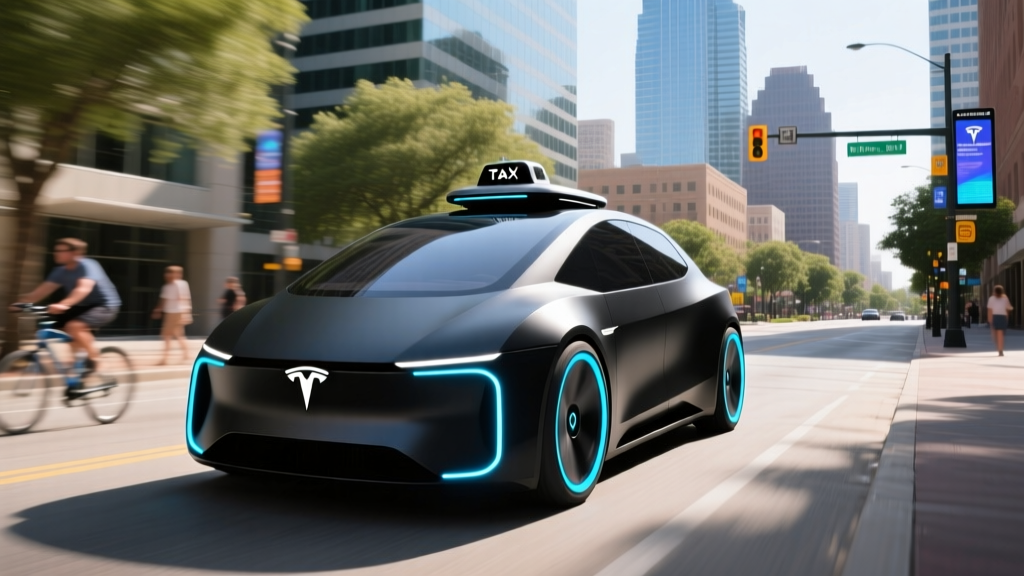
If you've been searching for the Tesla robotaxi Austin map to figure out where you can hail a driverless Cybercab, the short answer is: coverage remains limited and geofenced as of early 2026. Tesla's robotaxi ambitions — unveiled with fanfare at the October 2024 "We, Robot" event — have materialized as a controlled pilot program rather than a wide-open service. Austin, Texas, serves as one of Tesla's primary testing grounds, but the operational footprint is far smaller than the full city limits.
Understanding what's available today requires separating Tesla's marketing projections from the regulatory and technical realities on the ground. This guide breaks down the current service area, how the technology works, what it costs, and where it fits in the broader autonomous vehicle landscape.
SAE Automation Levels: Where Tesla's Robotaxi Actually Sits
The single most important distinction for any autonomous vehicle discussion is the SAE International automation level. This framework determines who is responsible when something goes wrong — and it's where most consumer confusion originates.
SAE Automation Levels — Quick Reference
| Level | Name | Driver Required? | Example |
|---|---|---|---|
| Level 0 | No Automation | Full control | Basic car, no ADAS |
| Level 1 | Driver Assistance | Yes — hands on | Adaptive cruise control |
| Level 2 | Partial Automation | Yes — must supervise | Tesla Autopilot / FSD (Supervised) |
| Level 3 | Conditional Automation | Eyes off, must take over on request | Mercedes Drive Pilot (limited conditions) |
| Level 4 | High Automation | No — within geofence | Waymo One, Tesla Robotaxi (target) |
| Level 5 | Full Automation | No — anywhere, any condition | Does not exist commercially |
Where Tesla's consumer vehicles sit today: Tesla Autopilot and Full Self-Driving (Supervised) remain SAE Level 2 systems. The driver is legally and practically responsible at all times. These are driver-assistance features, not self-driving systems, regardless of the "Full Self-Driving" branding.
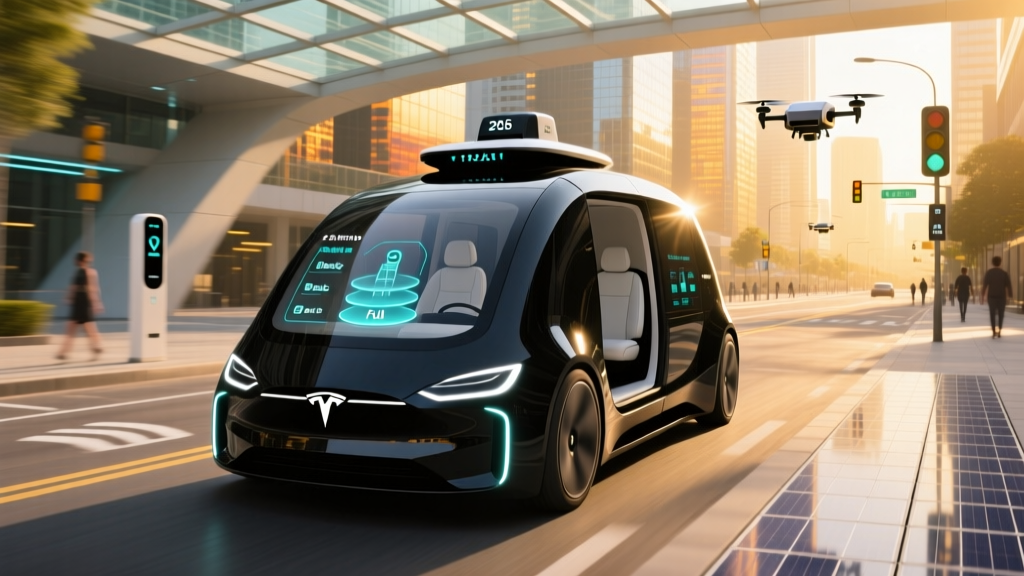
Where the Tesla Robotaxi (Cybercab) targets: Tesla's dedicated robotaxi platform — the Cybercab, with no steering wheel or pedals — is designed for SAE Level 4 operation within defined geofenced areas. At Level 4, the vehicle handles all driving tasks within its operational design domain (ODD) with no human fallback required. This is the same classification as Waymo's driverless service.
Current Service Availability: The Austin Geofence
Austin is Tesla's robotaxi launch city for good reason: it's where Tesla relocated its corporate headquarters (the Gigafactory Texas campus), the regulatory environment in Texas has been relatively accommodating to AV testing, and the city's grid layout and weather conditions are favorable for vision-based systems.
However, the operational area as of early 2026 is a subset of the city — not full municipal coverage.
Tesla Robotaxi Service Availability — 2026
| City | Status | Coverage Area | Access |
|---|---|---|---|
| Austin, TX | Active pilot | Select zones (South Austin, portions of downtown, airport corridor) | Invite-only / waitlist |
| San Francisco, CA | Testing (not public) | Limited test corridors | Internal / employees |
| Phoenix, AZ | Announced expansion | TBD | Not yet available |
Note: Service areas and access tiers change frequently. Check Tesla's official robotaxi app for real-time geofence boundaries.
For context, Waymo One — the most established Level 4 robotaxi service in the U.S. — covers roughly 80+ square miles across the Phoenix metro area and has expanded to parts of Los Angeles and San Francisco. Tesla's Austin footprint is currently smaller, focused on lower-complexity corridors as the system accumulates miles and edge-case data.
Where can I use this robotaxi service right now? If you're in Austin and have been accepted into the pilot program via Tesla's app waitlist, you can hail a Cybercab within the designated geofenced zone. Outside that zone, the service will not accept a ride request. If you're not in Austin or haven't received access, the service is not yet available to you.
How to Use the Tesla Robotaxi Service and Pricing
The Tesla robotaxi experience is designed to mirror existing rideshare apps — open the Tesla app, set a pickup and dropoff within the geofence, confirm the ride, and a Cybercab arrives. The key difference: there is no driver to rate, tip, or interact with.
Step-by-Step: Hailing a Tesla Robotaxi
- Download/open the Tesla app and navigate to the Robotaxi section (available only to approved users in active service areas).
- Enter your destination — both pickup and dropoff must fall within the active geofence.
- Confirm the ride — the app displays estimated pickup time, route, and fare.
- Board the Cybercab — unlock via the app; no driver present.
- Ride and exit — the vehicle navigates autonomously; you can monitor the route via in-cabin display.
Pricing: Tesla Robotaxi vs. Uber/Lyft
Tesla has stated that its long-term goal is to offer robotaxi rides at a cost per mile significantly below traditional rideshare, targeting roughly $0.20–$0.30 per mile before fees. The economic thesis: removing the driver (who typically captures 60–75% of a rideshare fare) allows dramatic cost reduction.
| Service | Cost/Mile (Est.) | 5-Mile Ride (Est.) | Notes |
|---|---|---|---|
| Tesla Robotaxi (projected) | $0.20–$0.30 | $1.00–$1.50 + base fee | Long-term target; pilot pricing may differ |
| UberX (Austin avg.) | $1.50–$2.50 | $7.50–$12.50 + fees | Varies by demand/surge |
| Lyft (Austin avg.) | $1.40–$2.30 | $7.00–$11.50 + fees | Varies by demand/surge |
| Waymo One (Phoenix) | $1.50–$3.00 | $7.50–$15.00 + fees | Comparable to Uber/Lyft currently |
How much does it cost vs Uber/Lyft? In its current pilot phase, Tesla's robotaxi pricing has not been publicly standardized — early riders may receive subsidized or promotional fares. Tesla's stated long-term target of $0.20–$0.30/mile would be dramatically cheaper than Uber/Lyft (roughly 80–90% less per mile). However, achieving that price point requires massive fleet scale, low insurance costs, and high vehicle utilization — none of which are guaranteed in the near term. For now, expect pilot pricing to be comparable to or slightly below standard rideshare rates.
The Camera-Only Tech Stack: How Tesla's Robotaxi Sees the World
Tesla's approach to autonomous driving is philosophically distinct from every other major robotaxi operator. While Waymo, Cruise (now largely defunct), and Zoox rely on a sensor suite combining lidar, radar, and cameras, Tesla has committed to a camera-only (vision-based) architecture — what the company calls "Tesla Vision."
Tesla Robotaxi (Cybercab) — Technology Stack
| Component | Tesla Cybercab | Waymo 6th-Gen (Comparison) |
|---|---|---|
| Cameras | 8+ surround cameras (upgraded resolution) | 29 cameras |
| Lidar | None | 5 lidar units |
| Radar | None (removed from fleet) | 6 radar units |
| Compute | HW4 / next-gen Tesla FSD chip | Custom Waymo compute platform |
| AI Approach | End-to-end neural network (vision → control) | Modular perception + planning stack |
| HD Maps | No (relies on real-time perception) | Yes (pre-mapped geofences) |
The camera-only bet: Tesla's argument is that human drivers navigate using only vision (two eyes, no lidar), so a sufficiently advanced neural network fed by high-resolution cameras should be capable of the same. The advantage is cost — eliminating lidar and radar reduces vehicle hardware cost by thousands of dollars per unit, critical for a robotaxi fleet that must achieve massive scale to be profitable.
The risk: Camera-only systems face inherent limitations in conditions where human vision also struggles: heavy rain, fog, direct sun glare, and low-light scenarios. Lidar provides redundant depth perception that works regardless of lighting. Tesla's neural network approach must compensate for this through software alone — a challenge no production system has fully solved for Level 4 operations across all weather conditions.
Tesla's end-to-end neural network approach (introduced with FSD v12 and evolved since) replaces hand-coded rules with learned behavior from billions of miles of driving data. The system maps camera inputs directly to driving actions — steering, braking, acceleration — rather than passing through intermediate perception and planning modules. This is a fundamentally different architecture from Waymo's modular stack.
Safety Record: What the Data Actually Shows
Assessing the safety of Tesla's robotaxi service requires careful attention to what data exists and what doesn't. As a pilot program with limited public miles, the statistical picture is thin — which is itself an important data point.
Autonomous Vehicle Safety Data — Context
- Waymo: Over 30+ million driverless miles as of late 2025, with published safety studies showing 85% fewer police-reported crash-involved incidents compared to human benchmarks in comparable geographies.
- Tesla FSD (Supervised, Level 2): Tesla's quarterly vehicle safety reports show approximately one crash per ~4–5 million miles with FSD active. However, these are supervised miles with a driver present — not comparable to Level 4 driverless operations. The NHTSA Standing General Order requires crash reporting for all ADS-equipped vehicles.
- Tesla Robotaxi (Cybercab, Level 4): As a limited pilot, total driverless miles are not yet publicly reported at a scale sufficient for statistical safety claims. NHTSA reporting requirements apply.
- Human driver benchmark: ~1.35 fatalities per 100 million vehicle miles traveled (VMT) nationally per NHTSA FARS data.
How safe are robotaxis (real data)? The honest answer: for Tesla's Level 4 Cybercab service specifically, there is not yet enough public driverless mileage data to make a statistically rigorous safety comparison. Waymo, with tens of millions of driverless miles, has the most robust published safety data in the industry and shows strong results relative to human benchmarks. Tesla's FSD (Supervised) data reflects Level 2 operation with a human safety net — it cannot be extrapolated to Level 4. As the Austin pilot scales, expect NHTSA reporting and Tesla's own disclosures to provide more clarity.
Regulatory Landscape: Who Approves Robotaxi Operations
Deploying a driverless vehicle on public roads is not solely a technology challenge — it requires navigating a patchwork of state and local regulations. In the United States, there is no single federal robotaxi license; instead, each state sets its own rules for autonomous vehicle testing and commercial deployment.
Texas Regulatory Framework
Texas has been relatively permissive for AV deployment. The state's 2017 autonomous vehicle law (SB 2205) allows autonomous vehicles to operate on public roads without a human driver, provided the vehicle is equipped with proper insurance and meets federal motor vehicle safety standards (or has an exemption). There is no state-level permit process equivalent to California's DMV deployment permits — which has made Texas attractive for companies wanting to avoid California's more stringent reporting requirements.
At the local level, Austin has not imposed additional geofence restrictions beyond standard traffic regulations, though coordination with the city's transportation department is required for commercial operations.
Federal Oversight
The National Highway Traffic Safety Administration (NHTSA) retains authority over vehicle safety standards. The Cybercab — designed without a steering wheel or pedals — requires an exemption from certain Federal Motor Vehicle Safety Standards (FMVSS) that assume a human driver. Tesla has pursued these exemptions, and NHTSA has the authority to grant or deny them. The Standing General Order requires all manufacturers and operators of ADS-equipped vehicles to report crashes, providing a federal data-collection mechanism.
Current Limitations: What the Tesla Robotaxi Cannot Do
Every Level 4 system operates within a defined Operational Design Domain (ODD). Outside that domain, the system either cannot operate or must safely pull over. Tesla's Cybercab is no exception.
Known Limitations of the Tesla Robotaxi (2026)
- Geofencing: The vehicle will not operate outside its approved service area. If a ride request includes a destination outside the geofence, it will be rejected.
- Weather: Camera-only systems degrade in heavy rain, fog, snow, and severe sun glare. Austin's relatively mild climate is one reason it was chosen as a launch city. Expect service suspensions during severe weather events.
- Construction zones: Unmapped lane closures, temporary barriers, and flaggers present edge cases that autonomous systems handle inconsistently. The Cybercab may reroute or stop if it cannot resolve a construction zone safely.
- Night driving in poorly lit areas: Camera performance decreases in low-light conditions. While Tesla's cameras have improved in sensitivity, unlit rural roads or poorly maintained urban streets may fall outside the ODD.
- Complex multi-point intersections: Unprotected left turns across heavy traffic, roundabouts with aggressive human drivers, and non-standard intersections remain challenging scenarios.
- Emergency vehicles: Detecting and appropriately yielding to approaching emergency vehicles (especially when sirens are audible but the vehicle is not yet visible) remains an industry-wide challenge.
- Pedestrian-dense areas: High-density pedestrian environments (festivals, school zones at dismissal, protest areas) require prediction capabilities that are still maturing.
What are the current limitations? The Tesla robotaxi cannot drive everywhere, in all weather, in all conditions. It operates within a geofenced zone in favorable weather on roads it can confidently navigate. This is consistent with every other Level 4 system in commercial operation — including Waymo, which also suspends service during severe weather and restricts operations to pre-approved zones.
How Tesla's Robotaxi Compares to the Competition
The autonomous vehicle landscape in 2026 includes several active commercial services and testing programs. Here's how Tesla's approach compares:
| Feature | Tesla Cybercab | Waymo One | Zoox |
|---|---|---|---|
| SAE Level | Level 4 (geofenced) | Level 4 (geofenced) | Level 4 (geofenced) |
| Primary Sensors | Cameras only | Lidar + radar + cameras | Lidar + radar + cameras |
| Active Cities (public) | Austin (pilot) | Phoenix, SF, LA, Austin (expanding) | Las Vegas, SF (limited) |
| Vehicle | Cybercab (purpose-built, no steering wheel) | Jaguar I-PACE EV | Zoox purpose-built (bidirectional) |
| Public Miles (driverless) | Limited (pilot scale) | 30M+ | Limited |
| HD Map Dependency | No | Yes | Yes |
Tesla's camera-only, no-HD-map approach offers a theoretical scalability advantage: if the neural network is robust enough, it should be deployable to any city without the months of pre-mapping that Waymo and Zoox require. The trade-off is that the system must handle every scenario through learned perception alone, without the redundant depth and spatial data that lidar provides.
Frequently Asked Questions
Is Tesla's robotaxi truly self-driving, or is it driver-assist?
The Tesla Cybercab robotaxi service is designed for SAE Level 4 — truly driverless within its geofenced operational area, with no human driver present or required. This is fundamentally different from Tesla's consumer FSD (Supervised) feature, which is Level 2 and requires continuous driver supervision. The two products share neural network technology but operate under completely different safety and legal frameworks.
Where can I use the Tesla robotaxi service right now?
As of early 2026, the Tesla robotaxi is in a limited pilot program in Austin, Texas, covering select geofenced zones. Access is by invitation or waitlist through the Tesla app. The service is not available to the general public outside this pilot area. Expansion to additional cities has been announced but is not yet live.
How much does a Tesla robotaxi ride cost compared to Uber or Lyft?
Tesla's long-term target is $0.20–$0.30 per mile — dramatically cheaper than Uber/Lyft's typical $1.40–$2.50 per mile in Austin. However, during the pilot phase, pricing may be subsidized or promotional. At scale, the removal of the driver (who captures the majority of a rideshare fare) is what enables the cost reduction, but achieving that scale remains the central challenge.
What happens if the Tesla robotaxi encounters a situation it can't handle?
At Level 4, the vehicle is designed to execute a "minimal risk condition" (MRC) — typically pulling over safely and stopping — if it encounters a scenario outside its capability. Tesla's system can also connect to a remote operations center for guidance, though the vehicle itself makes all real-time driving decisions. The Cybercab does not have a steering wheel or pedals, so there is no option for a passenger to take manual control.
Why doesn't Tesla use lidar like Waymo and other robotaxi companies?
Tesla's position is that a camera-only system, powered by advanced neural networks trained on billions of miles of real-world driving data, can match or exceed the capability of lidar-equipped systems at a fraction of the hardware cost. This cost advantage is critical for fleet economics. The trade-off is that cameras, unlike lidar, are affected by lighting conditions and cannot directly measure distance — the neural network must infer depth from visual data alone. Whether this approach achieves equivalent safety at Level 4 scale remains the central question in the autonomous vehicle industry.
Does the Tesla robotaxi work in rain or bad weather?
Light rain is generally within the system's operational capability. However, heavy rain, fog, and severe weather conditions degrade camera performance and may trigger service suspensions. Austin's relatively dry climate makes it a favorable launch city for a camera-only system. Don't expect reliable robotaxi service in snow or heavy storms — this limitation applies to all current Level 4 systems, not just Tesla's.
This article reflects information available as of early 2026. Robotaxi service areas, pricing, and regulatory status change frequently. Always verify current availability and terms through Tesla's official channels and local regulatory authorities. Autonomous vehicle safety data is evolving; consult NHTSA for the latest reporting.