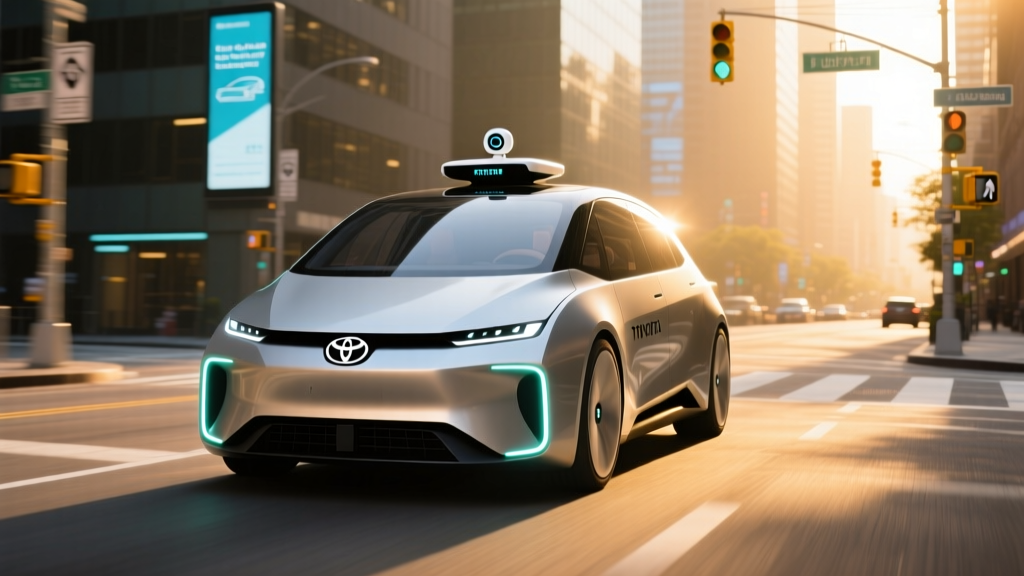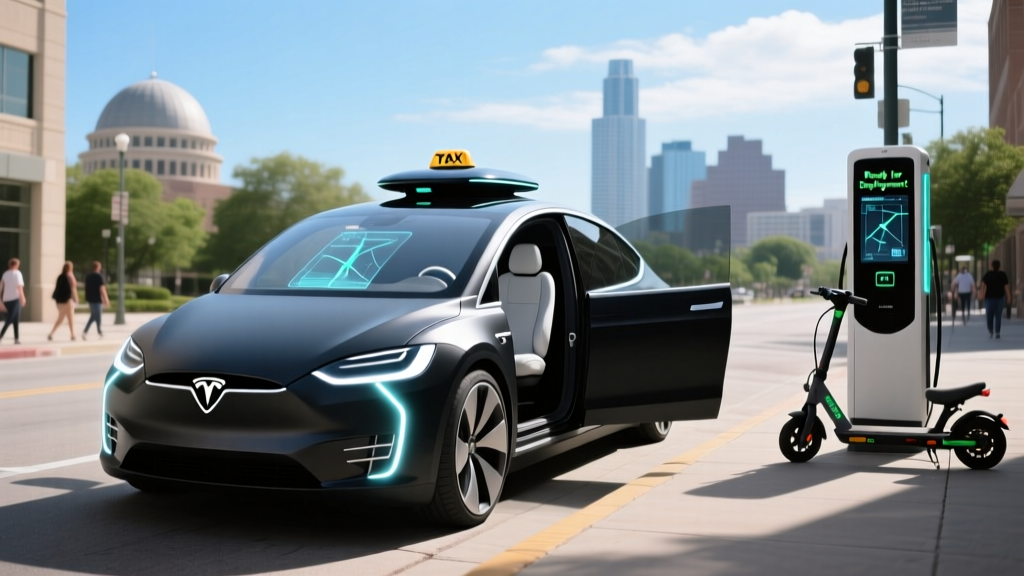
The phrase "Tesla robotaxi Austin launch" has circulated in EV and tech circles since the Cybercab unveil in late 2024. By mid-2026, Tesla has moved from concept to a limited, supervised ride-hail pilot in Austin, Texas — but the gap between marketing ambition and operational reality remains significant. This guide breaks down exactly what is live, what is announced, and what the data says about safety, pricing, and technology.
Where Does Tesla's Robotaxi Stand on the SAE Autonomy Scale?
Before evaluating any robotaxi service, buyers and riders need to understand the SAE International automation framework. The distinction between Level 2 and Level 4 is not semantic — it determines whether a human must monitor the system at all times.
| Level | Name | Driver Role | Example |
|---|---|---|---|
| Level 0 | No Automation | Full control | Basic cruise control |
| Level 1 | Driver Assistance | Hands on wheel, eyes on road | Adaptive cruise, lane-keep |
| Level 2 | Partial Automation | Must supervise at all times | Tesla FSD (Supervised), BlueCruise, Super Cruise |
| Level 3 | Conditional Automation | Eyes off in specific conditions; must take over when requested | Mercedes Drive Pilot (limited markets) |
| Level 4 | High Automation | No driver needed in defined operational domain | Waymo One (Phoenix, SF, LA) |
| Level 5 | Full Automation | No driver, any condition | Does not exist commercially |
Where Can I Use Tesla's Robotaxi Service Right Now?
As of mid-2026, Tesla's ride-hail robotaxi service operates in a restricted zone in Austin, Texas. This is a supervised pilot program, not a city-wide commercial rollout.
| City | Status | Service Area | Hours | Vehicle |
|---|---|---|---|---|
| Austin, TX | Limited pilot (invite/waitlist) | ~15 sq mi geofence: South Congress, downtown core, parts of East Austin | Daytime hours, fair weather | Model Y (modified, no driver) |
| San Francisco, CA | Announced — not yet live | TBD | TBD | Cybercab (announced) |
| Los Angeles, CA | Announced — not yet live | TBD | TBD | Cybercab (announced) |
| Phoenix, AZ | No confirmed timeline | — | — | — |
The Austin geofence covers a relatively dense urban corridor suited to low-speed, well-mapped routes. Riders outside this zone cannot hail a Tesla robotaxi, and the service does not operate during heavy rain, construction-zone reroutes, or nighttime hours outside the pilot's approved window. Tesla has not published an exact rider count, but early access is limited to waitlisted users and select partners.
How Much Does a Tesla Robotaxi Ride Cost vs. Uber and Lyft?
Tesla has positioned its robotaxi pricing below traditional rideshare to undercut incumbents while building ridership. During the Austin pilot, pricing is promotional and subject to change as the service scales.
| Service | Base Fare | Per-Mile Rate | Per-Minute Rate | Est. 5-Mile Ride |
|---|---|---|---|---|
| Tesla Robotaxi (pilot pricing) | $1.50 | $0.70 | $0.20 | ~$6.00–$7.50 |
| UberX (Austin avg.) | $2.50 | $1.10 | $0.28 | ~$9.50–$12.00 |
| Lyft (Austin avg.) | $2.20 | $1.05 | $0.26 | ~$9.00–$11.00 |
| Waymo One (where available) | $2.00 | $0.95 | $0.22 | ~$8.00–$10.00 |
At pilot rates, Tesla undercuts UberX by roughly 35–40% on a standard trip. However, surge pricing does not currently apply to the robotaxi pilot, and Tesla has not disclosed long-term pricing once the service exits its promotional phase. For context, Tesla CEO Elon Musk has previously cited a target cost of under $1.00 per mile at scale, though the company has not published a formal rate card for post-pilot operations.
To hail a ride, users access the Tesla app (separate from the vehicle-ownership app), enter a pickup and drop-off within the geofence, and confirm. The vehicle arrives without a driver; riders unlock via the app and can monitor the route on an in-cabin screen.
Tesla's Camera-Only Tech Stack vs. Lidar-Equipped Competitors
The most consequential technical decision in Tesla's robotaxi program is its rejection of lidar. Where Waymo's sixth-generation vehicles carry a suite of lidar units, radar, and cameras, Tesla relies exclusively on a vision-only architecture.
Tesla Robotaxi Sensor Suite (Model Y Pilot Vehicles)
- Cameras: 8–9 exterior cameras providing 360° coverage, upgraded to higher-resolution sensors vs. consumer Model Y
- Neural network: End-to-end neural network processing for perception, path planning, and control — Tesla's "FSD v13+" stack adapted for driverless operation
- Compute: Tesla HW4 (or successor) onboard inference computer
- Mapping: HD map-lite approach using real-time vision, supplemented by fleet-derived route data
- No lidar, no radar (Tesla removed ultrasonic sensors and radar from production vehicles starting in 2022–2023)
Waymo Sensor Suite (6th-Gen, for comparison)
- Lidar: Multiple solid-state lidar units for 3D point-cloud depth perception
- Cameras: High-resolution exterior camera array
- Radar: Imaging radar for adverse weather object detection
- HD maps: Pre-built centimeter-accuracy maps for all service areas
The camera-only approach gives Tesla a cost advantage — lidar arrays add thousands of dollars per vehicle — and scales more easily across Tesla's existing fleet of millions of camera-equipped cars. The trade-off is that vision systems historically struggle more with depth estimation in low-light conditions, heavy rain, and direct sun glare. This is precisely why Tesla's Austin pilot is restricted to fair-weather, daytime operation.
Waymo's lidar-equipped approach provides redundant depth sensing that performs more consistently in edge cases but at a higher per-vehicle hardware cost. Neither approach has proven definitively superior at scale; the data from both systems continues to evolve.
Safety Data: What We Know From Tesla's Pilot and Competitor Benchmarks
Safety is the single most important metric for any driverless service, and it is where concrete data matters more than marketing claims. As of mid-2026, Tesla has not published a comprehensive safety report for its Austin robotaxi pilot comparable to what Waymo and other operators release.
Available Robotaxi Safety Data (2025–2026)
- Waymo: Over 30 million fully driverless miles completed as of early 2026. Published safety data showing a 85% reduction in injury-causing crash rates compared to human benchmark in operational areas (Phoenix, San Francisco, Los Angeles). NHTSA standing general order reports available publicly.
- Tesla Austin Pilot: Tesla has not disclosed total driverless miles, disengagement rates, or crash statistics for the robotaxi pilot as of this writing. The company has stated that safety data will be published as the service scales. Under NHTSA's Standing General Order, all ADS-equipped vehicles involved in crashes must be reported within 24 hours for serious incidents.
- Cruise (GM): Suspended operations in late 2023 after a pedestrian-dragging incident in San Francisco. Resumed limited supervised testing in 2025 under tighter regulatory oversight. No current driverless commercial service.
For consumer FSD (Supervised) — the Level 2 system, not the robotaxi — Tesla's Q1 2026 Vehicle Safety Report claimed one crash per ~5.9 million miles driven with FSD engaged, compared to the U.S. average of roughly one crash per ~670,000 miles (NHTSA data). However, these figures are not directly comparable: Tesla's data includes all FSD-engaged miles (highway, city, parking), while NHTSA's national average includes all vehicles, all conditions, and all driver demographics. Independent researchers have noted that Tesla's self-reported data lacks the third-party verification that NHTSA crash databases provide.
The bottom line: robotaxi safety claims require context. Waymo's published data is the most transparent in the industry. Tesla's robotaxi pilot data is not yet publicly available in comparable detail, and buyers should watch for NHTSA filings and Tesla's own safety disclosures as the Austin service expands.
Regulatory Landscape: Who Approves Robotaxi Operations?
Robotaxi deployment in the United States is governed by a patchwork of state and local regulations — there is no single federal license for driverless ride-hail.
- Texas (Austin): Texas passed HB 3026 in 2023, establishing a framework for autonomous vehicle testing and deployment. The Texas Department of Transportation (TxDOT) oversees AV permits. Tesla's Austin pilot operates under a testing permit with city coordination. Local law enforcement and fire departments are notified of AV operations in their jurisdiction.
- California: The California DMV issues testing permits; the California Public Utilities Commission (CPUC) issues commercial deployment permits. Waymo holds both. Tesla would need CPUC approval before offering paid robotaxi rides in San Francisco or Los Angeles.
- Federal (NHTSA): The National Highway Traffic Safety Administration sets Federal Motor Vehicle Safety Standards (FMVSS). The Tesla Cybercab, designed without a steering wheel or pedals, requires an FMVSS exemption or redesign to meet current standards — a regulatory hurdle that has delayed the Cybercab's production timeline. The NHTSA also investigates AV-related crashes under its Standing General Order and defect investigation authority.
Tesla's choice to launch in Austin rather than San Francisco reflects regulatory pragmatism: Texas has a more permissive AV framework, fewer permitting layers, and a city government that has signaled willingness to accommodate Tesla's operations. California's multi-agency approval process adds months or years to deployment timelines.
Current Limitations: Where Tesla's Robotaxi Cannot Operate
Known Operational Limits — Austin Pilot (2026)
- Geofence: Restricted to ~15 sq mi of central/east Austin. No airport runs, no suburban pickups, no intercity travel.
- Weather: Service suspended during heavy rain, flooding, or reduced-visibility conditions. Camera-only systems degrade significantly when lenses are obscured by water or road spray.
- Nighttime: Pilot limited to daytime and early-evening hours. Full 24/7 operation has not been approved.
- Construction zones: Routes with active lane shifts, temporary barriers, or flaggers are avoided or trigger a remote-operator handoff. Tesla's system, like all current Level 4 services, struggles with unmapped temporary infrastructure changes.
- Edge cases: Unmarked intersections, emergency-vehicle interactions, and unusual road users (horse-drawn carriages, oversized loads) remain areas where the system may pull over and request remote assistance.
- Passenger capacity: Model Y pilot vehicles seat up to 4 passengers. No wheelchair-accessible vehicles are currently in the fleet.
- No highway operation: The Austin pilot geofence covers surface streets only. Highway merging and high-speed operation are not part of the current service domain.
These limitations are not unique to Tesla — Waymo, Zoox, and every other Level 4 operator impose similar constraints. The difference is that Tesla's camera-only stack may face steeper performance cliffs in adverse conditions compared to lidar-equipped competitors, which is why weather and lighting restrictions are particularly important to monitor.
The Cybercab: When Does Tesla's Purpose-Built Robotaxi Arrive?
The Austin pilot currently uses modified Model Y vehicles. Tesla's purpose-built robotaxi, the Cybercab, was unveiled in October 2024 with a two-seat configuration, no steering wheel, no pedals, and a projected production cost under $30,000.
As of mid-2026, the Cybercab remains in pre-production. Tesla has targeted a production start in late 2026 or early 2027, but the vehicle faces a significant regulatory barrier: U.S. FMVSS currently requires a steering wheel, mirrors, and pedals for passenger vehicles. Tesla must either obtain a regulatory exemption from NHTSA or redesign the Cybercab to include manual controls — neither of which has been confirmed as of this writing.
Until the Cybercab enters production and receives regulatory clearance, Tesla's robotaxi service will rely on modified versions of its existing consumer vehicles. This is a functional but suboptimal approach: consumer vehicles carry the cost and weight of manual-driving hardware that a purpose-built robotaxi would eliminate.
Tesla Robotaxi vs. Waymo One: Side-by-Side
| Attribute | Tesla Robotaxi (Austin) | Waymo One |
|---|---|---|
| SAE Level | Level 4 (geofenced pilot) | Level 4 (commercial) |
| Cities Live | 1 (Austin, limited zone) | 4+ (Phoenix, SF, LA, expanding) |
| Sensor Stack | Camera-only, no lidar | Lidar + camera + radar |
| Vehicle | Modified Model Y | Jaguar I-PACE, custom 6th-gen |
| Availability | Waitlist / invite-only | Open to public (in service areas) |
| Weather Limits | Fair weather, daytime only | Rain-capable, 24/7 in most areas |
| Published Safety Data | Not yet disclosed for pilot | Yes — 30M+ miles, published reports |
| Est. 5-Mi Ride Cost | ~$6–$7.50 (pilot promo) | ~$8–$10 |
| Regulatory Status | TX testing permit | CPUC + DMV commercial permits (CA); AZ approved |
Frequently Asked Questions
Is Tesla's robotaxi truly self-driving or is it driver-assist?
Within its Austin pilot geofence, Tesla's robotaxi operates as an SAE Level 4 service — no driver behind the wheel. This is fundamentally different from Tesla's consumer FSD (Supervised), which is Level 2 and requires an attentive human driver at all times. The robotaxi's Level 4 capability is restricted to a small, well-mapped area under favorable conditions; it is not a general-purpose self-driving system.
Can I hail a Tesla robotaxi anywhere in Austin?
No. The service is limited to a geofenced zone of approximately 15 square miles covering parts of downtown, South Congress, and East Austin. Pickup and drop-off must both fall within this zone. Airport service and suburban areas are not included.
How safe are robotaxis compared to human drivers?
Waymo's published data — the most transparent in the industry — shows an 85% reduction in injury-causing crash rates across 30+ million driverless miles compared to human benchmarks in its operational areas. Tesla has not yet published equivalent data for its Austin pilot. All robotaxi operators are subject to NHTSA crash reporting requirements under the Standing General Order.
What happens if the Tesla robotaxi encounters a situation it can't handle?
The vehicle is designed to pull over safely and request remote assistance from a Tesla operations center. A remote operator can assess the situation and, if necessary, guide the vehicle through the obstacle or dispatch a human safety driver. This is standard practice across the Level 4 robotaxi industry.
When will the Cybercab replace the Model Y in Tesla's robotaxi fleet?
Tesla has targeted late 2026 or early 2027 for Cybercab production, but the vehicle faces FMVSS regulatory hurdles (it was designed without a steering wheel or pedals). No confirmed production or deployment date exists as of mid-2026. Until then, modified Model Y vehicles serve the Austin pilot.
Does the Tesla robotaxi operate at night or in the rain?
The current Austin pilot is restricted to daytime and early-evening hours in fair weather. Heavy rain, flooding, or low-visibility conditions trigger a service suspension. This is partly a regulatory condition of the pilot permit and partly a limitation of the camera-only sensor suite, which degrades in adverse visual conditions.