The Austin Robotaxi Question: Where Does Tesla Actually Stand?
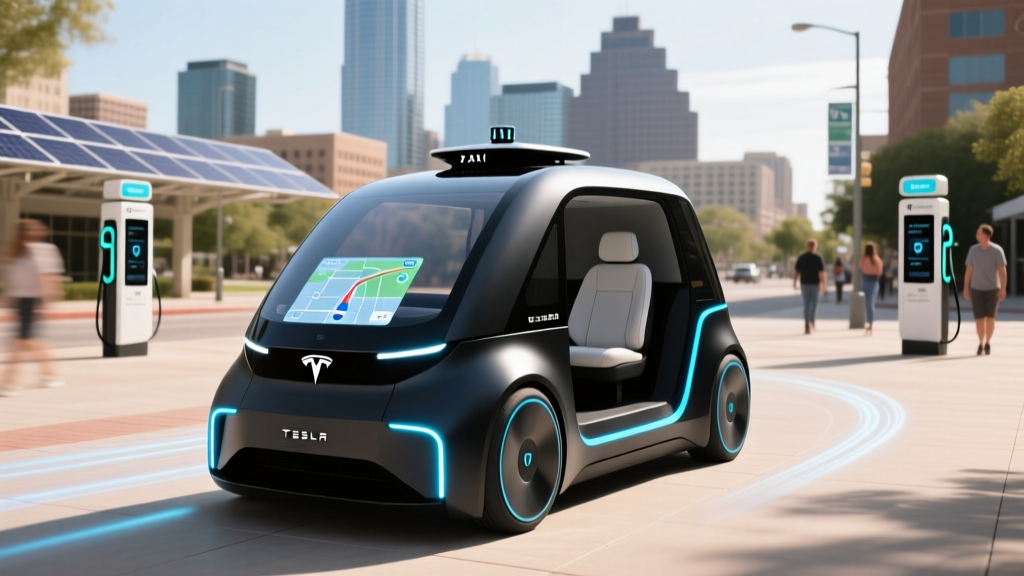
Search interest around "Tesla robotaxi Austin June" has surged since Elon Musk first pointed to Austin, Texas as a launch city for Tesla's driverless ride-hailing ambitions. The promise is tantalizing: summon a Cybercab (Tesla's dedicated robotaxi platform) or a retrofitted Model Y via the Tesla app and ride without a human behind the wheel. But separating marketing timelines from operational reality requires a hard look at regulatory approvals, technology readiness, and what Tesla has actually deployed on public roads as of mid-2026.
Here's what buyers, riders, and EV enthusiasts need to know — grounded in data, not press-release optimism.
SAE Automation Levels: Why the Distinction Matters
Before evaluating any robotaxi claim, you must understand the SAE International automation framework. The gap between Level 2 and Level 4 is not incremental — it's categorical.
| Level | Name | Who Drives | Example |
|---|---|---|---|
| Level 0 | No Automation | Human | Basic cruise control |
| Level 1 | Driver Assistance | Human (system assists steering OR speed) | Adaptive cruise, lane-keep |
| Level 2 | Partial Automation | Human (must supervise at all times) | Tesla Autopilot, FSD Supervised, GM Super Cruise, Ford BlueCruise |
| Level 3 | Conditional Automation | System (human must take over when requested) | Mercedes Drive Pilot (limited conditions) |
| Level 4 | High Automation | System (no human needed within ODD) | Waymo One, Cruise (pre-suspension), Zoox |
| Level 5 | Full Automation | System (all conditions, everywhere) | Does not exist commercially |
The critical point: Tesla's consumer FSD (Supervised) — even in its latest 2026 builds — remains an SAE Level 2 driver-assistance system. The driver must remain engaged, hands on or near the wheel, eyes on the road. A robotaxi, by definition, requires Level 4: no driver present, no human fallback needed within the system's operational design domain (ODD).
Tesla's robotaxi ambitions require either removing the driver entirely from a vehicle operating on public roads (Level 4) or deploying the purpose-built Cybercab with no steering wheel or pedals. Neither has achieved broad regulatory approval for commercial passenger service as of this writing.
Service Availability: Where Can You Actually Ride a Tesla Robotaxi?
Tesla has indicated Austin, Texas as a primary testbed and early launch market for a driverless ride-hailing service. Austin's regulatory environment — Texas has been relatively permissive on autonomous vehicle testing under TxDOT guidelines and state legislation (SB 2205, which took effect in 2023) — makes it a logical proving ground.
| Provider | City | Status | SAE Level | 24/7 Operation |
|---|---|---|---|---|
| Waymo One | Phoenix, AZ | Live — commercial | Level 4 | Yes |
| Waymo One | San Francisco, CA | Live — commercial | Level 4 | Yes |
| Waymo One | Los Angeles, CA | Live — commercial | Level 4 | Yes |
| Waymo One | Austin, TX | Testing / limited | Level 4 | No |
| Tesla (announced) | Austin, TX | Announced / pre-commercial testing | Targeting Level 4 | N/A |
| Zoox | Las Vegas, NV / Foster City, CA | Limited commercial | Level 4 | Limited hours |
As of mid-2026, Tesla's Austin robotaxi service has not launched for public commercial use. Tesla has been conducting supervised autonomous driving tests on Austin streets, and Musk has referenced a June timeframe in various communications, but no Texas regulatory body has issued a commercial passenger-service permit to Tesla for driverless operations. The National Highway Traffic Safety Administration (NHTSA) maintains oversight of autonomous vehicle safety, while the Texas Department of Licensing and Regulation handles state-level operational permits.
⚠️ Unreleased Service Notice: Tesla's robotaxi service in Austin remains announced/preliminary. Any "June launch" references should be treated as target dates from Tesla, not confirmed commercial availability. We will update this article when a regulatory permit is issued and rides are bookable by the public.
Tesla's Technology Stack: Camera-Only vs. the Lidar Consensus
Tesla's approach to autonomy diverges sharply from the rest of the robotaxi industry, and this technical bet is central to understanding both its potential and its regulatory hurdles.
Tesla Vision (Camera-Only)
- Sensors: 8 surround cameras (HW4/AI5 hardware), no lidar, no radar (removed from production vehicles since 2022–2023)
- Compute: Custom Tesla FSD chip (HW4) or next-gen AI5 inference hardware — estimated 300+ TOPS
- Approach: End-to-end neural network trained on billions of miles of fleet driving data; vision-only perception with BEV (bird's-eye-view) occupancy networks
- Mapping: No HD lidar maps; relies on real-time perception and standard-definition map data
- Claimed advantage: Scalability — cameras are cheap, and Tesla's fleet of millions of vehicles provides unmatched training data
Waymo / Zoox (Lidar + Sensor Fusion)
- Sensors: Roof-mounted lidar arrays (custom 5th-gen for Waymo), multiple cameras, radar units, external microphones
- Compute: Custom compute platforms with redundant perception pipelines
- Approach: Sensor fusion with HD pre-mapped routes; geofenced to approved ODDs
- Mapping: Centimeter-precision HD maps, updated continuously
- Claimed advantage: Redundancy — lidar provides precise 3D depth regardless of lighting; proven in commercial Level 4 service
The camera-only approach is cheaper and more scalable, but it faces skepticism from safety regulators and independent researchers. Lidar provides direct depth measurement in conditions where cameras struggle — heavy rain, direct sun glare, low-light scenarios. Tesla must demonstrate to regulators that its vision system can match or exceed lidar-equipped competitors in edge-case handling before a driverless permit is likely.
Pricing Expectations: Tesla Robotaxi vs. Uber and Lyft
Tesla has projected aggressive per-mile pricing for its robotaxi service, with Musk citing figures as low as $0.20–$0.40 per mile in investor presentations. For context, here's how that compares to current rideshare and competitor robotaxi pricing:
| Service | Cost per Mile (est.) | Base Fare | Avg. 5-Mile Trip | Surge Pricing |
|---|---|---|---|---|
| UberX (national avg.) | $1.20–$1.80 | $2.50–$3.50 | $9–$13 | Yes |
| Lyft Standard | $1.10–$1.60 | $2.00–$3.00 | $8–$11 | Yes |
| Waymo One (Phoenix/SF) | $1.00–$1.50 | $2.00–$3.00 | $7–$11 | Limited |
| Tesla Robotaxi (projected) | $0.20–$0.40 (Tesla claim) | TBD | $3.50–$5.50 (if realized) | Unknown |
Reality check: Tesla's $0.20/mile figure assumes full fleet utilization, minimal remote-assistance overhead, and zero regulatory fees — conditions no robotaxi operator has achieved at scale. Waymo, with years of commercial operation and billions in Alphabet investment, charges prices comparable to Uber/Lyft. Expect Tesla's actual launch pricing, if and when approved, to land closer to $0.80–$1.20/mile initially, with promotional rates in early markets.
Safety Record: What the Data Shows for Robotaxis
Safety is the single most important variable for robotaxi approval and public trust. Here's what we know from operators with actual commercial data:
Waymo Safety Data (Published 2024–2025)
- Total autonomous miles driven: Over 30 million fully driverless miles (as of late 2024)
- Injury-causing crash rate: Approximately 85% lower than human benchmark in comparable urban environments (per Waymo's published NHTSA-submitted data and peer-reviewed studies)
- Police-reportable crash rate: Approximately 57% lower than human benchmark
- Key context: Most incidents involve low-speed contact; Waymo vehicles tend to be more conservative at intersections and crosswalks than human drivers
Tesla FSD (Supervised) — Not Directly Comparable
- Tesla publishes quarterly safety reports citing ~1 crash per 4–6 million miles with FSD engaged, but these are Level 2 supervised miles — a human driver is present and intervening
- NHTSA's Standing General Order (SGO) data shows Tesla Autopilot/FSD-involved incidents, but raw counts lack exposure normalization (total miles driven under each condition)
- Driverless (Level 4) safety data for Tesla does not yet exist at commercial scale
For a Tesla robotaxi to gain regulatory approval, the company will need to submit comparable Level 4 disengagement and incident data to NHTSA and Texas state regulators. Until that data exists from real-world driverless operation, safety comparisons to Waymo remain speculative.
Regulatory Landscape: Who Approves a Tesla Robotaxi in Austin?
Deploying a driverless commercial passenger service requires navigating a layered regulatory framework:
- Federal (NHTSA): Oversees vehicle safety standards. Tesla's Cybercab — with no steering wheel or pedals — requires exemptions from Federal Motor Vehicle Safety Standards (FMVSS) that assume a human driver. NHTSA has granted limited exemptions to other manufacturers (e.g., Cruise Origin, Zoox), but each requires a separate application and safety case.
- State (Texas): Texas SB 2205 (2023) allows autonomous vehicles on public roads if they comply with traffic laws, are insured, and can achieve a "minimal risk condition" if systems fail. The Texas Department of Motor Vehicles and TxDOT share oversight. A commercial passenger-service permit requires proof of insurance, safety validation, and incident-reporting compliance.
- Local (City of Austin): Austin's transportation department can impose geofencing restrictions, curb-management rules, and data-sharing requirements on robotaxi operators.
Tesla has not publicly confirmed that it has submitted a commercial driverless-service application to Texas regulators as of mid-2026. Testing with safety drivers does not require the same permits as commercial passenger service without a human fallback.
Current Limitations: What Tesla's Robotaxi Cannot Do
Even if Tesla launches a limited Austin service, expect significant operational constraints in the early phases:
- Geofencing: Service will be restricted to a defined ODD — likely central Austin, major arterials, and pre-mapped corridors. Subdivisions, rural roads, and construction zones may be excluded.
- Weather restrictions: Camera-only systems face challenges in heavy rain, fog, and low-visibility conditions. Expect service suspensions during severe weather — Austin's spring thunderstorms could trigger frequent pauses.
- Operating hours: Early deployments may be limited to daylight or clear-weather hours, expanding gradually as the system validates nighttime performance.
- No highway operation (initially): Robotaxi services typically launch on surface streets. I-35, Mopac, and other Austin freeways are unlikely to be in the initial ODD.
- Edge cases: Unprotected left turns across heavy traffic, temporary road closures, emergency-vehicle interaction, and unusual road geometries remain challenging scenarios for all autonomous systems.
- No steering wheel (Cybercab): If Tesla deploys the Cybercab platform, passengers will have no manual override — a regulatory and psychological hurdle that requires FMVSS exemption and extensive safety validation.
Frequently Asked Questions
Where can I use the Tesla robotaxi service right now?
Nowhere — as of mid-2026, Tesla has not launched a commercial driverless ride-hailing service in any city. Austin, Texas is the announced target market, but no public rides are bookable. Waymo One remains the only widely available Level 4 robotaxi in the US (Phoenix, San Francisco, Los Angeles).
Is Tesla FSD (Supervised) the same as a robotaxi?
No. Tesla FSD Supervised is an SAE Level 2 driver-assistance system. The driver must remain attentive, keep hands near the wheel, and be prepared to take over instantly. A robotaxi is Level 4 — no driver, no steering wheel, no human fallback. These are fundamentally different systems with different regulatory requirements.
How much will a Tesla robotaxi ride cost vs. Uber or Lyft?
Tesla has claimed pricing as low as $0.20–$0.40 per mile, but this is a long-term projection, not a confirmed fare structure. Based on Waymo's actual commercial pricing ($1.00–$1.50/mile), expect Tesla's launch pricing to be comparable to Uber/Lyft initially ($8–$13 for a 5-mile trip), with potential promotional discounts in early markets.
How safe are robotaxis compared to human drivers?
Waymo's published data — over 30 million driverless miles — shows an injury-causing crash rate approximately 85% lower than human benchmarks in comparable urban environments. However, Tesla has no comparable Level 4 driverless safety data. Tesla's FSD safety statistics reflect supervised (Level 2) operation and are not directly comparable.
What are the biggest limitations of a Tesla robotaxi?
Early service will be geofenced to specific Austin corridors, likely suspended during heavy rain or low-visibility weather, restricted from highways, and limited to pre-approved operating hours. Tesla's camera-only approach (no lidar) may face additional regulatory scrutiny in edge-case scenarios.
When will the Tesla robotaxi actually be available in Austin?
There is no confirmed date. Tesla has referenced mid-2026 timeframes in various communications, but commercial deployment requires Texas state permits, NHTSA FMVSS exemptions (for the Cybercab), and demonstrated safety validation. Any "June" target should be treated as aspirational until a regulatory permit is publicly issued and rides are bookable through the Tesla app.