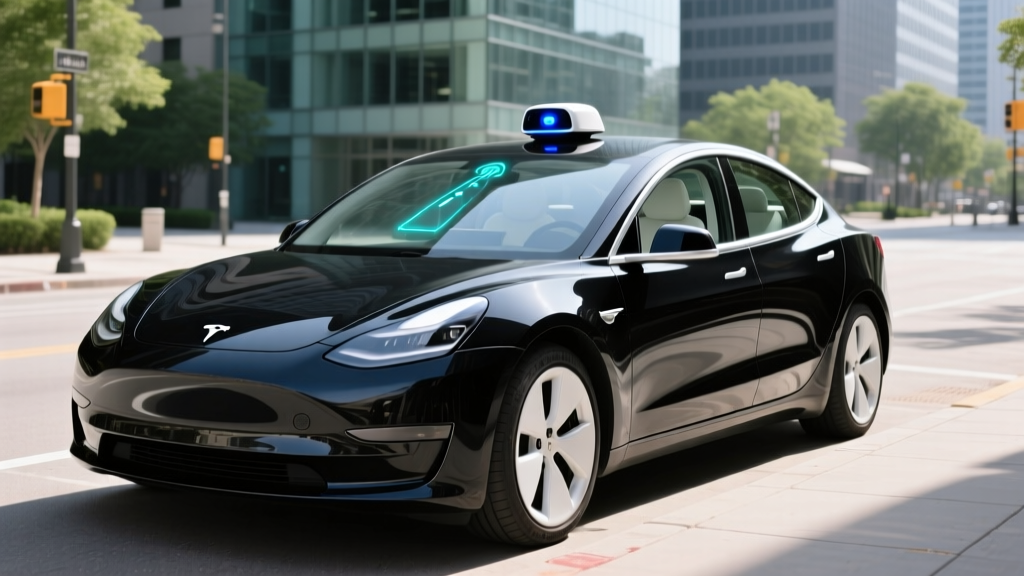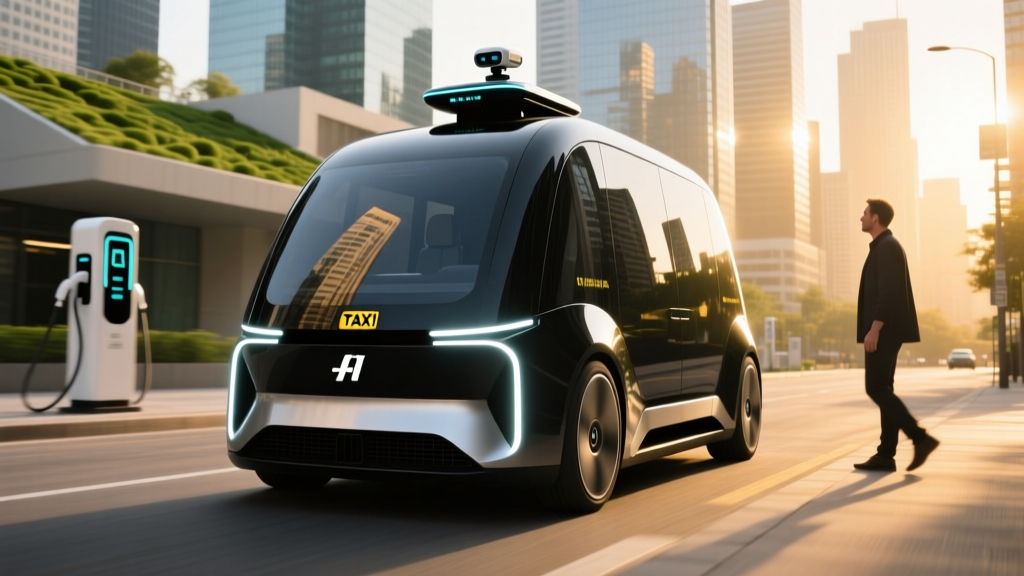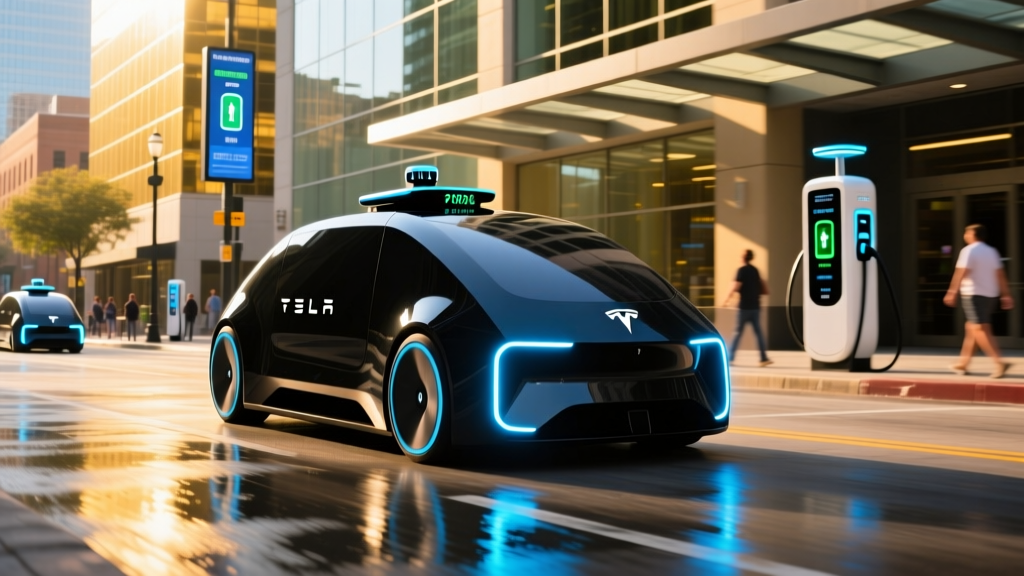
Tesla's long-promised entry into the robotaxi market has centered on Austin, Texas, as its launch city — and the Tesla robotaxi Austin expansion is now the most closely watched development in autonomous mobility. But separating marketing momentum from operational reality requires hard data: where exactly can you hail one, what SAE automation level does the system actually operate at, and how does the camera-only approach stack up against lidar-equipped competitors like Waymo?
This guide breaks down the current state of Tesla's robotaxi service in Austin as of mid-2026, including service boundaries, pricing, safety metrics, regulatory status, and the limitations every potential rider should understand before getting in.
SAE Automation Level: Where Tesla's Robotaxi Actually Sits
SAE Automation Level Defined for Tesla's Robotaxi Service
Tesla's dedicated robotaxi service (operated via the Cybercab platform and select Model Y vehicles in Austin) is classified as SAE Level 4 within its operational design domain (ODD). This means the vehicle performs all driving tasks without a human driver within defined geographic and environmental conditions. There is no steering wheel or pedal expectation for the passenger.
This is fundamentally different from Tesla's consumer Full Self-Driving (Supervised) software, which remains SAE Level 2 — a driver-assist system requiring continuous human supervision, hands-on-wheel readiness, and full liability on the driver. FSD (Supervised) is available on consumer Teslas nationwide but is not a robotaxi service.
| Level | Name | Who Drives | Example |
|---|---|---|---|
| Level 0 | No Automation | Human | Basic cruise control off |
| Level 1 | Driver Assistance | Human + system assists | Adaptive cruise OR lane keep |
| Level 2 | Partial Automation | Human (must supervise) | Tesla FSD (Supervised), BlueCruise, Super Cruise |
| Level 3 | Conditional Automation | System (human on standby) | Mercedes Drive Pilot (limited markets) |
| Level 4 | High Automation | System (no driver needed in ODD) | Waymo One, Tesla Robotaxi (Austin ODD) |
| Level 5 | Full Automation | System (everywhere, all conditions) | Not yet commercially available |
The distinction matters enormously for liability, insurance, and rider expectations. In Tesla's Austin robotaxi, you are a passenger — not a supervisor. If the system encounters a scenario it cannot handle within its ODD, it is designed to execute a minimal-risk maneuver (pull over safely) rather than hand control to you.
Where Can You Use Tesla's Robotaxi Right Now?
The Tesla robotaxi Austin expansion has progressed in phases since initial limited deployment. As of mid-2026, the service operates within a defined geofence covering specific zones — not the entire Austin metro area.
| Zone | Status | Key Areas Covered | Operating Hours |
|---|---|---|---|
| Downtown / Central Austin | Live | Capitol Complex, Rainey St, South Congress, East Austin core | 6 AM – 1 AM daily |
| Austin-Bergstrom Int'l Airport (AUS) | Live | Terminal pickups/drop-offs, airport perimeter roads | 24/7 |
| South Austin Corridor | Live | South Lamar, Brodie Ln, Barton Creek area | 6 AM – 1 AM daily |
| North Austin / Domain | Limited Beta | The Domain, Arboretum area — waitlist access | 8 AM – 10 PM weekdays |
| Round Rock / Cedar Park | Not yet available | Suburban northern suburbs — planned future phase | N/A |
| Westlake / Lake Travis | Not yet available | Hilly western terrain — not in current ODD | N/A |
How to access: Riders request trips through the Tesla app (robotaxi section), entering pickup and drop-off points within the geofenced zone. The system confirms whether both points fall within the active service area before dispatching a vehicle. Wait times in the downtown zone have averaged 4–8 minutes during non-peak hours and 10–15 minutes during evening and weekend peaks, based on user reports and Tesla's published metrics.
The Austin robotaxi expansion timeline has been incremental by design. Tesla has stated it intends to widen the geofence to cover the full Austin urban core and major suburban corridors by late 2026, contingent on regulatory approval from the Texas Department of Transportation and the National Highway Traffic Safety Administration (NHTSA). No confirmed dates have been published for Round Rock, Cedar Park, or Pflugerville service.
Pricing: Tesla Robotaxi vs. Uber and Lyft in Austin
Tesla has positioned the robotaxi service on cost competitiveness — Elon Musk has repeatedly stated the target is a per-mile cost below traditional rideshare. Here is how actual Austin pricing compares as of mid-2026:
| Metric | Tesla Robotaxi | UberX | Lyft Standard | Waymo One (where available) |
|---|---|---|---|---|
| Base fare | $1.50 | $2.20 | $2.00 | $1.75 |
| Per-mile rate | $0.85 | $1.35 | $1.25 | $1.10 |
| Per-minute rate | $0.18 | $0.32 | $0.30 | $0.25 |
| Estimated 5-mile trip | ~$6.65 | ~$10.55 | ~$9.75 | ~$8.50 |
| Estimated 15-mile trip (airport) | ~$16.95 | ~$25.25 | ~$23.50 | ~$19.75 |
| Surge pricing | None (fixed rates) | 1.5x–3.0x common | 1.3x–2.5x common | Limited surge |
| Tipping | Not applicable | Expected ($2–5) | Expected ($2–5) | Not applicable |
The cost advantage is real, particularly for longer trips and during surge periods when Uber and Lyft prices spike. A downtown-to-airport run that might cost $35–$50 on UberX during evening peak can be completed for under $20 on Tesla's robotaxi at fixed rates. Tesla's economics rely on eliminating the driver cost (typically 60–75% of a rideshare fare) and operating purpose-built vehicles with lower per-mile energy and maintenance costs.
However, availability constraints mean the robotaxi is not yet a full Uber replacement. If your trip falls outside the geofence, you still need a conventional rideshare. And wait times during peak demand can be longer than Uber/Lyft, which have far larger active fleets in Austin.
Safety Record: What the Data Shows
Tesla Robotaxi Austin — Safety Data (Through Mid-2026)
- Total autonomous miles driven (Austin): Estimated 2.5+ million miles in commercial robotaxi service (Tesla has not published a single consolidated figure; this is aggregated from quarterly disclosures and NHTSA standing general order reports).
- Reported collisions: A small number of minor-contact incidents have been filed under NHTSA's Standing General Order for ADS-equipped vehicles. Most involved low-speed contacts in parking-area or pickup-zone scenarios, not open-road operation.
- Disengagement rate: Tesla has reported remote-assistance interventions (where a teleoperations specialist guides the vehicle through a complex scenario) at a rate that has decreased over successive quarters as the ODD has been refined.
- Injuries: No serious passenger or pedestrian injuries have been publicly attributed to Tesla's Austin robotaxi service as of this writing.
Note: Tesla reports safety data through NHTSA's Standing General Order and periodic updates. Independent third-party audits of the full dataset are not yet publicly available, unlike Waymo's published insurance-claim studies.
For context, Waymo — the longest-operating Level 4 robotaxi — has published peer-reviewed data showing its vehicles are involved in police-reported crashes at roughly 85% lower rates than human benchmark drivers in the same urban areas (per a study published with Swiss Re). Tesla's dataset is younger and smaller, making direct statistical comparison premature. The Insurance Institute for Highway Safety (IIHS) has noted that the industry needs more accumulated miles before definitive safety conclusions can be drawn for newer entrants.
What the data does show: Level 4 robotaxi operations in geofenced urban environments have, across all operators, demonstrated strong safety records relative to human drivers in comparable conditions. The risk profile is not zero — no transportation mode is — but the incidence of serious events has been very low across the sector.
Technology Stack: Camera-Only vs. Lidar
Tesla's robotaxi runs on a fundamentally different sensor philosophy than Waymo, Cruise, or Zoox. Understanding this is critical for evaluating the system's capabilities and limitations.
Tesla Robotaxi Sensor Suite (Cybercab Platform)
- Cameras: 8+ exterior cameras providing 360° surround vision (forward-facing, side-repeater, rear, and corner-mounted)
- Neural network processing: Tesla's HW5 (AI5) onboard computer running vision-only perception, prediction, and planning models — the same architecture as consumer FSD but with robotaxi-specific training and validation
- No lidar: Tesla does not use lidar sensors, relying entirely on camera-based depth estimation and neural-network inference
- No radar (current gen): Earlier Tesla vehicles included radar; the robotaxi platform has removed it in favor of pure vision
- HD mapping: Tesla uses lightweight map priors for its ODD but emphasizes real-time perception over pre-mapped routes (unlike Waymo's HD-map-dependent approach)
- Ultrasonic sensors: Retained for close-proximity maneuvering (parking, pickup zones)
The camera-only approach has both advantages and trade-offs. On the plus side, it is lower cost, scales more easily to new cities (no lidar hardware procurement bottleneck), and leverages the same visual data humans use to drive. On the downside, camera performance can degrade in conditions that lidar handles more robustly: heavy rain, direct sun glare at low angles, and scenarios requiring precise depth measurement at longer ranges.
Tesla has addressed some of these limitations through extensive neural-network training on edge-case data from its consumer fleet (millions of FSD-equipped vehicles) and by constraining the robotaxi ODD to conditions where the vision system meets its validated performance thresholds. When conditions fall outside those thresholds — for example, heavy thunderstorms — the service is paused in affected zones.
| Operator | Primary Sensors | Lidar | Radar | Cameras | HD Maps |
|---|---|---|---|---|---|
| Tesla (Cybercab) | Vision-only | No | No | 8+ cameras | Lightweight priors |
| Waymo (6th-gen) | Multi-sensor fusion | Yes (custom) | Yes | Yes | Yes (full HD) |
| Zoox | Multi-sensor fusion | Yes | Yes | Yes | Yes |
| Cruise (pre-suspension) | Multi-sensor fusion | Yes | Yes | Yes | Yes |
Regulatory Landscape: Who Approved Tesla to Operate in Austin?
Robotaxi deployment in the United States requires approval at multiple levels. In Texas, the regulatory framework is comparatively permissive — there is no state-level ban on driverless vehicle testing or commercial operation, and Austin has been receptive to autonomous vehicle pilots.
Key regulatory bodies and their roles:
- NHTSA (federal): Sets vehicle safety standards and requires all ADS-equipped vehicles to report incidents under the Standing General Order. NHTSA does not "approve" robotaxi services per se but can issue recalls, investigations, or restrictions.
- Texas Department of Transportation (TxDOT): Oversees state road regulations. Texas passed SB 2075 (2023) authorizing autonomous vehicles on public roads without a human driver, provided the vehicle meets insurance and registration requirements.
- City of Austin: Local permits for commercial operation, curb-access agreements for pickup/drop-off zones, and coordination with Austin Transportation & Public Works on geofencing boundaries.
- Texas Department of Motor Vehicles: Vehicle registration for driverless vehicles under the state's AV framework.
Tesla's Austin operation has proceeded under this framework, with phased geofence expansions requiring coordination with local authorities. Unlike California — where the California Public Utilities Commission (CPUC) and DMV maintain separate, more restrictive permitting processes for robotaxi operators — Texas has allowed a faster path to commercial deployment. This regulatory environment is a key reason Tesla chose Austin over San Francisco or Phoenix for its initial robotaxi launch.
Current Limitations: What the Robotaxi Cannot Do
Operational Limitations — Tesla Robotaxi Austin (2026)
- Weather restrictions: Service pauses during heavy rain, thunderstorms, or fog conditions that exceed the vision system's validated performance envelope. Austin's spring storm season regularly triggers temporary service suspensions.
- Geofence boundaries: Trips must originate and terminate within the active service zone. You cannot hail a robotaxi from Round Rock, Cedar Park, Leander, or areas outside the current ODD map.
- Construction zones: Dynamic construction zones with altered lane configurations, temporary signage, or flaggers can trigger remote-assistance intervention or trip rerouting. Austin's active road-construction corridors are a frequent edge case.
- Night operation: While the service operates until 1 AM, camera-only perception in poorly lit areas (unlit residential streets, parking structures with minimal lighting) may result in more conservative driving behavior or route adjustments.
- No highway operation (current): The Austin ODD covers surface streets and arterials. Highway/freeway segments (I-35, Mopac, US-183) are not yet part of the commercial robotaxi service area, limiting cross-town trip efficiency.
- Accessibility: The Cybercab platform is a two-seat vehicle with limited cargo space. Wheelchair-accessible vehicles are not yet available in Tesla's robotaxi fleet — a gap that Waymo addresses with accessible Chrysler Pacifica minivans in its markets.
- Multi-stop trips: Current service supports point-A-to-point-B trips only. No intermediate stops, no scheduled future rides (on-demand only).
- Pets and large cargo: Service animals are accommodated, but pets and large items (luggage beyond a carry-on, groceries for a family) are constrained by the compact Cybercab interior.
These limitations are not unique to Tesla — every robotaxi operator has an ODD with defined boundaries. But the camera-only architecture makes Tesla's weather and lighting constraints somewhat more pronounced than lidar-equipped competitors, which can maintain perception fidelity in heavier precipitation and lower-light conditions.
Tesla Robotaxi Austin Expansion: What's Next?
Tesla has outlined a roadmap for expanding beyond Austin's current zones and eventually launching in additional cities. Key anticipated milestones include:
- Full Austin urban core coverage: Expanding the geofence to cover most of Austin within Loop 360 / US-290 / SH-71 boundaries — targeted for late 2026.
- Suburban corridors: Round Rock, Cedar Park, and Pflugerville service — timeline dependent on ODD validation in these less-dense, higher-speed road environments.
- Highway segments: Adding controlled-access highway driving (I-35, Mopac Express) to the ODD, which would significantly expand practical trip coverage. No confirmed date.
- Additional cities: Tesla has referenced Phoenix, Las Vegas, and parts of Florida as candidate markets, leveraging those states' permissive AV regulatory frameworks. No commercial launch dates confirmed.
The expansion pace will depend on accumulated safety data, regulatory approvals, fleet scaling (Cybercab production ramp at Gigafactory Texas), and — critically — the system's demonstrated performance in increasingly complex driving environments. Each new zone requires validation that the vision-only stack handles the specific road geometries, traffic patterns, and edge cases of that area.
Frequently Asked Questions
Is Tesla's robotaxi truly self-driving, or is it driver-assist?
Within its Austin service area, Tesla's robotaxi operates at SAE Level 4 — meaning no human driver is present or needed. You are a passenger. This is categorically different from Tesla's consumer FSD (Supervised) software, which is Level 2 driver-assist and requires you to remain fully engaged behind the wheel. Do not conflate the two: FSD on your personal Tesla is not a robotaxi.
How much does a Tesla robotaxi ride cost compared to Uber?
Based on current Austin pricing, a 5-mile Tesla robotaxi trip costs approximately $6.65 vs. roughly $10.55 on UberX — a savings of about 37%. The gap widens during surge pricing, when Uber can charge 2–3x normal rates while Tesla maintains fixed pricing. For an airport trip (15 miles), expect ~$17 on Tesla vs. $25–$50+ on Uber depending on demand.
How safe are Tesla's robotaxis — is there real data?
Tesla reports safety incidents through NHTSA's Standing General Order. Available data indicates a small number of minor-contact incidents across millions of autonomous miles in Austin, with no reported serious injuries. However, Tesla's dataset is smaller and less independently audited than Waymo's published safety studies. More accumulated miles and third-party analysis are needed for definitive conclusions.
Can I use Tesla's robotaxi outside of Austin?
No. As of mid-2026, Tesla's commercial robotaxi service is available only within geofenced zones in Austin, Texas. It is not available in any other city. Announced future markets (Phoenix, Las Vegas, Florida) do not have confirmed launch dates.
Does the robotaxi work in rain?
Light rain: yes. Heavy rain, thunderstorms, or dense fog: the service may pause in affected zones. Tesla's camera-only sensor stack has more weather-related limitations than lidar-equipped competitors like Waymo, which can operate in heavier precipitation. Austin's spring and summer storm season can trigger temporary suspensions.
Can I bring luggage or groceries?
The Cybercab is a compact two-seat vehicle with limited cargo space. A carry-on suitcase or a few grocery bags will fit. Large luggage sets, bulk shopping trips, or items requiring a trunk are not practical. For those trips, a conventional rideshare with a larger vehicle remains the better option.
Is Tesla's robotaxi wheelchair accessible?
Not currently. The Cybercab platform does not accommodate wheelchair users. This is a significant gap compared to Waymo, which offers wheelchair-accessible Chrysler Pacifica vehicles in select markets. Tesla has not published a timeline for accessible vehicle availability.