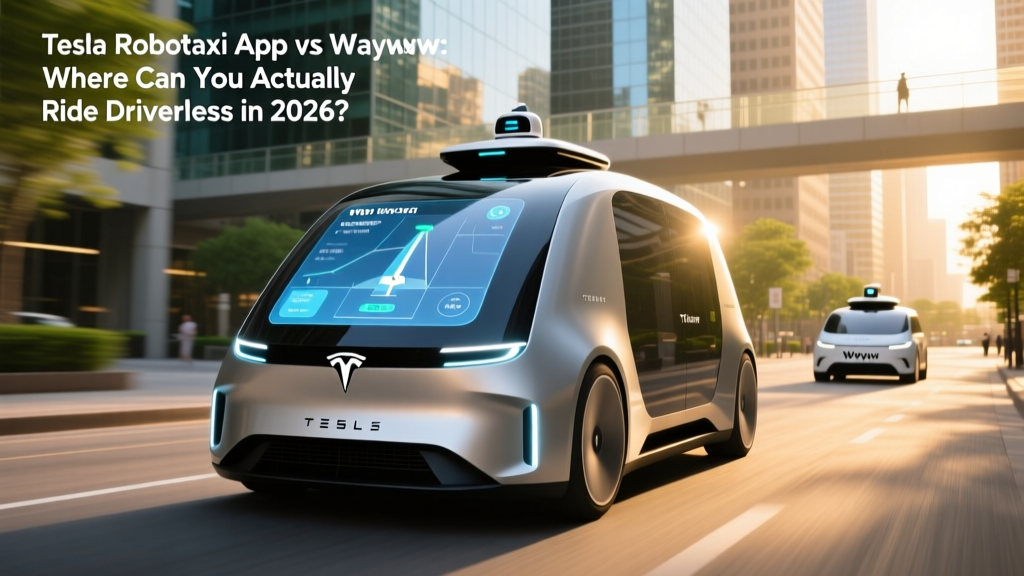
The Tesla Robotaxi App: What Exists and What Doesn't in 2026
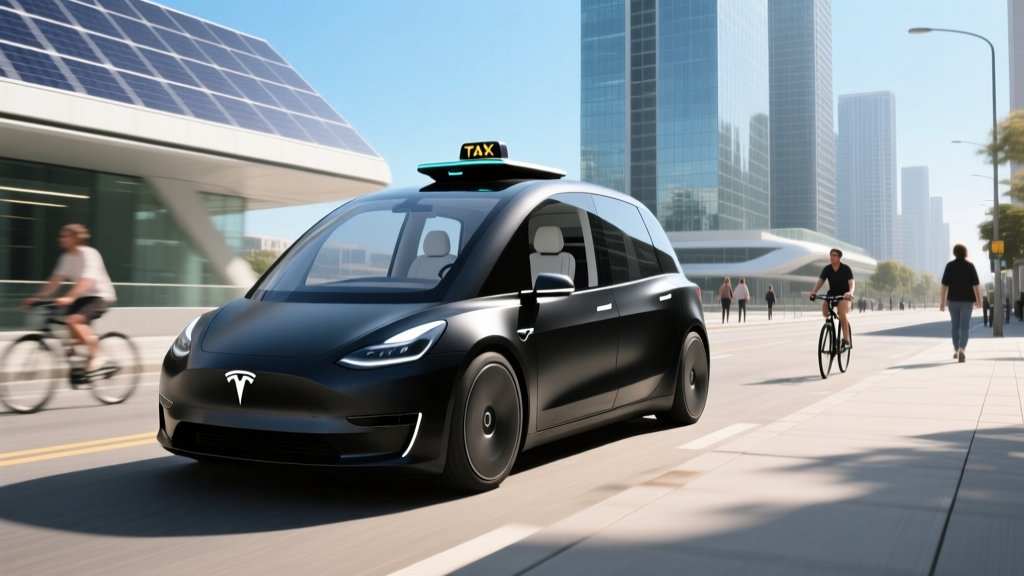
If you've been searching for a robotaxi app Tesla offers, here's the honest answer: as of early 2026, there is no Tesla robotaxi app available for public download that summons a driverless vehicle. Tesla CEO Elon Musk unveiled the Cybercab concept in October 2024 — a steering-wheel-free, two-seat vehicle designed for autonomous ride-hailing — but the production timeline has slipped repeatedly, and Tesla has yet to launch a commercial, driverless ride-hailing service anywhere in the United States.
What Tesla does offer is Full Self-Driving (Supervised), a $8,000 software add-on (or $99/month subscription) available on all current Tesla vehicles. FSD Supervised handles city streets, highways, and parking maneuvers — but it is a SAE Level 2 driver-assistance system. The driver must remain attentive, hands ready, and legally responsible at all times. This is fundamentally different from a robotaxi.
Meanwhile, Waymo — the Alphabet subsidiary operating the world's largest commercial robotaxi fleet — lets you hail a truly driverless ride today through the Waymo One app in multiple U.S. cities. Let's break down exactly what each service offers, where they operate, what they cost, and how safe they actually are.
SAE Automation Levels: Why the Tesla vs. Robotaxi Distinction Matters
The single most important thing to understand before downloading any app or trusting any system is the SAE International automation level. Marketing language blurs these lines; the engineering reality does not.
| Level | Name | Who Drives | Current Examples |
|---|---|---|---|
| Level 0 | No Automation | Human does everything | Basic cruise control |
| Level 1 | Driver Assistance | Human + one assist (steering OR speed) | Adaptive cruise, lane-keep |
| Level 2 | Partial Automation | Human supervises; system handles steering + speed together | Tesla Autopilot/FSD Supervised, GM Super Cruise, Ford BlueCruise |
| Level 3 | Conditional Automation | System drives in limited conditions; human must take over on request | Mercedes DRIVE PILOT (limited markets, ≤40 mph) |
| Level 4 | High Automation | System drives fully within its operational domain; no human needed | Waymo One, Zoox (limited geofenced areas) |
| Level 5 | Full Automation | System drives everywhere, all conditions | Does not exist commercially |
Where Can You Actually Use a Robotaxi Service Right Now?
As of Q1 2026, fully driverless commercial robotaxi service is available through a small number of operators in specific U.S. metro areas. Here's where you can open an app and get a ride with no one in the driver's seat:
| Operator | App | Live Cities | Hours | Vehicle |
|---|---|---|---|---|
| Waymo One | Waymo One | Phoenix (metro-wide), San Francisco, Los Angeles, Austin (ramp-up) | 24/7 in Phoenix & SF; limited hours in LA/Austin | Jaguar I-PACE EV, Zeekr RT (expanding) |
| Waymo (via Uber) | Uber app (Waymo option) | Phoenix, Austin | Select hours | Jaguar I-PACE |
| Zoox | Zoox (invite-only/pilot) | Las Vegas (Strip corridor), Foster City, CA (limited) | Limited pilot hours | Zoox purpose-built carriage (no steering wheel) |
| Cruise | Suspended | Operations paused since late 2023; limited supervised testing only | N/A | Chevrolet Bolt EV / Origin (paused) |
| Tesla (Cybercab) | Not available | Not launched — targeted Austin pilot (announced, not confirmed live) | N/A | Cybercab concept (not in production) |
Practical reality: If you want to hail a driverless ride today, Waymo One is your primary option. Phoenix offers the broadest coverage (over 225 square miles of service area), followed by San Francisco. Los Angeles service has expanded progressively through 2025 into 2026. Austin is in active ramp-up with Waymo vehicles available through both the Waymo One app and the Uber platform.
Tesla has announced plans to launch unsupervised FSD and a ride-hailing network, potentially starting in Austin, but as of this writing, no date has been confirmed and no regulatory approvals for driverless commercial operation have been publicly granted to Tesla in any state.
How Much Does a Robotaxi Ride Cost vs. Uber and Lyft?
Robotaxi pricing has been a moving target as operators balance rider acquisition against the enormous cost of running autonomous fleets. Based on reported rider pricing in late 2025 and early 2026:
| Service | Base Fare + Per Mile | Estimated 5-Mile Trip | Notes |
|---|---|---|---|
| Waymo One | Comparable to UberX, occasional promos | $12–$18 | Promotional discounts for new riders; no surge pricing as of early 2026 |
| Waymo via Uber | Uber pricing structure | $13–$20 | May include Uber loyalty points; subject to Uber surge |
| UberX (human driver) | Varies by market | $11–$19 | Surge pricing common during peak hours |
| Lyft (human driver) | Varies by market | $10–$18 | Surge/prime-time pricing applies |
| Tesla Cybercab (projected) | Tesla has targeted ~$0.20/mile operating cost | $5–$10 (target, unconfirmed) | Not available; pricing entirely speculative |
Waymo's pricing is broadly competitive with UberX in most markets, and the company has avoided surge pricing — a meaningful advantage during peak demand. However, Waymo rides can take slightly longer to arrive (average wait times of 5–8 minutes in Phoenix vs. 3–5 minutes for UberX) due to fleet density and the operational caution built into routing.
Tesla's long-stated vision is to undercut rideshare dramatically by eliminating the driver's share of the fare. Musk has cited a target cost per mile below $0.20 for Cybercab operations. If achieved, a 5-mile ride could theoretically cost under $5. But this remains entirely theoretical until the service actually launches with real vehicles, real regulatory approval, and real insurance structures.
How Safe Are Robotaxis? The Real Data
Safety is the most contentious question in autonomous vehicles, and it deserves data — not marketing. Here's what we know from public reports and regulatory filings:
• Over 50 million fully autonomous miles driven across Phoenix, San Francisco, and Los Angeles
• Waymo's published analysis (peer-reviewed methodology) claims a ~85% reduction in injury-causing crash involvement compared to human benchmarks in comparable urban environments
• Contactless near-miss and minor-contact incidents do occur — primarily low-speed scenarios involving pedestrians stepping into traffic or other human drivers acting unpredictably
• Waymo vehicles have been involved in NHTSA-reported incidents, including a January 2024 event in San Francisco where a Waymo vehicle struck a pedestrian who had been pushed into the vehicle's path by a human-driven car; the pedestrian sustained minor injuries
Cruise's cautionary tale: In October 2023, a Cruise robotaxi in San Francisco struck a pedestrian who had been thrown into its path by a human-driven vehicle, then dragged the pedestrian approximately 20 feet while pulling to the curb. The incident — and Cruise's initial failure to fully disclose the dragging to regulators — led California's DMV to suspend Cruise's deployment permit. Cruise suspended nationwide operations and has not resumed commercial driverless service as of early 2026.
Tesla FSD (Supervised) safety context: Tesla publishes quarterly safety reports showing miles driven per accident with Autopilot/FSD engaged. However, these reports measure all Tesla vehicles with driver-assist engaged — not driverless operation — and the methodology has been debated by independent researchers. Because FSD Supervised requires a human driver, incidents are categorized differently from robotaxi operations under NHTSA reporting rules.
The honest summary: Level 4 robotaxis from Waymo have demonstrated a strong safety record over tens of millions of urban miles, with fewer serious incidents per mile than human drivers in comparable conditions. But the sample size is still small relative to the trillions of miles humans drive annually, and edge cases remain a challenge for every system.
Technology Stack: Camera-Only vs. Lidar + Sensor Fusion
The philosophical split between Tesla's vision-only approach and Waymo's multi-sensor stack is one of the defining debates in autonomous driving.
• 8 cameras (current HW4 vehicles) providing 360° visual coverage
• No lidar, no radar (Tesla removed ultrasonic sensors and radar from new vehicles starting 2022–2023)
• Neural network-based perception running on Tesla's custom FSD chip (HW4: ~300+ TOPS)
• End-to-end neural network architecture (introduced in FSD v12) replaces hand-coded rules with learned driving behavior from video training data
• Custom 5th-generation lidar units providing high-resolution 3D point clouds (360° coverage, range >200m)
• Multiple cameras for color/object classification and traffic-signal reading
• Radar units for velocity detection and adverse-weather penetration
• External audio sensors to detect emergency vehicle sirens
• HD pre-mapped routes within geofenced service areas
• Redundant compute, steering, and braking systems
Waymo's approach is more expensive per vehicle (estimated $100,000+ in sensor hardware per Jaguar I-PACE, though costs are dropping with each generation) but provides redundancy: if one sensor modality is degraded (e.g., camera blinded by sun glare), lidar and radar can compensate. Tesla's vision-only approach is far cheaper to manufacture and scales to millions of consumer vehicles, but relies entirely on camera performance in all conditions — a significant challenge in heavy rain, fog, snow, or low-light scenarios.
For a robotaxi operating without a human backup driver, the redundancy argument has so far won with regulators. Every currently operating Level 4 robotaxi in the U.S. uses lidar as part of its sensor suite.
Regulatory Landscape: Who Approves Robotaxi Operations?
Robotaxi deployment in the U.S. requires navigating a patchwork of state and local regulations. There is no single federal "robotaxi license." Instead:
- State level: Each state determines whether driverless testing and commercial deployment are legal. California (via the DMV and CPUC), Arizona, Texas, and Nevada have been the most permissive. States like New York remain highly restrictive.
- California DMV: Issues deployment permits for commercial driverless operations. Can suspend permits (as it did with Cruise in October 2023).
- California CPUC: Regulates commercial passenger service, including fare structures and accessibility requirements.
- NHTSA (federal): Sets vehicle safety standards (FMVSS). Currently, vehicles without steering wheels or pedals — like Tesla's Cybercab concept or Zoox's carriage — require exemptions from existing FMVSS rules, which are granted on a case-by-case basis and have been slow to process.
- Local municipalities: Cities can impose additional restrictions on operating hours, zones, and fleet sizes. San Francisco's Board of Supervisors has at times pushed back against expansion, citing congestion and emergency-response concerns.
For Tesla to launch a Cybercab robotaxi service, it would need: (1) state deployment permits in each operating state, (2) NHTSA FMVSS exemptions for a vehicle with no manual controls, (3) local operating agreements, and (4) commercial insurance structures that satisfy state requirements. None of these have been publicly confirmed as of early 2026.
Current Limitations: What Robotaxis Cannot Do
Whether you're evaluating Waymo today or Tesla's future plans, these limitations define the real-world experience:
- Geofencing: Waymo operates only within pre-mapped zones. Request a ride outside the zone and the app declines. You cannot take a Waymo from San Francisco to Sacramento.
- Weather degradation: Heavy rain, fog, and snow reduce sensor performance. Waymo may limit service or increase following distances in adverse weather. Tesla's camera-only system faces even greater challenges in these conditions.
- Construction zones and road changes: Unexpected lane closures, temporary signage, and unmapped road changes can cause robotaxis to stop and wait for remote-assistance guidance, adding minutes to your trip.
- Airport and highway access: Most robotaxi services avoid high-speed highway driving and have limited or no airport service. Waymo has begun limited highway-capable routing in Phoenix but this is not universal.
- Passenger behavior: No eating, no smoking, limited cargo. You must be seated and belted. Service animals are accommodated; pets generally are not.
- Accessibility: Current Waymo vehicles (Jaguar I-PACE) require passengers to enter a standard vehicle seat. Wheelchair-accessible robotaxi options remain extremely limited industry-wide — a significant gap that regulators are pressing operators to address.
- Emergency situations: If the vehicle detects a system fault, it will pull over safely and end the ride. You'll need alternative transportation. There is no human driver to improvise solutions.
Tesla's Path Forward: What to Watch in 2026 and Beyond
Tesla's robotaxi ambitions remain among the most closely watched developments in the EV and autonomy space. Here's where things stand:
Cybercab production: Tesla has targeted a production start no earlier than late 2026, likely at Giga Texas. The vehicle is a compact, two-seat, butterfly-door design with no steering wheel or pedals. Production timelines from Tesla have historically slipped — treat any announced date as preliminary.
Unsupervised FSD: Tesla has discussed launching unsupervised FSD (removing the driver-supervision requirement) as a software update to existing vehicles before the Cybercab enters production. This would theoretically allow current Tesla owners to summon their cars for autonomous trips. No regulatory approval for this has been granted in any U.S. state as of this writing.
The ride-hailing network: Tesla has described a platform where Tesla owners could add their vehicles to a shared autonomous fleet — an "Airbnb for cars" model. The economics depend entirely on unsupervised FSD reliability, insurance frameworks, and state-level approval. None of these pillars are in place yet.
For now, if you search for a "robotaxi app Tesla" in your phone's app store, you won't find one that delivers a driverless ride. What you will find is the Tesla app for owners, which includes FSD Supervised features that require you behind the wheel.
Frequently Asked Questions
Is there a Tesla robotaxi app I can download today?
No. Tesla does not offer a robotaxi ride-hailing app. The Tesla app is for vehicle owners and includes features like Summon and FSD Supervised activation, but these require a human driver. Tesla's Cybercab robotaxi service has not launched.
Where can I ride in a driverless robotaxi right now?
Waymo One is available for fully driverless rides in Phoenix (largest coverage area), San Francisco, and Los Angeles, with Austin ramping up. You can also request Waymo vehicles through the Uber app in Phoenix and Austin. Download the Waymo One app, create an account, and request a ride within the service zone.
How much does a Waymo robotaxi cost compared to Uber?
Waymo One pricing is broadly comparable to UberX — roughly $12–$18 for a typical 5-mile urban trip. Waymo does not currently apply surge pricing, which can make it cheaper than UberX during peak demand. Promotional discounts are frequently available for new riders.
Is Tesla FSD the same as a robotaxi?
No. Tesla FSD Supervised is an SAE Level 2 driver-assistance system. The driver must remain attentive and is legally responsible for the vehicle at all times. A robotaxi (like Waymo) is Level 4 — fully driverless within its operating domain, with no human intervention required. These are fundamentally different categories of technology.
How safe are Waymo robotaxis compared to human drivers?
Waymo reports over 50 million autonomous miles driven with a significantly lower rate of injury-causing crash involvement compared to human benchmarks in comparable urban environments. However, incidents do occur, and the total mileage is still small relative to the national driving population. NHTSA maintains a public database of reported incidents for autonomous vehicles.
When will Tesla's Cybercab actually be available?
Tesla has targeted production no earlier than late 2026, with commercial service to follow. Given Tesla's history of timeline delays and the regulatory approvals required (NHTSA FMVSS exemptions, state deployment permits), treat all announced dates as preliminary. No city has approved Tesla for commercial driverless operations as of early 2026.