The Tesla robotaxi app update has generated enormous buzz among EV owners and rideshare users alike, but separating marketing momentum from operational reality is essential before you tap "Request Ride." As of mid-2026, Tesla's driverless ride-hailing service is in a limited, supervised launch phase — distinctly different from the Full Self-Driving (Supervised) feature already available in consumer vehicles. This guide breaks down exactly what the latest app update enables, where the service actually operates, the technology behind it, and how it compares to established robotaxi operators like Waymo.
Tesla's consumer Full Self-Driving (Supervised) is SAE Level 2 — a driver-assistance system that requires continuous human supervision, hands-ready engagement, and full liability on the driver. The Tesla robotaxi service (branded as "Tesla Ride") operates at SAE Level 4 within its geofenced operational design domain (ODD), meaning the vehicle handles all driving tasks without a human driver in designated areas and conditions. These are fundamentally different products. Never conflate the two.
Where Can You Actually Use the Tesla Robotaxi Service Right Now?
The Tesla robotaxi app update unlocks ride-hailing functionality only in cities where Tesla has received regulatory approval for driverless commercial operations. As of mid-2026, availability is extremely limited compared to Waymo's multi-city footprint.
| Service | Live Cities | Status | Regulatory Body |
|---|---|---|---|
| Tesla Ride (Robotaxi) | Austin, TX (limited zones) | Supervised launch — safety driver present in some vehicles | TX DOT / City of Austin |
| Waymo One | Phoenix, San Francisco, Los Angeles, Austin | Fully driverless, commercial | CPUC (CA), AZ DOT, TX DOT |
| Cruise / GM | Phoenix (limited relaunch) | Phased restart post-2024 suspension | AZ DOT |
| Zoox | Las Vegas (Foster City testing) | Limited public rides | NV DOT / NHTSA exemption |
Tesla's Austin deployment is geofenced to specific corridors — primarily downtown, South Congress, and portions of East Riverside. The service does not extend to Austin-Bergstrom International Airport or most suburban areas. If you open the Tesla app outside these zones, the robotaxi option simply will not appear.
How the Tesla Robotaxi App Update Works in Practice
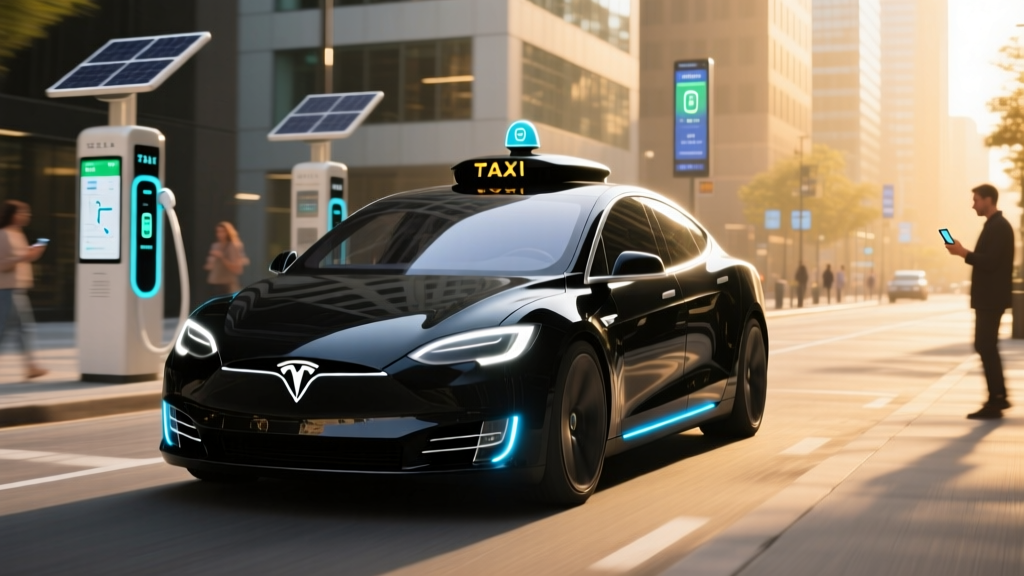
The latest Tesla app update (version 4.42.x, rolling out through mid-2026) adds a "Request Ride" tile for users in eligible zip codes. Here's the operational flow:
- Eligibility check: Your Tesla account must be in a supported region, with a verified payment method and identity confirmation.
- Pickup/dropoff: Both must fall within the geofenced ODD. The app shows a shaded map of the service boundary.
- Vehicle dispatch: A Tesla Model Y (robotaxi-configured, no steering wheel removed — this is not the Cybercab concept vehicle) arrives. Early deployments include a front-seat safety monitor.
- Ride execution: Rear-seat passengers view route progress on the center screen. No driver interaction is available to passengers.
- Payment: Automatically charged to your Tesla account payment method upon completion.
This is critically different from FSD (Supervised), which you activate in your own Tesla while remaining the responsible driver. The robotaxi app update does not turn your personal vehicle into a revenue-generating autonomous taxi — a feature Tesla has discussed but not launched.
Pricing: Tesla Robotaxi vs. Uber, Lyft, and Waymo
Tesla has positioned its robotaxi service aggressively on price to build ridership during the limited-launch phase. Based on observed fares in Austin:
| Service | Base Fare | Per-Mile Rate | Est. 5-Mi Trip | Surge Pricing? |
|---|---|---|---|---|
| Tesla Ride (Robotaxi) | $1.50 | $0.85/mi | ~$5.75 | No (introductory) |
| Waymo One | $2.00 | $1.10/mi | ~$7.50 | Yes (peak hours) |
| UberX | $2.50 | $1.25/mi | ~$8.75 | Yes |
| Lyft | $2.25 | $1.20/mi | ~$8.25 | Yes |
Tesla's pricing is subsidized during this launch phase. The company has not disclosed when introductory rates end, but expect per-mile rates to increase as the service scales. Waymo's pricing is closer to UberX but without surge volatility — a significant advantage during high-demand events.
Tesla Robotaxi Safety Record: What the Data Shows
Tesla's robotaxi fleet in Austin has logged an estimated ~500,000 driverless-equivalent miles since the service's initial launch, with a safety monitor present in early vehicles. This is orders of magnitude less than Waymo, which surpassed 10 million fully driverless miles across its operational cities by early 2026, per Waymo's published safety reports.
For context, the National Highway Traffic Safety Administration (NHTSA) reports the U.S. human-driver fatality rate at approximately 1.35 per 100 million vehicle miles traveled. Neither Tesla nor Waymo has published a directly comparable fatality-rate figure for their robotaxi fleets due to insufficient statistical sample size at current mileage volumes.
Tesla's approach to safety validation differs fundamentally from Waymo's. Waymo publishes periodic safety reports with disengagement and collision data. Tesla has historically released less granular public safety data for its autonomous operations, relying instead on aggregate fleet data from its consumer FSD (Supervised) program — which, again, is a Level 2 system with a human driver, not a comparable dataset.
Key safety considerations for prospective riders:
- Safety monitors: Early Austin deployments include a front-seat safety operator who can intervene. This is not yet a fully driverless experience in all vehicles.
- Incident reporting: Texas does not currently mandate the same level of public collision disclosure as California's DMV and CPUC, making independent safety verification more difficult.
- Insurance: Tesla carries commercial liability insurance for robotaxi rides, but passengers should review the terms of service for coverage limits.
Technology Stack: Camera-Only vs. Lidar-Based Approaches
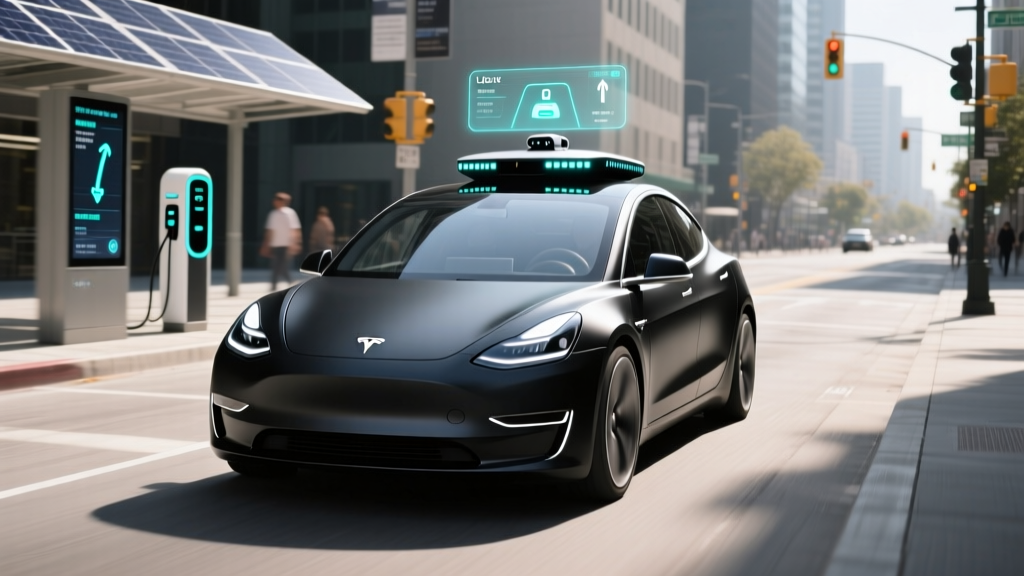
The Tesla robotaxi fleet uses the same sensor suite as consumer Tesla vehicles running Hardware 4.0 (HW4) — a camera-only architecture with no lidar or radar. This is a deliberate engineering philosophy that Tesla calls "vision-only" autonomy.
| Component | Tesla Robotaxi | Waymo (6th-Gen) | Zoox |
|---|---|---|---|
| Cameras | 8 surround cameras (HW4) | 29+ cameras | Multi-camera array |
| Lidar | None | 5 roof + side lidar units | Integrated lidar |
| Radar | None (removed in HW4) | 6 radar units | Integrated radar |
| AI Compute | Tesla FSD chip (dual SoC, ~300 TOPS) | Custom compute platform | Custom compute |
| HD Maps | Minimal (lane topology from vision) | Pre-built HD maps per city | HD maps |
| Vehicle Platform | Model Y (modified) | Jaguar I-PACE / Hyundai Ioniq 5 | Purpose-built Zoox vehicle |
The camera-only approach gives Tesla a massive cost advantage per vehicle — no $5,000–$15,000 lidar stack — but introduces well-documented limitations in depth perception, heavy rain, direct sun glare, and low-light conditions. Waymo's sensor redundancy is more expensive but provides overlapping detection layers that camera-only systems cannot replicate in adverse conditions.
Regulatory Landscape: Who Approves Robotaxi Operations?
Robotaxi deployment in the United States is governed by a patchwork of state and local regulations — there is no single federal license for driverless commercial service.
- California: The CPUC (California Public Utilities Commission) issues commercial robotaxi permits; the DMV issues testing permits. Both must be obtained before paid rides can operate. Tesla has not yet received a CPUC commercial deployment permit for California as of mid-2026.
- Texas: Regulation is less centralized. The Texas Department of Licensing and Regulation (TDLR) and individual cities set autonomous vehicle rules. Austin's regulatory environment has been more permissive, which is why Tesla launched there first.
- Arizona: Among the most permissive states for AV deployment, with minimal state-level barriers. Waymo and Cruise have both operated extensively in Phoenix.
- Federal (NHTSA): The NHTSA sets vehicle safety standards and investigates incidents but does not "approve" robotaxi services for commercial operation — that authority lies with states.
Tesla's path to multi-city expansion depends on securing permits state-by-state, a process that typically requires demonstrating safety data, insurance coverage, and accessibility compliance. Expect California approval to be a significant milestone, given the state's rigorous CPUC review process.
Current Limitations: What the Tesla Robotaxi Cannot Do
The Tesla robotaxi service, like all Level 4 systems, operates within a defined Operational Design Domain (ODD). Outside that domain, the service is unavailable.
- Geofence boundaries: Pickup and dropoff must be within the Austin service zone. Cross-city trips to suburbs like Round Rock or Cedar Park are not possible.
- Weather restrictions: Heavy rain, fog, or flooding will cause the service to suspend operations. Camera-only systems are particularly vulnerable to reduced visibility — expect more frequent weather-related suspensions than lidar-equipped competitors.
- Night operations: The Austin service currently operates from approximately 6:00 AM to 11:00 PM. Late-night rides are not available.
- Highway driving: Most robotaxi ODDs, including Tesla's Austin deployment, avoid high-speed limited-access highways. Expect surface-street routing only.
- Accessibility: Tesla's modified Model Y fleet is not wheelchair-accessible. This is a notable gap compared to Waymo's WAV (Wheelchair Accessible Vehicle) options in select markets.
- No multi-stop trips: The current app does not support adding intermediate stops. One pickup, one dropoff.
- Passenger limits: Rear-seat only, maximum 3 passengers. No front-seat access.
- Pets and cargo: Service animals are accommodated; pets and large items are not permitted.
Frequently Asked Questions
Does the Tesla robotaxi app update let me earn money with my own Tesla?
No. The current app update allows you to request rides from Tesla's own robotaxi fleet. Tesla has discussed a future "Tesla Network" where owners could add their personal vehicles to a shared fleet, but this feature is not live, has no confirmed launch date, and would require separate regulatory approvals in each jurisdiction.
Is Tesla's robotaxi truly self-driving, or is someone still controlling the car?
Within its geofenced ODD, the Tesla robotaxi operates at SAE Level 4, meaning the vehicle handles all driving tasks without a human driver. However, during the current Austin launch phase, some vehicles have a front-seat safety monitor who can intervene if necessary. Remote teleoperations support is also available. This is meaningfully different from the FSD (Supervised) feature in consumer Teslas, which is Level 2 and requires the vehicle owner to remain fully attentive and responsible.
How does Tesla's camera-only approach affect safety compared to lidar?
Camera-only systems are lower cost and benefit from Tesla's massive real-world training dataset, but they lack the direct depth-measurement capability that lidar provides. In practice, this means camera-only systems may struggle more in heavy rain, direct sun glare into the lens, and pitch-dark unlit roads. Waymo's multi-sensor approach provides redundancy — if one sensor type is degraded, others compensate. Tesla compensates through neural network depth estimation, which has improved significantly but remains a fundamentally different engineering bet.
What happens if the robotaxi gets into an accident?
Tesla carries commercial liability insurance for its robotaxi operations. In the event of a collision, the vehicle's cameras and telemetry data are preserved for investigation. As the operator (not the passenger), Tesla bears liability for at-fault incidents. Passengers should review the Tesla Ride terms of service for specific coverage details and limitations.
When will the Tesla robotaxi expand beyond Austin?
Tesla has indicated plans to expand to additional cities, but no specific dates or locations have been confirmed with regulatory approvals in place. Expansion requires navigating state-by-state permitting, which is a multi-month process per jurisdiction. California, Texas (beyond Austin), and Florida are likely early candidates based on regulatory environments, but treat any announced timelines as preliminary until permits are formally granted.