The Tesla Robotaxi App: Understanding Access Tiers and Privileges
Since Tesla launched its driverless ride-hailing service in late 2025, the Tesla Robotaxi app has operated on a tiered privilege system that determines who can request rides, where they can go, and how much they pay. Unlike Waymo's open-access model in its service cities, Tesla has gated its robotaxi platform through a combination of vehicle ownership status, FSD Supervised history, and geographic eligibility. For prospective riders trying to decode Tesla robotaxi app privileges, the system can feel opaque — so here is exactly how access works, what each tier unlocks, and where the service actually operates today.
The Tesla Robotaxi service operates as an SAE Level 4 driverless system within approved geofenced zones. This means no human driver is present, and the vehicle handles all driving tasks within its operational design domain (ODD). This is fundamentally different from Tesla's consumer FSD (Supervised) feature, which is an SAE Level 2 driver-assistance system requiring active human supervision at all times. The robotaxi fleet uses dedicated vehicles — not customer-owned cars.
Where Can I Use the Tesla Robotaxi Service Right Now?
Tesla's robotaxi rollout has been deliberately cautious, expanding city-by-city with regulatory approval. As of mid-2026, the service is live in the following markets, each with specific geofenced boundaries:
| City / Region | Launch Date | Geofence Coverage | Operating Hours |
|---|---|---|---|
| Austin, TX (downtown + airport corridor) | November 2025 | ~85 sq mi | 6 AM – 1 AM |
| Phoenix, AZ (metro core + Scottsdale) | February 2026 | ~110 sq mi | 24/7 |
| Las Vegas, NV (Strip + Convention Center) | April 2026 | ~30 sq mi | 24/7 |
| San Francisco, CA (limited zones) | Expected Q3 2026 | TBD | TBD |
Each city requires separate approval from state regulators — in Texas, the Texas Department of Transportation and local authorities; in Arizona, the Arizona Department of Transportation; and in Nevada, the Nevada Department of Motor Vehicles' autonomous vehicle division. Expansion announcements are frequent, but only the three cities above currently have live, bookable rides.
How Tesla Robotaxi App Privileges Are Tiered
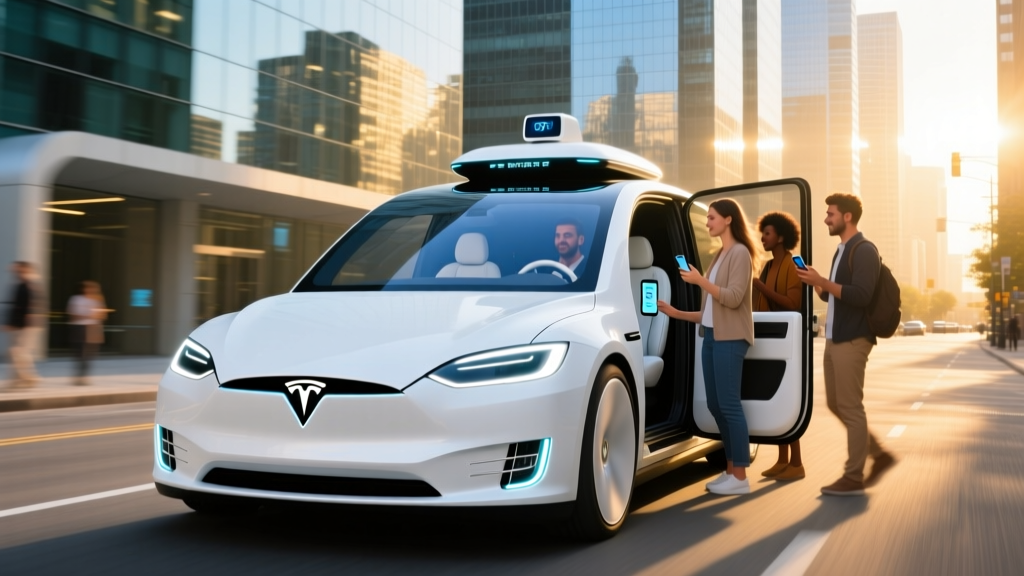
The Tesla Robotaxi app does not operate as a fully open marketplace. Instead, Tesla has structured access into three privilege tiers, each with different booking capabilities and pricing:
Tier 1: Open Access (General Public)
Available to any user who downloads the Tesla Robotaxi app and completes identity verification. Open Access riders can request standard rides within geofenced zones during operating hours. Surge pricing applies during peak demand. This tier was opened to the general public in Austin in March 2026 and in Phoenix in May 2026.
Tier 2: FSD Owner Priority
Tesla vehicle owners who have purchased FSD (Supervised) and maintained an active subscription receive priority booking — meaning shorter wait times during peak hours — and a 15% fare discount. This tier also unlocks airport pickup/drop-off in Austin (AUS) and Phoenix (PHX) before those locations opened to Tier 1 users. Tesla frames this as a loyalty benefit for customers who contributed driving data to the neural network training pipeline.
Tier 3: Early Access / Beta Tester
A limited, invitation-only tier for Tesla owners who participated in the FSD beta program prior to 2025 and opted into the robotaxi testing pool. Tier 3 users can request rides in pre-launch cities during validation phases and access experimental features like multi-stop routing and scheduled future rides. This tier is not open for new enrollment.
How Much Does Tesla Robotaxi Cost vs. Uber and Lyft?
Tesla has positioned its robotaxi pricing below traditional rideshare in most markets, leveraging the absence of a human driver to reduce per-mile costs. Here is how typical fares compare across platforms in Austin (the longest-operating market):
| Route | Tesla Robotaxi (Tier 1) | UberX | Lyft Standard | Waymo One |
|---|---|---|---|---|
| Downtown → AUS Airport (7 mi) | $11.50 | $18–$24 | $16–$22 | $14.00 |
| South Congress → Domain (12 mi) | $16.00 | $25–$33 | $23–$30 | $19.50 |
| Short downtown hop (2 mi) | $5.50 | $9–$12 | $8–$11 | $7.00 |
| Per-mile average | ~$1.35/mi | ~$2.40/mi | ~$2.20/mi | ~$1.75/mi |
Tesla's base fare structure includes a $2.00 booking fee plus $1.35 per mile and $0.30 per minute. Tier 2 (FSD Owner Priority) riders receive a 15% discount, bringing the effective per-mile rate to approximately $1.15. Unlike Uber and Lyft, Tesla Robotaxi does not currently implement surge pricing multipliers above 1.5x, though wait times do increase during peak periods for Tier 1 users.
Compared to Waymo One, Tesla's pricing is competitive on a per-mile basis, though Waymo's service area in Phoenix is substantially larger (~300 sq mi vs Tesla's ~110 sq mi) and operates 24/7 across its full footprint.
Safety Record: What the Data Actually Shows
- Total driverless miles completed: ~4.2 million (across all three cities)
- At-fault collisions: 3 reported incidents (all low-speed, no serious injuries)
- Disengagement rate: Not publicly disclosed for robotaxi fleet (Tesla reports consumer FSD Supervised disengagement data separately)
- NHTSA Standing General Order: All incidents reported per NHTSA ADS reporting requirements
Tesla's robotaxi safety record is still young compared to Waymo, which has logged over 30 million driverless miles since 2020. The three reported at-fault incidents in Tesla's fleet all occurred at speeds below 15 mph — two involving stationary object contact during complex construction-zone rerouting, and one low-speed rear-end in stop-and-go traffic. No passenger or pedestrian injuries were reported in any incident.
For context, the National Highway Traffic Safety Administration (NHTSA) requires all ADS operators to report crashes under the Standing General Order issued in 2021 and updated in 2024. Tesla's compliance has been confirmed, though the company has faced criticism from safety advocates for not voluntarily publishing granular disengagement or intervention-rate data the way Waymo does in its quarterly safety reports.
It is critical to distinguish this Level 4 robotaxi safety record from Tesla's consumer FSD (Supervised) data. FSD Supervised is a Level 2 system where the driver remains responsible; its collision and disengagement statistics are not directly comparable to the driverless robotaxi fleet.
Technology Stack: Camera-Only vs. the Lidar Competition
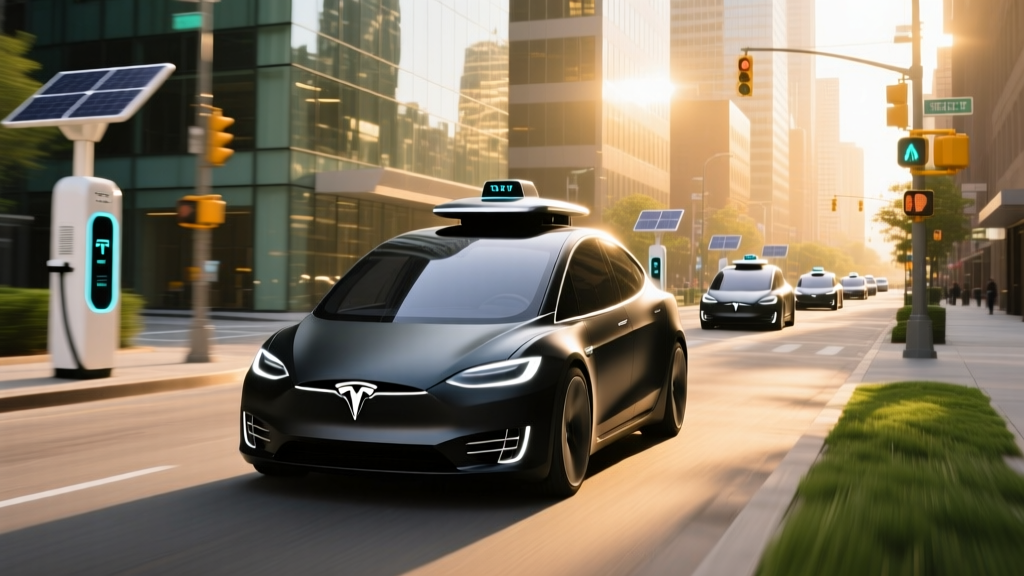
The Tesla Robotaxi fleet uses a dedicated vehicle platform (the "Cybercab" production variant) built around Tesla's vision-only architecture. This is a defining — and polarizing — technical choice in the autonomous vehicle industry.
- Cameras: 8 external cameras (front narrow + wide, rear, left/right forward-looking, left/right rearward-looking, rear-view) at up to 5 MP resolution
- Radar: 1 high-resolution 4D imaging radar (front-mounted, added for redundancy in low-visibility conditions)
- Ultrasonic: Removed in production (Tesla deprecated ultrasonic sensors in 2022 in favor of Tesla Vision)
- Lidar: None — Tesla does not use lidar in any production or robotaxi vehicle
- Compute: Dual HW5 (Hardware 5) AI inference chips, ~500 TOPS combined
- Neural network: End-to-end transformer architecture processing raw camera frames to driving commands
Waymo, by contrast, equips its 6th-generation Jaguar I-PACE fleet with a combination of lidar (custom-designed), radar, and cameras — a sensor-fusion approach that provides redundant depth perception independent of lighting conditions. Cruise's Origin (currently suspended from operations) used a similar lidar-heavy stack.
The camera-only approach gives Tesla a significant cost advantage per vehicle — estimated at $25,000–$30,000 per robotaxi unit vs. Waymo's estimated $100,000+ per vehicle — which directly enables the lower fare pricing. However, it also means the system must rely entirely on neural-network inference for depth estimation and object detection, a task that lidar handles through direct time-of-flight measurement.
In practice, Tesla's robotaxi fleet has demonstrated competent performance in Austin's and Phoenix's relatively straightforward driving environments. The real test will be expansion into denser, more chaotic urban cores like San Francisco or New York, where lidar-equipped competitors have historically struggled with edge cases involving occluded pedestrians, construction zones, and adverse weather.
Current Limitations: Where the Service Falls Short
- Heavy rain / flooding: Service suspends when visibility drops below system thresholds or road flooding is detected. Austin service was paused for ~6 hours during a severe thunderstorm in April 2026.
- Geofence boundaries: Rides cannot originate or terminate outside the approved zone. If your destination falls outside the geofence, the app will not let you book — there is no "partial route" option with human handoff.
- Construction zones: The fleet slows significantly or reroutes around active construction. In some cases, rides have been canceled mid-route when encountering unmapped road changes.
- Multi-lane unprotected left turns: Early rider reports noted extended wait times (30+ seconds) at complex intersections before the vehicle committed to a turn.
- No highway driving: Current geofences are limited to surface streets. Highway segments within the Austin and Phoenix zones are excluded from the ODD.
- Accessibility: The Cybercab platform currently does not accommodate wheelchair-accessible boarding. Tesla has stated an accessible variant is in development but has not provided a timeline.
- Pets and oversized cargo: Service animals are permitted; pets and large items are not, due to the unmonitored cabin environment.
These limitations are not unique to Tesla — Waymo similarly suspends service in heavy rain and restricts its geofence — but they represent real constraints for riders who might assume "autonomous" means "anywhere, anytime." The geofence in particular is a hard boundary: the Tesla Robotaxi app will simply refuse to book a ride outside it, with no fallback to a human-driven option.
Regulatory Landscape: Who Approves Robotaxi Operations?
Robotaxi deployment in the United States is governed by a patchwork of state and local regulations, with no comprehensive federal framework for ADS operations. Here is how approval works in Tesla's current markets:
- Texas: Autonomous vehicles are regulated under Texas Transportation Code Chapter 547. Tesla obtained a permit through the Texas Department of Licensing and Regulation (TDLR) and coordinates with Austin's transportation department for geofence approval.
- Arizona: Among the most permissive states for AV testing and deployment. Executive Order 2015-09 (updated multiple times) allows driverless operations with minimal state oversight. Tesla registered with the Arizona Department of Transportation.
- Nevada: Requires a Testing Permit and subsequent Deployment Permit from the Nevada DMV's Autonomous Vehicle Division. Tesla received its deployment permit in March 2026.
- California (pending): The California Public Utilities Commission (CPUC) and DMV jointly regulate robotaxi services. Tesla has applied for a CPUC passenger carrier permit and a DMV deployment permit for San Francisco, but approval has not been granted as of mid-2026. The CPUC process has been lengthy for all operators following the Cruise suspension in late 2023.
At the federal level, NHTSA retains authority over vehicle safety standards but has not issued specific ADS performance standards. The agency's primary enforcement tool remains the Standing General Order crash-reporting mandate and recall authority for safety defects.
Is This Truly Self-Driving or Driver-Assist?
The Tesla Robotaxi service is SAE Level 4 — genuinely driverless within its geofenced operational design domain. There is no human in the driver's seat, no steering wheel in the production Cybercab variant, and no expectation of human intervention. If the vehicle encounters a scenario it cannot handle, it is designed to execute a minimal-risk maneuver (pull over safely) and contact remote assistance.
This is categorically different from the FSD (Supervised) feature available on consumer Tesla vehicles, which remains an SAE Level 2 system. With FSD Supervised, the driver must maintain visual attention on the road, keep hands available for immediate takeover, and bears full legal responsibility for the vehicle's operation. The naming similarity between "Full Self-Driving" and the robotaxi service has been a persistent source of public confusion and regulatory scrutiny.
| Feature | Tesla Robotaxi (Cybercab) | Consumer FSD (Supervised) |
|---|---|---|
| SAE Level | Level 4 | Level 2 |
| Driver Required? | No | Yes — full supervision |
| Steering Wheel | No (Cybercab variant) | Yes |
| Operating Area | Geofenced zones only | Any road (driver responsible) |
| Liability | Tesla (as operator) | Vehicle owner/driver |
| Available to Public? | Yes (in service cities) | Yes (any Tesla owner, $8,000 or $99/mo) |
Frequently Asked Questions
Can I use the Tesla Robotaxi app if I don't own a Tesla?
Yes. The Open Access (Tier 1) tier is available to any user who downloads the app and completes identity verification. You do not need to own a Tesla vehicle to request rides. However, Tesla owners with FSD (Supervised) receive Tier 2 benefits including priority booking and a 15% fare discount.
How do Tesla robotaxi app privileges differ from the Waymo One app?
Waymo One operates as a flat-access service — any user in a service city can request a ride with no tiered privileges. Tesla's app uses a three-tier system where Tesla owners with FSD history receive booking priority and discounted fares. Both apps require identity verification and operate within geofenced zones.
What happens if the Tesla Robotaxi encounters a situation it cannot handle?
The vehicle is designed to execute a minimal-risk maneuver — typically pulling to the side of the road or stopping in a safe location — and then connecting to Tesla's remote assistance team. A remote operator can assess the situation and, if needed, guide the vehicle through the obstacle or dispatch a roadside support vehicle. The passenger is not expected to take any driving action.
Does the Tesla Robotaxi operate on highways?
No. Current geofenced operational design domains in Austin, Phoenix, and Las Vegas are limited to surface streets. Highway segments are excluded. This is consistent with most robotaxi services today, though Waymo does operate on some highway segments within its Phoenix and San Francisco geofences.
Is the Tesla Robotaxi safe in rain?
The fleet operates in light to moderate rain but suspends service during heavy precipitation, flooding, or when camera visibility drops below system thresholds. This is a known limitation of the camera-dominant sensor suite. In Austin, service has been paused multiple times during severe weather events, typically for 4–8 hours per incident.
How does Tesla's robotaxi safety record compare to Waymo's?
Waymo has logged over 30 million driverless miles with a published safety record showing a lower at-fault crash rate than human drivers in comparable urban environments. Tesla's robotaxi fleet has approximately 4.2 million driverless miles as of mid-2026 with 3 reported at-fault incidents (all low-speed, no injuries). The sample size is too small for a statistically meaningful comparison at this stage. Both operators report incidents to NHTSA under the Standing General Order.
Will Tesla robotaxi come to my city?
Tesla has announced plans to expand to additional cities through 2026 and 2027, with San Francisco expected to be the next live market. Expansion depends on regulatory approval in each jurisdiction, geofence validation, and local operating permits. No specific timeline has been provided for markets beyond those already announced.