If you've been searching for a Tesla robotaxi app on Android, you're not alone. The idea of hailing a driverless Tesla from your phone is one of the most anticipated — and most misunderstood — developments in the EV space. As of 2026, the reality requires separating Elon Musk's long-standing promises from what's actually operational, regulated, and bookable today.
This guide breaks down exactly where Tesla stands with driverless ride-hailing, how it compares to live Level 4 robotaxi services like Waymo, what the Android app situation looks like, and what safety and regulatory data you need before assuming any vehicle is truly driving itself.
Tesla's Robotaxi Ambitions vs. Today's Reality
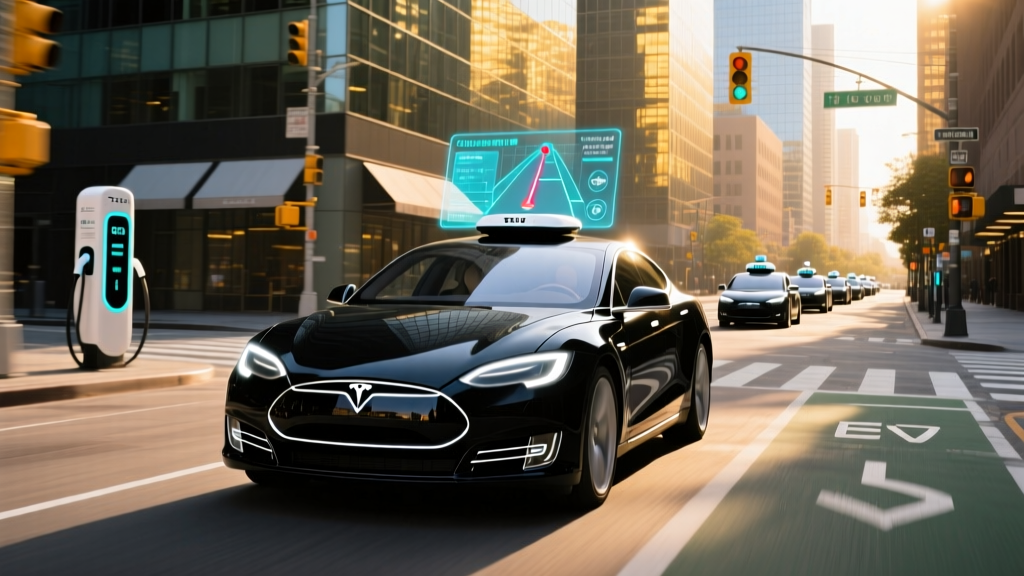
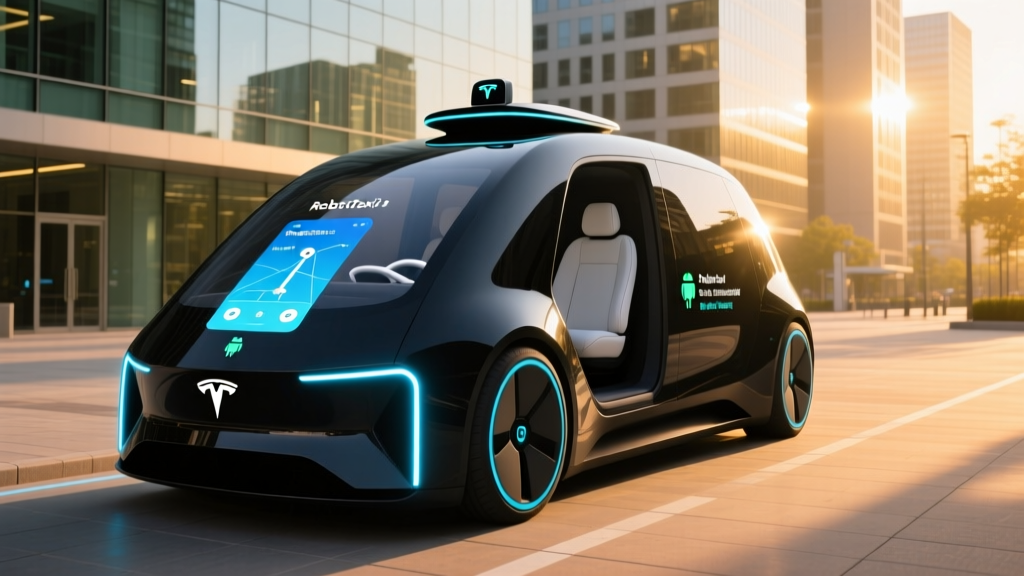
Tesla unveiled its dedicated "Cybercab" robotaxi concept in late 2024 — a two-seat, no-steering-wheel, no-pedal vehicle designed exclusively for autonomous ride-hailing. Tesla has signaled plans for a ride-hailing network (sometimes called the "Tesla Network") that would let owners add their vehicles to a fleet or hail driverless rides via a Tesla app.
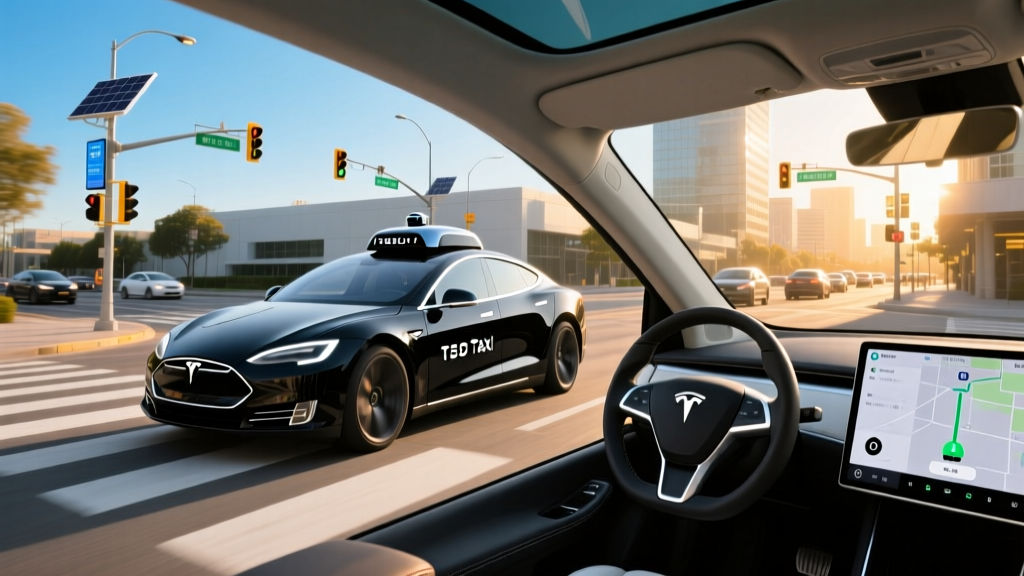
However, as of early 2026, no Tesla robotaxi service is commercially operational in any U.S. city. There is no downloadable Tesla robotaxi app on Android or iOS for summoning a driverless ride. Tesla's consumer app supports vehicle ownership functions (charging, climate, Summon, FSD Supervised status) but does not offer ride-hailing.
SAE Automation Levels: Where Tesla Sits
Understanding automation levels is essential before downloading any app or trusting any system with your safety. The SAE International J3016 standard defines six levels of driving automation:
| Level | Name | Who Drives | Example Systems (2026) |
|---|---|---|---|
| 0 | No Automation | Human | Basic cruise control |
| 1 | Driver Assistance | Human (system assists steering OR speed) | Adaptive cruise, lane-keeping |
| 2 | Partial Automation | Human (system assists steering AND speed) | Tesla Autopilot, FSD Supervised, GM Super Cruise, Ford BlueCruise |
| 3 | Conditional Automation | System (human must take over on request) | Mercedes Drive Pilot (limited markets/conditions) |
| 4 | High Automation | System (no human needed in geofenced area) | Waymo One, Zoox, Cruise (paused/restricted) |
| 5 | Full Automation | System (all conditions, all locations) | Does not exist commercially |
Tesla FSD Supervised is Level 2. No Tesla vehicle has received regulatory approval for Level 3, 4, or 5 operation. Any app, website, or social media post claiming you can hail a driverless Tesla today is inaccurate.
Where Can You Actually Use a Robotaxi Right Now?
If you want to ride in a vehicle with no driver today, Level 4 robotaxi services do exist — but they're operated by other companies, not Tesla. Here's where you can book one:
| Service | Operator | City/Region | App Platform | Hours |
|---|---|---|---|---|
| Waymo One | Waymo (Alphabet) | Phoenix metro (Chandler, Tempe, Scottsdale, parts of Phoenix), San Francisco, Los Angeles, Austin (expanding) | iOS + Android | 24/7 in Phoenix; limited hours elsewhere |
| Zoox | Zoox (Amazon) | Limited operations in Foster City, CA; Las Vegas (employee/restricted) | Invite-only / limited | Restricted |
| Cruise | Cruise (GM) | Operations suspended since late 2023; limited supervised testing resumed in Phoenix, Dallas, Houston (2025–2026) | Not publicly available | N/A |
Key takeaway: Waymo One is the only widely accessible, fully driverless (no safety operator) robotaxi service available to the public via a standard Android or iOS app. If you're looking for a robotaxi experience on your Android phone today, the Waymo One app is your primary option — not Tesla.
Tesla App on Android: What It Actually Does
The official Tesla app (available on Google Play) is a capable companion for Tesla owners. Here's what it supports in 2026:
- Vehicle controls: Lock/unlock, climate preconditioning, frunk/trunk, horn, lights
- Charging management: Session monitoring, charge limit setting, Supercharger stall navigation
- FSD Supervised status: View FSD version, safety score, and trip data
- Smart Summon: Move your Tesla short distances in parking lots (Level 2, driver-supervised, line-of-sight required)
- Sentry Mode: Live camera feed and event clips
- Service scheduling: Mobile Ranger or Service Center appointments
What the Tesla Android app does not do: book a driverless ride, hail a robotaxi, or summon a vehicle from outside visual range. If Tesla launches a ride-hailing network, it would likely integrate into this app — but that integration has not been announced with a firm date or regulatory approval.
How Much Do Robotaxis Cost vs. Uber and Lyft?
For the services that are actually live, here's how pricing compares to traditional rideshare. Data reflects typical fares observed in Phoenix and San Francisco through early 2026:
| Service | Typical 5-Mile Fare | Typical 10-Mile Fare | Surge Pricing? | Notes |
|---|---|---|---|---|
| Waymo One | $10–$15 | $18–$28 | Yes (demand-based) | Comparable to UberX; occasionally cheaper with promo codes |
| UberX | $12–$18 | $20–$32 | Yes | Varies heavily by city and time |
| Lyft Standard | $11–$17 | $19–$30 | Yes | Similar to UberX |
| Waymo (promo period) | $5–$8 | $10–$15 | Reduced | New-rider or market-expansion promos |
Waymo's pricing is broadly competitive with UberX and Lyft — not dramatically cheaper, but not more expensive either. The long-term thesis for robotaxi operators is that removing the driver eventually cuts costs by 50–70%, but that margin has not yet been passed to consumers at scale. Tesla has suggested its Cybercab could eventually charge around $0.20 per mile, but that figure is speculative and tied to a vehicle that isn't yet in production.
Robotaxi Safety: What the Data Actually Shows
- Over 50 million fully driverless miles completed across Phoenix, San Francisco, and Los Angeles
- Waymo published peer-reviewed data showing a 76% reduction in police-reported crash involvement per million miles compared to human benchmarks in comparable urban environments
- Zero fatalities attributed to Waymo driverless operations as of early 2026
- Minor contact incidents have occurred — primarily low-speed collisions with cyclists, pedestrians, or other vehicles in complex urban intersections
For context, Tesla's FSD Supervised has accumulated billions of supervised miles, but these are driven with an attentive human behind the wheel. Tesla's safety reports measure crashes where Autopilot/FSD was engaged, but the driver remained responsible. This is not equivalent to Level 4 robotaxi safety data, where no human backup exists.
The NHTSA Standing General Order requires all Level 2+ and Level 4 operators to report crashes involving their automated systems. This is the most reliable public source for comparing incident rates across operators.
Technology Stack: Tesla's Camera-Only Approach vs. Lidar-Based Robotaxis
Tesla's path to autonomy diverges sharply from every other major robotaxi operator. Here's how the sensor stacks compare:
| Feature | Tesla (FSD Supervised / Cybercab concept) | Waymo (6th-gen driver) | Zoox |
|---|---|---|---|
| Primary sensors | 8 cameras (vision-only) | LiDAR + radar + cameras | LiDAR + radar + cameras |
| LiDAR | None | Custom 360° LiDAR array | Custom 360° LiDAR array |
| Radar | Removed (2022+ vehicles) | Imaging radar | Imaging radar |
| HD maps | No (real-time vision-based) | Yes (pre-mapped geofenced areas) | Yes |
| Geofencing | No (aims for any road) | Yes (approved operational areas only) | Yes |
| Redundancy | Single vision pipeline | Multi-sensor redundancy | Multi-sensor redundancy |
Tesla's vision-only approach is ambitious and cost-effective, but it faces well-documented challenges in low-light conditions, heavy rain, fog, and scenarios where camera data alone may be ambiguous (e.g., a white truck against a bright sky — the scenario involved in a fatal 2016 Autopilot crash). LiDAR-equipped robotaxis like Waymo's 6th-generation vehicle maintain depth perception independent of lighting, providing a hardware redundancy that Tesla has deliberately chosen to forgo.
Whether Tesla's neural-network approach can match or exceed multi-sensor redundancy at Level 4 remains an open question — one that regulators have not yet answered in Tesla's favor for driverless operation.
Regulatory Landscape: Who Approves Robotaxi Operations?
Deploying a driverless ride-hailing service in the U.S. requires navigating a patchwork of state and federal approvals:
- NHTSA (federal): Sets vehicle safety standards (FMVSS). A vehicle without a steering wheel or pedals — like Tesla's proposed Cybercab — requires an exemption or new rulemaking to be street-legal.
- State DMVs and PUCs: California's DMV issues testing permits; the California Public Utilities Commission (CPUC) issues commercial deployment permits for passenger-carrying robotaxis. Arizona takes a lighter-touch approach, allowing Waymo to operate with fewer restrictions.
- Local municipalities: Cities can impose operational restrictions, as San Francisco did with Cruise in 2023 after multiple incidents including a pedestrian drag event.
Tesla has not received a commercial driverless deployment permit from any state agency. The Cybercab, lacking traditional controls, would need to clear FMVSS hurdles that have delayed other purpose-built autonomous vehicles. As of 2026, no timeline for regulatory approval has been publicly confirmed.
Current Limitations of All Robotaxi Services
Even the most advanced Level 4 robotaxis operating today face significant constraints:
- Geofencing: Waymo operates only within mapped, approved zones. A trip from downtown Phoenix to Flagstaff? Not possible.
- Weather: Heavy rain, fog, snow, and dust storms can degrade sensor performance. Waymo has pulled vehicles off the road during severe weather events in San Francisco.
- Construction zones: Unmapped lane closures, temporary signage, and flaggers can confuse autonomous systems, leading to route cancellations or extended wait times.
- Edge cases: Unusual objects on the road, erratic human behavior, emergency vehicle interactions, and complex multi-point turns remain challenging scenarios.
- Accessibility: Current robotaxis cannot accommodate wheelchairs without a human assistant, and child seat availability is limited.
- No highway operation: Most Level 4 services operate on surface streets at or below 45 mph. Highway-speed autonomous ride-hailing is not commercially available.
What This Means for Android Users Searching for a Tesla Robotaxi App
If you're an Android user hoping to hail a driverless Tesla today, here's the honest summary:
- No Tesla robotaxi app exists for Android or iOS as of 2026.
- Tesla FSD Supervised is Level 2 — it requires your full attention and is not a robotaxi system.
- The Cybercab is announced but not in production and has no confirmed regulatory pathway or launch date.
- Waymo One is available on Android in select cities and is the only broadly accessible, truly driverless ride-hailing service.
- Pricing is comparable to UberX/Lyft, not dramatically cheaper — at least not yet.
Tesla's vision of a massive autonomous ride-hailing network is compelling on paper. But until the Cybercab clears production, FMVSS compliance, state permitting, and insurance hurdles, the Tesla robotaxi app on Android remains a future promise — not a present reality.
Frequently Asked Questions
Is there a Tesla robotaxi app I can download on Android?
No. As of 2026, Tesla does not offer a robotaxi ride-hailing app on any platform. The Tesla app on Android supports vehicle ownership features (charging, climate, FSD Supervised monitoring) but does not enable booking driverless rides.
Is Tesla FSD the same as a robotaxi?
No. Tesla Full Self-Driving (FSD) Supervised is an SAE Level 2 driver-assistance system. The driver must remain fully attentive and is legally responsible for the vehicle at all times. A robotaxi operates at SAE Level 4 with no human driver required.
Where can I ride in a real robotaxi today?
Waymo One offers fully driverless rides to the public in Phoenix (metro area), San Francisco, Los Angeles, and Austin. You can book via the Waymo One app on Android or iOS.
How much does a Waymo robotaxi ride cost?
Typical fares range from $10–$15 for a 5-mile trip and $18–$28 for a 10-mile trip — comparable to UberX and Lyft Standard, with occasional promotional pricing for new riders.
When will Tesla's Cybercab be available?
Tesla has announced the Cybercab concept but has not confirmed a production date, regulatory approval timeline, or commercial launch schedule. Any projected dates should be treated as preliminary and unverified.
Are robotaxis safer than human drivers?
Waymo's published data shows a 76% reduction in police-reported crash involvement per million miles compared to human benchmarks in comparable urban environments. However, robotaxis operate in geofenced, mapped areas and may pull off the road in challenging conditions. Direct comparison requires context — robotaxi miles are primarily low-speed urban, not highway.
Does Tesla's camera-only approach work for robotaxis?
Tesla has not yet demonstrated Level 4 driverless operation with its vision-only system in a regulatory-approved commercial deployment. All currently operational Level 4 robotaxis (Waymo, Zoox) use multi-sensor stacks including LiDAR for depth-perception redundancy. Whether Tesla's approach can achieve equivalent safety without LiDAR remains unproven at the regulatory level.