Austin's Tesla Robotaxi Fleet: The Crash Data in Context
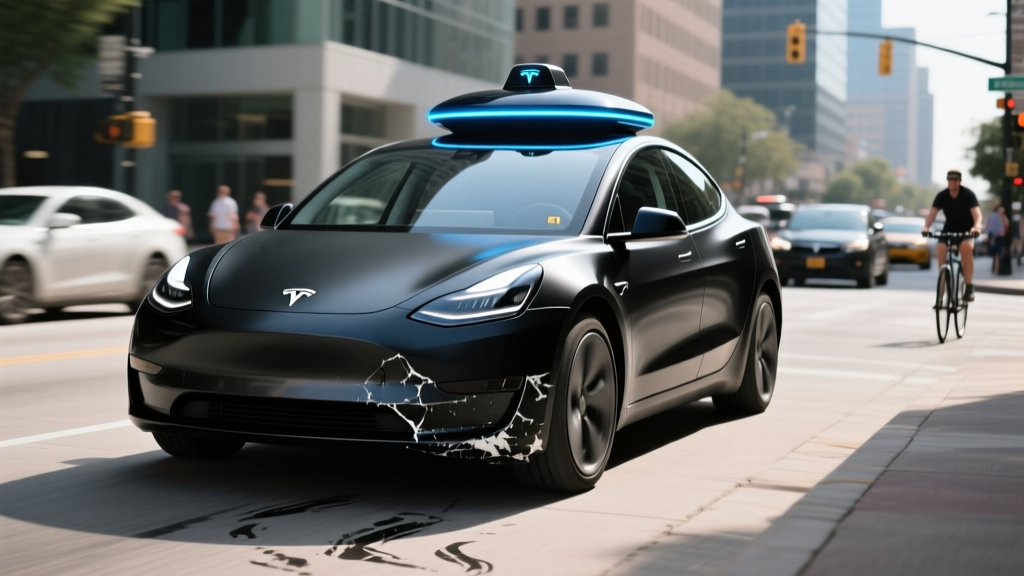
When reports surfaced that Tesla robotaxis have reported 14 crashes in Austin, the headline traveled fast — and for good reason. Austin is one of the earliest operational zones for Tesla's dedicated driverless ride-hailing service, which launched in limited form using a fleet of purpose-built and Model Y-based vehicles operating without a human safety driver behind the wheel. Fourteen incidents in a single metro area warrants scrutiny, but raw crash counts alone don't tell the full story. Context — miles driven, severity, fault attribution, and comparison to human-driven baselines — is what separates data-driven analysis from headline panic.
This article breaks down the Austin crash data, the autonomy level Tesla's robotaxi actually operates at, the technology stack powering it, where you can hail one today, what a ride costs versus Uber or Lyft, and the real limitations that still constrain the service in 2026.
Is Tesla's Robotaxi Truly Self-Driving? The SAE Level Breakdown
Before evaluating crash data, it's essential to establish what Tesla's robotaxi service actually is — and what it is not. Tesla operates two distinct systems that are frequently confused:
- FSD (Supervised): Available to consumer Tesla owners. This is a SAE Level 2 driver-assistance system. The driver must remain engaged, hands on or near the wheel, eyes on the road, and is legally responsible for the vehicle at all times.
- Tesla Robotaxi Service: The driverless ride-hailing fleet operating in Austin and select other zones. This system is classified as SAE Level 4 — fully driverless within its operational design domain (ODD), with no human occupant expected to intervene.
| Level | Name | Who Drives? | Example |
|---|---|---|---|
| Level 2 | Driver Assistance | Human (system assists) | Tesla FSD Supervised, GM Super Cruise, Ford BlueCruise |
| Level 3 | Conditional Automation | System (human on standby) | Mercedes DRIVE PILOT (limited conditions) |
| Level 4 | High Automation | System (no human needed in ODD) | Waymo One, Tesla Robotaxi Service, Zoox |
| Level 5 | Full Automation | System (all conditions, everywhere) | Does not exist commercially |
Tesla's robotaxi operates at Level 4 within a geofenced ODD. FSD (Supervised) on consumer vehicles remains Level 2. These are fundamentally different systems with different regulatory frameworks.
The Austin crash data applies specifically to the Level 4 robotaxi fleet — not to consumer Teslas running FSD Supervised. Conflating the two is a common error in media coverage and leads to misleading conclusions about both systems.
The 14 Austin Crashes: What the Incident Data Actually Shows
- Reported crashes: 14 (as of latest available NHTSA standing general order data)
- Fleet estimated miles driven in Austin: ~2.5–4 million miles (cumulative since launch)
- Crash rate estimate: ~3.5–5.6 crashes per million miles
- Human U.S. average: ~5.2 crashes per million miles (NHTSA national baseline, all severities)
- Injuries reported: Majority classified as minor or none; no confirmed fatalities attributed to robotaxi fleet fault
- Common incident types: Low-speed rear-end contacts, curb/pole proximity misjudgments, stopped-vehicle interactions
Sources: NHTSA Standing General Order, IIHS autonomous vehicle research. Mileage figures are estimates based on fleet size and operational hours; Tesla does not publish granular per-city mileage data publicly.
Fourteen crashes sound alarming in isolation, but crash rates must be normalized per miles driven to be meaningful. The U.S. human-driven crash rate, encompassing all severities including minor property-damage-only incidents, sits at roughly 5.2 per million miles according to NHTSA data. Tesla's Austin robotaxi fleet, operating across an estimated 2.5 to 4 million cumulative miles, yields a rate that is broadly comparable to — and in some estimates slightly below — the human baseline.
However, several nuances matter:
- Severity profile differs. Robotaxi crashes skew toward low-speed, low-severity events (parking-lot contacts, curb strikes, minor rear-ends at intersections). High-speed or catastrophic crashes are absent from the Austin data — a positive signal, but one that partly reflects the geofenced, lower-speed urban ODD.
- Reporting bias. Under NHTSA's Standing General Order, Level 4 operators must report any crash involving their ADS-equipped vehicles, regardless of severity. Human drivers routinely fail to report minor incidents. This makes direct rate comparisons inherently imperfect — robotaxi data is more complete, which can make the rate appear higher than it is relative to under-reported human data.
- Fault attribution. In several of the 14 Austin incidents, the robotaxi was rear-ended by a human-driven vehicle while stopped or decelerating — scenarios where the ADS was not the at-fault party. NHTSA data includes all crashes involving the vehicle, not only those caused by it.
Where Can You Use Tesla's Robotaxi Right Now?
Tesla's driverless robotaxi service is not available nationwide. As of 2026, it operates within tightly defined geofenced zones in a limited number of markets:
| City | Status | Operational Zone | Hours |
|---|---|---|---|
| Austin, TX | Live (limited fleet) | Central Austin, South Austin corridor, airport route | 6 AM – 1 AM |
| San Francisco Bay Area, CA | Live (expanding zones) | Select SF neighborhoods, parts of Palo Alto/Mountain View | 24/7 in core zones |
| Phoenix, AZ | Announced / early deployment | East Valley suburbs (Chandler, Gilbert area) | Limited hours |
| Los Angeles, CA | Announced (regulatory pending) | TBD | TBD |
Access is controlled through the Tesla app (separate from the standard Tesla vehicle app). Users in eligible zones can request a ride, see an estimated pickup time, and track the vehicle's arrival. The service currently does not operate on highways outside its geofenced corridors, in construction zones flagged as no-go areas, or during severe weather events that exceed the system's ODD.
For comparison, Waymo One — the most established Level 4 robotaxi service in the U.S. — operates in Phoenix, San Francisco, Los Angeles, and Austin with a significantly larger fleet and broader geofence coverage. Waymo has logged over 50 million autonomous miles as of late 2025, providing a much larger safety-data sample size.
Tech Stack: Camera-Only vs. Lidar — How Tesla's Robotaxi Sees the Road
- Primary sensors: 8+ cameras (surround-view, high-resolution, forward telephoto)
- Radar: Re-introduced 4D imaging radar (forward-facing) for depth and velocity data in low-visibility conditions
- Lidar: None — Tesla continues to reject lidar-based perception
- Ultrasonic sensors: Removed in newer builds; camera-based near-field perception replaces them
- Compute: Custom Tesla AI inference chip (HW5/AI5 generation), ~500+ TOPS
- Software architecture: End-to-end neural network (vision in → control out), replacing modular perception-planning-control pipeline
- Geofencing: HD-mapped operational design domain with real-time validation
Tesla's camera-and-radar-only approach remains the most debated engineering decision in the autonomous vehicle industry. Every major Level 4 competitor — Waymo, Zoox, Cruise (prior to suspension), and Apollo — relies on lidar as a core sensor for precise depth mapping and redundancy. Tesla's position is that a sufficiently advanced neural network, trained on billions of miles of real-world driving data from its consumer fleet, can extract equivalent depth and spatial information from camera imagery alone.
The Austin crash data offers a partial stress test of that thesis. Several of the 14 reported incidents involved proximity misjudgments — curb contacts, pole strikes during turns, and misestimated gaps in tight urban scenarios. These are precisely the edge cases where lidar's centimeter-accurate depth sensing provides a hardware-level safety margin that camera inference must learn from data. Whether Tesla's approach can match lidar-based systems' consistency in these scenarios over millions more miles remains the central open question.
The reintroduction of 4D imaging radar into the robotaxi fleet (after Tesla briefly removed radar from consumer vehicles in 2021-2022) signals internal acknowledgment that pure camera-only perception has practical limits, particularly in rain, glare, and low-light conditions common in Austin's variable weather.
How Much Does a Tesla Robotaxi Ride Cost vs. Uber and Lyft?
| Metric | Tesla Robotaxi | UberX (Austin) | Waymo One (Austin) |
|---|---|---|---|
| Base fare | $2.50 | $2.25 | $3.00 |
| Per-mile rate | $0.85 | $1.15 | $1.05 |
| Per-minute rate | $0.22 | $0.28 | $0.25 |
| Avg. 5-mile trip cost | ~$8.50 | ~$10.50 | ~$10.00 |
| Surge pricing | Currently none (fixed rates) | Yes (1.5x–3x common) | Limited dynamic pricing |
| Tip expected? | No (no driver) | Yes (15-20% typical) | No (no driver) |
Tesla's robotaxi pricing undercuts traditional rideshare on a per-mile basis, primarily because there is no driver to pay. Elon Musk has stated that the long-term target is a per-mile cost below $0.50, which would make robotaxi rides cheaper than personal car ownership on a cost-per-mile basis. However, current pricing reflects early-stage fleet economics — Tesla is subsidizing rides to build ridership and data volume.
The absence of surge pricing is a meaningful advantage during peak demand periods. An UberX ride across downtown Austin during SXSW or ACL Festival can surge to 3x normal rates, pushing a $10 ride to $30. Tesla's fixed-rate model eliminates that variability, though availability may simply drop when demand exceeds fleet capacity rather than raising prices.
Regulatory Landscape: Who Approves Robotaxi Operations?
Robotaxi deployment in the United States is governed by a patchwork of state and local regulations — there is no single federal approval process for Level 4 operations.
- Federal (NHTSA): Sets vehicle safety standards (FMVSS) and mandates crash reporting via the Standing General Order. NHTSA does not "approve" ADS software but can investigate and order recalls. Tesla's robotaxi fleet has been subject to at least one NHTSA preliminary evaluation related to the Austin incidents.
- State (Texas — TxDOT / Austin): Texas passed autonomous vehicle legislation (HB 3026 framework) allowing driverless testing and deployment with minimal state-level permitting. Austin does not require a separate city-level permit beyond standard business licensing, making it one of the more permissive robotaxi markets.
- State (California — DMV / CPUC): California requires both a DMV testing/deployment permit and a CPUC passenger service permit. This is why Tesla's Bay Area rollout has been slower and more geographically constrained than Austin.
- Insurance: Tesla carries commercial liability insurance for its robotaxi fleet. In Texas, the minimum required coverage is $30,000/$60,000/$25,000 (bodily injury per person / per accident / property damage), though Tesla's actual policy limits are significantly higher.
The regulatory asymmetry between Texas and California explains why Austin became Tesla's primary robotaxi proving ground: fewer bureaucratic layers, favorable weather, and a tech-sympathetic local government.
Current Limitations: Where Tesla's Robotaxi Cannot Operate
- Weather: Service suspends during heavy rain (>0.5 in/hr), fog (visibility <500 ft), and ice. Austin's occasional flash-flood events trigger automatic fleet grounding.
- Geofence boundaries: Cannot cross outside mapped ODD. Trips that would exit the zone are declined at request time.
- Construction zones: Dynamically flagged no-go areas. If a route encounters unexpected construction, the vehicle will pull over safely and request remote assistance or reroute.
- Highway driving: Limited to specific geofenced highway segments (e.g., portions of Mopac Expressway, SH-71). Unmapped highway segments are excluded.
- Night operation: Available but with reduced speed envelopes in poorly lit areas. Camera-only perception is inherently challenged in low-light, high-glare scenarios.
- Passenger capacity: Currently limited to 2-3 passengers per vehicle depending on fleet variant.
- Accessibility: Wheelchair-accessible vehicles are not yet available in the Tesla robotaxi fleet — a gap that has drawn ADA compliance scrutiny.
- Pets: Not permitted (service animals only).
These limitations are consistent with Level 4 operations across the industry — Waymo and Zoox have similar weather and geofence constraints. The key differentiator is scale: Waymo's Austin geofence covers a substantially larger area and includes more highway segments, reflecting years of additional mapping and validation.
Frequently Asked Questions
Are Tesla robotaxis safer than human drivers?
Based on the Austin data, Tesla's robotaxi fleet shows a crash rate roughly comparable to the U.S. human average (~3.5–5.6 per million miles vs. ~5.2 for humans). The severity profile is notably lower — most incidents are low-speed, property-damage-only events. However, the sample size (estimated 2.5–4 million miles) is still too small for statistical certainty. Waymo, with 50+ million autonomous miles, provides a more robust comparison dataset. Neither system has demonstrated a clear, statistically significant safety advantage over attentive human drivers at scale, though both show promise in eliminating impairment- and distraction-related crashes.
Can I use Tesla's robotaxi if I don't own a Tesla?
Yes. The robotaxi service is a standalone ride-hailing product accessible through the Tesla app. You do not need to own a Tesla vehicle or have any existing Tesla account. Simply download the app, create an account, and request a ride within an eligible geofenced zone — the same flow as Uber or Lyft.
What happens if a Tesla robotaxi gets into an accident with me inside?
The vehicle is programmed to come to a safe stop, unlock doors, and initiate contact with Tesla's remote operations center. Emergency services are dispatched automatically if crash severity sensors trigger. Tesla's commercial liability insurance covers passenger injuries. You are not responsible for vehicle damage. The incident is reported to NHTSA under the Standing General Order regardless of fault.
How does Tesla's camera-only approach compare to Waymo's lidar-based system?
Waymo uses a sensor fusion stack combining lidar, radar, and cameras — providing hardware-level depth redundancy that works independently of lighting conditions. Tesla relies on cameras and 4D radar with neural-network-based depth estimation. The trade-off: Tesla's system is cheaper per vehicle (no $5,000+ lidar array) but more dependent on software inference quality and environmental conditions. Real-world data from both fleets in the same cities (Austin, SF) will eventually provide the definitive comparison, but as of 2026, Waymo's larger mileage dataset gives it a statistical-confidence advantage.
Will Tesla robotaxis come to my city?
Tesla has announced plans to expand to Los Angeles, Miami, and additional markets through 2026-2027, but expansion pace depends on state-level regulatory approval, geofence mapping, and fleet scaling. California's DMV and CPUC permitting process is the primary bottleneck for West Coast expansion. Markets with permissive AV legislation (Texas, Arizona, Florida) will likely see service first. Check the Tesla app for your specific location — the map updates as zones expand.
The Bottom Line: Data, Not Headlines
The fact that Tesla robotaxis have reported 14 crashes in Austin is neither a condemnation nor a vindication — it is a data point. Normalized against miles driven, the rate is in the neighborhood of the human baseline, with a more favorable severity distribution. But the sample remains small, the reporting framework makes robotaxi data more transparent (and thus more visible) than human crash data, and the camera-only tech stack introduces edge-case risks that lidar-equipped competitors may handle more robustly.
For prospective riders in Austin: the service is real, the pricing is competitive, and the safety record to date does not suggest elevated risk relative to conventional rideshare. For the broader industry: Tesla's Austin fleet is generating exactly the kind of real-world deployment data that will either validate or challenge the camera-only autonomy thesis over the next 24 months. The 14 crashes are the beginning of that dataset, not the conclusion.