Tesla Removed Autosteer: What Changed in 2026
For years, every new Tesla shipped with Basic Autopilot — including Traffic-Aware Cruise Control (TACC) and Autosteer — as standard equipment at no extra cost. That era is over. In a significant shift for the 2026 model year, Tesla removed Autosteer from the base vehicle package, making basic Autopilot functionality a paid subscription or one-time purchase. Buyers who want lane-centering steering assistance on highways now must either subscribe monthly or pay upfront for a software package that was once bundled into the sticker price.
This move has generated confusion among shoppers and current owners alike. What exactly is included for free now? What does the subscription unlock? And how does Tesla's revised ADAS strategy compare to competitors like Ford BlueCruise and GM Super Cruise, which also use subscription models? Here's a precise breakdown of what changed, what it costs, and what it means for your next Tesla purchase.
All Tesla driver-assistance features — Basic Autopilot, Enhanced Autopilot, and Full Self-Driving (Supervised) — are classified as SAE Level 2. This means the system can simultaneously control steering and acceleration/braking under certain conditions, but the driver must remain fully engaged, keep hands on the wheel (or demonstrate attentiveness via cabin camera), and be prepared to take over instantly. Tesla's consumer systems are not autonomous or self-driving. Only Level 4 robotaxi services like Waymo operate without a human driver.
What Tesla's Autopilot Features Actually Do
To understand what Tesla removed, it helps to map the feature tiers as they stand for 2026 models (Model 3, Model Y, Model S, Model X, and Cybertruck):
| Feature Tier | What It Includes | SAE Level | Cost (2026) |
|---|---|---|---|
| Standard (Free) | Traffic-Aware Cruise Control (TACC) only — maintains set speed and following distance. Autosteer removed. | Level 1 | Included |
| Basic Autopilot (Subscription) | TACC + Autosteer (lane-centering on marked roads) | Level 2 | ~$99/month or bundled into Enhanced AP purchase |
| Enhanced Autopilot | Basic Autopilot + Auto Lane Change, Autopark, Summon, Navigate on Autopilot | Level 2 | ~$6,000 one-time or subscription tier |
| Full Self-Driving (Supervised) | All Enhanced AP features + traffic light/stop sign control, city street autosteer | Level 2 | ~$8,000 one-time or ~$99–$199/month |
What this means practically: A 2026 Tesla with no ADAS subscription will still maintain your speed and following distance on the highway (TACC, a Level 1 longitudinal assist). But it will not center the car in the lane — that's Autosteer, and it now lives behind a paywall. You'll need to steer manually unless you subscribe or purchase a higher-tier package.
How Tesla's Sensors and Software Power Autosteer
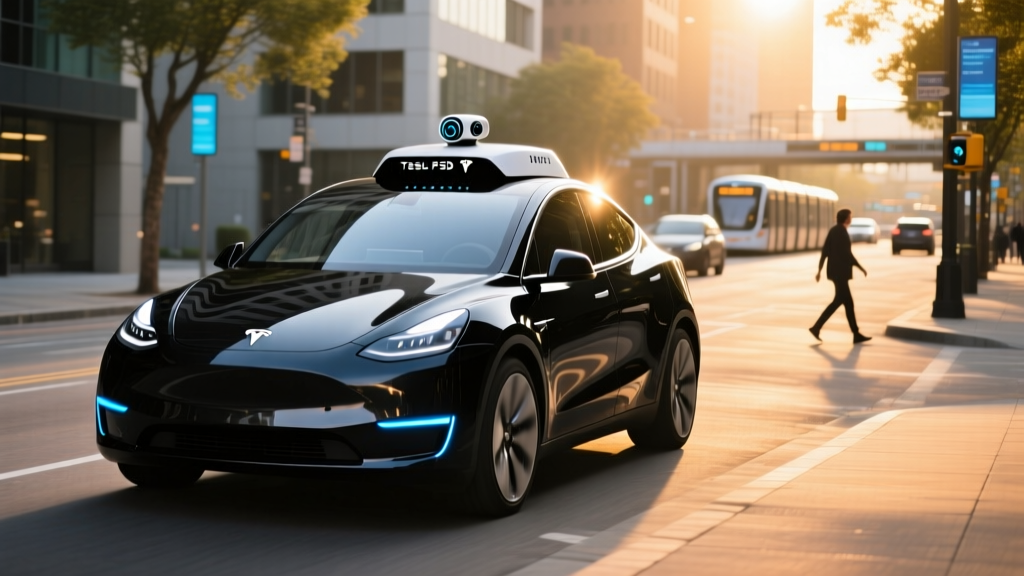
Tesla's ADAS stack, branded as Tesla Vision, relies entirely on a camera-based perception system. Since late 2022, Tesla has eliminated radar and ultrasonic sensors from new production vehicles, moving to a pure vision approach.
Hardware on 2026 models includes:
- 8 external cameras (front-facing narrow/wide, repeaters, rear-view) providing 360° visibility up to ~250 meters
- AI inference computer (HW4 / AI5 depending on model) running neural networks for object detection, lane-line recognition, and path planning
- Cabin-facing camera for driver attentiveness monitoring
Autosteer uses this camera array to detect lane markings, road edges, and surrounding vehicles, then applies steering torque to keep the vehicle centered. The system fuses visual data with real-time speed and yaw inputs to compute a driving path. When lane markings are clear and conditions are favorable, the result is smooth, confident lane-keeping. But because Tesla Vision depends entirely on visible-light cameras, its performance degrades in conditions where cameras struggle — heavy rain, fog, direct sun glare, faded lane paint, or construction zones with conflicting markings.
Real-World Capabilities and Honest Limitations
- It is not self-driving. You must remain attentive and ready to intervene at any moment.
- It does not handle all road types. Performance degrades on unmarked roads, complex intersections, and construction zones.
- It does not replace your judgment. The system may not detect stopped emergency vehicles, debris, or pedestrians reliably in all conditions.
- Weather matters. Heavy rain, snow, fog, and sun glare can impair camera-based perception and cause Autosteer to disengage with minimal warning.
- Phantom braking occurs. TACC and Autosteer can trigger unexpected deceleration, particularly on highways with overpasses or shadows. NHTSA has investigated this pattern across Tesla vehicles.
Where Autosteer excels: On well-marked divided highways with clear lane lines and moderate traffic, Autosteer is genuinely useful. It reduces driver fatigue on long trips by handling micro-steering corrections, and when paired with TACC, it creates a cohesive Level 2 driving experience. On a 300-mile interstate drive, the combination meaningfully reduces cognitive load — though you must remain hands-on (or demonstrate attentiveness via the cabin camera on newer models).
Where it struggles: In our experience and consistent with NHTSA incident reports, Tesla Vision-based Autosteer can become confused in work zones with old and new lane markings visible simultaneously, on rural roads with no shoulder markings, and during heavy precipitation when camera lenses get obscured. The system will issue a takeover request, but the handoff window can be brief — sometimes just a few seconds before the system disengages. This is why constant driver supervision is non-negotiable.
How Tesla's ADAS Pricing Compares to Competitors
Tesla's move to make Autosteer a paid feature brings its pricing model closer to what Ford and GM have been doing with their premium ADAS offerings. Here's how the major systems stack up for 2026:
| Manufacturer | System Name | SAE Level | Hands-Free? | Pricing Model | Key Limitation |
|---|---|---|---|---|---|
| Tesla | Autopilot (Basic) / FSD (Supervised) | Level 2 | No (attentiveness monitored) | Subscription (~$99/mo+) or one-time ($6K–$8K) | Camera-only; no LiDAR/radar redundancy |
| Ford | BlueCruise | Level 2 | Yes (on pre-mapped highways) | Included trial, then ~$75/yr or $2,500 one-time | Only works on ~130,000+ miles of mapped divided highways |
| GM (Chevrolet/Cadillac) | Super Cruise | Level 2 | Yes (on pre-mapped highways) | Included trial, then ~$25/mo or multi-year plans | Limited to mapped roads; requires OnStar connectivity |
| Hyundai/Kia/Genesis | Highway Driving Assist 2 (HDA2) | Level 2 | No | Included (no subscription) | Requires hands on wheel; less aggressive lane-centering |
| BMW | Driving Assistant Professional | Level 2 | Partial (hands-off at low speed in traffic) | Included in certain packages (~$2,500 option) | Hands-free limited to ≤40 mph traffic jam assist |
The key differentiator: Ford BlueCruise and GM Super Cruise allow true hands-free driving on pre-mapped limited-access highways — something Tesla's Autopilot and FSD (Supervised) still do not officially permit, despite the "Supervised" branding. Both BlueCruise and Super Cruise use LiDAR-mapped road data combined with driver-facing cameras to confirm eye-on-road attention before enabling hands-free mode. Tesla relies on camera-only perception and steering-wheel torque (or cabin camera attentiveness scoring) to confirm engagement, but requires the driver to remain capable of steering at all times.
On the other hand, Tesla's FSD (Supervised) offers broader geographic coverage — it can theoretically operate on any road, not just pre-mapped highways. The trade-off is that it demands more active supervision and is less predictable in edge cases than geofenced hands-free systems.
The Cost Breakdown: Subscription vs. One-Time Purchase
| Option | Upfront Cost | Monthly Cost | Break-Even vs. Subscription | Transferable on Trade? |
|---|---|---|---|---|
| Basic Autopilot Subscription | $0 | ~$99/mo | N/A | No — tied to driver/account, not vehicle |
| Enhanced Autopilot (one-time) | ~$6,000 | $0 | ~61 months vs. subscription | Yes — stays with vehicle on resale |
| FSD Supervised (one-time) | ~$8,000 | $0 | ~81 months vs. subscription | Yes — stays with vehicle on resale |
| FSD Supervised (monthly) | $0 | ~$99–$199/mo | N/A | No |
Who should subscribe: If you primarily drive in city traffic where Autosteer adds limited value, or if you plan to keep the vehicle under 4–5 years, the monthly subscription is the economically rational choice. You pay only when you need it (e.g., activate before a road trip, cancel during months of city-only commuting).
Who should buy outright: If you regularly drive highways, plan to keep the vehicle 5+ years, and want Enhanced Autopilot or FSD features, the one-time purchase makes financial sense after roughly 5–7 years. One-time purchases also remain with the vehicle at trade-in or resale, which can add to the car's market value — subscriptions do not transfer.
A note on the base price impact: With Autosteer removed from standard equipment, the effective value of a base 2026 Model 3 (starting around $38,990 MSRP) is reduced compared to 2024–2025 models that included it. Buyers who previously considered Basic Autopilot a "free" feature should now budget an additional ~$99/month or factor the one-time purchase cost into their total cost of ownership.
Safety Context: What the Data Shows
Tesla publishes quarterly safety reports claiming that vehicles driven with Autopilot engaged record fewer crashes per million miles than the U.S. average. However, these figures require careful interpretation:
- Selection bias: Autopilot is predominantly used on divided highways — the safest road type. Comparing highway Autopilot miles to all U.S. driving miles (including high-risk urban streets) skews the comparison.
- NHTSA investigations: The National Highway Traffic Safety Administration has opened multiple investigations into Tesla's Autopilot/FSD systems, particularly regarding crashes involving stationary emergency vehicles and the adequacy of driver-engagement monitoring. As of 2026, several of these investigations remain active. See NHTSA's automated vehicles safety page for current status.
- IIHS research: The Insurance Institute for Highway Safety has found that Level 2 systems can induce driver complacency, with drivers spending more time looking away from the road when lane-centering assist is active. This is a risk across all Level 2 systems, not unique to Tesla.
The bottom line: Autosteer and similar Level 2 features can reduce fatigue and may help prevent certain lane-departure crashes, but they are not a substitute for an attentive driver. Treat them as assistive tools, not autonomous replacements.
Which 2026 Tesla Models Are Affected
The removal of Autosteer from standard equipment applies across Tesla's entire 2026 lineup:
- 2026 Model 3 (all trims including Long Range and Performance) — TACC standard, Autosteer requires subscription or package purchase
- 2026 Model Y (all trims) — same structure
- 2026 Model S / Model X — same structure; given the higher MSRP ($79,990+ for Model S), many buyers opt for Enhanced AP or FSD at purchase
- 2026 Cybertruck — same structure
Owners of 2024 and 2025 models who received Basic Autopilot (including Autosteer) as standard equipment retain those features — Tesla has not retroactively removed previously included functionality from existing vehicles via OTA update. The change applies to new vehicle deliveries going forward.
Frequently Asked Questions
Can I still use cruise control on a 2026 Tesla without paying for Autopilot?
Yes. Traffic-Aware Cruise Control (TACC), which maintains your set speed and adjusts following distance behind vehicles ahead, remains included as standard equipment at no extra cost. What's removed from the free tier is Autosteer — the lane-centering steering assist. You'll need to steer manually with TACC unless you subscribe or purchase a package.
Is Tesla's Autosteer truly self-driving?
No. Autosteer, Enhanced Autopilot, and even Full Self-Driving (Supervised) are all SAE Level 2 driver-assistance systems. The driver must remain engaged, monitor the road, and be prepared to take full control at any time. Tesla's own documentation and the vehicle's user interface explicitly state this. The only truly driverless systems currently available to consumers are Level 4 robotaxi services like Waymo, which operate in geofenced urban areas without a human driver present.
How much does the Autopilot subscription cost in 2026?
Tesla's Basic Autopilot subscription (TACC + Autosteer) is priced at approximately $99/month as of the 2026 model year. FSD (Supervised) subscriptions range from approximately $99 to $199/month depending on whether the vehicle already has Enhanced Autopilot. Pricing is subject to change, and Tesla has adjusted subscription costs multiple times in recent years. Always verify current pricing on Tesla's official Autopilot page before purchasing.
Will Tesla remove features I already paid for via an OTA update?
Tesla has not retroactively disabled Autosteer on vehicles that shipped with Basic Autopilot included. The removal applies to new 2026 model-year vehicles that were built without Autosteer in the base software configuration. If you own a 2024 or 2025 Tesla with Basic Autopilot, your Autosteer functionality should remain intact.
How does Tesla Autosteer compare to Ford BlueCruise or GM Super Cruise?
BlueCruise and Super Cruise allow hands-free driving on pre-mapped divided highways (roughly 130,000+ miles of road in the U.S.), using LiDAR map data and infrared driver-monitoring cameras. Tesla's Autosteer requires continuous driver engagement and does not officially permit hands-free operation, but it works on virtually any road with visible lane markings — not just pre-mapped routes. The trade-off is geographic breadth (Tesla) vs. hands-free convenience on highways (Ford/GM). Both approaches remain Level 2 and require driver supervision.
Does the Autopilot subscription transfer if I sell my Tesla?
No. Subscriptions are tied to the driver's Tesla account, not the vehicle. If you sell or trade in your Tesla, the new owner will need to purchase their own subscription or one-time package. One-time purchases (Enhanced Autopilot, FSD) remain with the vehicle and can increase its resale value.