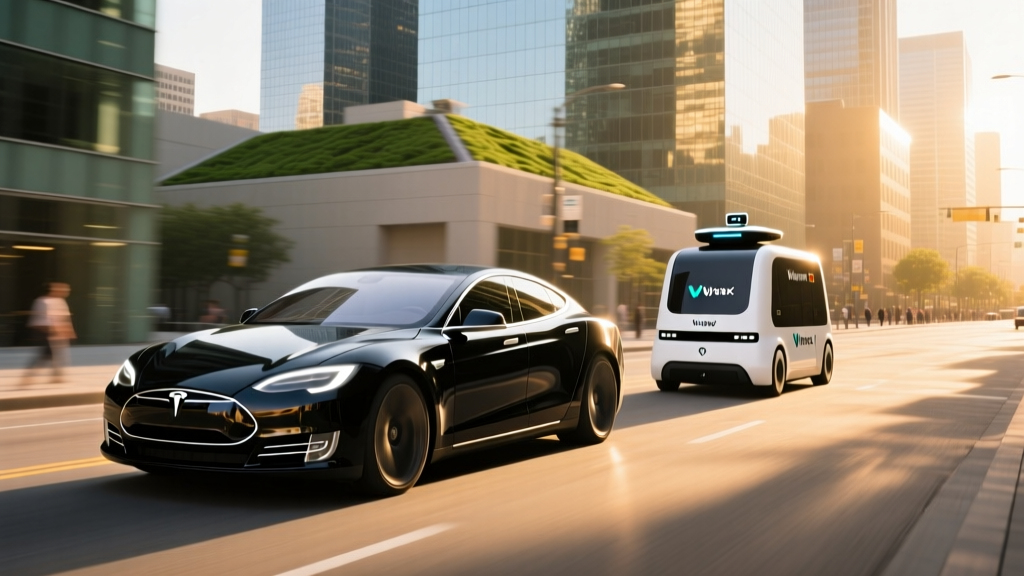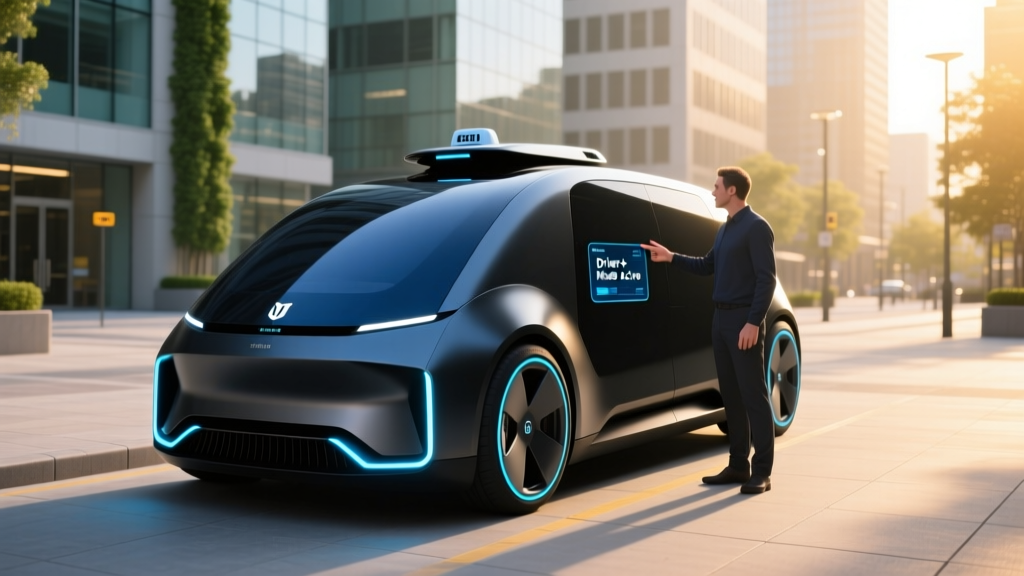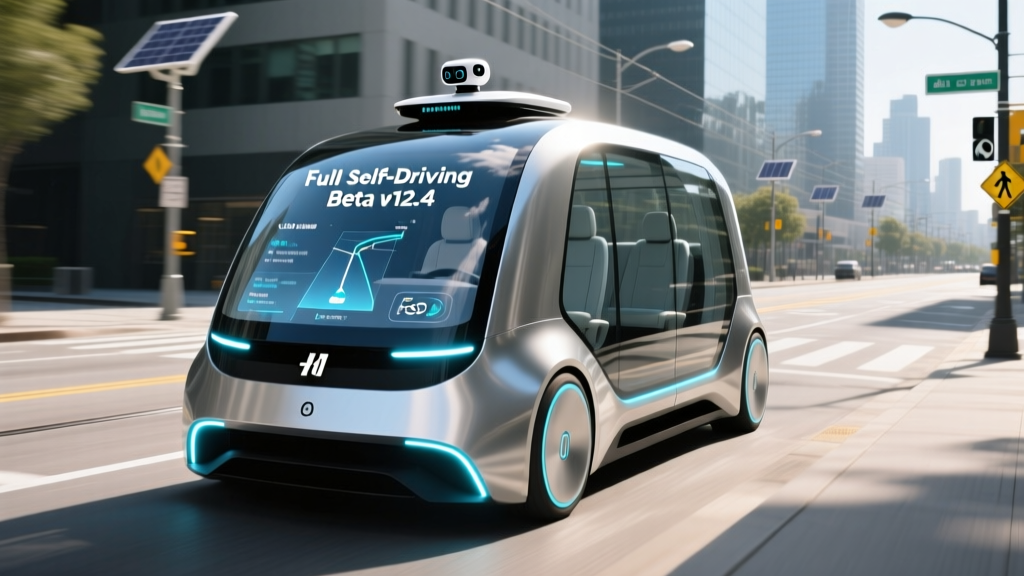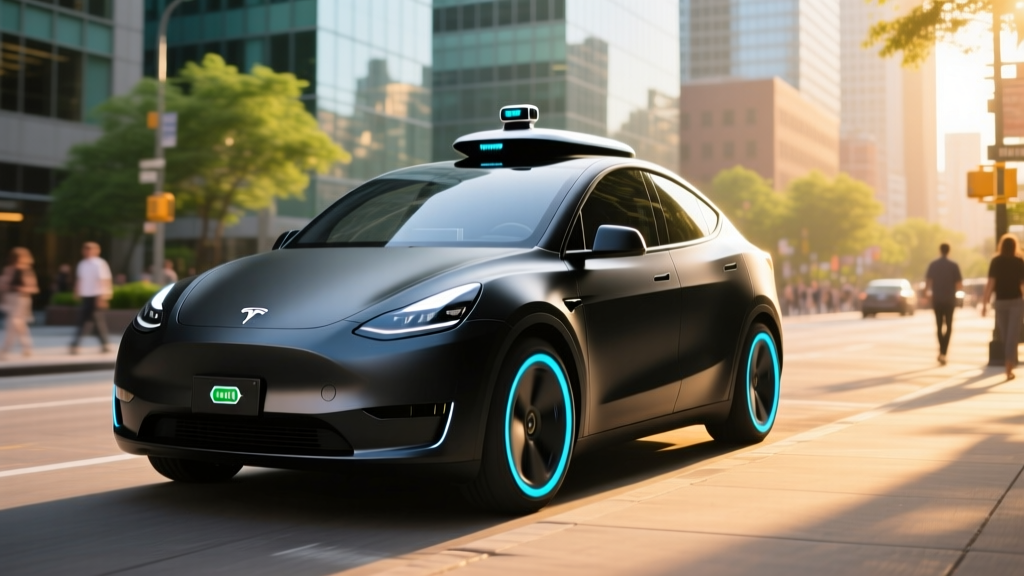
If you've seen headlines about Tesla Model Y autonomous delivery vehicles zipping through neighborhoods without drivers, it's time to separate marketing ambition from engineering reality. As of 2026, no Tesla vehicle — including the Model Y — operates as a driverless delivery or robotaxi platform on public roads. What Tesla does offer is Full Self-Driving (Supervised), a Level 2 driver-assistance system that requires continuous human oversight. True autonomous delivery and robotaxi services in the U.S. are currently the domain of Level 4 operators like Waymo and Zoox, using entirely different technology stacks and regulatory approvals.
This guide dissects exactly what Tesla's Model Y can and cannot do autonomously, where real robotaxi and autonomous delivery services operate today, and what the safety and pricing data actually shows.
Understanding SAE Autonomy Levels: Where Tesla Fits
The Society of Automotive Engineers (SAE) defines six levels of driving automation, and the distinction between Level 2 and Level 4 is the single most important thing any EV buyer or rideshare user needs to grasp.
| Level | Name | Who Drives? | Current Examples |
|---|---|---|---|
| 0 | No Automation | Human only | Basic cruise control |
| 1 | Driver Assistance | Human (system assists one axis) | Adaptive cruise OR lane-keep |
| 2 | Partial Automation | Human (must supervise at all times) | Tesla FSD (Supervised), GM Super Cruise, Ford BlueCruise |
| 3 | Conditional Automation | System in limited conditions; human on standby | Mercedes DRIVE PILOT (restricted, limited markets) |
| 4 | High Automation | System within geofenced ODD; no human needed | Waymo One, Zoox |
| 5 | Full Automation | System everywhere, all conditions | Does not exist commercially |
Tesla FSD (Supervised) is SAE Level 2. The system can steer, accelerate, brake, and navigate intersections, but the driver must remain attentive, hands ready, and prepared to intervene instantly. The "Supervised" label Tesla added in 2024 is not marketing — it's a legal and technical acknowledgment that the human is the driver.
By contrast, Waymo's 6th-generation Jaguar I-PACE and Zoox's purpose-built vehicle operate at SAE Level 4 within defined operational design domains (ODDs): mapped urban zones, specific weather conditions, and geofenced boundaries. There is no driver in the vehicle, and no steering wheel in the Zoox.
What Tesla Model Y FSD (Supervised) Actually Does
The 2026 Tesla Model Y Long Range AWD (EPA-estimated 320 miles of range, 75 kWh usable LFP/NMC battery depending on trim, 0–60 mph in 4.8 seconds, starting at ~$47,990 before incentives) can be equipped with FSD (Supervised) for an additional $8,000 or $99/month subscription.
With FSD (Supervised) engaged, the Model Y can:
- Navigate highway on-ramps and off-ramps
- Change lanes based on navigation route
- Respond to traffic lights and stop signs
- Execute left and right turns at intersections
- Navigate parking lots and execute parking maneuvers
However, the system cannot:
- Operate without a licensed, attentive driver in the seat
- Function in all weather conditions (heavy rain, snow, fog degrade camera-only systems)
- Handle all construction zones or unmapped road changes reliably
- Be used for commercial driverless delivery or rideshare
Where True Robotaxi and Autonomous Delivery Services Operate Now
If you're looking for a vehicle that genuinely drives itself — for rides or deliveries — here is where Level 4 services are live as of early 2026:
| Operator | Service Type | Live Cities | Vehicle Platform |
|---|---|---|---|
| Waymo One | Robotaxi (paid rides) | Phoenix, San Francisco, Los Angeles, Austin (expanding) | Jaguar I-PACE (6th-gen sensor suite) |
| Zoox | Robotaxi (limited free rides) | Foster City, CA; Las Vegas (limited) | Zoox purpose-built vehicle |
| Waymo Via | Autonomous delivery (freight/last-mile) | Phoenix metro (UPS partnership) | Class 8 trucks + light-duty vans |
| Nuro | Autonomous delivery (groceries, food) | Houston, Mountain View, CA (limited) | Nuro R3 (no passenger compartment) |
| Tesla | None (driverless) | N/A | N/A |
Tesla has announced ambitions for a "Robotaxi" service using existing vehicles and has demonstrated a prototype "Cybercab" concept, but as of 2026, no Tesla vehicle is approved or operating as a driverless robotaxi or delivery vehicle anywhere in the world. Any Model Y you see making a delivery has a human driver behind the wheel.
Technology Stack: Camera-Only vs. Multi-Sensor Fusion
The reason Tesla's FSD remains Level 2 while Waymo operates at Level 4 comes down to fundamentally different engineering philosophies.
Tesla FSD (Supervised) — Vision-Only
- Sensors: 8 surround cameras (updated HW4 suite), no lidar, no radar
- Processing: Tesla HW4 (AI5 chip expected in future refresh)
- Mapping: Minimal reliance on HD maps; neural network interprets live camera feed
- Geofencing: None — system available on any road (driver responsibility)
- Redundancy: Limited sensor redundancy; camera obstruction = system degradation
Waymo 6th-Gen — Multi-Sensor Fusion
- Sensors: Custom lidar array, radar, cameras, external audio sensors
- Processing: Custom Waymo compute platform
- Mapping: Centimeter-precision HD maps of every operational street
- Geofencing: Strictly limited to pre-mapped ODD with real-time monitoring
- Redundancy: Multiple independent sensor modalities; any single sensor failure does not disable the vehicle
For autonomous delivery or robotaxi use — where no human is present to intervene — multi-sensor fusion with lidar provides the redundancy that regulators and insurers require. Tesla's bet that cameras plus neural networks alone can achieve Level 4 remains unproven at commercial scale.
Safety Data: What the Numbers Show
Safety is the most contested topic in autonomous vehicles. Here is what published data indicates:
Waymo (Level 4, Driverless)
- Over 30 million paid driverless miles completed as of late 2025 (Waymo Safety Report)
- Waymo's published analysis (based on 2024 data) showed an 85% reduction in injury-causing crash rates compared to human benchmarks in comparable geographies
- Incidents that do occur tend to be low-speed (parking lot, intersection creep) and are publicly reported to NHTSA
Tesla FSD (Supervised) (Level 2, Driver Present)
- Tesla's quarterly Vehicle Safety Report claims approximately 1 crash per ~5.9 million miles with Autopilot engaged vs. ~1 per ~660,000 miles without
- Important caveat: Tesla's data is self-reported, does not separate FSD from basic Autopilot, does not control for road type (highway vs. urban), and the driver is always present — making direct comparison to driverless Level 4 data misleading
- NHTSA's Standing General Order requires crash reporting for vehicles with ADS/L2+ systems; Tesla incidents are included in this database
Comparing Level 2 (driver present) safety data to Level 4 (driverless) data is not apples-to-apples. Level 2 systems have a human safety net; Level 4 systems must handle every edge case independently. The relevant question for a prospective robotaxi user is whether a driverless system's crash rate is lower than a human ride-hail driver's — and Waymo's published data suggests it is, within its operational domain.
Pricing: Robotaxi vs. Uber vs. Tesla Ownership
For users in cities where Waymo One operates, here's how pricing compares to traditional rideshare:
| Service | Estimated Fare | Notes |
|---|---|---|
| UberX | $12–$18 | Varies by surge pricing, time of day |
| Lyft Standard | $11–$17 | Similar surge variability |
| Waymo One | $10–$20 | No surge pricing; promotional discounts common in new markets |
| Tesla Model Y (owner driving) | ~$1.50–$2.50 (electricity + depreciation per trip) | Not a rideshare; represents marginal cost of personal EV use |
Waymo has generally priced at or slightly below UberX to build ridership, without the surge multipliers that make rideshare unpredictable. Tesla's hypothetical future robotaxi service has no published pricing, though Elon Musk has suggested fares below Uber — a claim that remains speculative without a live service to evaluate.
Regulatory Landscape: Who Approves Driverless Operations
Deploying a Level 4 robotaxi or autonomous delivery service in the U.S. requires navigating a patchwork of state and federal regulations:
- Federal (NHTSA): Sets vehicle safety standards (FMVSS). Currently, NHTSA requires a steering wheel and pedals for most vehicles — which is why Zoox needed a special exemption for its driverless pod. NHTSA also mandates crash reporting via Standing General Order for all ADS and Level 2+ systems.
- State DMVs and PUCs: States control deployment permits. California's CPUC issues paid-rideshare permits for robotaxis (Waymo holds one). Arizona has minimal regulatory barriers, which is why Phoenix was Waymo's first market. Texas has permissive autonomous vehicle laws enabling Houston testing.
- Local municipalities: Cities can restrict or condition operations (noise, curb access, emergency response protocols). San Francisco, for instance, imposed speed and operating-hour restrictions on robotaxis before granting full approval.
Tesla would need to secure state-by-state deployment permits, meet NHTSA standards for driverless operation, and demonstrate a safety case to regulators before any Model Y could operate without a driver — a process that Waymo spent over a decade and billions of dollars completing.
Current Limitations of All Autonomous Systems
Even Level 4 robotaxis face real-world constraints that buyers and users should understand:
- Weather: Heavy rain, snow, and fog can cause service suspension. Waymo in San Francisco occasionally pauses operations during atmospheric rivers. Tesla's camera-only system is even more vulnerable to visibility loss.
- Geofencing: Waymo vehicles cannot leave their mapped ODD. Drive to an unmapped street and the vehicle will pull over safely and end the ride.
- Construction zones: Major road reconfigurations can confuse systems. Waymo uses real-time remote assistance to navigate complex scenarios; Tesla FSD relies on the human driver.
- Edge cases: Unusual obstacles (overturned trucks, parades, emergency scenes) may require remote human assistance (Level 4) or driver intervention (Level 2).
- Pull-overs: Level 4 vehicles will conservatively stop and wait if uncertain — which can frustrate other drivers but prioritizes safety.
- No-go scenarios: Unpaved roads, private property, drive-throughs, and most parking garages are outside current ODDs for robotaxis.
The Bottom Line for Tesla Model Y Buyers
If you're buying a 2026 Model Y, FSD (Supervised) is a sophisticated Level 2 driver-assist system — not a robotaxi platform. You cannot summon it to deliver a package driverless, enroll it in a Tesla ride-hail network, or legally remove yourself from the driver's seat on public roads.
If you want a driverless ride today, Waymo One in Phoenix, San Francisco, Los Angeles, and Austin is your option. If you want autonomous delivery, Waymo Via (freight) and Nuro (last-mile groceries) operate in limited markets.
Tesla's autonomy ambitions may materialize — the company has enormous real-world driving data and a vertically integrated software stack. But as of 2026, the gap between FSD (Supervised) and a certified Level 4 robotaxi is not a software update away. It requires sensor redundancy, regulatory approval, insurance frameworks, and operational infrastructure that Tesla has not yet deployed commercially.
Frequently Asked Questions
Can I use a Tesla Model Y for autonomous delivery right now?
No. No Tesla vehicle is approved for driverless delivery or robotaxi service anywhere in the world as of 2026. FSD (Supervised) requires a licensed, attentive driver at all times. Autonomous delivery services that are live (Waymo Via, Nuro) use different vehicles and Level 4 technology stacks.
Is Tesla FSD (Supervised) self-driving?
No. Tesla FSD is SAE Level 2 partial automation. The driver must remain engaged, monitor the road, and be prepared to take over immediately. The "Supervised" designation is a legal and technical acknowledgment of this requirement. Only Level 4 systems (Waymo, Zoox) operate without a driver, within geofenced areas.
Where can I ride in a real robotaxi in 2026?
Waymo One operates paid driverless rides in Phoenix, San Francisco, Los Angeles, and Austin. Zoox offers limited free rides in Foster City, CA, and Las Vegas. Availability is expanding gradually but remains limited to pre-mapped urban zones in specific states.
How much does a Waymo robotaxi ride cost compared to Uber?
A typical 5-mile Waymo One ride costs $10–$20, comparable to UberX ($12–$18) but without surge pricing. Waymo frequently offers promotional discounts in newer markets to build ridership.
How safe are robotaxis compared to human drivers?
Waymo's published data (30+ million driverless miles) indicates an approximately 85% reduction in injury-causing crash rates compared to human benchmarks in comparable geographies. However, this data is specific to Waymo's geofenced ODD in favorable conditions. Direct comparison with Tesla FSD data is inappropriate because FSD always has a human driver present as a safety net.
Will Tesla launch a robotaxi service?
Tesla has announced intentions and demonstrated a Cybercab concept, but no launch date, regulatory approval, or operational city has been confirmed as of 2026. Any future service would require Level 4 certification, state-by-state permits, and NHTSA compliance — a multi-year process at minimum.
Does the Tesla Model Y have lidar?
No. The 2026 Model Y uses Tesla's HW4 camera-only sensor suite (8 surround cameras). Tesla removed radar from its vehicles starting in 2021 and has never equipped production cars with lidar. This is a deliberate engineering choice that differentiates Tesla from Level 4 operators who use multi-sensor fusion.