What the Tesla FSD v14 Hardware 3 Update Actually Delivers
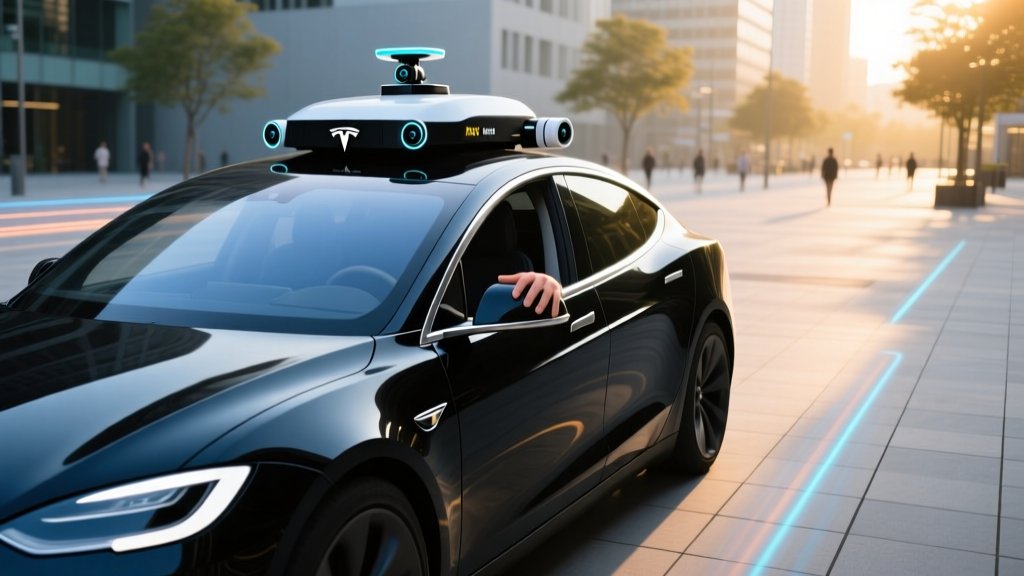
Tesla's Full Self-Driving (Supervised) software has undergone continuous iteration since its beta launch, and the v14 release marks a significant architectural shift — particularly for owners still running Hardware 3 (HW3) vehicles. The Tesla FSD v14 Hardware 3 update addresses a growing gap between Tesla's newest AI inference stack and the compute ceiling of the older vision processor, but it comes with important caveats that every owner should understand before expecting a transformation in daily driving behavior.
FSD (Supervised) relies entirely on Tesla's vision-only approach: eight external cameras (front-facing narrow and wide, left/right repeaters, left/right rear, and a backup camera) feed image data to the onboard computer. There is no radar or ultrasonic sensor fusion in current-production Teslas — the company removed ultrasonic sensors starting with Model 3 and Model Y vehicles built from late 2022 onward, and later from Model S and Model X. The neural network processes lane markings, traffic signals, other vehicles, pedestrians, and road geometry in real time to execute steering, acceleration, and braking commands.
Tesla FSD (Supervised) is classified as SAE Level 2 driver assistance. This means the system can simultaneously control steering and speed, but the driver must remain fully engaged, monitor the environment at all times, and be prepared to intervene immediately. It is not autonomous. Tesla's own owner's manuals and marketing materials now include the "Supervised" designation following NHTSA scrutiny. Only Level 4 services like Waymo operate without a human driver in defined geographic zones.
Hardware 3 vs. Hardware 4: Why the Update Matters
The core tension behind the Tesla FSD v14 Hardware 3 update is compute throughput. Tesla's Hardware 4 (HW4), introduced in refreshed Model S and Model X vehicles in early 2023 and later in Model 3 Highland and Model Y Juniper refreshes, features cameras with roughly double the resolution of HW3 (5 megapixels vs. 1.2 megapixels for front cameras) and an onboard computer with significantly higher inference capacity — estimated at approximately 300-500 TOPS (trillions of operations per second) compared to HW3's roughly 144 TOPS across its dual neural network accelerators.
With v14, Tesla has pushed its end-to-end neural network architecture further, relying on larger transformer-based models that process more contextual information per frame. For HW4 vehicles, this means smoother lane changes, better handling of complex intersections, and more confident behavior in construction zones. For HW3 vehicles, the v14 update must operate within tighter memory and compute constraints, which Tesla manages through model quantization and selective feature gating.
| Capability | HW3 (v14 Update) | HW4 (v14 Native) |
|---|---|---|
| Camera Resolution | 1.2 MP (front) | 5 MP (front), 2 MP (repeaters) |
| Inference Compute | ~144 TOPS | ~300–500 TOPS (est.) |
| Complex Intersection Handling | Functional, more conservative | More assertive, fewer disengagements |
| Low-Light / Night Driving | Limited by sensor resolution | Improved clarity and detection range |
| End-to-End Neural Net | Quantized / compressed model | Full-precision model |
| Estimated Disengagements (per 1,000 mi) | Higher — expect 2–5 on complex routes | Lower — typically 1–3 on similar routes |
In practice, HW3 owners running FSD v14 report that the system handles highway driving and well-marked suburban roads competently, but struggles more frequently than HW4 in scenarios like unprotected left turns across multi-lane traffic, temporary construction-zone lane shifts, and faded or conflicting lane markings. The quantized neural network simply has less fidelity at the edges of its training distribution.
Which Tesla Models and Trims Are Affected?
The Tesla FSD v14 Hardware 3 update applies to every Tesla vehicle still equipped with the HW3 computer that has an active FSD license (purchased outright or subscribed). Here is how the hardware landscape breaks down by model:
- Model 3 (pre-2024 Highland refresh): Most 2019–2023 Model 3 vehicles ship with HW3. The 2024+ Highland refresh uses HW4.
- Model Y (pre-2025 Juniper refresh): 2020–2024 Model Y vehicles generally carry HW3. The 2025+ Juniper refresh transitions to HW4.
- Model S (pre-2023 refresh): 2019–early 2023 Model S vehicles use HW3. The 2023+ Plaid and Long Range models received HW4.
- Model X (pre-2023 refresh): Same timeline as Model S — HW3 through early 2023, HW4 thereafter.
- Cybertruck: All Cybertrucks ship with HW4 from launch.
If you purchased FSD as a one-time $8,000 add-on (the price Tesla reduced to in 2024 from the previous $15,000) on a HW3 vehicle, you are eligible for every FSD software update Tesla releases, including v14. Tesla has not announced a mandatory paid hardware retrofit program for HW3-to-HW4 upgrades, though the company has historically offered free HW3-to-HW4 swaps for customers who originally purchased the FSD package at the higher price point on vehicles where Tesla committed to full self-driving capability.
Real-World Capabilities and Honest Limitations
FSD v14 on Hardware 3 delivers genuine utility in specific driving contexts, but it is critical to understand where the system falls short — both for safety and for setting realistic expectations.
- It does not drive autonomously — you are the responsible driver at all times.
- It does not reliably handle unmapped or severely degraded road surfaces without intervention.
- It does not perform well in heavy rain, snow, or fog where camera visibility is reduced. The vision-only system has no radar fallback.
- It does not always recognize temporary traffic-control devices (hand-held signs, flaggers) at construction zones.
- It does not guarantee compliance with every local traffic law — the driver remains legally liable.
- Performance degrades in direct low-angle sunlight (sunrise/sunset) that washes out forward cameras.
On well-maintained interstate highways with clear lane markings, FSD v14 on HW3 manages lane-keeping, adaptive cruise, and automatic lane changes with minimal intervention. In our experience and consistent with community-reported data, expect roughly 200–500 miles between necessary steering-wheel touches on straightforward highway routes. On complex urban routes with frequent unprotected turns, bike lanes, and pedestrian traffic, that interval drops to 20–80 miles — sometimes less in dense downtown cores.
Cold weather introduces additional variables. Camera lenses can accumulate road salt spray, ice, or condensation that the system detects and warns about, disabling FSD until visibility is restored. Tesla's camera heaters help, but they are not always sufficient in freezing precipitation. Owners in northern climates should plan for FSD being unavailable during active winter storms more frequently than during mild conditions.
Cost Breakdown: Purchase, Subscription, and What You Actually Pay
Tesla's pricing for FSD has shifted multiple times. As of the current period, here is the cost structure:
| Option | Cost | Notes |
|---|---|---|
| One-Time Purchase | $8,000 | Transfers with the vehicle, not the owner. Non-refundable. |
| Monthly Subscription | $99/month | Cancel anytime. Requires Basic Autopilot-equipped vehicle. |
| Basic Autopilot | Included (standard) | TACC + lane-keeping on all new Teslas. Not FSD. |
| Enhanced Autopilot | Discontinued | Previously $6,000; features folded into FSD tier. |
For HW3 owners debating whether to subscribe or purchase outright, the math is straightforward: at $99/month, the subscription reaches the $8,000 purchase price in roughly 81 months (6.75 years). If you plan to keep your HW3 Tesla beyond that horizon and use FSD regularly, the purchase makes financial sense. If you intend to trade into an HW4 vehicle within 2–3 years, the subscription avoids sinking $8,000 into hardware that will not transfer with you (FSD transfers with the car, not the owner).
One important note: Tesla has periodically offered FSD transfer promotions when customers purchase a new Tesla, allowing a one-time FSD license transfer from an old vehicle to a new one. These promotions are not permanent policy — check Tesla's current terms before relying on a transfer.
How FSD v14 Compares to Competing Level 2 Systems
Tesla's FSD is not the only advanced Level 2 system on the market, and a clear-eyed comparison helps contextualize what HW3 owners are getting.
| System | SAE Level | Hands-Free? | Geofenced? | Cost |
|---|---|---|---|---|
| Tesla FSD (Supervised) | Level 2 | No — hands on wheel required (torque-based) | No — works on most roads | $8,000 or $99/mo |
| GM Super Cruise | Level 2 | Yes — on mapped highways (~750,000+ mi) | Yes — LiDAR-mapped roads only | Included or $2,500 package |
| Ford BlueCruise 1.4 | Level 2 | Yes — on mapped highways (~130,000+ mi) | Yes — pre-qualified roads | $2,100 or $75/mo |
| BMW Highway Assistant (L2+) | Level 2 | Yes — eyes-off up to 85 mph (limited highways) | Yes — specific divided highways | ~$1,700 package |
| Hyundai/Kia HDA2 | Level 2 | No — hands-on | No | Included on higher trims |
The key trade-off is coverage versus hands-free convenience. Tesla FSD works on virtually any road — residential streets, rural highways, parking lots — but requires constant hand contact (detected via steering-wheel torque). GM Super Cruise and Ford BlueCruise allow true hands-free driving but only on pre-mapped divided highways. For a Tesla owner whose daily commute includes suburban surface streets and unmarked roads, FSD offers broader utility. For long interstate road trips, Super Cruise's hands-free capability and LiDAR-backed confidence in lane positioning is arguably more relaxing.
According to IIHS research on driver-assistance systems, all Level 2 systems carry misuse risk, and driver monitoring remains the critical safety variable regardless of brand. Tesla's camera-based driver monitoring (tracking eye gaze via the cabin camera) is less mature than the infrared eye-tracking systems used by GM and Ford for hands-free operation, which is one reason Tesla maintains the torque-on-wheel requirement.
Should HW3 Owners Expect a Hardware Upgrade?
This is the most common question in Tesla owner communities: will Tesla offer a free or paid HW3-to-HW4 retrofit? The answer, as of now, is nuanced.
Tesla has historically honored FSD purchases with hardware upgrades — when the company transitioned from HW2.5 to HW3, it offered free computer swaps to customers who had purchased FSD. However, the HW3-to-HW4 transition is more complex because the camera suite itself differs (HW4 uses higher-resolution sensors with different connectors and mounting). A full HW4 retrofit would require replacing cameras, wiring harnesses, and the computer — a significantly more involved service than a simple ECU swap.
Tesla has not announced a formal HW3-to-HW4 retrofit program. Some service centers have performed selective camera upgrades under warranty or as part of broader service campaigns, but this is not a systematic, customer-initiated upgrade path. If you are considering purchasing a used HW3 Tesla specifically for FSD, factor in the possibility that you may remain on HW3 for the vehicle's remaining life, running quantized versions of future FSD releases.
For current HW3 owners, the practical recommendation is this: FSD v14 on HW3 is a capable highway companion and a functional urban assistant that requires attentive supervision. It is not a reason to sell your vehicle, nor is it a substitute for driving. If an HW4 upgrade matters to you, the most reliable path is trading into a newer vehicle — a 2024+ Model 3 Highland, a 2025+ Model Y Juniper, or any current-production Model S, Model X, or Cybertruck.
Frequently Asked Questions
Is Tesla FSD v14 actually self-driving?
No. Tesla FSD (Supervised) is SAE Level 2 driver assistance. You must remain fully engaged, keep your hands on the steering wheel, and monitor the road at all times. The "Full Self-Driving" name is a product designation, not a description of capability. Only Level 4 robotaxi services like Waymo operate without a human driver.
Can I get FSD v14 if I never purchased FSD?
FSD v14 requires either a one-time FSD purchase ($8,000) or an active $99/month subscription. Tesla's standard Autopilot (included on all vehicles) provides basic adaptive cruise control and lane-centering but does not include FSD features like automatic lane changes, traffic-light recognition, or city-street navigation.
Does FSD work in bad weather?
FSD relies entirely on cameras. Heavy rain, snow, fog, and road-salt spray can obscure camera lenses and cause the system to disable itself. Camera heaters help with light frost and condensation, but they are not sufficient in active freezing precipitation. Plan to drive manually in severe weather.
Will Tesla charge me to upgrade from HW3 to HW4?
Tesla has not announced a formal paid or free HW3-to-HW4 retrofit program. Past precedent (HW2.5 to HW3) suggests that customers who purchased FSD outright may eventually be offered a hardware upgrade, but the scope of the HW4 camera change makes this more complex. Check with your local Tesla service center for current policy.
How does FSD v14 on HW3 compare to FSD v12 or v13?
FSD v14 continues Tesla's transition to an end-to-end neural network architecture (first introduced in v12) that replaces hand-coded rules with learned driving behavior. Compared to v12 and v13, v14 shows improved handling of complex intersections and smoother speed modulation, but HW3's compute ceiling means the model must run in a compressed form, limiting its performance ceiling relative to HW4. For more on Tesla's approach, see the NHTSA's automated vehicle safety guidelines.