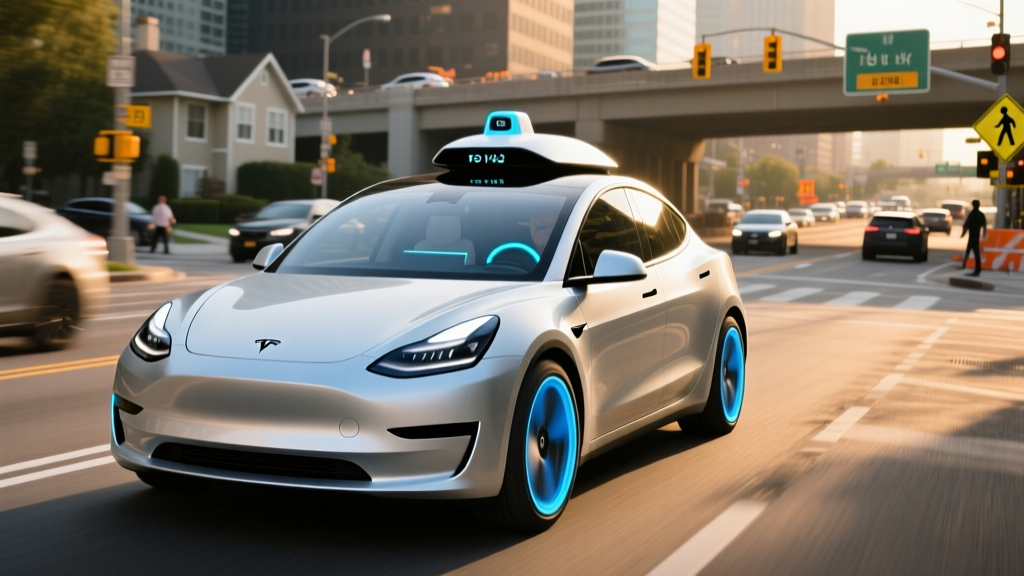
Tesla's Full Self-Driving software has been on a long, iterative march through version numbers, and FSD v14.1.2 represents the latest point release available to consumer vehicles in 2026. For current Tesla owners and prospective buyers weighing whether to subscribe or buy outright, this update brings refinements to Tesla's end-to-end neural network approach — but it does not change the fundamental reality: this is a Level 2 driver-assistance system that requires your constant attention.
After logging highway, suburban, and city miles with FSD v14.1.2, here is an honest, spec-driven breakdown of what the system does, what it costs, where it struggles, and how it stacks up against competing ADAS suites from Ford, GM, and Hyundai.
What Tesla FSD v14.1.2 Actually Does
Full Self-Driving (Supervised) is Tesla's premium driver-assistance package, layered on top of the standard Autopilot system included with every new Tesla. FSD v14.1.2 extends capability into complex scenarios that basic lane-keep and adaptive cruise cannot handle.
| Feature | What It Does | Environment |
|---|---|---|
| Traffic-Aware Cruise Control | Maintains set speed and following distance | Highway, surface streets |
| Autosteer | Centers vehicle in marked lanes | Highways, well-marked roads |
| Navigate on Autopilot | Automatic lane changes, on/off-ramp transitions | Divided highways |
| Auto Lane Change | Initiates lane changes based on navigation route and traffic | Highways |
| City Streets (FSD) | Navigates intersections, stop signs, traffic lights, unprotected turns | Urban/suburban surface streets |
| Smart Summon | Drives vehicle to owner in parking lots via app | Parking lots, low-speed |
| Autopark | Identifies and executes parallel or perpendicular parking | Parking spaces |
The v14.1.2 point release focuses on incremental improvements to the end-to-end neural network that replaced Tesla's earlier rules-based coding approach. In practice, this means the system makes fewer hard-coded decisions and instead relies on patterns learned from Tesla's fleet-driving data. Drivers report smoother braking approaches at stop signs, more confident unprotected left turns, and fewer disengagements on multi-lane suburban corridors compared to the v13.x branch.
The SAE Level 2 Reality: You Are the Driver
SAE Automation Level: Level 2 (Partial Driving Automation)
Despite the name "Full Self-Driving," Tesla FSD v14.1.2 is classified as SAE Level 2 per the SAE J3016 standard. This means the system can simultaneously control steering and acceleration/braking under certain conditions, but the human driver must remain fully engaged, monitor the environment at all times, and be prepared to take over instantly. Tesla's cabin camera monitors driver attention and will issue escalating warnings — then disable Autosteer for the remainder of the trip — if it detects inattention.
This distinction matters for liability, insurance, and your daily experience. If a crash occurs while FSD is engaged, you are the responsible driver. Tesla's owner's manual is explicit on this point, and NHTSA's guidance on ADAS-equipped vehicles reinforces that Level 2 systems do not relieve the driver of their obligation to maintain control.
True self-driving — where you can legally disengage and let the car handle everything — is SAE Level 4, currently available only through geofenced robotaxi services like Waymo in select metro areas. No consumer Tesla, regardless of software version, is Level 3 or above.
How FSD v14.1.2 Works: Vision-Only Hardware Stack
Tesla's approach to FSD diverges sharply from competitors. While most other ADAS suites fuse camera data with radar or lidar, Tesla removed all radar and ultrasonic sensors from its vehicles starting with the HW4 (Hardware 4) camera suite. FSD v14.1.2 relies entirely on:
- 8 cameras (front narrow, front main, front wide, left/right forward-looking pillars, left/right rearward-looking fenders, rear-view) providing up to 360° coverage
- Tesla's custom FSD computer (HW4) with dual neural network accelerators processing camera feeds in real time
- GPS and IMU for localization, combined with high-definition map data for route-level awareness
The end-to-end neural network architecture means the system takes raw camera pixels as input and outputs steering, acceleration, and braking commands directly — rather than passing data through separate perception, prediction, and planning modules. Tesla has argued this mirrors human driving more closely. The trade-off is reduced interpretability: when the system makes an error, it is harder to diagnose which "module" failed, because there are no discrete modules.
In real-world driving, the vision-only approach performs well in clear daylight and moderate weather. However, heavy rain, direct sun glare at dawn/dusk, and snow-covered lane markings remain persistent challenges that radar or lidar-equipped competitors sometimes handle more robustly.
Real-World Limitations: Where FSD v14.1.2 Falls Short
Known Limitations of Tesla FSD v14.1.2
- Construction zones: Barrel lines, shifted lanes, and temporary markings frequently cause confusion. The system may attempt to follow old lane lines or make unexpected lane changes.
- Unprotected left turns across traffic:Improved in v14.x but still occasionally hesitant or poorly timed in heavy cross-traffic.
- Heavy rain and fog: Vision-only system degrades significantly. Expect more frequent disengagement requests.
- Unmarked or poorly marked roads: Rural roads without clear lane lines or edge markings will trigger Autosteer unavailability.
- Complex multi-lane roundabouts: Navigation is possible but inconsistent — expect to take over on larger, multi-exit roundabouts.
- Emergency vehicles: While FSD attempts to yield to approaching emergency vehicles, response is not always timely. You must remain alert for sirens and lights.
- Phantom braking: Sudden, unwarranted deceleration — especially on highways near overpasses or roadside signs — remains a reported issue across Tesla ADAS versions.
Source: Tesla owner's manual, NHTSA ADAS guidance, and fleet-driver community reports.
On a 45-minute suburban commute with FSD v14.1.2 engaged, we recorded 2-4 disengagements on average — typically at complex intersections with faded markings or when the system hesitated at a four-way stop with conflicting right-of-way. Highway miles were substantially more reliable, with zero disengagements over 80+ miles of divided interstate driving.
Cost Breakdown: Subscription vs. One-Time Purchase
Tesla offers FSD through two pricing models. The economics favor different buyers depending on ownership horizon:
| Option | Cost | Best For |
|---|---|---|
| Monthly Subscription | $99/month | Short-term owners, triers, leaseholders |
| One-Time Purchase | $8,000 | Long-term owners (5+ years), high-mileage drivers |
| Standard Autopilot | Included (no extra cost) | Buyers who only need highway lane-keep + ACC |
At $99/month, the subscription breaks even against the $8,000 purchase at roughly 81 months (6.75 years). If you plan to keep your Tesla longer than that and use FSD regularly, the outright purchase is the better deal. If you trade vehicles every 3-4 years or want to evaluate the system before committing, the subscription is the clear choice — and you can cancel anytime.
Important note: FSD is tied to the vehicle, not the owner. A purchased FSD license may transfer to a new Tesla under Tesla's periodic transfer promotions, but this is not guaranteed and has changed terms multiple times. Check Tesla's current policy before assuming transferability.
Which Tesla Models Include or Support FSD?
FSD v14.1.2 is available across Tesla's current consumer lineup, but hardware compatibility matters:
| Model | Hardware Required | FSD Availability |
|---|---|---|
| Model 3 (2024+ Highland and 2025-2026 refresh) | HW4 | Yes — subscription or purchase |
| Model Y (2025+ Juniper and 2026) | HW4 | Yes — subscription or purchase |
| Model S (2024-2026) | HW4 | Yes — subscription or purchase |
| Model X (2024-2026) | HW4 | Yes — subscription or purchase |
| Cybertruck (2024-2026) | HW4 | Yes — subscription or purchase |
| Older HW3 vehicles | HW3 | Limited — may not receive v14.x features fully |
If you own an older Tesla with Hardware 3 (roughly 2019-2023 production), your vehicle may not receive the full v14.1.2 feature set or may run a pared-back version. Tesla has periodically offered HW3-to-HW4 upgrade paths — check your Tesla account or service center for current availability.
FSD v14.1.2 vs. Competing ADAS Systems
Tesla's vision-only, neural-network approach is unique in the market. Here is how FSD compares to the other major consumer ADAS suites available in 2026:
| Feature | Tesla FSD (Supervised) | GM Super Cruise | Ford BlueCruise | Hyundai/Kia HDA2 |
|---|---|---|---|---|
| SAE Level | Level 2 | Level 2 | Level 2 | Level 2 |
| Hands-Free Highway | No (hands-on-wheel detection) | Yes (on mapped roads, eye monitoring) | Yes (on pre-mapped highways, eye monitoring) | No (hands-on required) |
| City Street Navigation | Yes | No | Limited (stop-and-go assist) | No |
| Sensors | Cameras only | Cameras + LiDAR + radar + HD maps | Cameras + radar + driver-facing camera | Cameras + radar |
| Automatic Lane Change | Yes | Yes (mapped highways) | Yes (BlueCruise 1.0+) | Yes (with nav) |
| Subscription Cost | $99/mo or $8,000 | $25/mo after trial | $75/mo or ~$2,100 (3-yr) after trial | Included (no subscription) |
| Driver Monitoring | Cabin camera (attention alerts) | IR eye-tracking camera | IR eye-tracking camera | Steering wheel torque |
The key differentiator: Tesla FSD is the only system that attempts full city-street navigation — handling traffic lights, stop signs, and turns on unmapped surface roads. Super Cruise and BlueCruise are more polished on highways (and both allow true hands-free driving on pre-mapped divided roads, which Tesla does not), but they stop at the off-ramp.
If your driving is 90%+ highway commuting, Super Cruise or BlueCruise may actually deliver a more relaxing experience thanks to hands-free operation and superior driver monitoring. If you want a system that attempts to handle your full door-to-door commute including suburban streets, FSD is currently the only consumer option — with the caveat that you must supervise it more actively than the hands-free highway systems.
Safety Data and Regulatory Context
Tesla publishes quarterly safety reports claiming lower crash rates with Autopilot/FSD engaged versus the US average. However, these reports have been criticized by safety researchers for methodological limitations — primarily, that Autopilot is predominantly used on divided highways (inherently safer road types), making direct comparison to all-driving averages misleading.
NHTSA's Standing General Order requires all manufacturers to report crashes involving Level 2 and above ADAS systems. Tesla's reported incidents are publicly available through NHTSA's database. As of early 2026, NHTSA has opened multiple investigations into Tesla's Autopilot/FSD behavior in specific scenarios, including emergency vehicle encounters and crash-imminent steering interventions.
The Insurance Institute for Highway Safety (IIHS) has called for stronger driver-monitoring requirements for all Level 2 systems. Their research indicates that drivers using partial automation tend to become less attentive over time — a risk that applies to FSD, Super Cruise, and BlueCruise alike.
Frequently Asked Questions
Is Tesla FSD v14.1.2 truly self-driving?
No. FSD v14.1.2 is an SAE Level 2 driver-assistance system. Despite the marketing name "Full Self-Driving," the system requires you to remain fully engaged, monitor the road at all times, and be ready to take over instantly. You are the responsible driver at all times. True self-driving (Level 4) is only available through geofenced robotaxi services like Waymo.
How much does FSD cost in 2026?
Tesla FSD is available as a $99/month subscription or a one-time $8,000 purchase. Standard Autopilot (traffic-aware cruise control and basic Autosteer) is included at no additional cost with every new Tesla.
Does FSD work in bad weather?
FSD's vision-only system degrades in heavy rain, snow, fog, and direct sun glare. Tesla's owner manual explicitly states that Autosteer may not function in these conditions. Expect more frequent disengagement requests and plan to drive manually in poor weather.
Can I use FSD on my older Tesla?
FSD v14.1.2 requires Tesla's Hardware 4 (HW4) camera suite for full functionality. Vehicles with Hardware 3 (roughly 2019-2023 production) may receive limited or no access to v14.x features. Check your Tesla account for your vehicle's hardware version and current software eligibility.
How does FSD compare to GM Super Cruise or Ford BlueCruise?
FSD is the only consumer system that navigates city streets (intersections, stop signs, turns). Super Cruise and BlueCruise are more refined for highway use and both allow true hands-free driving on pre-mapped divided highways — something Tesla does not permit. All three are Level 2 and require driver supervision.
Will FSD improve over time with updates?
Yes — Tesla delivers over-the-air software updates that incrementally improve FSD performance. However, Tesla does not provide a public timeline for specific capability milestones, and the system's progression has historically been slower than initial projections. Purchase FSD based on its current capabilities, not promised future ones.