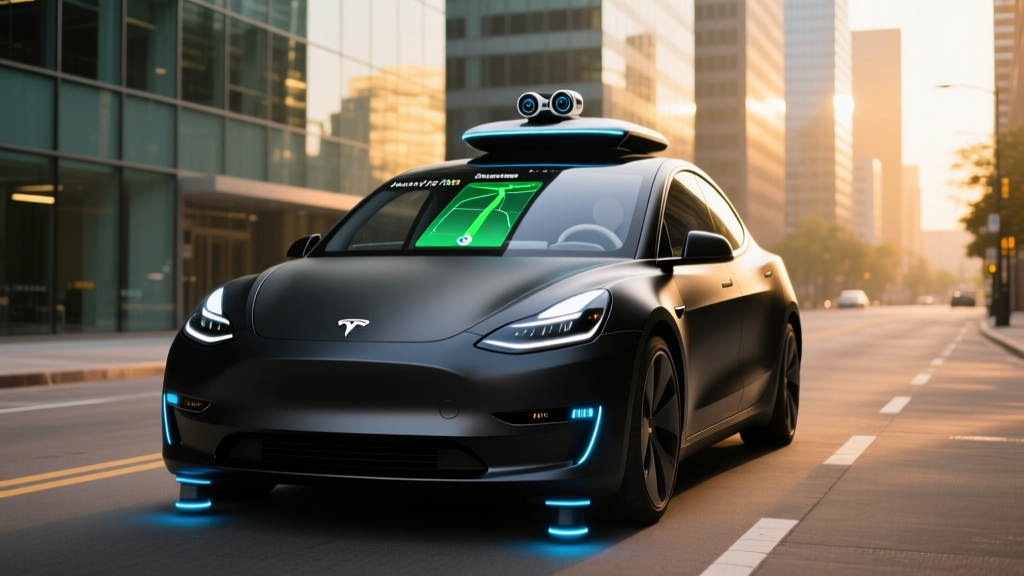
Understanding Tesla's FSD Transfer Program Changes
Tesla's Full Self-Driving (FSD) transfer program—which allowed owners to move their purchased FSD license from one Tesla vehicle to another—is ending. This policy shift has significant financial implications for current Tesla owners planning to upgrade or replace their vehicles in 2026.
The FSD transfer program was introduced as a limited-time offering that let owners retain their $8,000-$15,000 FSD investment when trading in or selling their Tesla. With this program ending, buyers must now decide whether to repurchase FSD on their next vehicle or switch to the monthly subscription model.
What Tesla FSD Actually Does (and Doesn't Do)
SAE Level 2 Driver Assistance
Important: Tesla FSD is a Level 2 driver-assistance system under SAE International's automation framework. This means the driver must remain fully engaged, monitor the driving environment at all times, and be prepared to take immediate control. FSD does not make your Tesla "self-driving" or autonomous—that designation applies only to Level 4 systems like Waymo's robotaxi service operating in geofenced areas.
Tesla's Full Self-Driving capability builds on the standard Autopilot system with additional features designed to reduce driver workload on highways and city streets. Here's what the system technically includes:
| Feature | Function | Technical Requirements |
|---|---|---|
| Traffic-Aware Cruise Control | Maintains set speed and following distance | 8 cameras, neural network processing |
| Autosteer | Keeps vehicle centered in clearly marked lanes | Camera-based lane detection, driver monitoring |
| Auto Lane Change | Changes lanes on highways when turn signal activated | Surround cameras, ultrasonic sensors |
| Navigate on Autopilot | Suggests and executes highway exits and interchanges | GPS, map data, camera perception |
| Autopark | Parallel and perpendicular parking assistance | Ultrasonic sensors, camera vision |
| Summon | Moves vehicle short distances in parking lots | Camera and ultrasonic sensor fusion |
| Traffic Light and Stop Sign Control | Detects and responds to traffic controls | Computer vision, map data |
| City Streets (Beta/Supervised) | Navigates urban environments with intersections | Advanced neural networks, extensive training data |
Real-World Capabilities and Limitations
What FSD Cannot Do
- Drive without supervision: You must keep your hands on the wheel and eyes on the road. The system uses a cabin camera to monitor driver attention.
- Handle all weather conditions: Heavy rain, snow, fog, or direct sun glare can impair camera vision and degrade performance.
- Navigate construction zones reliably: Temporary lane markings, cones, and changed traffic patterns often confuse the system.
- Work on poorly marked roads: Rural roads without clear lane lines or unmapped areas may cause FSD to disengage.
- Replace driver judgment: The system cannot anticipate erratic human behavior, road debris, or complex emergency scenarios.
In real-world testing on highway routes, FSD performs competently on well-marked interstates with clear weather conditions. However, city street driving remains inconsistent. During a 50-mile urban test route in moderate traffic, the system required driver intervention approximately every 8-12 miles for scenarios including unprotected left turns, complex intersections, and unexpected pedestrian behavior.
Cold weather performance presents additional challenges. When temperatures drop below freezing, camera lenses can accumulate frost or condensation, triggering system warnings and disengagement. Tesla recommends preconditioning your vehicle to warm the camera system before using FSD in winter conditions.
FSD Pricing: Purchase vs. Subscription in 2026
| Option | Cost | Transferability | Best For |
|---|---|---|---|
| One-Time Purchase | $8,000 (as of 2026) | No longer transferable after program end | Long-term owners (5+ years), high-mileage drivers |
| Monthly Subscription | $99/month | N/A (tied to active subscription) | Short-term owners, those wanting flexibility |
| Included with Vehicle | Varies by promotion | Tied to specific vehicle | New vehicle buyers during promotional periods |
With the FSD transfer program ending, the financial calculus changes significantly. Previously, a driver who purchased FSD for $8,000 and kept their Tesla for four years effectively paid $167/month. If they then transferred FSD to a new Tesla, that cost dropped to near zero on the second vehicle.
Now, owners face a choice: repurchase FSD for another $8,000 on their next Tesla, or switch to the $99/month subscription. For drivers who plan to keep their next Tesla for 6+ years, the one-time purchase still makes financial sense (break-even at 67 months). For those who trade vehicles every 3-4 years, the subscription model offers better economics.
Which Tesla Models Include FSD Capability?
Tesla's FSD hardware is standard on all current production vehicles, but the software capability must be purchased separately:
- Model 3 (2024-2026): All trims (Rear-Wheel Drive, Long Range, Performance) include FSD hardware. Software purchase or subscription required.
- Model Y (2024-2026): All trims include FSD hardware. Software purchase or subscription required.
- Model S (2024-2026): All trims include FSD hardware. Software purchase or subscription required.
- Model X (2024-2026): All trims include FSD hardware. Software purchase or subscription required.
- Cybertruck (2024-2026): All trims include FSD hardware. Software purchase or subscription required.
Tesla occasionally offers limited-time promotions that include FSD capability with new vehicle purchases or leases. These promotions are typically announced quarterly and vary by region. Check Tesla's current offers before assuming FSD requires separate purchase.
How FSD Compares to Competing Systems
| Manufacturer | System Name | SAE Level | Cost | Key Differentiator |
|---|---|---|---|---|
| Tesla | Full Self-Driving (FSD) | Level 2 | $8,000 or $99/mo | Camera-only vision, city street capability |
| Ford | BlueCruise | Level 2 | $2,100 + $75/yr or included | Hands-free on approved highways (130,000+ miles) |
| General Motors | Super Cruise | Level 2 | $2,500 or included on select trims | Hands-free on 750,000+ miles of mapped roads |
| BMW | Driving Assistant Professional | Level 2 | $1,700-$2,500 | Hands-off up to 85 mph on highways |
| Mercedes-Benz | Drive Pilot | Level 3 (limited) | $2,500 | Conditional Level 3 up to 40 mph (NV, CA only) |
The key distinction between Tesla FSD and competitors like Ford BlueCruise or GM Super Cruise lies in their operational design domains. Super Cruise and BlueCruise use LiDAR-mapped highway data and allow true hands-free driving on approved roads, but they do not function on unmapped surface streets. Tesla FSD attempts to work everywhere but requires continuous driver supervision.
Mercedes-Benz's Drive Pilot represents the only consumer-available Level 3 system in the U.S. as of 2026, but it's limited to specific conditions: speeds under 40 mph, daylight hours, clear weather, and approved highway sections in Nevada and California. The driver can legally disengage from driving tasks when conditions are met, but the system's operational scope is far narrower than Tesla's FSD ambitions.
What the End of FSD Transfers Means for Your Decision
If you're considering a Tesla purchase in 2026 and were counting on transferring an existing FSD license, you now face a fresh cost decision. Here's a practical framework:
Choose the $8,000 one-time purchase if:
- You plan to keep your Tesla for 6+ years
- You drive more than 15,000 miles annually and will use FSD regularly
- You prefer predictable, upfront costs over recurring subscriptions
Choose the $99/month subscription if:
- You typically trade vehicles every 3-4 years
- You want to test FSD before committing to the full purchase
- Your driving is primarily short commutes where FSD adds minimal value
- You prefer the flexibility to cancel during months when you won't use it
Skip FSD entirely if:
- You're satisfied with standard Autopilot (included with all Teslas) for highway driving
- Most of your driving is in urban areas where FSD city capabilities remain inconsistent
- You prefer to maintain full manual control and don't trust driver-assistance systems
Frequently Asked Questions
Can I still transfer FSD if I purchased it before the program ended?
Tesla has not announced a specific cutoff date for existing transfer requests already in process. If you initiated an FSD transfer before the program end announcement, contact Tesla support to confirm your transfer status. New transfer requests are no longer being accepted.
Does FSD work in all 50 states?
FSD is available in all U.S. states, but performance varies significantly by region. Areas with well-maintained roads, clear lane markings, and moderate weather see better results. Tesla's FSD city street capability performs best in the Phoenix, Austin, and Bay Area regions where extensive testing has occurred.
Will FSD get better over time with software updates?
Tesla regularly releases FSD software updates that improve performance and add features. However, there's no guarantee of when (or if) the system will achieve true autonomous capability. Tesla has been predicting "full autonomy within a year" since 2016. Purchase FSD based on its current capabilities, not future promises.
Is FSD safe? What do the safety statistics show?
Tesla publishes quarterly safety reports claiming vehicles with Autopilot engaged have lower crash rates than the national average. However, NHTSA has opened multiple investigations into Tesla's driver-assistance systems following crashes involving emergency vehicles and work zones. The IIHS has expressed concerns about driver monitoring and overreliance on automation. FSD is safe when used as intended—with full driver attention—but it is not a substitute for attentive driving.
What happens to my FSD subscription if I sell my Tesla?
FSD subscriptions are tied to your Tesla account and the specific vehicle. When you sell or trade your Tesla, the subscription does not transfer to the new owner. You can cancel your subscription at any time through your Tesla account. If you purchase a new Tesla, you'll need to start a new subscription or purchase FSD outright.
Does using FSD affect my insurance rates?
Insurance treatment of FSD varies by provider and state. Some insurers offer discounts for advanced driver-assistance systems, while others charge higher premiums due to the increased repair costs associated with camera and sensor damage. Tesla Insurance, available in select states, uses real-time driving data including Autopilot/FSD usage to calculate premiums. Contact your insurer directly for specific rate information.
The end of Tesla's FSD transfer program marks a significant shift in the economics of Tesla ownership. While the technology continues to evolve, buyers must now weigh the real-world capabilities and limitations against the non-transferable cost. For most drivers, the decision comes down to how long you plan to keep your vehicle and how much value you place on driver-assistance features that still require your full attention.