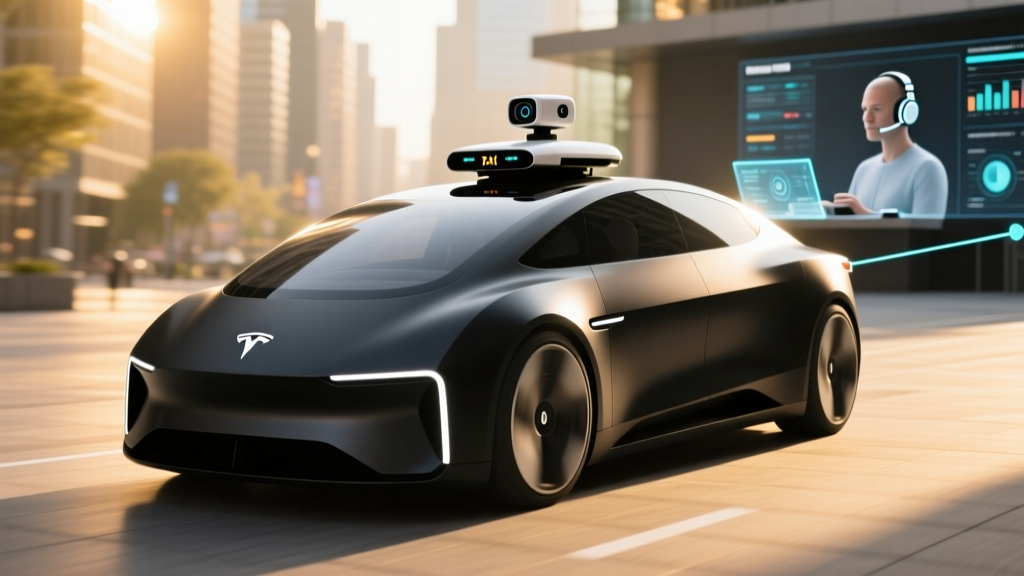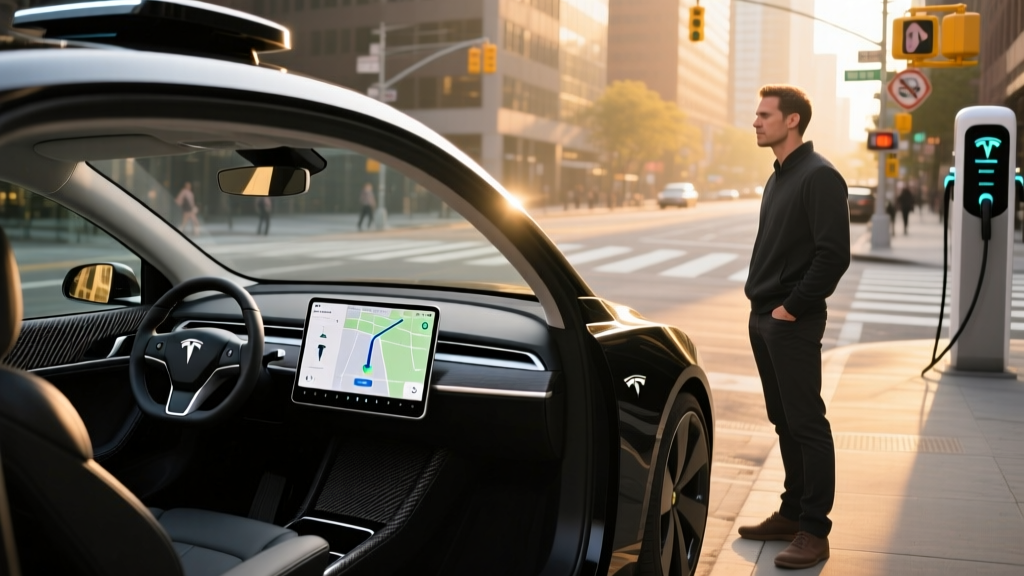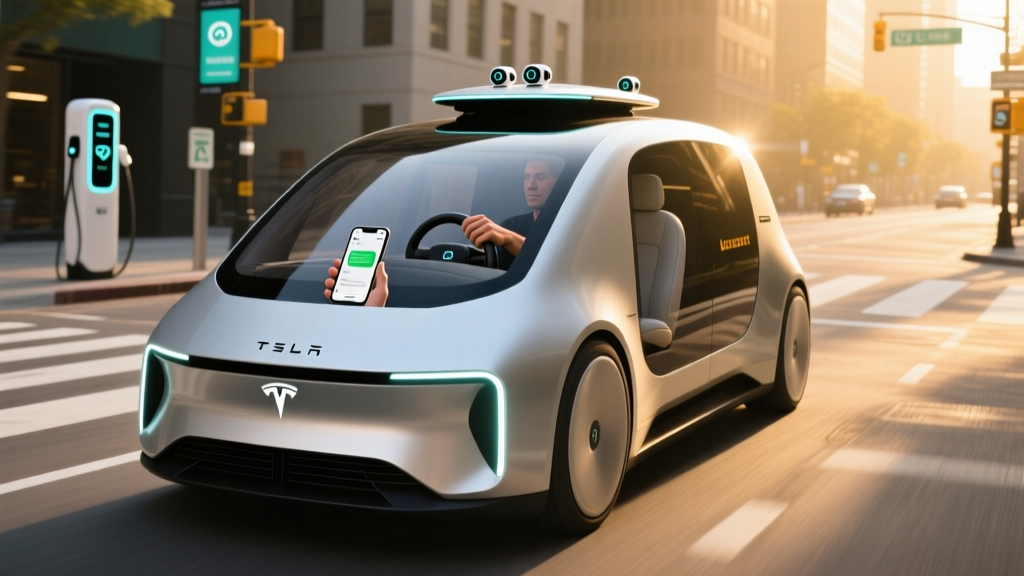
Search "Tesla FSD texting" on any forum or social platform and you'll find a polarized debate: viral videos of drivers reading phones, sleeping, or even sitting in the back seat — countered by safety advocates warning of catastrophic consequences. The question behind the search is straightforward: if the car is driving itself, can I legally and safely use my phone?
The short answer is no. Despite the "Full Self-Driving" name, Tesla's FSD (Supervised) is an SAE Level 2 driver-assistance system, not an autonomous vehicle. The driver remains legally responsible for the vehicle at all times. Texting, scrolling, or any phone use behind the wheel is illegal in most U.S. states and violates Tesla's own terms of use. Here's exactly what the technology does, what it doesn't do, and what happens if you ignore the rules.
What Tesla FSD (Supervised) Actually Does
Tesla's Full Self-Driving capability — officially branded FSD (Supervised) as of 2024 and continuing into 2026 — is an advanced driver-assistance suite built on Tesla's "Tesla Vision" architecture. It uses eight external cameras (no radar or lidar in current production vehicles) paired with Tesla's custom HW4.0 (and newer HW5.0 on latest models) onboard computer running neural-network-based perception software.
FSD (Supervised) extends beyond the standard Autopilot features included with every new Tesla. Here's a breakdown of what's layered on:
| Feature | Standard Autopilot | FSD (Supervised) |
|---|---|---|
| Traffic-Aware Cruise Control | ✓ | ✓ |
| Autosteer (lane centering, highways) | ✓ | ✓ |
| Auto Lane Change (with confirmation) | — | ✓ |
| Navigate on Autopilot (highway exits, interchanges) | — | ✓ |
| Traffic Light & Stop Sign Control | — | ✓ |
| Autosteer on City Streets | — | ✓ |
| Smart Summon (parking lot navigation) | — | ✓ |
| Autopark (parallel/perpendicular) | — | ✓ |
In practical terms, FSD (Supervised) can navigate city intersections, make turns, respond to traffic signals, and handle highway interchanges with minimal input — but the driver must continuously monitor the system and be ready to take over instantly.
Tesla FSD (Supervised) operates at SAE Level 2 automation per the SAE J3016 standard. This means the system provides combined steering and acceleration/braking support, but the human driver must remain fully engaged, eyes on the road, hands available to take control. Level 4 true self-driving — where no human intervention is needed within a defined operational domain — is currently only available through commercial robotaxi services like Waymo in select cities. No consumer vehicle sold in the U.S. in 2026 is Level 4.
The Legal Reality: Texting with FSD Engaged
Let's address the core search directly. Using a handheld phone to text, browse, or interact with apps while seated in the driver's seat of a Tesla — regardless of whether FSD (Supervised) is active — is illegal in 49 U.S. states and the District of Columbia under handheld device and distracted-driving laws. Montana is the only state without a statewide texting-while-driving ban as of early 2026, though local ordinances may still apply.
Key legal points every Tesla owner should understand:
- FSD activation does not change traffic law. You are the driver. The vehicle is not legally autonomous. If you are in the driver's seat and the car is in motion, all distracted-driving statutes apply to you.
- Tesla's cabin camera monitors attention. Current Tesla vehicles include an inward-facing cabin camera that tracks driver gaze. If the system detects you looking at a phone or away from the road, it issues escalating warnings and will eventually disengage Autosteer, requiring you to pull over before re-enabling it.
- Liability falls entirely on the driver. If a crash occurs while FSD is engaged and the driver was texting, the driver bears full legal and financial responsibility. Tesla's owner's manual and FSD terms explicitly state the driver must remain attentive and in control.
- NHTSA scrutiny is intensifying. The National Highway Traffic Safety Administration has issued standing General Orders requiring manufacturers to report crashes involving Level 2+ systems. Multiple investigations into Tesla Autopilot and FSD-related incidents have resulted in recalls and software updates mandating stricter driver-monitoring enforcement.
- Does not free you from legal responsibility as the driver
- Does not guarantee it will detect every obstacle, pedestrian, or stopped vehicle
- Does not perform reliably in heavy rain, snow, fog, or construction zones with shifted lanes
- Does not eliminate the need for hands near the wheel and eyes on the road
- Does not override state or federal distracted-driving laws
Driver Monitoring: How Tesla Enforces Attention
Tesla's attention-monitoring system has evolved significantly. Earlier model years relied primarily on steering-wheel torque detection — the system expected periodic resistance on the wheel. This was easily (and dangerously) defeated with weighted devices, prompting regulatory scrutiny.
Current 2025–2026 Tesla vehicles (Model 3 Highland, Model Y Juniper, refreshed Model S/X, and Cybertruck) use a cabin-facing camera with gaze-tracking AI as the primary attention monitor. The system works as follows:
- Continuous gaze tracking: The cabin camera monitors whether your eyes are directed toward the road ahead.
- Escalating alerts: If gaze leaves the road for more than a few seconds, the system issues a visual chime, then an audible warning, then progressively urgent alerts.
- Autosteer disengagement: Continued inattention triggers Autosteer deactivation for the remainder of the trip. The vehicle will slow and, in some configurations, activate hazard lights and come to a controlled stop.
- "Strike" system: Repeated inattention events are logged. Accumulating strikes can result in a temporary FSD suspension (typically one week), after which monitoring thresholds may be stricter.
In practice, this means texting on your phone will trigger cabin camera warnings within seconds. The system is specifically trained to recognize phone-holding postures and downward gaze patterns. While no monitoring system is perfect, Tesla's current implementation makes sustained phone use while FSD is active difficult to maintain without triggering intervention.
FSD Pricing: What It Costs in 2026
Tesla's FSD pricing has shifted multiple times. Here's the current structure for 2026 model-year vehicles:
| Option | Cost | Notes |
|---|---|---|
| FSD (Supervised) — One-Time Purchase | $8,000 | Available at vehicle purchase or added later; transfers with the vehicle, not the owner |
| FSD (Supervised) — Monthly Subscription | $99/month | Cancel anytime; does not transfer to a new vehicle; no long-term commitment |
| Enhanced Autopilot (discontinued for new orders) | N/A | Folded into base Autopilot or FSD tiers on newer vehicles |
| Base Autopilot | Included (standard) | TACC + Autosteer on highways; included on all new Teslas |
Is FSD worth the cost? That depends on your driving profile. If you commute long highway miles daily and value lane-change automation, the $99/month subscription is a low-risk way to test it. The $8,000 one-time purchase only makes financial sense if you plan to keep the vehicle 7+ years — and accept that FSD capability may not materially increase resale value. Tesla has historically not offered FSD transfer between vehicles, though limited promotional transfers have occurred.
Which Tesla Models Include FSD Capability?
FSD (Supervised) is available as an add-on across the entire 2026 Tesla lineup. It is not standard on any trim — it must be purchased or subscribed to separately. Here's model-level availability:
| Model | Hardware | FSD Availability | Base MSRP (2026) |
|---|---|---|---|
| Model 3 (Highland refresh) | HW4.0 / HW5.0 | Add-on ($8,000 or $99/mo) | ~$38,990 |
| Model Y (Juniper refresh) | HW4.0 / HW5.0 | Add-on ($8,000 or $99/mo) | ~$44,990 |
| Model S | HW4.0 | Add-on ($8,000 or $99/mo) | ~$74,990 |
| Model X | HW4.0 | Add-on ($8,000 or $99/mo) | ~$79,990 |
| Cybertruck | HW4.0 | Add-on ($8,000 or $99/mo) | ~$60,990 |
Note: MSRP figures are approximate base prices and subject to Tesla's frequent adjustments. FSD pricing is uniform across all models.
How Tesla FSD Compares to Competing Systems
Tesla isn't the only automaker offering advanced Level 2 driver-assist. Here's how FSD (Supervised) stacks up against key competitors in 2026:
| System | Automaker | Hands-Off? | Eyes-Off? | Cost | Key Limitation |
|---|---|---|---|---|---|
| Tesla FSD (Supervised) | Tesla | No (hands near wheel) | No | $8,000 / $99/mo | Vision-only; struggles in poor weather and unmapped construction |
| GM Super Cruise | GM (Cadillac, Chevy, GMC) | Yes (mapped highways) | No | $2,200 + $25/mo after trial | Only works on ~750,000 miles of pre-mapped divided highways |
| Ford BlueCruise 1.4 | Ford / Lincoln | Yes (mapped highways) | No | $2,100 + $75/yr after trial | Limited to pre-mapped highway sections; city streets not supported |
| BMW Highway Assistant (L2+) | BMW | Yes (up to 85 mph) | Yes (eyes-off, hands-off on select highways at ≤40 mph) | Included in Driving Assistant Pro (~$2,500 pkg) | Eyes-off only at low speeds on specific divided highways |
| Mercedes DRIVE PILOT (Level 3) | Mercedes-Benz | Yes | Yes (conditional) | ~$2,500/yr subscription | Only approved in NV and CA; ≤40 mph; specific highway conditions only |
The critical takeaway: no system available nationwide in 2026 legally permits phone use while driving. GM's Super Cruise and Ford's BlueCruise allow hands-off operation on mapped highways but still require eyes-on-road monitoring via infrared cameras. Mercedes' DRIVE PILOT is the only SAE Level 3 system approved in the U.S. (Nevada and California only), permitting limited eyes-off operation under 40 mph in traffic jams — but even this system does not permit texting and activates only under strict operational conditions.
Real-World Limitations That Make Distraction Dangerous
FSD (Supervised) has improved dramatically since its initial beta release, but real-world edge cases remain frequent enough that an inattentive driver creates genuine risk. Based on extensive owner reporting, IIHS research, and NHTSA incident data, here are the scenarios where FSD most commonly requires immediate human takeover:
- Construction zones: Shifted lanes, temporary barriers, and orange cones confuse the vision system. FSD may attempt to follow old lane markings or fail to recognize lane closures entirely.
- Unprotected left turns: Judging gaps in oncoming traffic at intersections without dedicated turn signals remains inconsistent. The system may hesitate excessively or, worse, initiate a turn with an insufficient gap.
- Heavy precipitation: Rain, snow, and fog degrade camera visibility. Tesla Vision has no radar fallback — when cameras are obscured, the system may disengage abruptly with minimal warning.
- Phantom braking: FSD has a documented tendency to brake hard for non-existent obstacles, particularly on highways with overpasses or shadows. A driver looking at a phone has zero time to react if the car slams its brakes at 70 mph.
- Emergency vehicles: While Tesla has improved detection of stationary emergency vehicles with flashing lights (following NHTSA recommendations), response is not 100%. A distracted driver may not notice the system failing to yield or pull over.
- Complex multi-lane roundabouts: Lane selection and yield logic in large roundabouts can produce erratic behavior requiring intervention.
The physics are unforgiving: at 65 mph, a vehicle travels 95 feet per second. If FSD makes an unexpected decision and your eyes are on a phone screen, the 2–3 seconds required to look up, process the situation, and react translates to 190–285 feet of unmonitored travel. That's the difference between a routine correction and a collision.
Frequently Asked Questions
Can Tesla's cabin camera actually see if I'm texting?
Yes. The inward-facing cabin camera uses machine learning to detect gaze direction and phone-holding postures. Looking down at a phone in your lap or held up to your face will trigger attention warnings within seconds. The system does not record or transmit video of you — it processes attention data locally — but it does log inattention events that can lead to FSD suspension.
Will Tesla FSD ever be truly self-driving?
Tesla has projected full autonomy for years, but as of 2026, FSD remains SAE Level 2. Achieving Level 4 or 5 requires solving edge cases that current vision-only approaches have not demonstrated at scale. Regulatory approval for driverless consumer vehicles does not yet exist in most jurisdictions. If Tesla achieves unsupervised FSD, it would require new hardware validation, regulatory certification, and likely different liability frameworks.
If I crash while FSD is on and I was on my phone, is Tesla liable?
No. Tesla's terms of service, owner's manual, and in-app warnings explicitly place full driving responsibility on the human operator. Multiple court cases have affirmed that Level 2 driver-assist systems do not transfer liability to the manufacturer. If phone use is established (via phone records, cabin camera data, or witness testimony), the driver bears full civil and criminal liability.
Is it legal to use a phone mount and interact with navigation while FSD drives?
Most state distracted-driving laws exempt built-in navigation systems and allow brief, single-touch interactions with mounted phones for navigation purposes. However, extended interaction — typing addresses, scrolling, or reading messages — is illegal even with a mounted device. FSD being active does not change this. Use voice commands or set your destination before engaging FSD.
Does Tesla report FSD phone-use data to insurance companies?
Tesla offers its own insurance product in many states that uses real-time driving data, including Autopilot/FSD engagement and safety scores. While Tesla has not publicly detailed whether cabin-camera inattention events are shared with third-party insurers, your Tesla Safety Score — which factors into Tesla Insurance premiums — is affected by forced Autopilot disengagements, which inattention triggers. After a crash, phone records and vehicle telemetry are discoverable in legal proceedings regardless.
How does FSD's attention monitoring compare to GM Super Cruise?
GM's Super Cruise uses a dedicated infrared camera mounted on the steering column that tracks eye gaze with high precision — widely considered more robust than Tesla's cabin camera approach. Both systems will disengage if the driver looks away for sustained periods. Neither system permits phone use, and both log inattention events.
The bottom line: Tesla FSD (Supervised) is one of the most capable Level 2 driver-assist systems available in 2026, handling an impressive range of driving scenarios. But it is not self-driving, it does not make phone use legal, and the real-world edge cases where human intervention is critical occur frequently enough that distraction behind the wheel remains genuinely dangerous. Use FSD for what it is — a sophisticated co-pilot that reduces fatigue on long drives — and keep your phone in your pocket.