Tesla FSD Supervised v14.3: A Major Update, Not a Robotaxi
When Tesla began rolling out Full Self-Driving Supervised v14.3 to users in early 2026, the social media reaction was predictable: breathless claims that autonomy had finally arrived. The reality, as with every previous FSD iteration, is more nuanced — and more interesting if you look at the actual engineering.
FSD Supervised v14.3 represents a meaningful refinement of Tesla's vision-only neural-network approach to driver assistance. It smooths out lane-change hesitancy, improves unprotected left-turn execution, and reduces phantom braking events on divided highways. But it remains, by definition and by law, a Level 2 driver-assistance system that requires continuous human supervision. It is not a robotaxi. It does not remove the driver from the loop.
This article breaks down exactly what v14.3 changes, how it compares to true Level 4 robotaxi services from Waymo and others, what the safety data actually shows, and what limitations remain hard barriers to unsupervised operation.
SAE Automation Levels: Where FSD Supervised Actually Sits
The single most important thing to understand about Tesla FSD — in v14.3 or any prior version — is its classification under the SAE J3016 automation framework. Misunderstanding this distinction is the root of most public confusion about autonomous driving.
| Level | Name | Who Drives | Example Systems (2026) |
|---|---|---|---|
| Level 0 | No Automation | Human does everything | Basic cruise control |
| Level 1 | Driver Assistance | Human + one automated function | Adaptive cruise OR lane-keep |
| Level 2 | Partial Automation | Human supervises; system steers + accelerates | Tesla FSD Supervised, GM Super Cruise, Ford BlueCruise |
| Level 3 | Conditional Automation | System drives in narrow ODD; human takes over on request | Mercedes Drive Pilot (limited markets, ≤40 mph) |
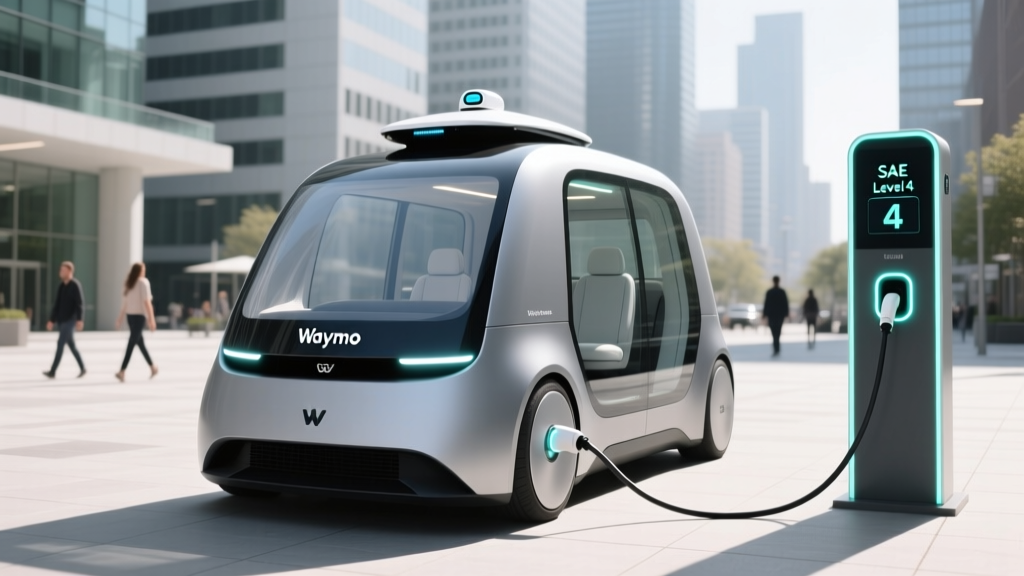
| Level 4 | High Automation | System drives fully within geofenced area; no human needed | Waymo One, Zoox |
| Level 5 | Full Automation | System drives everywhere, all conditions | Does not exist commercially |
Bottom line: Tesla FSD Supervised v14.3 is a Level 2 system. The driver must remain attentive, keep hands available, and be prepared to intervene at any moment. Tesla's own documentation and the system's in-cabin warnings make this explicit. Calling it "self-driving" without the "Supervised" qualifier is technically incorrect and legally consequential.
This is not a knock on Tesla's engineering. Level 2 systems have become remarkably capable in the 2024–2026 timeframe. But the gap between Level 2 (driver responsible) and Level 4 (system responsible) is not a software update — it's a fundamentally different liability, regulatory, and safety-validation problem.
What's Actually New in FSD Supervised v14.3
Based on Tesla's release notes and early user telemetry shared through the FSD tracking community, v14.3 introduces several measurable improvements over v14.2:
- End-to-end neural network refinement: v14.x moved to a unified neural network handling perception, planning, and control simultaneously rather than modular rule-based handoffs. v14.3 trains on a significantly expanded dataset of edge-case scenarios — construction zones, irregular intersections, and adverse-weather clips.
- Reduced intervention frequency: Early aggregated user data suggests disengagements per 1,000 miles have dropped roughly 18–22% compared to v14.2 on comparable road types, though this varies heavily by geography.
- Smoother speed management: Less oscillation around posted speed limits, particularly in school zones and transitional speed areas.
- Improved unprotected left turns: A historically weak point for vision-only systems. v14.3 shows better gap-selection judgment at uncontrolled intersections, though complex multi-lane scenarios still generate conservative hesitation.
- Lane-change decisiveness: Reduced "abort-and-retry" cycles during highway merges.
These are real engineering gains. They are not, however, a crossing of the Level 2 → Level 4 threshold.
FSD Supervised vs. True Robotaxis: The Honest Comparison
Because Tesla's branding invites the comparison, it's worth directly contrasting FSD Supervised v14.3 with actual Level 4 robotaxi services operating in the US in 2026.
| Service | SAE Level | Operational Cities (2026) | Driver Required? | Pricing Model |
|---|---|---|---|---|
| Waymo One | Level 4 | Phoenix, San Francisco, Los Angeles, Austin, expanding | No | Per-ride, comparable to UberX |
| Zoox | Level 4 | Las Vegas, San Francisco (limited zones) | No | Invite/pilot program; per-ride pricing in expansion |
| Cruise | Level 4 | Gradual re-launch post-2024 suspension; Phoenix, Dallas (limited) | No | Per-ride; phased return |
| Tesla FSD Supervised v14.3 | Level 2 | Any public road (vehicle owner operates) | Yes, always | $8,000 one-time purchase or ~$99/mo subscription (no per-ride fee) |
The structural difference is stark. Waymo One riders summon a vehicle with no one in the driver's seat; the system assumes full operational and legal responsibility within its approved Operational Design Domain (ODD). Tesla FSD Supervised puts the legal and operational burden squarely on the human behind the wheel, even when the software is performing well.
How to Use FSD Supervised v14.3 (and What It Costs)
FSD Supervised is not a ride-hailing service — it's a vehicle feature. Here's how access works in 2026:
- Vehicle eligibility: Hardware 4 (HW4) or newer Tesla vehicles (Model S/X from ~2023 refresh, Model 3 Highland, Model Y Juniper, Cybertruck).
- Purchase: $8,000 one-time or approximately $99/month subscription, per Tesla's current pricing. This is an over-the-air software feature, not a separate vehicle.
- Activation: The driver engages FSD Supervised via the stalk or touchscreen after acknowledging the supervision requirement. The cabin camera monitors driver attention; repeated inattention triggers escalating warnings and eventual lockout for the drive.
- Operational scope: Unlike geofenced Level 4 services, FSD Supervised attempts to operate on any public road — highways, surface streets, rural routes. Capability varies dramatically by road type and complexity.
| Option | Upfront Cost | Per-Trip Cost | Best For |
|---|---|---|---|
| Tesla FSD Supervised (subscription) | $0 (monthly) | $99/mo flat + electricity | Daily Tesla owners who want reduced driving workload |
| Tesla FSD Supervised (purchase) | $8,000 | Electricity only | High-mileage Tesla owners planning multi-year ownership |
| Waymo One | $0 | ~$1.00–$1.50/mile (varies by city/demand) | Urban riders in Waymo cities who want no-driver rides |
| UberX / Lyft | $0 | ~$1.20–$2.00/mile | Universal availability; human driver flexibility |
The economics are fundamentally different: FSD Supervised is a driver-assist feature for vehicle owners, not a transportation-as-a-service offering. You cannot summon a driverless Tesla today, despite years of "Robotaxi Day" marketing.
Safety Data: What the Numbers Actually Show
Safety claims around autonomous and driver-assist systems are often the most overstated aspect of public discussion. Let's look at concrete data.
FSD Supervised Safety Context
Tesla's self-reported data (Q4 2025 Vehicle Safety Report): Tesla claims approximately 1 crash per ~4.5 million miles driven with FSD Supervised engaged, versus the US average of roughly 1 crash per ~670,000 miles (NHTSA baseline). However, this comparison is methodologically imperfect — Tesla's fleet skews toward highway miles in good weather, and "crash" definitions differ.
Independent disengagement tracking: Aggregated user-reported disengagement data (via third-party trackers like FSD Tracker) suggests intervention rates of roughly 1 disengagement per 150–250 miles on mixed surface streets, improving to 1 per 400–600 miles on controlled-access highways under v14.x.
NHTSA Standing General Order data: Under NHTSA's crash-reporting mandate, Tesla has reported hundreds of incidents involving Autopilot/FSD-engaged vehicles since 2021. These are not necessarily caused by the system, but they represent cases where the system was active at the time of a crash.
For comparison, Waymo publishes its own safety data showing that across 30+ million driverless miles in Phoenix, San Francisco, and Los Angeles, its vehicles were involved in injury-causing crashes at a rate roughly 85% lower than human benchmarks in comparable geographies. Waymo's data benefits from a tightly controlled ODD; Tesla's data spans every road type and weather condition a private owner encounters.
The honest takeaway: FSD Supervised v14.3 is a meaningfully safer driver-assist system than v12 or v13, and it likely reduces crash risk relative to inattentive human driving on highway routes. It is not, based on available data, demonstrably safer than a Level 4 robotaxi operating within its designed domain — and it doesn't claim to be, because the human remains responsible.
The Technology Stack: Vision-Only vs. Sensor Fusion
Tesla's technical approach to FSD remains philosophically distinct from the rest of the autonomous-driving industry, and v14.3 doubles down on this bet.
Tesla FSD Supervised — Vision-Only Stack
- Sensors: 8 cameras (HW4) providing 360° surround view. No lidar. No radar on current-production vehicles (Tesla removed radar from new vehicles starting 2021–2022 and ultrasonic sensors from 2022+ builds).
- Compute: HW4 dual-chip FSD computer, ~2x the processing throughput of HW3.
- Software approach: End-to-end neural network (v14.x) — a single unified model handles perception, path planning, and control, trained on billions of miles of real-world driving video. Rule-based "if-then" code has been largely eliminated.
- Mapping: Lane-level HD maps generated from fleet data, but the system is designed to operate even where map coverage is sparse.
- Geofencing: None. FSD Supervised attempts to drive anywhere, which is both its ambition and its liability.
Waymo / Zoox — Sensor Fusion Stack
- Sensors: Multiple lidar units, radar, cameras, and ultrasonic sensors — redundant perception layers.
- Mapping: Centimeter-precision HD maps of every operational road, maintained continuously.
- Geofencing: Strict. Vehicles will not operate outside approved ODD boundaries, and will pull over safely if conditions exceed capability (heavy rain, construction zone changes).
- Remote assistance: Fleet operations centers can provide high-level guidance (not remote driving) when vehicles encounter novel scenarios.
Both approaches have produced impressive results in their respective domains. Tesla's vision-only approach has the advantage of scalability — cameras are cheap, and data from millions of customer vehicles provides a training corpus no robotaxi fleet can match. The disadvantage is that cameras alone struggle in scenarios where lidar excels: precise depth estimation in low light, direct velocity measurement of nearby objects, and redundancy when a single sensor modality is degraded (sun glare, heavy rain, fog).
Current Limitations of FSD Supervised v14.3
Being honest about what FSD Supervised cannot reliably do is essential for anyone using or considering the system. These are not edge cases — they are regular driving scenarios.
- Adverse weather: Heavy rain, snow, fog, and ice on camera lenses degrade performance significantly. Tesla's owner manual explicitly states FSD should not be used in these conditions.
- Construction zones: While v14.3 has improved here, temporary lane shifts, flaggers, and irregular cone patterns remain high-disengagement scenarios.
- Unprotected complex intersections: Multi-lane unprotected left turns with oncoming traffic, pedestrians, and bicycles simultaneously still produce conservative behavior or intervention requests.
- Rural and unmapped roads: Roads with faded lane markings, no center lines, or recent layout changes are less reliable.
- Sun glare and camera occlusion: Low-angle sun, dirty cameras, and water spray can blind the vision system with no lidar fallback.
- Emergency vehicles: Detection of stationary emergency vehicles with flashing lights has improved but is not 100% reliable — a known NHTSA investigation area.
- No driver removal: You cannot nap, read, or look at your phone. The cabin camera will escalate warnings and eventually disable FSD for the drive if attention is not maintained.
Critical reminder: FSD Supervised v14.3 does not make your Tesla a self-driving car. You are the driver. You are legally liable for every action the vehicle takes while FSD is engaged. Insurance, traffic citations, and crash liability all rest with you. No version of FSD to date has changed this legal reality.
Regulatory Landscape: Who Approves What
Understanding why Tesla can sell FSD Supervised nationwide while Waymo requires city-by-city approval comes down to the regulatory framework:
- Level 2 systems (FSD Supervised, Super Cruise, BlueCruise): Regulated as driver-assist features under existing Federal Motor Vehicle Safety Standards (FMVSS). NHTSA can investigate and order recalls for safety defects, but no pre-market approval is required. The human driver is the responsible party.
- Level 4 systems (Waymo, Zoox, Cruise): Require state-level permits for driverless operation. California (CPUC + DMV), Arizona, Texas, and Nevada have specific regulatory frameworks. Each operational city typically requires local agreement, law enforcement coordination, and first-responder protocols. The company is the responsible party when the system is engaged.
- Federal oversight: NHTSA maintains the Standing General Order requiring crash reporting for Level 2+ and ADS-equipped vehicles, and has active investigations into Autopilot/FSD crash patterns.
This is why Tesla can push FSD Supervised v14.3 to hundreds of thousands of vehicles overnight via OTA, while Waymo's expansion to a new city takes months or years of regulatory work. The liability structures are fundamentally different.
Frequently Asked Questions
Is Tesla FSD Supervised v14.3 truly self-driving?
No. It is a Level 2 driver-assistance system. The word "Supervised" in the product name is a legal and technical requirement: the human driver must monitor the system at all times and be prepared to take over instantly. Only Level 4 services like Waymo One operate without a human driver in the loop, and only within tightly defined geofenced areas.
Where can I use FSD Supervised v14.3?
Anywhere you can legally drive a Tesla — the system is not geofenced. However, capability varies enormously by road type. Controlled-access highways in fair weather are where it performs best. Complex urban intersections, construction zones, and adverse weather are where disengagements are most frequent.
How much does FSD Supervised cost in 2026?
Tesla currently offers FSD Supervised as a $8,000 one-time purchase or approximately $99/month subscription. This is a feature of a vehicle you own — it is not a per-ride transportation service. Compare this to Waymo One, which charges per ride (~$1.00–$1.50/mile) but requires no vehicle ownership.
How safe is FSD Supervised compared to human driving?
Tesla's self-reported data suggests lower crash rates per mile with FSD engaged versus the US average, but methodological differences (fleet composition, road types, weather, reporting definitions) make direct comparison difficult. Independent data suggests disengagement rates of roughly 1 per 150–250 miles on mixed surface streets under v14.x — meaning the system requires human intervention multiple times on a typical 30-minute commute. It is a capable assist system; it is not a replacement driver.
Will FSD ever become Level 4 or Level 5?
Tesla has predicted imminent full autonomy since approximately 2016. As of 2026, no Tesla vehicle offers unsupervised driverless operation on public roads, and no regulatory body has approved such operation. Achieving Level 4 would require not just software improvement but a fundamentally different validation, liability, and regulatory framework. Treat any timeline predictions with extreme skepticism.
Does the §30D federal EV tax credit apply to FSD?
No. The IRS §30D clean vehicle credit applies to the purchase of eligible new electric vehicles meeting MSRP, income, and battery-sourcing requirements. Software features like FSD Supervised are not eligible for separate tax credits. Whether FSD purchase price is included in the vehicle's MSRP for cap purposes depends on how it's invoiced at purchase — consult a tax professional for your specific situation.
The Bottom Line for EV Buyers
Tesla began rolling out Full Self-Driving Supervised v14.3 to users as a genuinely improved driver-assist system — smoother, more decisive, and requiring fewer interventions than its predecessors. For Tesla owners who drive significant highway miles or deal with monotonous commutes, it is a meaningful quality-of-life feature worth the subscription price.
It is not, and should not be confused with, a robotaxi. You are the driver. You are the liability backstop. You must pay attention. And if you're choosing between a Tesla with FSD Supervised and a Waymo One ride in a city where both are available, you're choosing between two fundamentally different products: a car you drive (with help) versus a ride you take (with no driver at all).
For EV shoppers evaluating Tesla specifically, FSD Supervised should factor into the purchase as an optional convenience feature — not as a reason to expect autonomous transportation. Judge the vehicle on its range, charging speed, price, and ownership economics first. If FSD Supervised makes the daily drive easier, that's a bonus. Just don't take your hands off the wheel.