What Tesla FSD (Supervised) Actually Does
Full Self-Driving (Supervised) — commonly searched as "c fsd" or simply "FSD" — is Tesla's most advanced driver-assistance software tier, sitting above the standard Autopilot and Enhanced Autopilot packages. As of 2026, FSD (Supervised) enables city-street navigation, traffic-light and stop-sign recognition with automatic response, lane changes on highways and surface streets, and on/off-ramp handling, all within a single end-to-end neural network architecture that Tesla has iterated on since the v12 rewrite.
Under the hood, FSD relies entirely on Tesla Vision — a camera-only perception stack. Current Model 3, Model Y, Model S, and Model X vehicles ship with the HW4 (also called AI4) computer and a suite of exterior cameras providing 360-degree coverage. Tesla removed ultrasonic sensors and radar from new production vehicles beginning in 2022–2023, meaning depth estimation and object detection are performed through learned visual inference rather than direct distance measurement.
| Feature | What It Does | Availability |
|---|---|---|
| Traffic-Aware Cruise Control | Maintains set speed and following distance | Standard Autopilot |
| Autosteer | Center-lane keeping on marked highways | Standard Autopilot |
| Auto Lane Change | Initiates lane changes based on navigation route | FSD (Supervised) |
| City Streets Navigation | Handles intersections, turns, traffic lights, stop signs | FSD (Supervised) |
| Smart Summon | Vehicle navigates parking lots to driver's phone location | FSD (Supervised) |
| Autopark | Parallel and perpendicular parking assist | FSD (Supervised) |
When FSD (Supervised) is engaged, the vehicle attempts to follow the navigation route from origin to destination, managing speed, steering, lane selection, and intersection behavior. The driver sets the route, confirms engagement, and must continuously monitor the system.
SAE Automation Level: Why FSD Is Level 2, Not Self-Driving
SAE Level 2 — Partial Driving Automation. Tesla FSD (Supervised) is classified as SAE Level 2 by the Society of Automotive Engineers' J3016 framework. This means the system can simultaneously control steering and acceleration/braking under certain conditions, but the human driver must remain fully engaged, hands on or near the wheel, eyes on the road, and ready to intervene at any moment. The vehicle does not accept full liability for driving decisions.
This distinction is critical and frequently misunderstood. Tesla's own owner's manual and marketing materials use the "Supervised" suffix specifically to communicate this requirement. The system will issue escalating alerts — visual chimes, audio warnings, and eventually a forced pullover with hazard lights — if it detects driver inattention via the cabin camera monitoring eye gaze.
For true comparison, SAE Level 4 systems like Waymo's robotaxi service operate without any driver present in geofenced areas and accept operational liability. No consumer vehicle sold in the United States in 2026 operates at Level 3 or above on public roads without geographic or conditional restrictions. Mercedes-Benz's Drive Pilot holds a limited Level 3 certification in Nevada and California, but only below 40 mph on specific divided highways in clear conditions — a far narrower operational design domain than what FSD attempts.
Pricing: $8,000 Purchase vs. $99/Month Subscription
Tesla offers FSD (Supervised) through two pricing models, and the right choice depends heavily on your ownership horizon and annual mileage.
| Option | Cost | Transferable? | Best For |
|---|---|---|---|
| One-Time Purchase | $8,000 | No (tied to vehicle) | Owners planning 5+ years, high mileage |
| Monthly Subscription | $99/month | N/A (cancel anytime) | Lease holders, occasional users, triers |
| Enhanced Autopilot | $6,000 one-time | No | Highway-only assist, no city streets |
| Basic Autopilot | Included (no cost) | N/A | TACC + Autosteer on highways |
At $99/month, the subscription breaks even against the $8,000 purchase at approximately 81 months — nearly seven years. If you plan to trade or sell your Tesla within four to five years, the subscription is almost always the more rational financial decision, especially since FSD does not reliably add equivalent resale value. Tesla occasionally offers promotional FSD transfers to new vehicles for existing owners; these are limited-time programs and should not be counted on.
One important note: FSD (Supervised) is not a prerequisite for the §30D federal clean vehicle tax credit. That credit — up to $7,500 for eligible new EVs, subject to MSRP caps ($55,000 sedans, $80,000 SUVs/trucks/vans), buyer income limits ($150K single / $300K joint), and battery-sourcing requirements — applies to the vehicle itself regardless of software package. Consult a tax professional for your specific eligibility.
Which Tesla Models and Trims Include FSD?
FSD (Supervised) is available as an add-on across Tesla's entire 2026 consumer lineup. It is not standard on any trim — you must purchase or subscribe.
| Package Name | Includes | Cost |
|---|---|---|
| Autopilot (Basic) | Traffic-Aware Cruise Control + Autosteer (highway lanes only) | Standard on all Teslas |
| Enhanced Autopilot (EAP) | Basic + Auto Lane Change, Navigate on Autopilot, Autopark, Smart Summon | $6,000 |
| FSD (Supervised) | EAP + Traffic Light/Stop Sign Control + City Street Navigation | $8,000 or $99/mo |
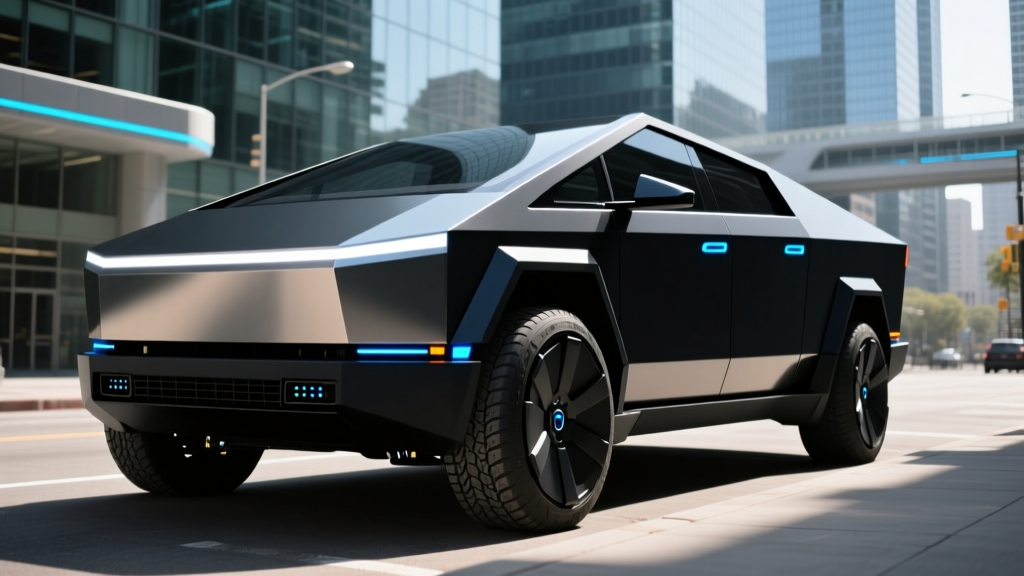
Every new 2026 Model 3 (Highland and refreshed variants), Model Y (Juniper), Model S, and Model X ships with the HW4/AI4 compute platform capable of running FSD. The Cybertruck also supports FSD (Supervised) and received city-street capability in a 2025 software update. Older vehicles with HW3 (roughly pre-2019 builds and some 2019–2022 units not upgraded) may face limitations as Tesla's neural network models increasingly target HW4's higher-resolution camera inputs and faster inference throughput.
Real-World Capabilities: Where FSD Excels
Based on extensive real-world use across multiple Tesla models and software versions through early 2026, FSD (Supervised) performs most competently in the following scenarios:
- Suburban arterial roads with clear lane markings, moderate traffic, and standard signalized intersections. The system handles left and right turns, including protected and unprotected turns, with increasing smoothness.
- Highway driving including on-ramp to off-ramp navigation, lane changes around slower traffic, and speed adjustment for curves and congestion. This remains FSD's strongest domain.
- Predictable city grids with well-marked lanes, standard signage, and right-angle intersections. Cities like Phoenix, Austin, and Sacramento tend to produce better FSD behavior than older, irregularly laid-out cities.
- Daytime, clear-weather conditions where camera visibility is unobstructed.
The end-to-end neural network approach (introduced with v12 and refined through v13 and subsequent updates) produces noticeably more human-like driving behavior compared to the older rules-based stack. Jerky braking, hesitation at four-way stops, and overly cautious lane changes have been substantially reduced — though not eliminated.
Real-World Limitations: Where FSD Falls Short
⚠ Critical Limitations — Driver Must Stay Engaged
FSD (Supervised) does not handle all driving scenarios safely. You must be prepared to take over immediately in these common situations:
- Construction zones with temporary lane shifts, cones, and flaggers — the system frequently misreads temporary markings or fails to recognize flagger hand signals.
- Heavy rain, fog, or snow — camera obstruction degrades perception rapidly. The system may issue a "camera visibility reduced" warning and disengage features.
- Faded or conflicting lane markings — especially in older cities or recently repaved roads where old markings are visible beneath new ones.
- Unprotected left turns across multi-lane traffic — the system sometimes hesitates excessively or misjudges gaps in oncoming traffic.
- Roundabouts and non-standard intersections — behavior can be unpredictable, including unnecessary stops or incorrect yield decisions.
- Emergency vehicles — while Tesla has improved detection of stationary emergency vehicles with flashing lights, response is not guaranteed. You must disengage and take over.
- Night driving on poorly lit rural roads — reduced camera visibility limits object detection range.
Source: NHTSA guidance on automated driving systems emphasizes that Level 2 systems require continuous driver supervision.
Cold-weather performance deserves specific mention. In temperatures below freezing, particularly with road salt spray or slush accumulation on cameras, FSD may restrict functionality entirely. Owners in northern climates should expect to manually drive more frequently during winter months. This is a practical ownership reality, not a theoretical edge case.
FSD vs. Competing Systems: How It Stacks Up
Tesla's FSD is not the only advanced Level 2 driver-assist system on the market. Here's how it compares to key competitors available in 2026:
| System | Manufacturer | Hands-Free? | City Streets? | Cost |
|---|---|---|---|---|
| FSD (Supervised) | Tesla | No (hands-on, eye monitoring) | Yes | $8,000 / $99 mo |
| Super Cruise | GM (Cadillac, Chevy, GMC) | Yes (on mapped highways) | No | $2,500 or included on select trims |
| BlueCruise | Ford / Lincoln | Yes (on mapped highways) | No | $2,100 / $75 mo |
| Drive Pilot | Mercedes-Benz | Yes (Level 3, limited ODD) | No (highway only, <40 mph) | $2,500/yr subscription |
| ProPILOT Assist 2.0 | Nissan | Yes (on mapped highways) | No | Included on higher trims |
| Toyota Safety Sense (TEC) | Toyota | No | No | Standard on most models |
The key trade-off: Tesla FSD attempts the broadest operational design domain (city streets + highway, nationwide), but requires hands-on engagement. GM's Super Cruise and Ford's BlueCruise offer true hands-free driving — eyes off the road is permitted on pre-mapped divided highways — but they do not handle city streets at all. If your primary use case is long highway commutes on interstates, Super Cruise or BlueCruise may actually deliver a more relaxed experience because the hands-free permission reduces fatigue.
For safety ratings and how driver-assist features factor into vehicle evaluation, the Insurance Institute for Highway Safety (IIHS) maintains updated assessments of partial automation systems across model years.
Should You Buy or Subscribe to FSD?
The decision framework comes down to three questions:
1. How long will you keep the vehicle? Under five years: subscribe. Over five years with high daily mileage on varied roads: the purchase may justify itself, though resale-value recovery of the $8,000 is uncertain.
2. What's your driving environment? If you primarily drive well-marked suburban and highway routes in fair weather, FSD's city-street capability adds genuine daily utility. If you drive mostly in heavy snow, rural unmarked roads, or dense chaotic urban traffic with constant construction, you'll disengage frequently and get less value.
3. Are you comfortable as a test driver? Despite significant improvement through 2025–2026, FSD (Supervised) still makes unexpected decisions. Drivers who find this stressful — who tense up at every intersection approach — will not enjoy the experience regardless of technical capability. The supervision burden is real and continuous.
Frequently Asked Questions
Is Tesla FSD truly self-driving?
No. Tesla FSD (Supervised) is an SAE Level 2 driver-assistance system. The driver must remain fully attentive, keep hands on or near the steering wheel, and be prepared to take over instantly. Tesla uses the "Supervised" label specifically to communicate this requirement. No consumer Tesla vehicle operates autonomously.
How much does Tesla FSD cost in 2026?
FSD (Supervised) costs $8,000 as a one-time purchase or $99 per month as a subscription. Enhanced Autopilot, which includes highway lane changes and Navigate on Autopilot but not city-street driving, is $6,000. Basic Autopilot (traffic-aware cruise control and lane-keeping) is included standard on all new Teslas.
Can FSD handle rain and snow?
FSD performance degrades in heavy rain, fog, and snow because it relies on camera visibility. In moderate rain, the system typically remains functional but with reduced confidence. In heavy precipitation or when cameras become obscured by salt spray or ice, FSD features may be restricted or disabled entirely. Always be prepared to take over in adverse weather.
Does FSD transfer to a new Tesla if I buy another one?
Generally, no. The FSD purchase is tied to the specific vehicle VIN. Tesla has occasionally run limited-time FSD transfer promotions for existing owners purchasing a new vehicle, but these are not guaranteed programs. The $99/month subscription stays with your Tesla account and can be applied to a new vehicle.
What hardware does my Tesla need to run FSD?
All 2026 Tesla vehicles ship with the HW4 (AI4) computer and high-resolution camera suite required for FSD (Supervised). Vehicles built before mid-2019 have HW2.5 or earlier and are not compatible. Some HW3 vehicles (2019–2022) may be eligible for a hardware upgrade — check your Tesla account or service center for availability.
How does FSD compare to Waymo?
Waymo operates a Level 4 robotaxi service with no driver present, but only in geofenced areas of select cities (Phoenix, San Francisco, Los Angeles, Austin). Tesla FSD is Level 2 — driver required — but operates nationwide on virtually any road. These are fundamentally different systems: Waymo accepts driving liability in its operational area; Tesla does not.