Tesla FSD Subscription Cost: The 2026 Breakdown
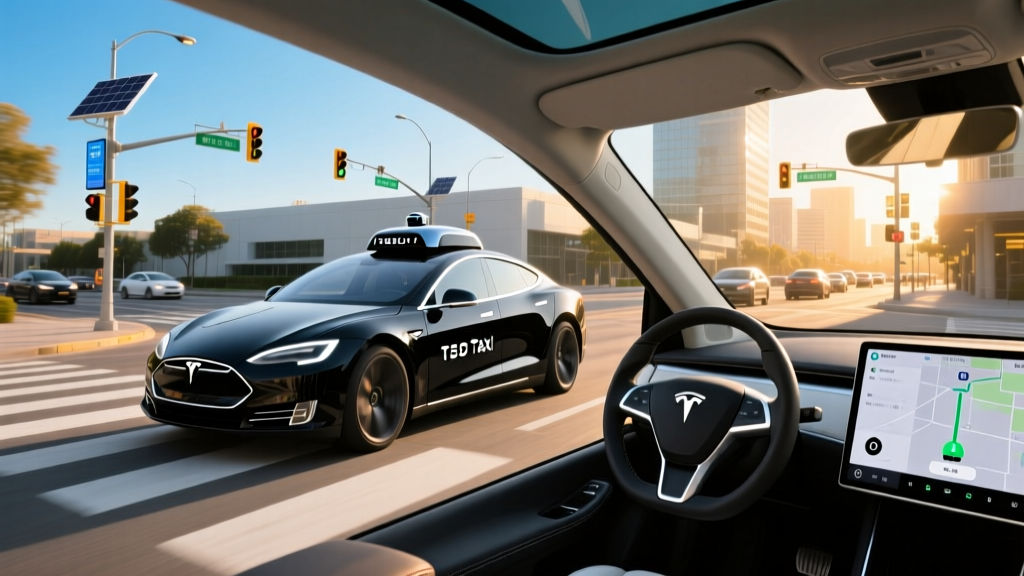
For Tesla owners weighing whether to activate Full Self-Driving (Supervised), the math hinges on one question: does the Tesla FSD subscription cost justify the real-world utility you get in return? In 2026, Tesla continues to offer FSD as both a monthly subscription and a one-time purchase, but the feature set, limitations, and value proposition demand a clear-eyed look before you commit your wallet.
SAE Automation Level: Level 2 — Not Self-Driving
Tesla Full Self-Driving (Supervised) is an SAE Level 2 driver-assistance system. Despite the "Full Self-Driving" name, the driver must remain fully engaged, keep hands on the steering wheel, and monitor the road at all times. Tesla's system does not remove driver responsibility. Only Level 4 services like Waymo operate without a human driver in defined conditions.
How Tesla FSD (Supervised) Actually Works
Tesla's FSD (Supervised) builds on the company's camera-only Tesla Vision architecture. Current-model Teslas rely on a suite of external cameras — typically eight cameras providing 360-degree visibility — paired with a proprietary neural-network processing chip (Hardware 4, or HW4, on 2023-and-newer vehicles). Tesla removed ultrasonic sensors and radar from new production vehicles beginning in 2022-2023, betting entirely on vision-based perception.
FSD (Supervised) adds the following capabilities on top of standard Autopilot:
- Navigate on Autopilot: Suggests lane changes, takes highway exits, and navigates interchanges based on your navigation route.
- Auto Lane Change: Executes lane changes on highways when the system determines it is safe and the turn signal is engaged.
- Autopark: Detects parallel or perpendicular parking spots and steers the vehicle into them.
- Smart Summon: Allows the vehicle to navigate a parking lot to the driver's location at low speed (driver must monitor via the app).
- Traffic Light and Stop Sign Control: Detects traffic lights and stop signs and adjusts speed accordingly (driver must confirm actions).
- City Streets (Supervised): Attempts to navigate urban roads, make turns, and follow routes on surface streets — the most complex and debated part of the FSD package.
| Feature | Standard Autopilot | FSD (Supervised) |
|---|---|---|
| Traffic-Aware Cruise Control | ✅ | ✅ |
| Autosteer (lane centering) | ✅ (highway only) | ✅ (highway + city) |
| Navigate on Autopilot | ❌ | ✅ |
| Auto Lane Change | ❌ | ✅ |
| Autopark | ❌ | ✅ |
| Smart Summon | ❌ | ✅ |
| Traffic Light / Stop Sign Control | ❌ | ✅ |
| City Street Navigation | ❌ | ✅ (Supervised) |
What the Tesla FSD Subscription Costs in 2026
Tesla offers FSD (Supervised) through two pricing paths: a monthly subscription or a one-time upfront purchase. The Tesla FSD subscription cost has shifted over the years, but as of early 2026, the structure is as follows:
| Option | Cost | Notes |
|---|---|---|
| FSD Monthly Subscription | $99/month | Cancel anytime; tied to the vehicle/driver profile. No long-term commitment. |
| FSD One-Time Purchase | $8,000 | Transfers with the vehicle at resale (not to a new Tesla you buy). Adds to vehicle MSRP at purchase. |
| Standard Autopilot | Included | Comes standard on every new Tesla — no extra charge. |
The break-even calculation: At $99/month, the subscription reaches the $8,000 one-time purchase price in approximately 81 months — nearly seven years. If you plan to keep your Tesla for less than five years, the subscription is almost certainly the smarter financial move. If you intend to own the car for seven or more years, the one-time purchase saves money over time and may add modest resale value (though FSD resale premiums are inconsistent and debated).
Important caveat: Tesla has historically adjusted FSD pricing — both subscription and one-time — without much advance notice. The $99/month and $8,000 figures reflect early 2026 pricing. Always confirm current pricing on Tesla's official FSD support page before purchasing.
Which Tesla Models Include FSD?
FSD (Supervised) is available as an add-on across Tesla's entire current production lineup — it is never standard equipment. You can subscribe to or purchase FSD for:
- Model 3 (all trims, including Standard Range and Long Range)
- Model Y (all trims)
- Model S (Long Range and Plaid)
- Model X (Long Range and Plaid)
- Cybertruck (AWD and Cyberbeast)
Vehicles must be equipped with Hardware 3 (HW3) or newer to run FSD. Most Teslas built from mid-2019 onward have HW3; vehicles from 2023 forward have HW4. Older HW2.5 or earlier vehicles cannot run current FSD software. If you are buying used, verify the hardware generation before committing to a subscription.
Brand Naming: Don't Confuse These Systems
- Tesla Autopilot: Standard on all new Teslas. Includes traffic-aware cruise control and basic lane centering on highways. Level 2.
- Tesla FSD (Supervised): Paid add-on (subscription or one-time). Extends Autopilot with city-street navigation, auto lane changes, autosteer on surface streets, and more. Still Level 2 — driver must supervise.
- Ford BlueCruise: Ford's hands-off-eyes-off highway system on pre-mapped divided highways. Level 2. Available on Mustang Mach-E, F-150 Lightning, and others.
- GM Super Cruise: GM's hands-off highway system on 400,000+ miles of mapped roads. Level 2. Available on Cadillac Lyriq, Chevy Silverado EV, and select models.
Real-World Capabilities and Honest Limitations
FSD (Supervised) has improved substantially through iterative over-the-air updates, particularly on highway driving and well-marked suburban roads. But real-world performance varies dramatically by scenario, and understanding where it excels — and where it falls short — is essential before you start paying $99/month.
Where FSD Performs Well
- Highway driving: Lane centering, adaptive cruise, and Navigate on Autopilot are mature and reliable on well-marked interstates. This is where FSD delivers the most consistent value.
- Suburban arterials with clear markings: FSD handles moderate-speed roads with clear lane lines and predictable traffic patterns reasonably well.
- Parking assistance: Autopark works for straightforward parallel and perpendicular spots, though it may take multiple attempts in tight spaces.
Where FSD Struggles
- Construction zones: Temporary lane shifts, cones, and altered road geometry frequently confuse the system. Expect to take over immediately.
- Unmarked or poorly marked roads: Rural roads without clear lane lines, faded markings, or no shoulders degrade FSD performance significantly.
- Complex urban intersections: Unprotected left turns, multi-lane roundabouts, and intersections with irregular geometry remain challenging. The system may hesitate, make unexpected moves, or disengage.
- Adverse weather: Heavy rain, fog, snow, and low-angle sun glare impair camera-based perception. Tesla Vision has no radar or lidar redundancy, so degraded visibility directly degrades system capability.
- Edge cases: Emergency vehicles stopped in travel lanes, pedestrians stepping off curbs unexpectedly, and debris in the roadway are scenarios where FSD reaction times and decision-making may not match an alert human driver.
What FSD Does NOT Do
- It does not drive the car autonomously. You are the driver. You are liable.
- It does not work reliably in heavy rain, snow, or fog.
- It does not navigate construction zones safely without intervention.
- It does not eliminate the need for attention, hands on the wheel, or situational awareness.
- It does not qualify as SAE Level 3, 4, or 5 under any current definition.
FSD vs. Competing Level 2 Systems: A Cost and Capability Comparison
Tesla's FSD is not the only advanced Level 2 system on the market. Here is how it stacks up against key competitors in both cost and real-world capability:
| System | Cost | Hands-Off Highway? | City Street Capability | Sensor Suite |
|---|---|---|---|---|
| Tesla FSD (Supervised) | $99/mo or $8,000 | No (hands-on required) | Yes (supervised) | Cameras only (Tesla Vision) |
| Ford BlueCruise | $75/mo or ~$2,100 one-time | Yes (on mapped highways) | No | Cameras + radar + driver monitoring |
| GM Super Cruise | $25/mo (after trial) or ~$2,200 | Yes (on 400k+ mapped miles) | No | Cameras + radar + LiDAR map + driver monitoring |
| Mercedes Drive Pilot | $2,500/year (select markets) | Yes (Level 3, under 40 mph, mapped highways) | No | Cameras + radar + LiDAR + HD maps |
The key trade-off: Tesla FSD offers the broadest geographic coverage — it does not require pre-mapped roads and works on most surface streets. Ford BlueCruise and GM Super Cruise are more limited in where they operate but offer genuine hands-off driving on approved highway segments, with driver-monitoring cameras ensuring attention. Mercedes Drive Pilot is the only SAE Level 3 system available in the U.S. (in limited form), meaning the car assumes legal liability under specific conditions — but its operational domain is extremely narrow.
For the latest safety data and crash-test performance of Tesla vehicles, consult the NHTSA's vehicle safety resources and IIHS ratings.
Is the Tesla FSD Subscription Cost Worth It?
The answer depends entirely on your driving patterns and expectations.
Subscribe to FSD If:
- You commute on well-marked highways daily and want Navigate on Autopilot and auto lane changes to reduce fatigue.
- You want to test FSD for a few months before committing $8,000 to a one-time purchase.
- You plan to sell or trade your Tesla within five years.
- You are curious about city-street FSD and want to evaluate it in your specific area before making a long-term investment.
Skip FSD (Stick with Standard Autopilot) If:
- You primarily drive in heavy urban traffic with complex intersections and construction zones where FSD will frequently disengage.
- You expect a self-driving car — FSD is not that, and will not be in the foreseeable near term.
- You live in an area with poorly marked roads, heavy snow, or frequent adverse weather.
- The $99/month or $8,000 cost is a significant stretch for your budget relative to the convenience it provides.
Standard Autopilot — included free on every new Tesla — already provides excellent adaptive cruise control and highway lane centering. For many owners, that baseline capability covers 80% of the driver-assist value at zero additional cost. The FSD premium buys you city-street navigation, autosteer, and parking features that are genuinely useful but far from flawless.
Frequently Asked Questions
Is Tesla FSD really self-driving?
No. Tesla FSD (Supervised) is an SAE Level 2 driver-assistance system. The driver must keep hands on the wheel, monitor the road, and be prepared to take over at any moment. Tesla's own documentation and the system's on-screen warnings make this requirement explicit. The "Full Self-Driving" name is a product label, not a description of its automation level.
Can I cancel the FSD subscription at any time?
Yes. The $99/month FSD subscription can be canceled through your Tesla account at any time. Once canceled, the FSD features revert to standard Autopilot at the end of your current billing cycle. There is no early termination fee.
Does FSD transfer if I sell my Tesla?
If you purchased FSD as a one-time $8,000 add-on, it is tied to the vehicle and transfers to the new owner at sale. It does not transfer to a new Tesla you purchase. Subscription-based FSD does not transfer — the new owner would need to start their own subscription. Tesla has occasionally offered limited-time FSD transfer promotions for trade-ins, but these are exceptions, not policy.
Does FSD work in bad weather?
FSD performance degrades in heavy rain, snow, fog, and conditions with reduced visibility. Because Tesla relies exclusively on cameras (no radar or lidar backup), anything that obscures the camera lenses or reduces contrast — including direct sun glare, road spray, or dirty lenses — can impair the system. Tesla's owner manual instructs drivers to exercise heightened caution or disable Autopilot/FSD in adverse weather.
What hardware does my Tesla need to run FSD?
FSD (Supervised) requires Hardware 3 (HW3) or newer. Most Teslas built from April 2019 onward have HW3; vehicles from 2023 forward typically have HW4 (also called AI4). You can check your hardware version in the vehicle's Software menu under "Additional Vehicle Information." Vehicles with HW2.5 or earlier cannot run current FSD software.
How does FSD compare to Waymo or Cruise robotaxis?
Waymo and Cruise (when operational) are SAE Level 4 driverless services operating in geofenced urban areas with no human driver required. Tesla FSD is a Level 2 consumer system that requires constant driver supervision. They are fundamentally different categories of technology with different regulatory frameworks, liability models, and operational domains. For more on the distinction, see our coverage of automated vehicle safety regulations at NHTSA.
Does buying FSD increase my Tesla's resale value?
The resale premium for a one-time FSD purchase is inconsistent. Some used Teslas with FSD command a modest premium ($2,000–$4,000), but many buyers are unwilling to pay the full $8,000 original cost on the used market. Tesla's own used inventory pricing does not always reflect a dollar-for-dollar FSD premium. Do not buy FSD as a financial investment expecting full recouped value at resale.