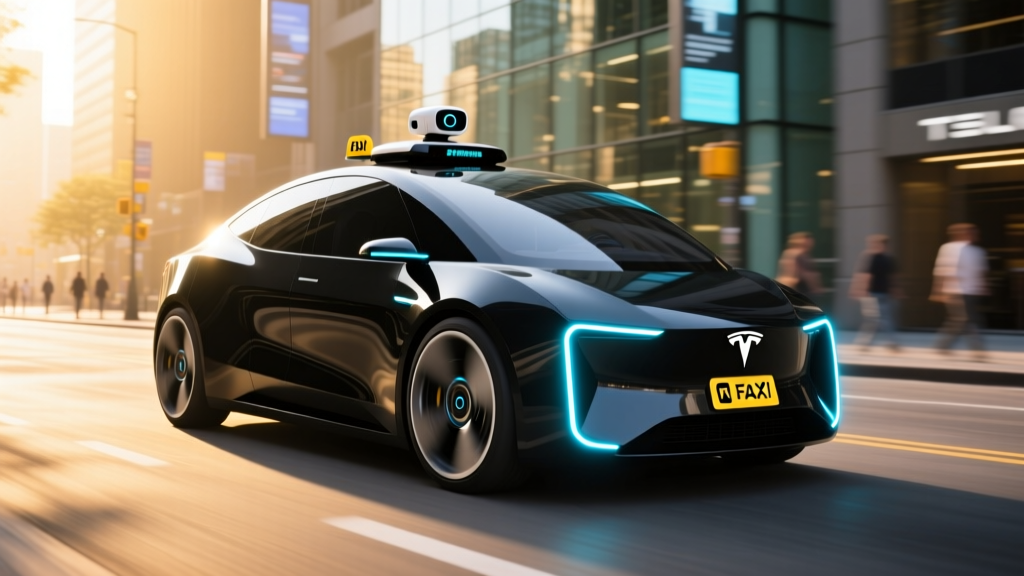
If you have spent any time in EV forums or Tesla configurators, you have seen the acronym FSD everywhere. New buyers frequently ask: what does FSD stand for? And more importantly, does the name match the reality? The short answer is that FSD stands for Full Self-Driving — but that marketing label requires serious unpacking. In 2026, Tesla's FSD (Supervised) remains a Level 2 driver-assistance system that demands continuous driver engagement, despite the aspirational name.
This guide breaks down exactly what FSD does, how the hardware and software work, what it costs, which vehicles include it, and how it compares to competing systems from Ford, GM, and Hyundai. If you are weighing whether to subscribe or skip it, the data below will help you decide.
What FSD Stands For and What It Actually Does
FSD stands for Full Self-Driving, a branded driver-assistance package that sits above Tesla's standard Autopilot system. As of 2026, Tesla officially refers to it as FSD (Supervised), a critical qualifier that signals the driver must remain attentive and ready to take over at any moment.
Functionally, FSD (Supervised) extends the capabilities of basic Autopilot in several key ways:
- Navigate on Autopilot: Automatic highway on-ramp to off-ramp driving, including lane changes, interchange navigation, and toll-booth routing (with driver confirmation).
- Auto Lane Change: Initiates lane changes on highways based on navigation route and surrounding traffic, with driver approval.
- Autopark: Detects parallel and perpendicular parking spaces and steers the vehicle into them.
- Summon and Smart Summon: Moves the vehicle short distances in parking lots, either in a straight line (Summon) or navigating to the driver's phone location (Smart Summon).
- Traffic Light and Stop Sign Control: Detects and responds to traffic signals and stop signs on city streets, with driver confirmation.
- City Streets Steering: Provides active steering guidance on urban and suburban roads, including turns and intersection navigation.
Tesla FSD (Supervised) is classified as SAE Level 2 by both Tesla and independent bodies like NHTSA. This means the system can control steering and acceleration simultaneously, but the human driver is responsible for monitoring the environment and must be prepared to intervene instantly. True "self-driving" begins at SAE Level 4, which currently only applies to geofenced robotaxi services like Waymo and Zoox — not consumer vehicles.
How Tesla FSD Works: Sensors, Cameras, and Neural Networks
Tesla's approach to FSD diverges significantly from most competitors. While systems like Ford BlueCruise and GM Super Cruise rely on a combination of cameras, radar, and LiDAR, Tesla has committed to a vision-only architecture — commonly referred to as "Tesla Vision."
The Hardware Stack (HW4 / AI4)
Current 2025–2026 Tesla vehicles ship with the HW4 (also called AI4) compute platform, which includes:
- 8 cameras providing 360-degree surround view (front main + narrow, left/right repeaters, left/right pillars, rear)
- Upgraded front camera with higher resolution (~5 megapixel) for improved object detection at distance
- Custom Tesla FSD computer with dual neural network processing chips capable of ~144 TOPS (trillions of operations per second)
Notably absent: no radar and no LiDAR. Tesla removed radar from Model 3 and Model Y in mid-2021 and ultrasonic sensors in late 2022, relying entirely on camera-derived depth estimation and neural network inference.
The Software: End-to-End Neural Networks
Starting with FSD v12 (released in early 2024) and continuing into the v13.x series available in 2026, Tesla shifted to an end-to-end neural network architecture. Instead of modular code stacks (separate systems for lane detection, path planning, object tracking), a single neural network processes raw camera input and outputs steering, braking, and acceleration commands directly. This approach, trained on billions of miles of real-world driving data, produces more naturalistic driving behavior but makes the system's decision-making less transparent and harder to debug.
Real-World Capabilities and Honest Limitations
In 2026 testing across Model Y Long Range and Model 3 Highland vehicles, FSD (Supervised) demonstrates genuine competence in specific scenarios while falling short in others. Here is what the data shows:
| Scenario | FSD Performance | Driver Action Required |
|---|---|---|
| Divided highway cruising | Strong — smooth lane keeping, appropriate following distance | Monitor; approve lane changes |
| Highway interchanges | Good — handles most cloverleaf and flyover ramps | Confirm merges in heavy traffic |
| Suburban city streets | Improved — navigates turns, stop signs, traffic lights | Active supervision; intervene at unprotected lefts |
| Construction zones | Weak — cones, shifted lanes, and temporary signals cause errors | Frequent takeover required |
| Heavy rain / fog | Degraded — camera-only system struggles with visibility | Assume full control; system may disengage |
| Unmarked rural roads | Inconsistent — relies on visible lane markings or clear road edges | High intervention rate expected |
| Parking lots (Smart Summon) | Slow and cautious — navigates but at very low speed | Must watch phone screen and be ready to stop |
- It does not drive autonomously — you are the driver, legally and functionally.
- It does not eliminate the need for attention — Tesla's cabin camera monitors your eyes and will issue escalating warnings if you look away.
- It does not handle all weather — heavy rain, snow, fog, and direct sun glare can blind cameras and cause sudden disengagement.
- It does not replace your insurance liability — if FSD is active during a collision, you are still the responsible party.
- It does not guarantee a specific route — the system may choose unexpected paths or hesitate at complex intersections.
FSD Pricing: Subscription vs. One-Time Purchase
Tesla offers two ways to access FSD (Supervised), and the economics differ significantly depending on how long you plan to keep the vehicle.
| Option | Cost (2026) | Notes |
|---|---|---|
| FSD Monthly Subscription | $99/month | Cancel anytime; no long-term commitment; best for trying it out or short-term ownership |
| FSD One-Time Purchase | $8,000 | Tied to the vehicle (transferable to new Tesla in limited cases); break-even vs. subscription at ~81 months |
| Standard Autopilot | Included | Traffic-aware cruise control + autosteer on marked highways; no city-street steering or auto lane change |
At $99/month, the subscription model makes FSD accessible without a massive upfront outlay. If you plan to keep your Tesla for less than six or seven years, subscribing is the mathematically better choice. The one-time $8,000 purchase only makes sense for long-term owners who use FSD daily — and even then, there is residual-value uncertainty. While Tesla claims FSD transfers to a new Tesla purchase, the used-car market generally does not fully recoup the $8,000 cost, since FSD value is debated among buyers.
Which Tesla Models Include FSD and Availability by Trim
FSD (Supervised) is available across Tesla's entire 2026 lineup, but it is never included as standard equipment — it is always an add-on, either via subscription or purchase. Here is the current availability:
- Model 3 (all trims): FSD available as subscription or purchase. Standard Autopilot included on all trims.
- Model Y (all trims): FSD available as subscription or purchase. Standard Autopilot included.
- Model S (all trims): FSD available as subscription or purchase.
- Model X (all trims): FSD available as subscription or purchase.
- Cybertruck (all trims): FSD available as subscription or purchase (rolled out progressively through 2025).
Every Tesla vehicle built since approximately April 2022 includes the HW4/AI4 hardware necessary to run FSD. Vehicles with the older HW3 computer (primarily 2019–2022 builds) may require a hardware retrofit — Tesla has offered free upgrades in some cases, but this is not guaranteed. If you are buying used, confirm the hardware generation before subscribing.
FSD vs. Competing Systems: How It Stacks Up
Tesla's FSD is the most widely discussed driver-assist system, but it is not the only advanced option. Here is how it compares to the key Level 2 competitors available in 2026:
| Feature | Tesla FSD (Supervised) | GM Super Cruise | Ford BlueCruise | Hyundai/Kia HDA2 |
|---|---|---|---|---|
| SAE Level | Level 2 | Level 2 | Level 2 | Level 2 |
| Hands-Free Highway | No (hands-on-wheel or torque required) | Yes (on pre-mapped roads, ~750,000+ mi) | Yes (on pre-mapped Blue Zones, ~130,000+ mi) | No (hands-on required) |
| City Street Steering | Yes (nationwide) | No | No | No |
| Auto Lane Change | Yes | Yes (on mapped roads) | Yes (on mapped roads) | Yes |
| Sensor Suite | Cameras only | Cameras + radar + LiDAR map | Cameras + radar + LiDAR map | Cameras + radar |
| Cost | $99/mo or $8,000 | $2,100–$2,500 + $25/mo after trial | $2,100 one-time (BlueCruise 1.0+) or included on select trims | Included on higher trims |
| Driver Monitoring | Cabin camera (eye tracking) | Infrared camera (eye tracking) | Infrared camera (eye tracking) | Steering wheel torque |
The key differentiator: Tesla FSD offers city-street steering nationwide, which no competitor currently matches at scale. However, GM Super Cruise and Ford BlueCruise offer genuine hands-free highway driving on pre-mapped roads — something Tesla does not, since it still requires some steering-wheel interaction. If your primary use case is long highway commutes, Super Cruise and BlueCruise provide a more relaxed experience on compatible roads. If you want a system that attempts to assist on any road, anywhere, FSD is the only option.
Safety Data and Regulatory Context
Tesla's Autopilot and FSD systems have drawn scrutiny from NHTSA, which has opened multiple investigations into crashes involving Tesla vehicles operating under Autopilot. Tesla publishes quarterly safety reports claiming approximately one crash per 4–6 million miles driven with Autopilot active, compared to the U.S. average of roughly one crash per 670,000 miles (per NHTSA data). However, these comparisons are imperfect — Tesla's data is self-reported, and Autopilot is predominantly used on divided highways, which are inherently safer than the mixed road types in the national average.
The Insurance Institute for Highway Safety (IIHS) has consistently rated partial automation systems as offering no proven safety benefit over attentive human driving, and has raised concerns about driver over-reliance. The bottom line: no Level 2 system, including FSD, has been independently proven to reduce crash rates below attentive manual driving. Treat FSD as a convenience feature, not a safety device.
Should You Subscribe to FSD? A Practical Decision Framework
Subscribe to FSD ($99/mo) if:
- You drive frequently in varied conditions (city + highway) and want to evaluate city-street assist.
- You plan to keep the vehicle less than 5–6 years (subscription is cheaper than the $8,000 purchase).
- You understand it is a driver-assist tool, not a chauffeur, and you will remain attentive.
- You value receiving continuous over-the-air improvements as Tesla iterates the neural network.
Skip FSD and use standard Autopilot if:
- Your driving is primarily highway — standard Autopilot handles traffic-aware cruise and lane-keeping well.
- You find constant supervision of an imperfect system more stressful than driving manually.
- You are on a budget — $1,188/year is a meaningful addition to your ownership cost.
- You want hands-free highway driving — consider a GM vehicle with Super Cruise or a Ford with BlueCruise instead.
Frequently Asked Questions
Is Tesla FSD actually full self-driving?
No. Despite the name, FSD (Supervised) is an SAE Level 2 driver-assistance system. It requires continuous driver supervision, and you are legally responsible for the vehicle at all times. True self-driving (SAE Level 4) is currently limited to geofenced robotaxi services like Waymo, not consumer vehicles you can buy.
Can I transfer FSD to a new Tesla?
Tesla has periodically offered FSD transfer programs, allowing you to move a purchased FSD license to a new Tesla delivery. However, this is not guaranteed and has been offered as a limited-time promotion rather than a permanent policy. The subscription model does not require transfer — you simply subscribe on any eligible Tesla.
Does FSD work in bad weather?
FSD's camera-only system is more vulnerable to weather degradation than radar-equipped competitors. Heavy rain, snow accumulation on cameras, dense fog, and direct sun glare can all reduce performance or trigger disengagement. Tesla advises drivers to take over in adverse conditions. If you live in a region with frequent heavy precipitation, expect to drive manually more often.
What is the difference between Autopilot and FSD?
Standard Autopilot (included on all new Teslas) provides traffic-aware cruise control and autosteer on clearly marked highways. FSD adds city-street steering, traffic light and stop sign recognition, Navigate on Autopilot for highway interchanges, auto lane change, autosteer on urban roads, and Summon. Think of Autopilot as highway cruise assist and FSD as a broader (but still supervised) driving aid.
Does FSD improve my Tesla's resale value?
The used-EV market has shown mixed results on FSD resale value. Some buyers pay a premium for an FSD-equipped used Tesla; others view it skeptically given the subscription option. Industry data suggests FSD adds roughly $3,000–$5,000 to resale value — well below the $8,000 purchase price. If resale value matters to you, the subscription model avoids this depreciation hit entirely.
How does FSD handle construction zones?
Construction zones remain one of FSD's weakest scenarios. Shifted lanes, temporary barriers, traffic cones, and absent lane markings can confuse the vision system. Expect frequent disengagements and plan to drive manually through active work zones. This is a known limitation that Tesla has acknowledged in release notes.
Understanding what FSD stands for is only the starting point. The real question is whether the system's current capabilities justify its cost for your specific driving patterns. For highway-heavy commuters, standard Autopilot or a competitor's hands-free system may serve you better. For tech-forward drivers who want the broadest available driver assist — and who commit to staying engaged — FSD (Supervised) at $99/month is a reasonable experiment with an easy exit.