The Core Question: What Are You Actually Buying?
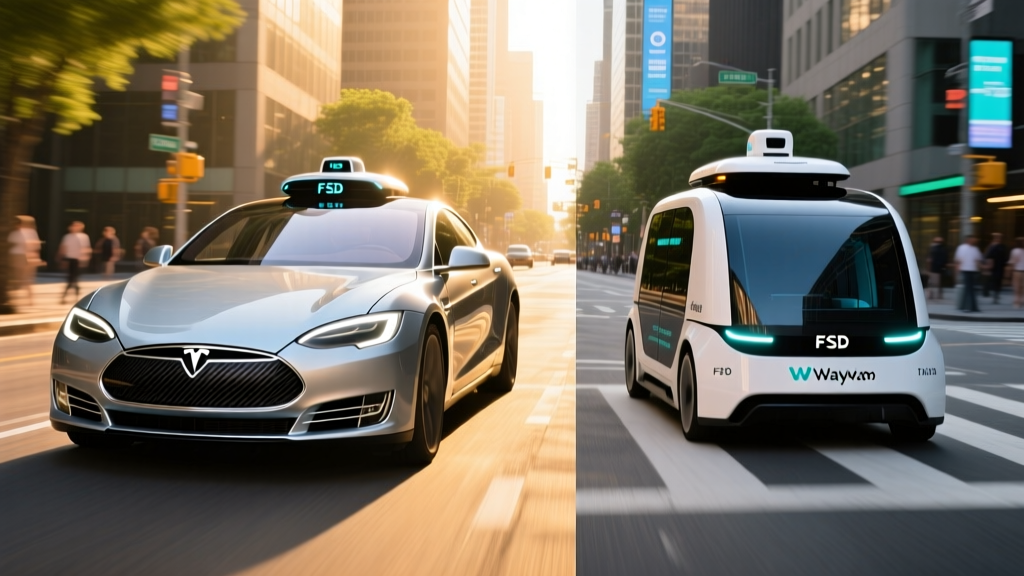
When shoppers ask whether Tesla's self-driving technology is worth the investment, they're usually conflating two very different products: Tesla's Full Self-Driving (Supervised) software — a $8,000 add-on that requires constant driver attention — and true Level 4 robotaxi services like Waymo, where no driver is present at all. Understanding this distinction is the single most important factor in deciding whether Tesla's FSD package delivers value for your money in 2026.
| Level | Name | Who Drives? | Example |
|---|---|---|---|
| Level 0 | No Automation | Human does everything | Basic car |
| Level 1 | Driver Assistance | Human + one assist feature | Adaptive cruise OR lane keep |
| Level 2 | Partial Automation | Human supervises at all times | Tesla FSD, GM Super Cruise, Ford BlueCruise |
| Level 3 | Conditional Automation | System drives in limited conditions; human on standby | Mercedes Drive Pilot (select markets) |
| Level 4 | High Automation | No driver needed in geofenced area | Waymo One, Zoox |
| Level 5 | Full Automation | No driver needed anywhere | Does not exist commercially |
Tesla FSD (Supervised) operates at SAE Level 2. The driver is legally and practically responsible at all times. Source: SAE International J3016.
Tesla FSD (Supervised): What You Get for $8,000
As of 2026, Tesla offers Full Self-Driving (Supervised) as either a one-time purchase of $8,000 or a $99/month subscription. The package includes:
- Navigate on Autopilot: Highway on-ramp to off-ramp driving with automatic lane changes and interchange navigation
- Auto Lane Change: Suggests and executes lane changes based on navigation route and surrounding traffic
- Autopark: Parallel and perpendicular parking assistance
- Summon / Smart Summon: Moves the vehicle short distances in parking lots to the driver's location
- Traffic Light and Stop Sign Control: Detects and responds to traffic signals
- City Street Driving: Handles urban intersections, turns, and roundabouts
The critical caveat, repeated in Tesla's own documentation and in NHTSA filings: the driver must remain fully attentive, hands on or near the wheel, and ready to take over instantly. Tesla's cabin camera monitors driver engagement, and the system issues escalating warnings if attention lapses. This is not optional — it's a core operating requirement.
Where Can You Use True Robotaxi Services Right Now?
If what you actually want is a car that drives itself with no human behind the wheel, you're looking for a Level 4 robotaxi. Here's where those services operate as of early 2026:
| Service | City/Region | Hours | Status |
|---|---|---|---|
| Waymo One | Phoenix metro (East Valley, Downtown, North Phoenix) | 24/7 | Fully operational, no safety driver |
| Waymo One | San Francisco (citywide) | 24/7 | Fully operational, no safety driver |
| Waymo One | Los Angeles (Downtown, Hollywood, Westside, LAX) | 24/7 | Fully operational, no safety driver |
| Waymo One | Austin, TX (select areas) | Limited hours | Operational, expanding |
| Zoox | Las Vegas Strip corridor | Limited | Employee/invite-only rides |
| Zoox | Foster City, CA | Limited | Testing with safety driver |
| Tesla Robotaxi | Austin, TX (announced) | TBD | Announced / early pilot — not publicly available |
Sources: Waymo One service areas, NHTSA standing general orders. Availability subject to change; always confirm with the operator.
How Much Does a Robotaxi Cost vs. Uber and Lyft?
Waymo One pricing varies by city, time of day, and demand, but in general it tracks closely with UberX and Lyft standard fares — sometimes slightly higher, sometimes lower depending on surge pricing on competing platforms. Here's a representative comparison based on reported fares in late 2025 and early 2026:
| Route (approx.) | Waymo One | UberX | Lyft Standard |
|---|---|---|---|
| SF: Mission → Financial District (4 mi) | $14–$18 | $12–$20 | $11–$18 |
| Phoenix: Scottsdale → Sky Harbor (8 mi) | $22–$28 | $18–$26 | $17–$25 |
| LA: Santa Monica → Downtown (15 mi) | $32–$42 | $28–$45 | $26–$40 |
| Tip expected? | No (in-app tipping available) | Yes (15–20% customary) | Yes (15–20% customary) |
Fares are estimates based on user reports and may vary with demand, time, and route. Waymo frequently offers promotional credits for new riders. Uber/Lyft prices reflect non-surge conditions.
The key economic difference: with a robotaxi, there's no human driver to tip, which effectively saves 15–20% per ride compared to rideshare. Over frequent use, this adds up. However, robotaxi availability is restricted to specific geofenced zones — if your trip crosses outside the service area, you'll need a conventional rideshare.
How Safe Are Robotaxis? The Real Data
Safety is the most scrutinized question in autonomous driving, and it deserves a data-driven answer rather than marketing claims. Here's what we know from publicly reported figures and regulatory filings:
- Waymo: Over 50 million fully driverless miles completed across Phoenix, San Francisco, and Los Angeles. Waymo's published analysis (peer-reviewed and submitted to NHTSA) claims a ~57% reduction in injury-causing crashes compared to human benchmarks in comparable urban environments, and an ~85% reduction in police-reported crashes per million miles.
- Cruise (GM): Suspended all driverless operations in October 2023 after a serious incident in San Francisco involving a pedestrian and a subsequent vehicle drag. As of early 2026, Cruise has resumed limited testing with human safety drivers in select cities but has not restored driverless commercial service.
- Tesla FSD (Supervised): Tesla reports cumulative FSD miles driven but does not publish a standardized crash-rate-per-million-miles metric comparable to NHTSA benchmarks. Tesla's NHTSA Standing General Order filings document incidents involving Autopilot and FSD, with hundreds of reported crashes since 2021. Because FSD requires a human driver, crash responsibility falls on the driver, not the software.
Sources: Waymo safety reports, NHTSA Standing General Order crash data, IIHS research publications.
The honest summary: Waymo's data suggests its Level 4 vehicles perform comparably to or better than attentive human drivers in geofenced urban environments. But the data is self-reported and the operating conditions (geofenced, mapped, sensor-rich) are far more constrained than what a Tesla FSD driver encounters on an unmapped rural road or in heavy snow.
Technology Stack: Cameras vs. Lidar — Why It Matters
The philosophical split in autonomous driving technology defines the capabilities and limitations of each system:
| Feature | Tesla FSD (Supervised) | Waymo (6th-Gen Driver) |
|---|---|---|
| Primary Sensors | 8 cameras (vision-only) | Lidar + cameras + radar |
| Lidar | None | Custom-built roof-mounted + side units |
| Radar | Removed (since 2022) | Imaging radar for redundancy |
| HD Mapping | No (real-time vision) | Yes (pre-mapped geofenced areas) |
| Operating Domain | Any road (theoretically) | Geofenced urban corridors only |
| Redundancy | Human driver (required) | Hardware + software redundancy (no human needed) |
| Weather Handling | Degrades in heavy rain, fog, snow | Lidar + radar maintain performance in moderate conditions; service pauses in severe weather |
Tesla's vision-only approach is philosophically elegant — "humans drive with eyes, so cars should drive with cameras" — but it sacrifices the depth-sensing redundancy that lidar provides. Waymo's lidar can precisely measure distances to objects regardless of lighting conditions, a critical advantage at night or in shadowed urban canyons. Tesla's advantage is scalability: cameras are cheap and don't require pre-mapping, so FSD can theoretically work on any road. The trade-off is that without HD maps and lidar, the system faces harder edge cases.
Current Limitations: What These Systems Cannot Do
Whether you're evaluating Tesla FSD or considering a Waymo ride, understanding the boundaries is essential:
Tesla FSD (Supervised) Limitations
- Weather: Performance degrades significantly in heavy rain, snow, fog, and low-visibility conditions. Camera lenses can be obscured by road spray or ice.
- Construction zones: Temporary lane shifts, cones, and flaggers remain challenging. System may make unexpected decisions or disengage.
- Unmapped or poorly marked roads: Rural roads without clear lane markings reduce system confidence and accuracy.
- Edge cases: Unusual obstacles (fallen trees, debris, animals), complex multi-lane roundabouts, and unprotected left turns across heavy traffic remain inconsistent.
- Driver complacency risk: The system works well enough on highways to lull drivers into inattention, but may require instant takeover in emergencies — a well-documented human-factors problem.
- Regulatory status: NHTSA has opened multiple investigations into Autopilot/FSD crash patterns, particularly involving stationary emergency vehicles. No recall has mandated removal, but software updates have been required.
Waymo Robotaxi Limitations
- Geofencing: Operates only within pre-mapped zones. You cannot take a Waymo from San Francisco to Sacramento.
- Severe weather: Service suspends during heavy fog, torrential rain, or snow. Waymo does not currently operate in cities with significant winter weather.
- Highway driving: Waymo vehicles primarily operate on surface streets. Limited freeway capability in Phoenix but not a primary use case.
- Availability: Wait times can be 10–20+ minutes during peak demand in San Francisco and Los Angeles.
- No intercity trips: Airport service is available at LAX and Sky Harbor (Phoenix) but not at all airports.
Regulatory Landscape: Who Approves These Systems?
Autonomous vehicle regulation in the United States is a patchwork of federal and state authority:
- Federal (NHTSA): Sets vehicle safety standards (FMVSS) and investigates crash patterns. NHTSA does not "approve" autonomous driving systems before deployment but can issue recalls and mandate changes post-deployment. All manufacturers with Level 2+ systems must comply with the Standing General Order requiring crash reporting.
- State level: States control licensing, insurance requirements, and commercial operation permits. California (DMV + CPUC) requires separate testing and deployment permits; companies must report disengagement data. Arizona has minimal regulatory barriers, which is why Waymo launched commercially in Phoenix first. Texas allows autonomous testing and operation under a permissive framework.
- Local governments: Cities can impose additional restrictions. San Francisco saw significant political tension between residents, the city Board of Supervisors, and robotaxi operators over congestion, emergency vehicle interference, and parking violations.
Tesla's FSD does not require separate state-level robotaxi permits because it's classified as a Level 2 driver-assist system — the human driver is always legally responsible. If Tesla launches a true driverless robotaxi service, it would need state-by-state approval similar to Waymo's process.
So — Is Tesla Self-Driving Worth It?
The answer depends entirely on what you expect the system to do.
- You want the most advanced driver-assist system available for consumer purchase on a personal vehicle
- You drive frequently on highways and want reduce fatigue on long commutes
- You understand you must remain fully engaged and accept legal responsibility for all driving
- You value continuous over-the-air updates that incrementally improve capability
- You're willing to pay $8,000 upfront or $99/month for convenience, not autonomy
- You want to read, sleep, or work while the car drives — this is not legally or technically possible
- You want a robotaxi experience — Waymo One in Phoenix, SF, or LA provides that today
- You primarily drive in heavy winter weather or poorly mapped rural areas
- You expect the $8,000 investment to pay for itself through time savings or productivity — there's no evidence it does
For the $8,000 one-time cost, Tesla FSD delivers genuine highway comfort and increasingly competent city-street handling. It's the best Level 2 system you can buy for use on any road, not just pre-mapped corridors. But "self-driving" it is not — and if true autonomy is what you're after, a $14 Waymo ride in Phoenix delivers more actual self-driving than an $8,000 FSD package ever will, because one has a human watching and the other doesn't.
Frequently Asked Questions
Is Tesla FSD actually self-driving?
No. Tesla FSD (Supervised) is an SAE Level 2 driver-assist system. The driver must remain fully attentive and is legally responsible for all vehicle operation. Tesla itself labels the product "Supervised" to make this clear. True self-driving (Level 4) exists only in geofenced robotaxi services like Waymo One.
Can Tesla FSD handle city streets and intersections?
Yes, with caveats. FSD can navigate traffic lights, stop signs, roundabouts, and unprotected turns. However, performance varies by location and complexity. Expect occasional hesitations, unnecessary stops, or disengements in complex scenarios. You must be ready to intervene at any moment.
Is FSD transferable if I sell my Tesla?
As of 2026, FSD is generally tied to the vehicle, not the owner. If you purchased FSD outright, it typically transfers with the car to a new private owner. Subscription-based FSD does not transfer. Tesla has occasionally offered limited-time FSD transfer promotions for repeat buyers — check current policy at the time of purchase.
Where can I ride in a true driverless robotaxi today?
Waymo One operates fully driverless commercial service in Phoenix, San Francisco, Los Angeles, and select areas of Austin, TX. Download the Waymo app, create an account, and request a ride within the service area. No waitlist is currently active in major metro areas.
How does Tesla's planned robotaxi compare to Waymo?
Tesla has announced plans for a driverless robotaxi service, with initial pilot operations expected in Austin, TX. As of early 2026, this service is not publicly available. Tesla's camera-only approach differs fundamentally from Waymo's lidar-based stack. Until Tesla's robotaxi is in commercial operation with published safety data, direct comparison is speculative. Waymo has years of operational data and tens of millions of driverless miles; Tesla's robotaxi service has none yet.
Does using FSD affect my Tesla insurance premium?
It can. Some insurers view FSD as an additional risk factor due to the potential for driver complacency, while others offer discounts for advanced safety features. Tesla Insurance (available in select states) uses real-time driving data and may adjust premiums based on actual FSD usage patterns. Check with your insurer before purchasing.
What happens if FSD makes a mistake and crashes?
Because FSD is a Level 2 system, the driver bears legal and insurance responsibility for all crashes, even when the system is actively controlling the vehicle. Tesla's owner documentation is explicit on this point. NHTSA investigates patterns of Autopilot/FSD-involved crashes and has required software updates, but liability rests with the driver.