What You're Actually Buying: FSD Supervised, Not a Robotaxi
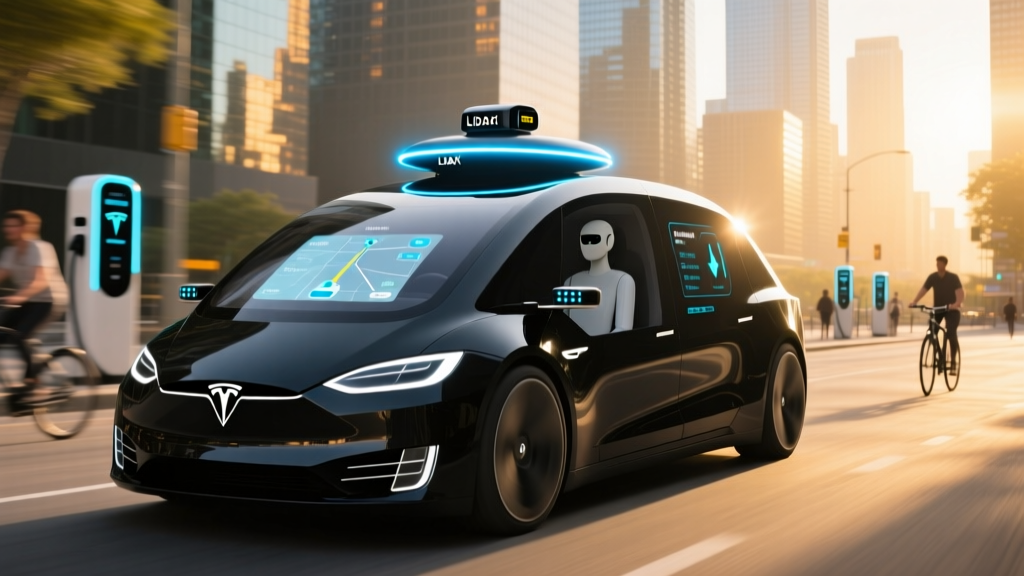
When you activate a Tesla self-driving subscription in 2026, you are purchasing access to Full Self-Driving (Supervised) — a sophisticated Level 2 driver-assistance system. You are not buying a driverless ride. The distinction matters enormously for safety expectations, legal liability, and daily usability. Tesla's FSD Supervised requires continuous driver engagement: hands on or near the wheel, eyes on the road, ready to intervene within seconds.
SAE Automation Level: Where Tesla FSD Supervised Sits
| SAE Level | Definition | Examples | Driver Required? |
|---|---|---|---|
| Level 0 | No automation | Basic cruise control | Yes — full control |
| Level 1 | Driver assistance (single axis) | Adaptive cruise OR lane-keep | Yes — full control |
| Level 2 | Partial automation (steering + speed) | Tesla Autopilot, FSD Supervised, GM Super Cruise, Ford BlueCruise | Yes — must supervise constantly |
| Level 3 | Conditional automation (system drives in limited conditions) | Mercedes DRIVE PILOT (approved in NV, CA) | Conditional — can disengage in approved zones |
| Level 4 | High automation (no driver needed in geofenced area) | Waymo One, Zoox | No — within operational design domain |
| Level 5 | Full automation (anywhere, any condition) | Does not exist commercially | No |
Tesla FSD Supervised is Level 2. The system handles steering, acceleration, and braking on highways and city streets, but the driver bears full legal and safety responsibility at all times. This is fundamentally different from Waymo's Level 4 robotaxi, where no human driver is present.
Tesla Self-Driving Subscription: Pricing and Access in 2026
Tesla offers FSD (Supervised) through two purchase models, and pricing has shifted several times since the system's beta launch. As of early 2026, the current structure is:
| Option | Cost | Notes |
|---|---|---|
| Monthly Subscription | $99/month | Cancel anytime; requires active Tesla account and compatible vehicle (HW3.0 or HW4.0) |
| One-Time Purchase | $8,000 | Transfers with vehicle at sale; previously priced at $12,000 and $15,000 in earlier years |
| Free Trial | 30 days (promotional) | Tesla periodically offers trials to encourage adoption; availability varies |
The $99/month subscription makes sense for buyers who want to test the system on a long road trip or evaluate it before committing. The $8,000 outright purchase breaks even at roughly 81 months — nearly seven years — so the subscription is the rational choice for most owners unless you plan to keep the vehicle long-term and use FSD daily.
Important: FSD Supervised is not transferable between Tesla accounts. If you buy a used Tesla, FSD only transfers if the original owner purchased it outright and the vehicle was transferred through Tesla's official process. Subscription-based FSD does not carry over to a new owner.
What FSD Supervised Can and Cannot Do
Tesla's FSD (Supervised) operates on a vision-only technology stack — no lidar, no radar on current-production vehicles (Tesla removed ultrasonic sensors starting in 2022 and radar in 2021 for most models). The system relies on:
Tesla FSD Technology Stack
- Cameras: 8 surround cameras (HW3.0) or upgraded high-resolution cameras (HW4.0) providing 360° visibility
- Neural network: End-to-end neural net trained on billions of miles of fleet driving data, processing inputs through Tesla's custom FSD computer
- Hardware: HW3.0 (FSD Computer, ~144 TOPS) or HW4.0 (improved processing, better camera resolution, ~300+ TOPS estimated)
- Mapping: No HD lidar maps — Tesla uses real-time vision processing and navigation-level map data
- No geofencing: FSD Supervised is nominally available on any road, unlike Level 4 robotaxis that operate only in pre-mapped zones
Capabilities
On well-marked highways, FSD handles lane changes, on-ramp to off-ramp navigation, speed adjustment, and merging with reasonable competence. City-street driving — navigating stoplights, cross traffic, unprotected left turns, and construction zones — has improved substantially through Tesla's v12 and v13 neural-network rewrites, which shifted from rule-based coding to end-to-end learning. The system can follow navigation routes through complex urban intersections and respond to traffic signals.
Where It Falls Short
Despite improvements, FSD Supervised still struggles with:
- Construction zones: Cone detection and temporary lane shifts remain inconsistent; the system may attempt to follow old lane markings
- Unprotected left turns: Hesitation or overly aggressive gap acceptance in heavy cross-traffic
- Adverse weather: Heavy rain, fog, snow, or direct sun glare can degrade camera performance and trigger system disengagement
- Edge cases: Unusual road configurations, temporary traffic-control officers directing flow, emergency vehicles stopped in travel lanes
- Phantom braking: The system occasionally brakes hard for non-existent obstacles, particularly on shadowed highway overpasses
- Rural/unmarked roads: Performance degrades significantly without clear lane markings or signage
Safety Data: What the Numbers Show
Tesla publishes quarterly safety reports, and the company claims that vehicles with Autopilot engaged record fewer crashes per million miles than the U.S. fleet average. However, these reports have significant methodological limitations that buyers should understand:
Tesla Safety Claims vs. Independent Analysis
| Metric | Tesla Reported | Context / Caveats |
|---|---|---|
| Crashes per million miles (Autopilot engaged) | ~1 per 4–5 million miles (varies quarterly) | Autopilot is used predominantly on highways, which are inherently safer than city streets; comparison to all-driving average is not apples-to-apples |
| FSD Supervised intervention rate | Tesla reports improving miles-per-intervention with each software version | Exact FSD-specific intervention data is not independently verified; NHTSA has requested detailed data |
| NHTSA investigations | Multiple investigations opened into Autopilot/FSD crash patterns | NHTSA has investigated crashes involving Tesla vehicles and stationary emergency vehicles; nhtsa.gov maintains open investigation records |
| IIHS evaluation | IIHS has raised concerns about partial automation systems and driver monitoring | iihs.org has published research showing drivers may over-trust Level 2 systems |
The most important safety fact: you are the driver. NHTSA classifies FSD Supervised as a Level 2 system, meaning every crash that occurs while FSD is engaged is legally the driver's responsibility. Tesla's terms of service and in-car warnings make this explicit. If you zone out, look at your phone, or nap, you are operating the vehicle negligently regardless of the software's capability.
Tesla FSD vs. Level 4 Robotaxis: A Direct Comparison
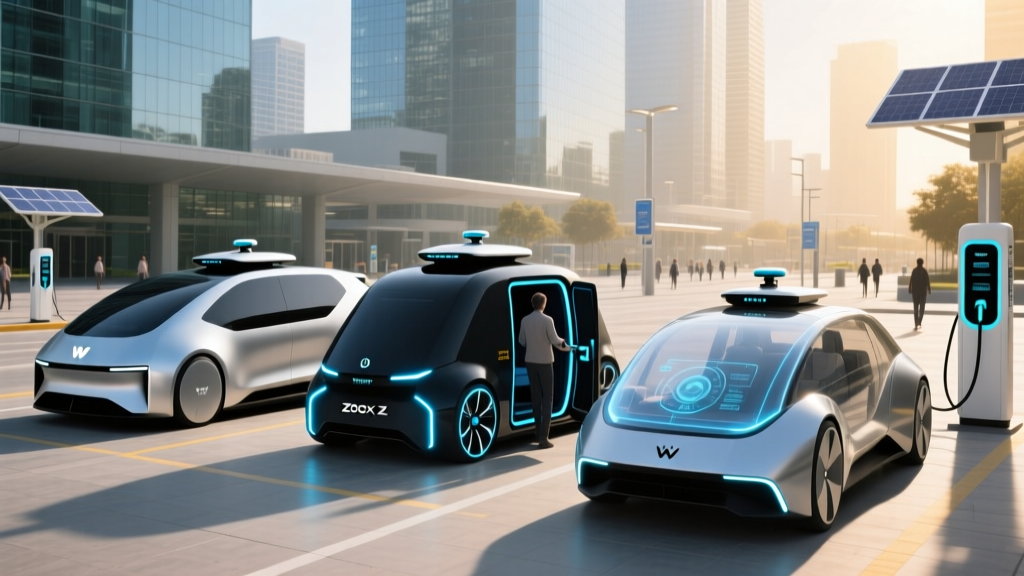
Many Tesla owners and prospective buyers conflate FSD Supervised with the driverless robotaxi services operated by Waymo and Zoox. This comparison table makes the distinction concrete:
| Feature | Tesla FSD (Supervised) | Waymo One (Level 4) | Zoox (Level 4) |
|---|---|---|---|
| SAE Level | Level 2 | Level 4 | Level 4 |
| Driver required in vehicle | Yes — must supervise at all times | No driver present | No driver present |
| Geographic availability | Any road in the U.S. (nominally) | Phoenix, San Francisco, Los Angeles, Austin (expanding) | Limited: Las Vegas, Foster City (testing/expansion) |
| Sensor suite | Cameras only (no lidar, no radar) | Lidar + radar + cameras (redundant sensing) | Lidar + radar + cameras (custom vehicle) |
| Geofencing | None | Yes — pre-mapped operational design domain | |
| Weather limitations | Degraded in rain, snow, fog | Service suspended in heavy rain/flooding; operates in light rain | |
| Cost to user | $99/month or $8,000 (you own the car) | Per-ride pricing (comparable to Uber/Lyft in most markets) | Not yet commercially priced at scale |
| Liability in a crash | Driver | Waymo (as operator) | Zoox (as operator) |
The trade-off is clear: Tesla FSD works on more roads but requires your attention and puts liability on you. Waymo operates without a driver but only in specific, pre-mapped zones and is unavailable in most of the country.
Is the Tesla Self-Driving Subscription Worth It?
Whether FSD Supervised justifies $99/month depends entirely on your driving profile and expectations.
Subscribe to FSD if:
- You commute 40+ miles daily on well-marked highways and want reduced fatigue (while still supervising)
- You take frequent long road trips and want the system to handle highway navigation between rest stops
- You want to evaluate FSD before committing to the $8,000 purchase or before a planned vehicle trade-in
- You are a technology enthusiast who values experiencing the latest neural-net driving improvements as they roll out
Skip the subscription if:
- You expect a self-driving car that lets you read, sleep, or watch video — that does not exist in any Tesla vehicle
- Your driving is primarily urban with heavy stop-and-go traffic, construction, or poorly marked roads
- You find that basic Autopilot (included with every Tesla) already handles your highway needs adequately
- You live in a region with frequent snow, heavy rain, or fog that would regularly trigger system limitations
For many Tesla owners, the included Autopilot — which provides adaptive cruise control and lane-centering on highways — covers 80% of the driver-assistance benefit at zero additional cost. FSD Supervised adds city-street capability, traffic-light and stop-sign recognition, and automatic navigation-based lane changes, but the marginal improvement over Autopilot varies enormously by route and conditions.
Regulatory Landscape and What's Next
Tesla's approach to autonomy has drawn scrutiny from multiple regulators. NHTSA has issued standing general orders requiring crash reporting for vehicles equipped with automated driving systems, and Tesla is included in this requirement. The agency has opened specific investigations into Autopilot behavior near stationary emergency vehicles and into FSD's compliance with recall remedies.
At the state level, California's DMV and the California Public Utilities Commission (CPUC) regulate autonomous vehicle testing and deployment. Tesla holds a testing permit in California but does not have a deployment permit for driverless operations. This means Tesla cannot legally operate a robotaxi service in California without additional regulatory approval.
Tesla has publicly discussed plans for a dedicated robotaxi (sometimes referred to as the "Cybercab"), which the company has described as a Level 4-capable vehicle without a steering wheel or pedals. As of early 2026, this vehicle has been announced but is not yet in production or available for purchase. Any claims about its timeline should be treated as preliminary until Tesla begins deliveries and obtains the necessary regulatory approvals for driverless operation in specific jurisdictions.
For now, the Tesla self-driving subscription gives you access to one of the most widely available Level 2 systems in the world — one that continues to improve through over-the-air updates but still demands your full attention behind the wheel.
Frequently Asked Questions
Is Tesla FSD truly self-driving?
No. Tesla FSD (Supervised) is an SAE Level 2 driver-assistance system. The driver must remain fully engaged, monitor the road, and be prepared to take over instantly. It is not equivalent to Waymo's Level 4 robotaxi, which operates without a human driver in approved zones.
How much does the Tesla self-driving subscription cost in 2026?
The FSD Supervised subscription is $99 per month. Alternatively, you can purchase FSD outright for $8,000. Pricing has changed multiple times — Tesla previously charged $12,000 and $15,000 for outright purchase and offered the subscription at $199/month in earlier years.
Can I use FSD on any road?
Nominally, yes — FSD Supervised is not geofenced and can be activated on highways, city streets, and rural roads. However, performance varies dramatically by road type. Well-marked divided highways produce the best results; unmarked rural roads, complex construction zones, and adverse weather conditions significantly degrade capability.
How does FSD safety compare to a human driver?
Tesla's published data suggests fewer crashes per million miles on Autopilot than the national average, but this comparison is imperfect because Autopilot is used predominantly on safer highway environments. Independent verification of FSD-specific safety data is limited. NHTSA and IIHS have both raised concerns about driver over-reliance on Level 2 systems. You remain legally responsible for all driving decisions.
Will Tesla's FSD ever become fully autonomous?
Tesla has stated this intention for years, but full Level 4/5 autonomy requires both technical capability and regulatory approval — neither of which Tesla has achieved for consumer vehicles as of 2026. The company's announced robotaxi vehicle has not entered production. Treat any timeline predictions with caution.
What hardware do I need for FSD?
FSD Supervised requires Hardware 3.0 (FSD Computer) or Hardware 4.0. Most Tesla vehicles built after April 2019 have HW3.0. Vehicles built from 2023 onward may have HW4.0 with improved cameras and processing. If your vehicle has older HW2.5 hardware, you would need a retrofit (offered by Tesla at various points) to run current FSD software.
Does FSD work in bad weather?
Performance degrades in heavy rain, snow, fog, and conditions with direct sun glare on cameras. The system may issue warnings and disengage, requiring immediate manual control. Tesla's vision-only approach (no lidar or radar) makes it more susceptible to weather-related limitations than multi-sensor robotaxi platforms.