The Truth About a Tesla With Self-Driving Capability
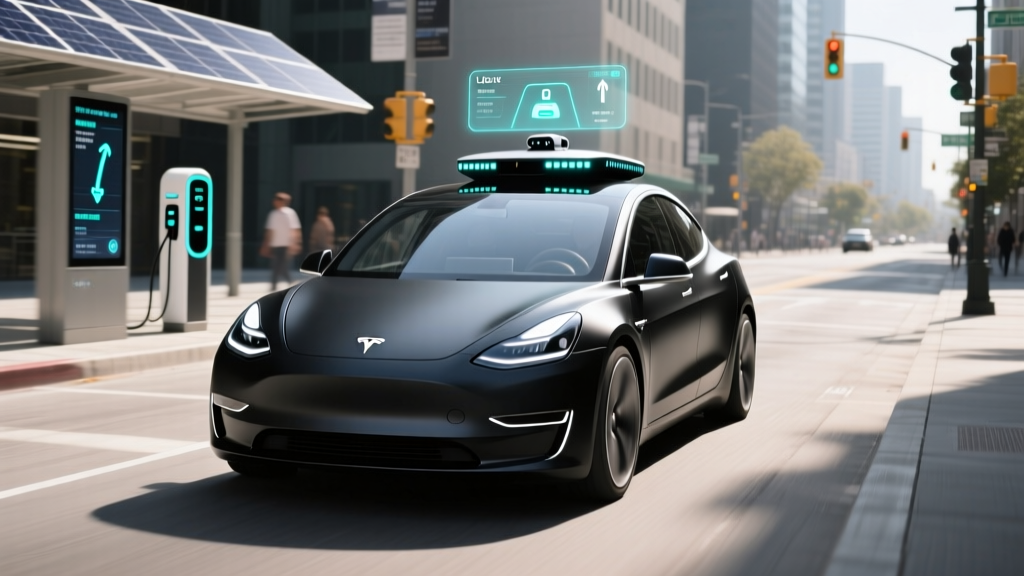
Search "tesla with self driving" and you'll find a tangle of marketing language, YouTube demos, and heated forum debates. Here's the precise reality as of 2026: no Tesla vehicle sold to consumers operates as a self-driving car. Tesla's Full Self-Driving (FSD) Supervised software is an SAE Level 2 driver-assistance system. The driver must remain fully engaged — eyes on the road, hands available to steer — at all times. The car does not drive itself.
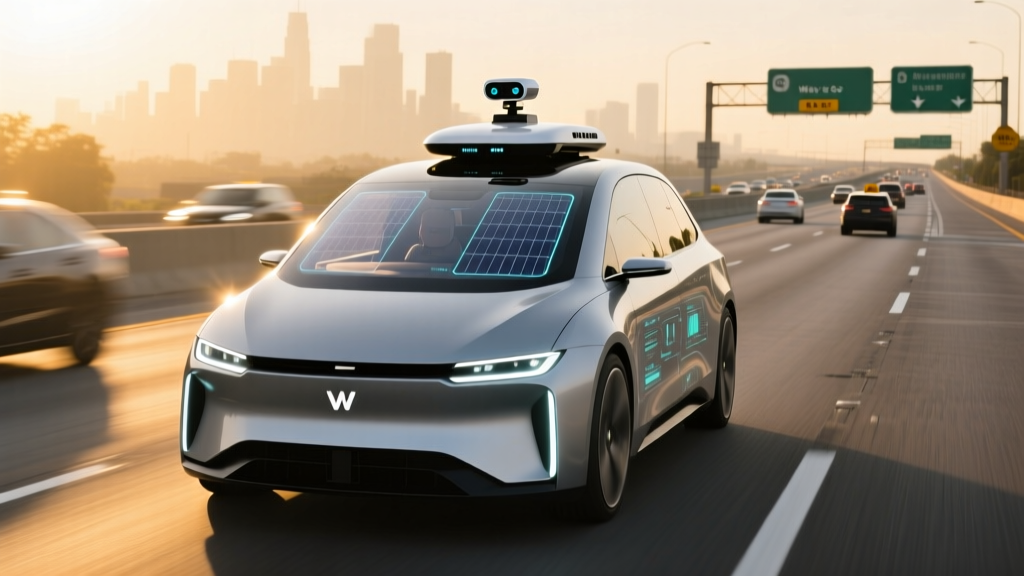
This distinction isn't semantic hair-splitting. It defines your legal liability, your insurance obligations, and what the car will and won't do when a construction barrel appears in a lane closure at 70 mph. It also separates Tesla's consumer product from actual robotaxi services like Waymo, which operate at SAE Level 4 in geofenced areas with no human driver in the loop.
Below, we break down exactly what FSD Supervised can do, what it costs, the safety data available, and how it compares to true driverless services you can hail today.
SAE Automation Levels: Where Tesla FSD Actually Sits
The Society of Automotive Engineers defines six levels of driving automation. Understanding these levels is essential before spending $8,000 on FSD or subscribing at $99/month.
| SAE Level | Name | Who Drives | Example Systems |
|---|---|---|---|
| Level 0 | No Automation | Human does everything | Basic cruise control |
| Level 1 | Driver Assistance | Human + one automated function (steering OR speed) | Tesla Autopilot (basic), Toyota Safety Sense |
| Level 2 | Partial Automation | Human supervises; system handles steering AND speed simultaneously | Tesla FSD Supervised, GM Super Cruise, Ford BlueCruise |
| Level 3 | Conditional Automation | System drives in specific conditions; human must take over on request | Mercedes DRIVE PILOT (limited markets, low speed) |
| Level 4 | High Automation | System drives fully within its operational domain; no human needed | Waymo One, Zoox (geofenced robotaxis) |
| Level 5 | Full Automation | System drives everywhere, all conditions | Does not exist in production |
What FSD Supervised Actually Does on the Road
FSD Supervised (currently version 13.x as of early 2026) handles a broad set of driving tasks on city streets and highways. The system uses Tesla's vision-only architecture — no lidar, no radar on current production vehicles — relying on a suite of external cameras processed by the Hardware 4 (AI4) computer.
Capabilities in Practice
- Highway driving: Maintains speed, follows traffic, executes lane changes, and navigates on/off-ramps with minimal intervention on well-marked interstates.
- City streets: Reads traffic lights and stop signs, makes protected and some unprotected turns, navigates roundabouts, and handles multi-lane urban roads.
- Parking: Smart Summon (navigate to you in a parking lot), automatic parallel and perpendicular parking.
- Navigation integration: Follows a set navigation route end-to-end, including suggesting lane changes for upcoming turns.
Where It Struggles
- Construction zones: Cones, shifted lanes, and temporary barriers remain a primary intervention trigger. The vision-only stack can misread or fail to detect temporary lane reconfigurations.
- Unprotected left turns: Across multi-lane traffic with oncoming vehicles at speed — the system may hesitate excessively or, less commonly, initiate a turn with insufficient gap.
- Weather degradation: Heavy rain, fog, or direct low-angle sun can impair camera visibility. Unlike lidar-based systems, there's no redundant depth-sensing in low-visibility conditions.
- Edge-case road geometry: Non-standard intersections, poorly marked rural roads, and temporary road closures require immediate driver takeover.
Tesla FSD Technology Stack
| Component | Specification |
|---|---|
| Sensor Suite | 8 cameras (vision-only); no lidar, no radar (radar removed from 2022+ vehicles) |
| Compute | Hardware 4 (AI4) — dual neural network processors, ~300+ TOPS |
| Software Approach | End-to-end neural network (v13+); replaces rule-based code with learned driving behavior from fleet data |
| Driver Monitoring | Interior cabin camera with attention tracking (no steering-wheel torque sensor on newer models) |
| Mapping | Lane-level navigation maps, but not HD lidar maps; relies on real-time vision interpretation |
FSD Pricing: Purchase, Subscription, and Total Cost
Tesla offers FSD Supervised through two pricing models. Neither includes the Level 4 robotaxi capability that the name might imply.
| Option | Cost | Notes |
|---|---|---|
| FSD Purchase (one-time) | $8,000 | Tied to the vehicle; transfers if you sell the car. Non-refundable. |
| FSD Monthly Subscription | $99/month | Cancel anytime. Available on vehicles with Enhanced Autopilot or FSD hardware. |
| Basic Autopilot (included) | $0 | Traffic-aware cruise control + autosteer on highways. Standard on all new Teslas. |
Cost context: At $99/month, FSD costs $1,188/year. Over five years, the subscription totals $5,940 — $2,060 less than the outright purchase. If you plan to keep the vehicle beyond ~6.5 years, purchasing makes financial sense. If you're leasing or plan to trade in within 3-4 years, subscribe.
Note: FSD does not qualify for any federal tax credit or incentive. The §30D clean vehicle credit applies to the vehicle purchase itself (subject to MSRP caps of $55,000 for sedans / $80,000 for SUVs/trucks and buyer income limits per IRS guidelines), not to software add-ons.
Safety Data: What the Numbers Actually Show
This is where Tesla's FSD conversation gets contentious. Tesla publishes quarterly safety reports, but independent verification remains limited compared to Waymo's publicly reported data.
FSD Safety Data Snapshot
- Tesla's self-reported claim (Q4 2025): ~1 crash per 4.5 million miles driven with Autopilot/FSD engaged, vs. ~1 per 670,000 miles without. (Source: Tesla Vehicle Safety Report)
- NHTSA investigation context: NHTSA has opened multiple investigations into Tesla's Autopilot/FSD systems, including a standing general order requiring crash reporting for ADAS-equipped vehicles. As of early 2026, investigations into crashes involving stationary emergency vehicles and the FSD city-street beta remain open.
- Intervention rate (third-party testing): Independent testing by organizations like the Insurance Institute for Highway Safety (IIHS) and various automotive publications show FSD Supervised requires driver interventions roughly every 50-150 miles in mixed city/highway driving, depending on route complexity. Highway-only intervention rates are significantly lower.
- Comparison baseline: Waymo's Level 4 robotaxis report an intervention rate of approximately 1 per 13,000+ miles in their Phoenix and San Francisco operational domains — with no human driver present to intervene. Direct comparison is imperfect (geofenced vs. anywhere), but the gap illustrates the autonomy-level difference.
Note: Tesla's safety report methodology combines Autopilot (highway) and FSD (city) miles and does not separate engagement conditions from overall fleet averages. Independent researchers have flagged this as a limitation in drawing conclusions about FSD-specific safety.
Tesla's Robotaxi Ambitions vs. Today's Reality
Tesla announced the Cybercab — a purpose-built, two-seat, steering-wheel-free vehicle designed for Level 4 robotaxi operation — at its October 2024 "We, Robot" event. As of early 2026, the Cybercab remains in pre-production. Tesla has stated it intends to launch an unsupervised FSD service in Austin, Texas, and select other markets, but no commercial driverless service is currently operational.
This positions Tesla differently from Waymo, which operates a commercial, paying-passenger robotaxi service right now.
| Attribute | Tesla FSD Supervised | Waymo One (Level 4 Robotaxi) |
|---|---|---|
| SAE Level | Level 2 (driver required) | Level 4 (no driver in vehicle) |
| Availability | Any Tesla with FSD, nationwide | Phoenix, San Francisco, Los Angeles (select zones) |
| Sensor Stack | Cameras only | LiDAR + cameras + radar |
| Geofencing | None (works on any road) | Yes — limited to mapped operational design domains |
| Human Driver Present | Yes — required at all times | No |
| Commercial Service | Consumer product (you own/drive it) | Paid ride-hail service |
| Weather Limitation | Degraded in heavy rain, fog, snow | Service paused in heavy rain/flooding; operates in light rain |
Where Can You Use True Robotaxi Services Right Now?
If you're looking for a genuinely driverless ride — no hands on a wheel, no attention required — here's what's live in 2026:
| Service | Operational Cities | Hours | How to Access |
|---|---|---|---|
| Waymo One | Phoenix (full metro), San Francisco (most of city), Los Angeles (select areas), expanding to additional zones | 24/7 in Phoenix; limited overnight hours in SF/LA | Waymo app (open to public, no waitlist) |
| Zoox | Las Vegas (limited corridor), Foster City, CA (testing) | Limited hours | Invite-only / employee programs |
| Cruise (GM) | Operations significantly scaled back after 2023 San Francisco incident; limited supervised testing in Phoenix/Dallas | N/A | Not available to public |
Robotaxi Pricing vs. Uber/Lyft
| Service | Typical Cost (5-mile trip) | Surge Pricing | Tip Expected |
|---|---|---|---|
| Waymo One | $12–$18 | Rare; mild demand pricing in peak hours | No (no driver) |
| UberX (Phoenix baseline) | $10–$20 | Yes — frequent during peak/events | Yes ($2–$5 typical) |
| Lyft (Phoenix baseline) | $10–$18 | Yes — "Prime Time" pricing | Yes ($2–$5 typical) |
Waymo's pricing is generally competitive with Uber/Lyft on a per-ride basis — and frequently cheaper once you factor in that no tip is expected. However, availability is constrained by geofencing, and wait times can exceed rideshare during peak demand.
Current Limitations of FSD and Robotaxis
Both Tesla's Level 2 FSD and Level 4 robotaxis have meaningful constraints that buyers and riders should understand before relying on them.
Tesla FSD Supervised — Limitations
- Driver liability: You are legally the driver. Any crash, citation, or traffic violation while FSD is engaged is your responsibility.
- Attention requirement: The cabin camera monitors your eyes. Repeated inattention warnings escalate to FSD lockout ("strike" system — three strikes result in a one-week FSD suspension).
- No hands-free on surface streets: Unlike GM's Super Cruise on mapped highways, Tesla FSD requires you to be prepared to steer at any moment, even when the system appears to be handling the road competently.
- Insurance implications: Most insurers do not offer discounts for FSD. Some charge higher premiums for Tesla vehicles generally due to repair costs. FSD does not change your risk classification with most carriers.
- Resale value uncertainty: The $8,000 FSD purchase does not transfer to a new Tesla if you trade in — it stays with the original vehicle. Used-market FSD premiums are inconsistent.
Level 4 Robotaxis (Waymo) — Limitations
- Geofencing: Cannot travel outside mapped operational zones. A trip from downtown Phoenix to Sedona? Not possible.
- Weather sensitivity: Heavy monsoon rain, dense fog, or flooded roads trigger service suspension.
- No highway operation: Current Level 4 services operate on surface streets at speeds up to ~45 mph. No freeway driving.
- Limited cargo/pets: Service animals permitted; personal pets and large items may be restricted.
- Accessibility: Waymo's Jaguar I-PACE fleet accommodates folding wheelchairs but not all mobility devices. WAV (wheelchair-accessible vehicle) availability is limited.
Regulatory Landscape: Who Approves What
Understanding who regulates autonomous driving clarifies why Tesla's consumer FSD and Waymo's robotaxi operate under fundamentally different frameworks:
- Tesla FSD Supervised: Regulated as an Advanced Driver Assistance System (ADAS) under NHTSA's existing authority. No pre-market approval required — Tesla self-certifies compliance with Federal Motor Vehicle Safety Standards (FMVSS). State-level regulation varies: some states require reporting, others have no specific ADAS rules.
- Level 4 Robotaxis: Require state-level deployment permits. In California, the California Public Utilities Commission (CPUC) and DMV both issue permits. Arizona (where Waymo launched) has a more permissive regulatory environment via executive order. Federal oversight comes through NHTSA's Standing General Order for crash reporting and exemption processes for vehicles without steering wheels (Cybercab, Zoox).
The regulatory gap matters: a Level 2 system like FSD can be deployed nationwide immediately via an over-the-air update, while a Level 4 robotaxi must earn permission city by city, state by state.
Frequently Asked Questions
Is a Tesla with self-driving actually self-driving?
No. Tesla's Full Self-Driving (FSD) Supervised is an SAE Level 2 driver-assistance system. The vehicle can handle steering and acceleration/braking simultaneously in many conditions, but a human driver must remain fully attentive and ready to take over at any moment. You are legally and practically the driver at all times. The word "Supervised" in the product name reflects this requirement.
How much does FSD cost in 2026?
FSD Supervised is available as a one-time $8,000 purchase or a $99/month subscription. Basic Autopilot (traffic-aware cruise control and lane-keeping on highways) is included standard with every new Tesla. FSD does not qualify for any federal tax credit — the §30D credit applies only to the vehicle itself, subject to MSRP and income caps.
Where can I ride in a real driverless robotaxi today?
Waymo One operates commercially in Phoenix (full metro area, 24/7), San Francisco (most of the city), and Los Angeles (select areas). You download the Waymo app, request a ride, and a Jaguar I-PACE with no human driver arrives. Zoox has limited operations in Las Vegas but is not broadly open to the public.
Is FSD safer than driving myself?
Tesla's self-reported data claims fewer crashes per million miles with Autopilot/FSD engaged than without. However, this data combines highway Autopilot (a relatively controlled environment) with city-street FSD and does not isolate FSD-specific performance. Independent testing shows FSD requires driver intervention every 50-150 miles in mixed driving. NHTSA has open investigations into FSD-related crash patterns. The honest answer: FSD may reduce certain types of crashes (rear-end, lane departure) while introducing new risks (over-reliance, edge-case failures). You should not treat it as a safety net that replaces attentive driving.
Will Tesla's Cybercab robotaxi be available to buy?
Tesla has announced the Cybercab as a purpose-built Level 4 robotaxi with no steering wheel or pedals, intended for a fleet-based ride-hail model rather than individual ownership. As of early 2026, the Cybercab is in pre-production and no commercial service has launched. Tesla has targeted an unsupervised FSD rollout in Austin and select markets, but timelines have historically shifted. Treat all Cybercab availability dates as preliminary until vehicles are in revenue service.
Does FSD work in bad weather?
FSD's camera-only system degrades in heavy rain, snow, fog, and conditions with heavy spray from trucks. Unlike lidar-equipped systems, there is no active depth-sensing fallback when cameras are obscured. Tesla's owner manual explicitly states that Autopilot/FSD may not function correctly in these conditions. In practice, the system may issue a takeover request or reduce functionality. You should not rely on FSD in adverse weather.