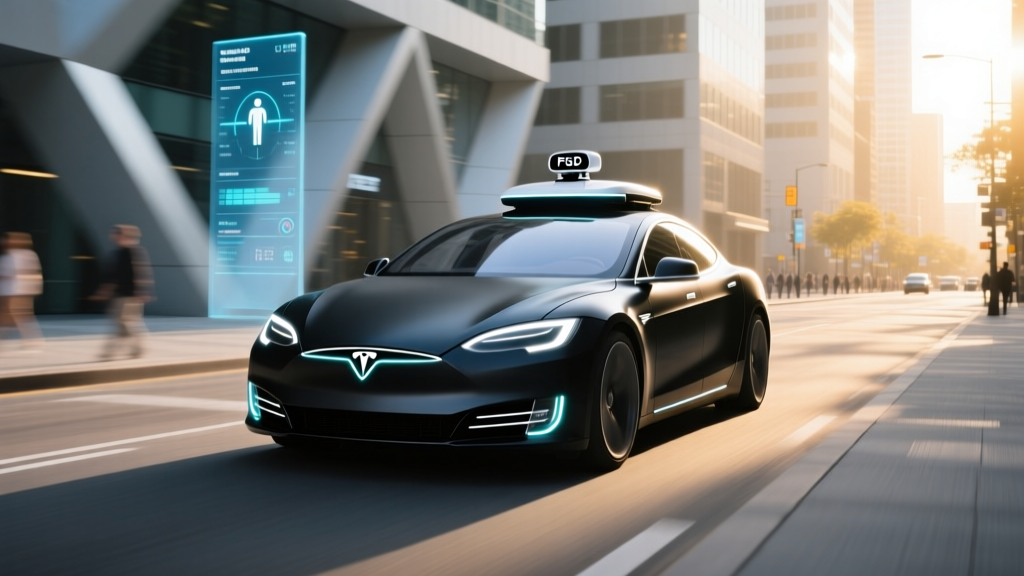
Tesla periodically rolls out promotional offers on Full Self-Driving (FSD) capability — sometimes slashing the one-time purchase price, bundling free trial periods, or offering discounted subscription rates. For buyers on the fence, a Tesla FSD promotion can look like a compelling reason to add the $8,000 software package to their order. But before you tap "Add FSD" at checkout, you need to understand exactly what you're buying, what it can and cannot do, and whether the math works in your favor.
This guide dissects Tesla's FSD stack as it stands in the 2026 model year — the hardware, the software, the real-world performance, the cost structures, and the critical limitations that marketing materials tend to gloss over.
What Tesla FSD Actually Does (and Doesn't Do)
Full Self-Driving (Supervised) is Tesla's most advanced driver-assistance system. It builds on the base Autopilot suite that comes standard on every new Tesla and adds capabilities for city streets, not just highways.
| Feature | Autopilot (Standard) | Enhanced Autopilot | FSD (Supervised) |
|---|---|---|---|
| Adaptive cruise control | ✓ | ✓ | ✓ |
| Lane centering (Autosteer) | ✓ (highway) | ✓ (highway) | ✓ (all roads) |
| Auto lane change | — | ✓ | ✓ |
| Navigate on Autopilot (on/off-ramps) | — | ✓ | ✓ |
| Autopark / Smart Summon | — | ✓ | ✓ |
| Traffic light & stop sign control | — | — | ✓ |
| City street Autosteer | — | — | ✓ |
| Price (one-time) | Included | ~$6,000 | ~$8,000 (promos vary) |
| Monthly subscription | — | — | $99/mo |
In practical terms, FSD Supervised can navigate intersections, make turns, respond to traffic signals, and handle merging on surface streets — all without the driver manually steering. However, and this is the most important sentence in this article: the driver must remain fully attentive, with hands on or near the wheel, at all times.
SAE Automation Level: Level 2
Tesla FSD (Supervised) operates at SAE Level 2 — partial driving automation. The system handles steering and acceleration/deceleration simultaneously, but the human driver is the responsible operator. You must monitor the road, be ready to intervene instantly, and keep your hands detected by the steering wheel torque sensor or cabin camera. This is fundamentally different from SAE Level 4 systems like Waymo's robotaxi, which operate without any human driver in defined service areas. No Tesla vehicle sold to consumers is autonomous. For more on SAE automation levels, see SAE International's J3016 standard.
How FSD Works: Hardware and Software Under the Hood
Tesla's approach diverges sharply from competitors. While Waymo, Cruise, and most legacy automakers rely on a sensor fusion stack combining cameras, radar, lidar, and ultrasonic sensors, Tesla has gone all-in on a vision-only architecture — branded Tesla Vision.
All 2026 Tesla vehicles (Model 3, Model Y, Model S, Model X, and Cybertruck) ship with Hardware 4 (HW4), which includes:
- 8 cameras providing 360-degree visibility (front-facing main + narrow, left/right repeaters, left/right pillars, rear)
- High-resolution sensors — up to 5 megapixel cameras with improved low-light performance over HW3
- Dual onboard computers running Tesla's custom neural network inference chips, processing roughly 2,500 frames per second combined
Notably absent: radar (removed starting in 2021 for North American vehicles) and ultrasonic sensors (phased out starting late 2022). Tesla relies entirely on neural-network-processed camera data for depth estimation, object detection, and path planning. This end-to-end neural network approach, which Tesla has iterated on heavily since 2024, processes raw video input and outputs driving decisions directly, replacing the older modular rules-based code.
The real-world implication of a vision-only system is that FSD performance is sensitive to conditions that degrade camera visibility — heavy rain, fog, direct sun glare, dirty lenses, and poorly marked roads all reduce system confidence and may trigger disengagements.
Tesla FSD Pricing: One-Time Purchase vs. Subscription
Understanding the cost structure is essential before evaluating any promotion. Tesla has adjusted FSD pricing several times, and promotional periods can significantly alter the value equation.
| Option | Cost | Transferability | Best For |
|---|---|---|---|
| One-time purchase | $8,000 MSRP (promotions may reduce to $6,000–$7,000) | Transfers with vehicle if sold; recently Tesla has offered limited purchase-to-new-vehicle transfers during promotions | Owners planning 4+ years of ownership who use FSD daily |
| Monthly subscription | $99/month | Not transferable; tied to driver account, not vehicle | Owners who want FSD for road trips or seasonal use; those uncertain about long-term value |
| Free trial | 30 days (promotional periods may extend to 60–90 days) | N/A | Every new buyer — always activate the trial before committing |
The break-even math: At $99/month, the subscription reaches $8,000 in roughly 81 months (6.75 years). If a promotion drops the one-time price to $6,000, the break-even drops to about 61 months (5 years). For owners who plan to keep their Tesla beyond that window and use FSD regularly, the lump-sum purchase makes financial sense. For everyone else, the subscription offers flexibility with no commitment.
One important caveat: Tesla has periodically offered FSD transfers from an old vehicle to a new Tesla purchase — typically during end-of-quarter sales pushes. These transfer promotions are time-limited and not guaranteed. If you're considering selling a Tesla with purchased FSD, be aware that FSD adds minimal resale value on the used market; private buyers and dealerships rarely pay a premium for it.
Real-World Performance: Where FSD Excels and Where It Struggles
Having tested FSD across multiple software versions on Model 3, Model Y, and Cybertruck, here's an honest assessment of where the system stands in daily driving.
Where FSD Performs Well
- Highway driving: Lane changes, on-ramp merging, and speed management on well-marked interstates are smooth and predictable. This is FSD's strongest use case.
- Suburban arterial roads: Roads with clear lane markings, standard intersections, and moderate traffic density see reliable performance with infrequent disengagements.
- Traffic signal compliance: Stop sign and red light detection has improved substantially; the system correctly identifies and responds to most standard traffic controls.
Where FSD Struggles
FSD Supervised Limitations — Know Before You Buy
- Construction zones: Temporary lane shifts, orange cones, and altered road geometry frequently cause confusion or abrupt disengagements. Always take over in work zones.
- Unprotected left turns: Complex intersections with multiple turn lanes, oncoming traffic, and pedestrians remain challenging. Expect the system to be overly cautious (sometimes stopping unnecessarily) or to hesitate.
- Heavy weather: Rain, snow, and fog reduce camera effectiveness. FSD may reduce speed, issue warnings, or disengage entirely. Never rely on FSD in severe weather.
- Unmarked or poorly marked roads: Rural roads, faded lane lines, and non-standard intersections degrade performance significantly.
- Edge-case objects: Unusual road debris, emergency vehicles stopped at odd angles, and unexpected pedestrian behavior can exceed the system's training data.
- Phantom braking: The system occasionally brakes hard for shadows, overhead signs, or objects that pose no actual threat — a known issue that persists across software versions.
The National Highway Traffic Safety Administration (NHTSA) has investigated multiple incidents involving Tesla's Autopilot and FSD systems, particularly regarding crashes into stationary emergency vehicles. As of 2026, NHTSA's standing general order requires Tesla (and all ADAS manufacturers) to report crashes involving Level 2 systems. Check NHTSA's automated vehicle safety page for the latest enforcement actions and recall notices.
How Tesla FSD Compares to Competing ADAS Systems
Tesla isn't the only automaker offering advanced driver-assistance. Here's how FSD stacks up against the major competitors available in 2026:
| System | Manufacturer | SAE Level | Hands-Free? | Cost | Key Differentiator |
|---|---|---|---|---|---|
| FSD (Supervised) | Tesla | Level 2 | No (hands on wheel required) | $8,000 or $99/mo | City street coverage nationwide; vision-only |
| Super Cruise | GM (Cadillac/Chevrolet/GMC) | Level 2 | Yes (on mapped highways) | ~$2,500 or included on premium trims | True hands-free on 750,000+ miles of mapped roads; uses lidar-mapped HD maps + driver camera |
| BlueCruise | Ford/Lincoln | Level 2 | Yes (on pre-qualified highway sections) | $2,100 (2-year) then ~$75/yr or $75/mo | Hands-free highway driving; growing road network; driver-facing camera monitoring |
| ProPILOT Assist 2.0 | Nissan/Infiniti | Level 2 | Yes (on mapped highways, limited conditions) | Included on higher trims | Hands-off highway; nav-linked lane guidance |
| Toyota Teammate (Advanced Drive) | Toyota/Lexus | Level 2 | No | Included on select trims | Conservative, safety-first approach; strong in highway cruising |
The key takeaway: GM's Super Cruise and Ford's BlueCruise offer hands-free operation on mapped highways — something Tesla FSD does not. Tesla's advantage is geographic breadth: FSD works on virtually any road in the U.S. and Canada, while Super Cruise and BlueCruise are limited to their pre-mapped highway networks. For highway commuters, hands-free systems may offer a more relaxing experience. For drivers who want assistance on surface streets and in cities, FSD's coverage area is unmatched.
Is a Tesla FSD Promotion Worth It? The Decision Framework
Not every promotion is a deal, and not every driver benefits from FSD. Use this framework to decide:
Buy FSD (one-time, especially on promotion) if:
- You drive 20,000+ miles/year and commute in mixed highway/city conditions
- You plan to keep the vehicle 5+ years
- You value having the latest software features and accept that the system will evolve over time
- The promotion drops the price to $6,000 or below (reducing the break-even to ~5 years vs. subscription)
Subscribe to FSD monthly ($99/mo) if:
- You primarily want FSD for road trips or occasional use
- You're uncertain whether you'll like the system long-term
- You plan to sell or trade the vehicle within 3–4 years
- You prefer flexibility over sunk cost
Skip FSD entirely if:
- You primarily drive in dense urban areas with complex, unpredictable traffic (your intervention rate will be high)
- You expect a "self-driving" experience — FSD requires constant supervision
- Standard Autopilot (included) already covers your needs (highway cruise + lane centering)
- The $8,000 would be better allocated toward a home Level 2 charger installation, insurance, or simply saved
Models, Trims, and Availability: Which Teslas Get FSD?
FSD (Supervised) is available as an add-on across the entire 2026 Tesla lineup:
- Model 3 (all trims: RWD, Long Range, Performance) — HW4 standard
- Model Y (Long Range, Performance, and the refreshed Long Range RWD) — HW4 standard
- Model S (Long Range, Plaid) — HW4 standard
- Model X (Long Range, Plaid) — HW4 standard
- Cybertruck (AWD, Cyberbeast) — HW4 standard; FSD availability confirmed as of late 2025 software update
Every new Tesla ships with the hardware necessary for FSD. The software unlock is what you're paying for — either $8,000 upfront or $99/month. Base Autopilot (adaptive cruise + lane centering on highways) is included at no extra cost on every vehicle.
Tesla has also introduced FSD capability transfers as a promotional tool. During certain periods, Tesla allows owners who purchased FSD on a previous vehicle to transfer it to a new Tesla order, rather than repurchasing. These transfer windows are announced via the Tesla app and email, typically aligned with end-of-quarter delivery pushes. If you're an existing FSD owner considering a new Tesla, watch for these windows before placing your order.
Safety Data and Regulatory Context
Tesla publishes quarterly safety reports claiming that vehicles driving with Autopilot engaged record fewer crashes per million miles than the U.S. average. However, these statistics require careful interpretation:
- Most Autopilot miles are highway miles — the safest driving environment regardless of ADAS use
- The comparison is to the national average, which includes older vehicles, impaired drivers, and adverse conditions
- Tesla's data is self-reported and not independently audited by NHTSA or a third party
The Insurance Institute for Highway Safety (IIHS) has rated Tesla vehicles well in crashworthiness tests but has expressed concerns about the adequacy of driver monitoring in Tesla's Autopilot system compared to competitors like GM's Super Cruise, which uses an infrared camera to verify eye gaze. See IIHS ratings for crash-test specifics by model.
For the latest regulatory developments, Tesla's FSD has faced scrutiny from both NHTSA (investigations into crash patterns) and state regulators. California's DMV has required Tesla to adjust its marketing language around "Full Self-Driving" to avoid misleading consumers about the system's autonomy. Always verify current regulatory status through NHTSA.gov before relying on any ADAS feature.
Frequently Asked Questions
Is Tesla FSD truly self-driving?
No. Tesla FSD (Supervised) is an SAE Level 2 driver-assistance system. You must remain attentive, keep your hands on or near the steering wheel, and be prepared to take over at any moment. The "Supervised" designation in the product name exists specifically because the driver is the responsible operator. Only Level 4 services like Waymo operate without a human driver, and those are ride-hail services, not consumer vehicles.
How much does a Tesla FSD promotion typically discount?
Promotions vary. Tesla has historically offered FSD at reduced one-time prices (e.g., $6,000–$7,000 vs. the standard $8,000), extended free trials (60–90 days vs. the standard 30 days), or FSD transfer eligibility from a previous vehicle. These are typically tied to end-of-quarter delivery deadlines and are not guaranteed to recur.
Can I subscribe to FSD and then buy it later?
Yes. Tesla allows subscribers to switch to the one-time purchase at any time. Subscription payments do not count toward the purchase price, however — so if you subscribe for 24 months ($2,376) and then decide to buy, you'll still owe the full purchase price.
Does FSD work in bad weather?
Performance degrades in rain, snow, and fog because the vision-only system depends on camera clarity. In heavy precipitation, FSD may issue a "reduced capability" warning, lower its speed, or disengage entirely. Always take manual control in adverse weather.
Will FSD make my Tesla worth more at resale?
Minimally. Used-car market data consistently shows that FSD adds far less than its purchase price to resale value. Most used-Tesla buyers are unwilling to pay a significant premium for FSD, especially since they can subscribe to it independently. Treat the FSD purchase as a personal-use expense, not an investment.
What's the difference between Autopilot and FSD?
Autopilot is standard on every Tesla and includes adaptive cruise control and lane centering on highways. FSD (Supervised) adds city-street driving, traffic light/stop sign recognition, auto lane changes on highways, Navigate on Autopilot (on-ramp to off-ramp), and Smart Summon. Think of Autopilot as highway assist and FSD as highway-plus-city assist — both requiring full driver attention.