For years, Tesla offered Full Self-Driving (FSD) as either a monthly subscription or an $8,000 upfront purchase. That dual-option structure is now history. When Tesla ended the FSD one-time purchase on February 14, it fundamentally changed how buyers access the company's most advanced driver-assistance software — and raised important questions about long-term cost, vehicle resale value, and how Tesla's approach compares to the broader ADAS market.
This guide breaks down exactly what FSD (Supervised) does today, what it costs under the new subscription-only model, where its real-world limitations lie, and whether it's worth adding to your Tesla in 2026.
What Tesla FSD (Supervised) Actually Does
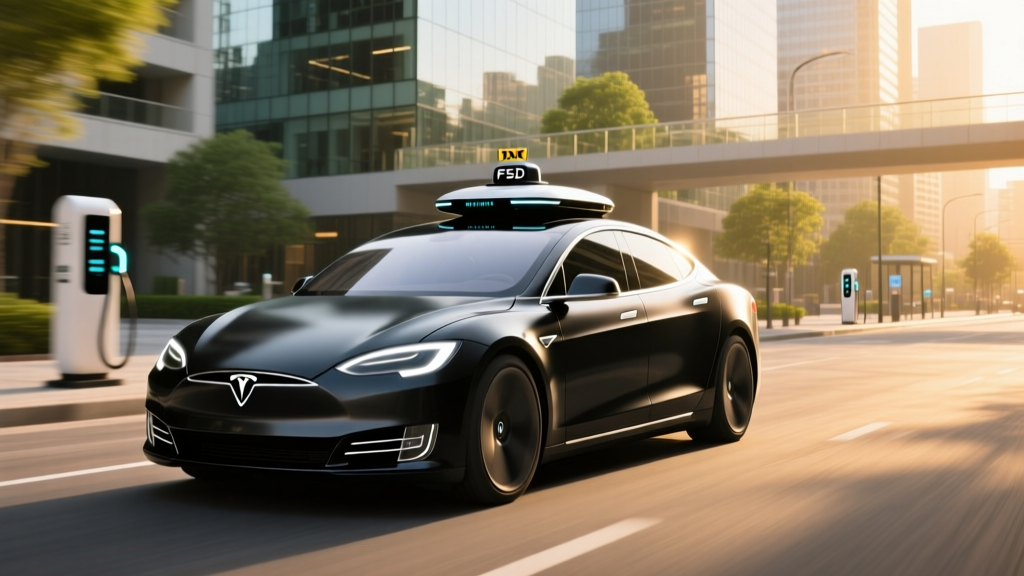
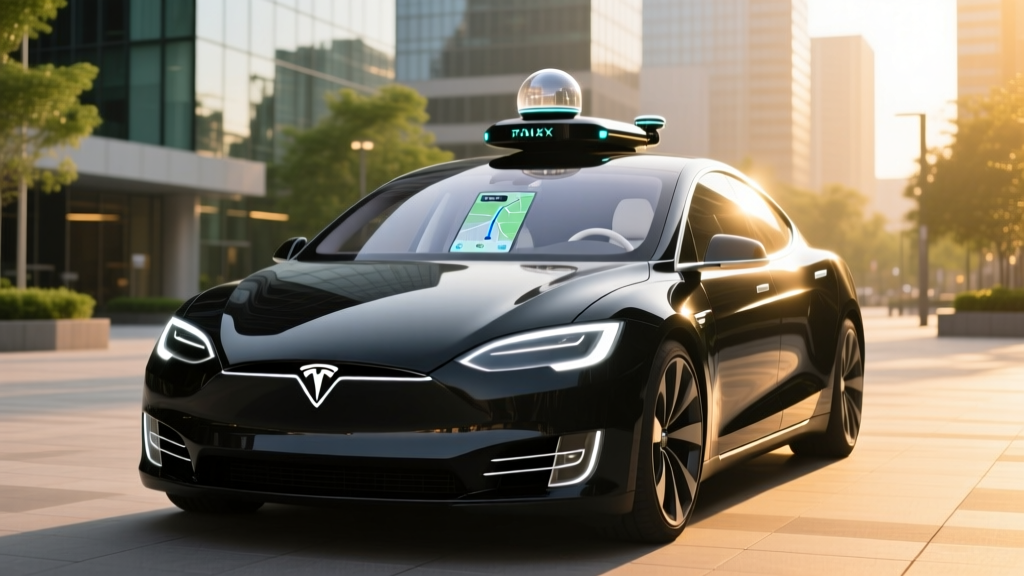
Tesla's Full Self-Driving capability — officially branded FSD (Supervised) — is the company's highest-tier driver-assistance package, sitting above the standard Autopilot and Enhanced Autopilot offerings. It relies entirely on a camera-based vision system (Tesla removed ultrasonic sensors and radar from new vehicles starting in 2022–2023, transitioning to what it calls "Tesla Vision").
The system uses eight surround cameras feeding data to Tesla's custom HW4 (Hardware 4) AI computer. Neural networks process real-time visual data to interpret lane markings, traffic signals, pedestrians, other vehicles, and road geometry. No lidar, no radar — purely vision-based perception.
| Feature | What It Does | Driver Required? |
|---|---|---|
| Traffic Light & Stop Sign Control | Detects and responds to traffic lights and stop signs, stopping and proceeding automatically | Yes — must confirm green lights |
| Auto Lane Change | Initiates lane changes on highways based on navigation route and traffic conditions | Yes — must approve each change |
| Navigate on Autopilot | Active guidance from highway on-ramp to off-ramp, including interchange navigation | Yes — continuous supervision |
| Autosteer on City Streets | Steering and speed management on surface streets, handling turns and intersections | Yes — hands on wheel, eyes on road |
| Smart Summon | Navigates parking lots to come to the driver or a selected location | Yes — must monitor via phone app |
| Autopark | Identifies parking spaces and parks the vehicle (parallel or perpendicular) | Yes — must remain in vehicle or monitor |
On paper, that's an impressive feature list. In practice, the system's performance varies significantly depending on conditions — something we'll address in detail below.
SAE Level 2: Why FSD Is Not Self-Driving
SAE Automation Level: Level 2 (Partial Driving Automation)
Despite the "Full Self-Driving" name, Tesla FSD (Supervised) is classified as SAE Level 2 by both Tesla and the National Highway Traffic Safety Administration (NHTSA). This means:
- The driver must remain fully engaged and attentive at all times
- Hands must stay on the steering wheel (Tesla monitors via steering torque and cabin camera)
- The driver is legally responsible for all vehicle actions
- The system can disengage unexpectedly — the driver must be ready to take over instantly
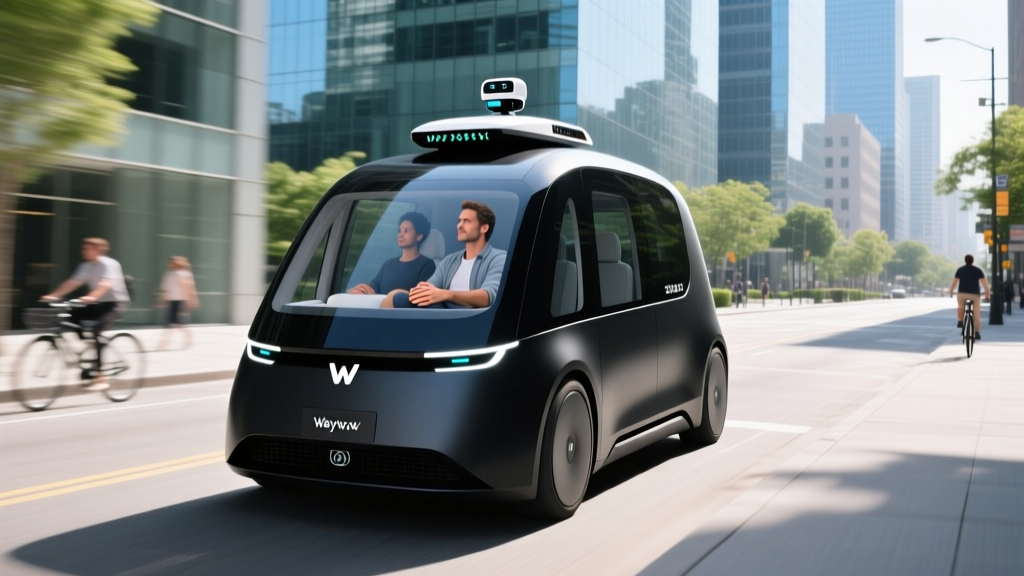
True self-driving (Level 4/5) is currently only available in limited robotaxi services like Waymo — not in any consumer vehicle you can purchase.
Tesla's cabin camera monitors driver attention, issuing escalating warnings if your eyes drift from the road. Repeated inattention triggers a "strike" system that can temporarily lock you out of FSD features. This enforcement mechanism exists precisely because the system requires human oversight — it cannot handle all driving scenarios independently.
The Cost Shift: Subscription-Only After February 14
When Tesla ended the FSD one-time purchase on February 14, it eliminated the $8,000 perpetual license that had been available (at various price points) since 2019. Here's how the pricing structure looks now:
| Pricing Model | Before Feb 14 | After Feb 14 (Current) |
|---|---|---|
| One-Time Purchase | $8,000 (lifetime, transfers with vehicle) | Discontinued — no longer available |
| Monthly Subscription | $99/month | $99/month (unchanged) |
| Transferability | One-time purchase stayed with the car at sale | Subscription is tied to your Tesla account, not the vehicle |
| Cancellation | N/A (permanent purchase) | Cancel anytime — no penalty |
What this means economically: At $99/month, you'd pay $5,940 over five years — less than the old $8,000 lump sum. Over eight years, you'd pay $9,504. The breakeven point versus the old one-time purchase was roughly 6.7 years. For buyers who planned to keep their Tesla long-term, the one-time purchase was the better financial move. For those who trade vehicles every 3–4 years, the subscription was already the smarter choice.
The bigger shift is philosophical: FSD is now a service, not an asset. It doesn't add to your vehicle's resale value the way the one-time purchase did. When selling a used Tesla that had the $8,000 FSD purchase, buyers often factored that into the price. With subscription-only, the next owner starts their own subscription — there's no embedded value to recoup.
Which Tesla Models Include FSD (Supervised)?
FSD (Supervised) is available across Tesla's entire 2026 lineup as an add-on subscription. It is not included standard on any trim — every Tesla ships with Basic Autopilot at no extra charge, while FSD requires the active $99/month subscription.
| Model | Hardware | FSD Available? | Notes |
|---|---|---|---|
| Model 3 (Highland/Refresh) | HW4 | Yes — $99/mo | All trims (RWD, Long Range, Performance) |
| Model Y (Juniper) | HW4 | Yes — $99/mo | All trims |
| Model S | HW4 | Yes — $99/mo | Long Range and Plaid |
| Model X | HW4 | Yes — $99/mo | Long Range and Plaid |
| Cybertruck | HW4 | Yes — $99/mo | AWD and Cyberbeast |
Vehicles built before mid-2023 with HW3 (Hardware 3) computers may require a hardware upgrade to access the latest FSD neural network models. Tesla has offered free HW3-to-HW4 upgrades for vehicles that had the one-time FSD purchase — but with the purchase option gone, new subscribers with older hardware should confirm upgrade eligibility with Tesla directly.
Real-World Limitations: Where FSD Struggles
Critical Limitations of FSD (Supervised)
- Weather degradation: Heavy rain, fog, snow, and direct sun glare can impair camera-based perception. Tesla Vision lacks radar redundancy, meaning performance drops more sharply in adverse weather than sensor-fusion systems.
- Faded or missing lane markings: Construction zones, rural roads, and poorly maintained streets can confuse the system's lane-tracking algorithms.
- Unprotected left turns: City-street FSD still struggles with complex intersections requiring gap judgment across multiple lanes of oncoming traffic.
- Phantom braking: The system occasionally brakes unexpectedly for perceived obstacles — a persistent issue documented in NHTSA investigations and owner complaints.
- Late disengagement: In some edge cases, FSD may disengage with insufficient warning time for the driver to react — reinforcing why continuous attention is non-negotiable.
- No off-road capability: Unpaved roads, private driveways, and unmapped areas are unsupported.
In real-world driving, I've found FSD (Supervised) most reliable on well-marked divided highways with clear signage — essentially the same conditions where any competent adaptive cruise control and lane-centering system performs well. On surface streets, the system can navigate many scenarios competently, but the frequency of interventions required (grabbing the wheel, confirming traffic lights, overriding poor lane choices) makes it feel more like a co-pilot requiring constant oversight than a system that reduces cognitive load.
Tesla publishes periodic safety reports, but these aggregate data across all Autopilot and FSD usage and have been criticized by researchers for not isolating FSD-specific performance from basic Autopilot highway driving. Independent testing by organizations like the Insurance Institute for Highway Safety (IIHS) has found that partial automation systems across all brands — including Tesla's — do not yet demonstrate a clear safety advantage over attentive human driving in controlled studies.
How Tesla FSD Compares to Competing ADAS Systems
Tesla isn't the only automaker offering advanced Level 2 driver assistance. Here's how FSD stacks up against the leading competitors in 2026:
| System | Brand | Sensors | Hands-Free? | Cost | Key Differentiator |
|---|---|---|---|---|---|
| FSD (Supervised) | Tesla | Cameras only (Tesla Vision) | No — torque monitoring + cabin cam | $99/mo | City street coverage (widest geographic availability) |
| Super Cruise | GM (Cadillac, Chevy, GMC) | Cameras, radar, lidar-mapped HD maps | Yes — on pre-mapped roads (~750k miles) | Included 3 yrs, then ~$25/mo | True hands-free on mapped highways; driver monitoring via IR camera |
| BlueCruise | Ford / Lincoln | Cameras, radar | Yes — on pre-approved Blue Zones (~130k miles) | $75/mo or $2,500 one-time (varies) | Hands-free highway; strong driver monitoring |
| ProPILOT Assist 2.0 | Nissan | Cameras, radar, lidar (Ariya) | Yes — on divided highways | Included on select trims | Eye-monitoring + hands-free highway on Ariya |
| Toyota Safety Sense 3.0 | Toyota | Cameras, radar | No — hands-on required | Standard (no extra cost) | Wide availability; conservative but reliable |
| Honda Sensing | Honda | Camera, radar | No — hands-on required | Standard (no extra cost) | Low-speed braking control; standard across lineup |
The most telling contrast is between Tesla's camera-only approach and GM's Super Cruise, which uses lidar-mapped HD road data. Super Cruise allows true hands-free driving on its mapped highway network (now exceeding 750,000 miles of compatible roads in North America), while FSD still requires hands on the steering wheel everywhere. Super Cruise's limitation is geographic — it won't activate off its mapped network, while FSD (Supervised) will attempt to operate on virtually any road.
Ford's BlueCruise occupies a middle ground: hands-free on approved highway "Blue Zones" but hands-on elsewhere. Notably, Ford still offers a one-time purchase option for BlueCruise on certain models — a choice Tesla has now eliminated.
What the End of One-Time FSD Means for Used Tesla Values
The used Tesla market has long grappled with how to value FSD. A 2022 Model Y with the $8,000 FSD purchase was generally worth more than an identical car without it — though rarely the full $8,000 premium. Third-party valuation tools like Kelley Blue Book and Edmunds typically added $2,000–$4,000 for FSD-equipped vehicles.
With FSD now subscription-only, that residual value advantage disappears for new purchases. Existing vehicles that had the one-time FSD purchase activated before February 14 retain that feature (it stays with the car), making them potentially more desirable on the used market as time goes on — a dwindling pool of Teslas with permanent FSD access versus the growing population of subscription-only cars.
For buyers shopping used Teslas in 2026: verify whether FSD was purchased outright (check the vehicle's software menu or ask Tesla directly with the VIN). A used Tesla with legacy one-time FSD is a meaningfully different value proposition than one requiring a new subscription.
Frequently Asked Questions
Can I still buy FSD as a one-time purchase?
No. Tesla ended the FSD one-time purchase on February 14, 2025. The only way to access FSD (Supervised) now is through the $99/month subscription. Any vehicle that had FSD purchased outright before that date retains the feature permanently.
Is Tesla FSD truly self-driving?
No. FSD (Supervised) is SAE Level 2 — a driver-assistance system that requires continuous human supervision. Your hands must remain on the steering wheel, your eyes on the road, and you are legally responsible for the vehicle at all times. True self-driving (Level 4) currently exists only in geofenced robotaxi services like Waymo, not in any consumer vehicle.
Does the FSD subscription transfer if I sell my Tesla?
No. The subscription is tied to your Tesla account, not the vehicle. When you sell, the new owner would need to start their own subscription. This differs from the old one-time purchase model, where FSD stayed with the car.
Which is better: Tesla FSD or GM Super Cruise?
It depends on your driving. Super Cruise offers true hands-free driving on ~750,000 miles of mapped highways — a more relaxed experience for long highway commutes. FSD (Supervised) covers more road types including city streets, but requires hands-on engagement everywhere and has more variable performance. For pure highway comfort, Super Cruise currently leads. For broader coverage, FSD covers more scenarios — with more driver workload.
Does FSD work in bad weather?
Performance degrades significantly in heavy rain, snow, fog, and low-visibility conditions. Tesla's camera-only vision system lacks the radar redundancy that some competing systems use as a backup in poor weather. Tesla's owner manual explicitly states that Autopilot and FSD should not be used in conditions that impair camera visibility.
What happens if I cancel the FSD subscription?
Your vehicle reverts to Basic Autopilot, which includes Traffic-Aware Cruise Control and Autosteer (lane centering) on highways. You lose access to Navigate on Autopilot, Auto Lane Change, city-street Autosteer, Smart Summon, Autopark, and Traffic Light & Stop Sign Control. You can resubscribe at any time.
Is the $99/month FSD subscription worth it?
At $1,188 per year, the subscription makes sense if you regularly drive in conditions where FSD's features reduce your workload — primarily long highway trips and predictable city commutes in good weather. If you mostly drive short distances, in adverse weather, or on poorly marked roads, the system's limitations may not justify the ongoing cost. Try it for one month and evaluate honestly whether it meaningfully reduces driving stress versus requiring so much oversight that it adds cognitive load instead.
The elimination of Tesla's one-time FSD purchase marks a strategic pivot toward recurring revenue — aligning Tesla with the software-as-a-service model increasingly common in the auto industry. For buyers, the calculus is simpler now: $99 per month, cancel anytime, no long-term commitment. Whether that's a good deal depends entirely on how much value you derive from a Level 2 system that, despite its ambitious name, still demands your full attention behind the wheel.