What Tesla Full Self-Driving (Supervised) Actually Does
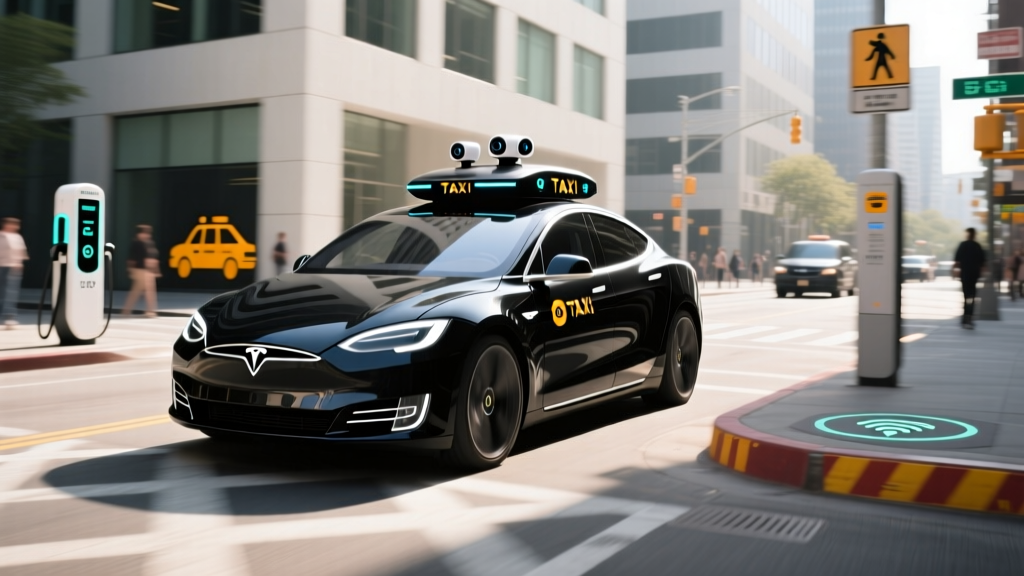
Tesla's Full Self-Driving (Supervised) — commonly abbreviated FSD — is the company's highest-tier driver-assistance system. It builds on the base Autopilot package that ships standard on every new Tesla and adds a suite of features designed for city streets, highways, and parking scenarios.
Technically, FSD (Supervised) relies on a vision-only sensor suite. Current Model 3, Model Y, Model S, and Model X vehicles use a camera array (typically eight cameras providing 360-degree coverage) paired with Tesla's HW4 (Hardware 4) computer. Tesla removed ultrasonic sensors and radar from new production vehicles starting in 2022–2023, moving entirely to Tesla Vision — a neural-network-driven perception system that interprets lane lines, traffic signals, pedestrians, and other vehicles from camera data alone.
The feature set includes:
- Traffic-Aware Cruise Control: Maintains a set speed and following distance, adjusting for vehicles ahead.
- Autosteer: Provides active lane-centering on highways and well-marked roads.
- Auto Lane Change: Initiates and completes lane changes on highways when the driver confirms via turn signal or, in newer versions, automatically based on navigation routing.
- Navigate on Autopilot: Suggests and executes highway exits, interchanges, and merges based on the navigation route.
- Autopark: Detects parallel or perpendicular parking spaces and steers the vehicle into them.
- Smart Summon: Allows the driver to summon the vehicle at low speed in a parking lot via the Tesla app (driver must remain within line of sight).
- Traffic Light and Stop Sign Control: Identifies and responds to traffic signals and stop signs, with driver confirmation required at red lights.
- City Streets (FSD): Handles turns, roundabouts, and intersections on surface streets — the most advanced and most scrutinized capability.
Tesla FSD (Supervised) is classified as SAE Level 2 driver assistance. This means the system can control steering and acceleration simultaneously, but the driver must remain fully engaged, hands on the wheel, and eyes on the road at all times. Tesla's own documentation and the NHTSA require continuous driver supervision. Only Level 4 services like Waymo One operate without a human driver — and those are geofenced robotaxis, not consumer vehicles.
Tesla FSD Monthly Subscription: Pricing Breakdown
One of the most searched questions about FSD is cost. Tesla offers two paths to access Full Self-Driving (Supervised), and the financial difference is significant over a typical ownership period.
| Option | Cost | Notes |
|---|---|---|
| One-Time Purchase | $8,000 | Tied to the vehicle; transfers if you sell the car. Tesla has adjusted this price multiple times (previously $12,000–$15,000). |
| Monthly Subscription | $99/month | Cancel anytime. Tied to your Tesla account, not the vehicle. Available on all Tesla models with HW3 or HW4. |
| Base Autopilot (Included) | $0 | Standard on every new Tesla. Includes Traffic-Aware Cruise Control and basic Autosteer on highways only. |
The break-even math: At $99/month, the subscription reaches the $8,000 purchase price in approximately 81 months (6.75 years). If you plan to keep your Tesla longer than that, the one-time purchase makes financial sense. If you lease, upgrade frequently, or want to test FSD before committing, the Tesla FSD monthly subscription is the lower-risk option.
One important caveat: Tesla does not currently offer a way to transfer a purchased FSD license to a new Tesla if you trade in, though the company has run limited-time promotional transfer windows. Subscription, by contrast, simply follows your account to whatever Tesla you own or lease.
Which Tesla Models and Trims Support FSD?
FSD (Supervised) is available across Tesla's entire current lineup, but hardware generation matters for the experience you'll get.
| Model | Current Hardware | FSD Available? | Starting MSRP (2025/2026) |
|---|---|---|---|
| Model 3 (Highland refresh) | HW4 | Yes — subscription or purchase | ~$38,990 (RWD) |
| Model Y (Juniper refresh) | HW4 | Yes — subscription or purchase | ~$44,990 (RWD) |
| Model S | HW4 | Yes — subscription or purchase | ~$79,990 (Dual Motor) |
| Model X | HW4 | Yes — subscription or purchase | ~$84,990 (Dual Motor) |
| Cybertruck | HW4 | Yes — subscription or purchase | ~$79,990 (AWD) |
Older vehicles with HW3 (roughly 2019–2022 production) can still subscribe to or purchase FSD, but Tesla has acknowledged that HW3 may not support all future FSD capabilities. The company has discussed a HW3-to-HW4 retrofit path, but availability and cost remain inconsistent. If you're buying used, verify the hardware generation before paying for FSD.
Real-World Capabilities: Where FSD Excels and Struggles
After extensive real-world use across highway and city environments, FSD (Supervised) delivers a mixed experience that varies heavily by road type, weather, and infrastructure quality.
Where It Works Well
- Divided highways with clear lane markings: FSD handles long highway stretches confidently — maintaining speed, following distance, and executing lane changes smoothly. Navigate on Autopilot is particularly strong here.
- Suburban arterials with good signage: Traffic light detection and stop-sign compliance work reliably in well-maintained suburban environments.
- Parking assistance: Autopark handles perpendicular and parallel spots competently, reducing low-speed maneuvering stress.
Where It Falls Short
- Construction zones: Cone detection and temporary lane rerouting remain inconsistent. Expect frequent disengagements.
- Faded or missing lane markings: The vision-only system depends heavily on visible paint. Rural roads and poorly maintained urban streets trigger phantom braking or lane drift.
- Heavy rain, fog, or snow: Camera-based perception degrades significantly in precipitation. Tesla's owner manual explicitly warns that Autopilot/FSD may not function in adverse weather.
- Unprotected left turns across traffic: City-street FSD still hesitates or misjudges gaps in oncoming traffic at intersections without dedicated turn signals.
- Roundabouts: While supported, execution is often jerky or overly cautious, sometimes stopping mid-roundabout.
- Phantom braking: The system occasionally brakes hard for no apparent obstacle — a persistent complaint documented in NHTSA consumer complaints and Tesla forums.
A critical real-world note: FSD's "miles per intervention" metric — how far the car drives before the human must take over — varies enormously. On a well-marked interstate, you might go 100+ miles without touching the wheel. On a rainy city street with construction, you might intervene every 30 seconds. Marketing materials sometimes cite aggregate averages that obscure this variance.
How FSD Compares to BlueCruise, Super Cruise, and ProPILOT
Tesla isn't the only automaker offering advanced Level 2 driver assistance. Here's how FSD stacks up against its closest competitors in 2026:
| Feature | Tesla FSD (Supervised) | GM Super Cruise | Ford BlueCruise | Nissan ProPILOT 2.0 |
|---|---|---|---|---|
| SAE Level | Level 2 | Level 2 | Level 2 | Level 2 |
| Hands-Free? | No — hands-on required | Yes — on mapped highways | Yes — on mapped highways | Yes — on mapped highways |
| City Streets? | Yes (with limitations) | No | No | No |
| Driver Monitoring | Steering wheel torque | Eye-tracking camera | Eye-tracking camera | Eye-tracking camera |
| Subscription Cost | $99/mo or $8,000 | $25/mo (after trial) | $75/mo or $2,500/yr | Included (3-yr trial, then TBD) |
| Geofenced? | No — works anywhere | Yes — ~750,000+ mapped miles | Yes — ~130,000+ mapped miles | Yes — select highways |
| Sensor Suite | Cameras only (Tesla Vision) | Cameras + LiDAR + radar + HD maps | Cameras + radar + driver cam | Cameras + radar + LiDAR (Ariya) |
The key trade-off is breadth vs. polish. Tesla FSD works on virtually any road — it's not geofenced — but the experience is inconsistent. Super Cruise and BlueCruise only work on pre-mapped divided highways, but on those roads they deliver a smoother, more confident hands-free experience with superior driver monitoring. For daily highway commuters, Super Cruise at $25/month may deliver more reliable value than FSD at $99/month. For drivers who want the broadest coverage and are willing to supervise actively, FSD's city-street capability is unmatched in the consumer market.
Should You Subscribe or Buy FSD Outright?
The Tesla FSD monthly subscription makes the most sense in these scenarios:
- You lease your Tesla: A $8,000 upfront purchase on a leased vehicle is rarely recoverable. The $99/month subscription costs roughly $3,564 over a 36-month lease — less than half the purchase price.
- You upgrade every 2–3 years: Since purchased FSD doesn't reliably transfer to a new vehicle, subscribing avoids the sunk-cost problem.
- You want to test before committing: Subscribe for 2–3 months, drive in your typical conditions, and evaluate whether the intervention rate justifies the cost. Cancel anytime.
- You primarily drive on highways where base Autopilot suffices: If your commute is a well-marked interstate, the included Autopilot may cover 90% of your needs. Save the subscription for road trips where Navigate on Autopilot adds value.
The one-time purchase is the better choice if you plan to keep your Tesla for 7+ years, drive frequently in varied conditions, and believe Tesla's FSD capabilities will improve meaningfully over that period.
Safety Context and Regulatory Landscape
Tesla's Autopilot and FSD systems have been subject to multiple NHTSA investigations, particularly around crash incidents involving stationary emergency vehicles and phantom braking events. As of 2026, NHTSA has required Tesla to implement more stringent driver-monitoring alerts, and the company has added additional nag warnings and steering-wheel torque requirements.
From a safety perspective, the data is nuanced. Tesla publishes quarterly safety reports claiming one crash per several million miles driven on Autopilot — but these figures are not independently verified and include all Autopilot engagement, not just FSD city-street driving. The IIHS has raised concerns that the name "Full Self-Driving" creates overtrust, leading drivers to disengage more than is safe.
Practical safety guidance: treat FSD as a co-pilot, not a replacement. Keep your hands positioned where you can take over instantly, scan ahead for construction zones and faded markings, and disable the system proactively in adverse weather rather than waiting for it to fail.
Frequently Asked Questions
Is the Tesla FSD monthly subscription worth it in 2026?
It depends on your driving patterns. If you commute on well-marked highways, the included base Autopilot handles cruise control and lane-centering adequately. FSD adds value for city-street driving, auto lane changes, and parking — but you'll still need to supervise actively. The $99/month subscription is a low-risk way to test whether those features improve your daily drive before committing $8,000.
Does FSD work in rain and snow?
Performance degrades significantly. Tesla Vision relies on cameras, and heavy rain, fog, snow, or even direct sun glare can impair detection. Tesla's own documentation warns that Autopilot and FSD may not function correctly in these conditions. Plan to drive manually in adverse weather.
Can I cancel the FSD subscription at any time?
Yes. You can cancel through your Tesla account, and access ends at the close of your current billing cycle. There are no early-termination fees.
Will FSD eventually become truly autonomous (Level 4 or 5)?
Tesla has predicted full autonomy for years, but as of 2026, FSD remains SAE Level 2. Achieving Level 4 requires not just software advancement but regulatory approval, which varies by jurisdiction. Tesla's vision-only approach also faces skepticism from engineers who argue that redundant sensor systems (LiDAR + radar + cameras) are necessary for true driverless operation. Treat any "full autonomy coming soon" claims with caution.
Does FSD transfer if I sell or trade in my Tesla?
A purchased FSD license is tied to the vehicle, so it transfers to the new owner if you sell privately — which can increase resale value. However, Tesla has historically not allowed transferring FSD to a new Tesla purchase, except during limited promotional windows. The subscription follows your Tesla account, not the vehicle, so you simply activate it on your next Tesla.
How does FSD compare to Waymo or Cruise robotaxis?
They operate at fundamentally different automation levels. Waymo One and Cruise (in its pre-suspension operations) ran Level 4 robotaxis — no driver present — in geofenced urban areas. Tesla FSD is Level 2, meaning you are the driver and are legally responsible for the vehicle at all times. The technology, regulatory framework, and liability model are entirely different.