Understanding Tesla's Driver-Assistance Ecosystem
Tesla offers three distinct tiers of driver-assistance technology, and the naming can confuse even seasoned EV shoppers. Before evaluating the Tesla FSD monthly cost, it's critical to understand what you're actually buying—and what remains squarely your responsibility as the driver.
Tesla's Driver-Assistance Tiers
| Feature Name | What It Does | Cost (2026) | Availability |
|---|---|---|---|
| Basic Autopilot | Traffic-aware cruise control, lane centering on divided highways | Included standard | All Tesla models |
| Enhanced Autopilot (EAP) | Adds auto lane change, Navigate on Autopilot, Smart Summon, Autopark | $6,000 one-time | All Tesla models |
| Full Self-Driving (Supervised) | Adds traffic light/stop sign recognition, city street navigation, enhanced Summon | $8,000 one-time OR $99/month subscription | All Tesla models |
The "Full Self-Driving" branding is marketing shorthand—not a technical description. Tesla's FSD remains a Level 2 driver-assistance system, meaning the driver must maintain full attention and be ready to take control at any moment.
Breaking Down the Tesla FSD Monthly Cost
As of 2026, Tesla offers FSD (Supervised) through two pricing models:
FSD Pricing Structure
| Option | Cost | Best For | Transferable? |
|---|---|---|---|
| One-time purchase | $8,000 | Long-term owners planning 5+ years with the vehicle | No—tied to vehicle, not owner |
| Monthly subscription | $99/month | Short-term owners, triers, or those uncertain about value | N/A—cancel anytime |
The Math: When Does Subscription Beat Purchase?
At $99/month, the subscription breaks even against the $8,000 one-time cost after roughly 81 months (6.75 years). If you plan to keep your Tesla longer than that and use FSD regularly, the purchase option saves money. If you're testing the waters, leasing, or uncertain about the technology's trajectory, the subscription offers flexibility.
Notably, FSD subscriptions are not transferable between vehicles. If you trade in your Tesla, you'll need to repurchase or resubscribe for your next one. The one-time purchase is tied to the VIN, not your account—meaning it stays with the car if you sell it, though resale-value recovery for FSD is historically poor (often $1,000-$3,000 in actual used-car premium, per Kelley Blue Book data).
What Tesla FSD (Supervised) Actually Does
FSD (Supervised) is a camera-only system—Tesla removed ultrasonic sensors (USS) and radar from new vehicles starting in 2022-2023, relying entirely on its "Tesla Vision" approach using eight external cameras and neural-network processing.
FSD (Supervised) Capabilities
| Function | How It Works | Driver Requirement |
|---|---|---|
| City street navigation | Executes turns, handles intersections, recognizes traffic lights and stop signs | Hands on wheel, eyes on road, ready to intervene |
| Highway driving | Maintains speed, changes lanes, navigates on/off ramps via Navigate on Autopilot | Continuous supervision, steering-wheel torque monitoring |
| Parking assistance | Identifies spaces, executes parallel and perpendicular parking maneuvers | Driver must monitor surroundings and confirm completion |
| Smart Summon | Car navigates parking lots to meet driver at a specified location | Driver must maintain line-of-sight and be ready to stop vehicle |
| Traffic control response | Stops for red lights, proceeds on green (with confirmation), yields to pedestrians | Driver must verify light state and intersection safety |
SAE Automation Level: Level 2
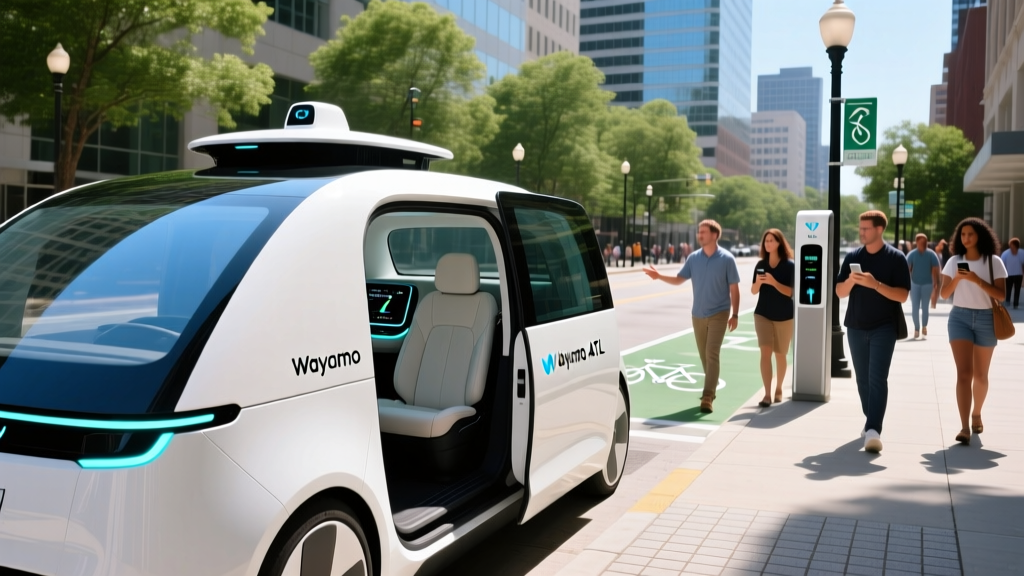
Despite the "Full Self-Driving" name, this system is classified as SAE Level 2—partial automation. The driver must remain fully engaged, monitor the environment, and be prepared to take immediate control. This is fundamentally different from SAE Level 4 systems like Waymo's robotaxi service, which operates without any human driver in defined geographic zones. Tesla's system does not absolve you of legal or operational responsibility for the vehicle.
Real-World Limitations You Need to Know
FSD (Supervised) Does NOT Handle:
- Severe weather: Heavy rain, snow, fog, or direct sun glare can blind cameras and cause disengagement
- Construction zones: Cone shifts, temporary lane markings, and flaggers require manual control
- Unmarked roads: Rural roads without clear lane lines or signage challenge the system
- Complex intersections: Unprotected left turns, multi-lane roundabouts, and unusual road geometry may require intervention
- Emergency vehicles: FSD may not reliably detect or yield to approaching ambulances or fire trucks
- Edge cases: Unusual obstacles (debris, animals, pedestrians in unexpected locations) demand immediate driver response
Bottom line: FSD reduces fatigue on predictable routes but does not eliminate the cognitive load of driving. You are the backup system.
Cold-Weather and Environmental Performance
Camera-based systems like Tesla Vision face inherent challenges that radar-equipped competitors (like GM's Super Cruise) handle better. In freezing rain or heavy snow, camera lenses can ice over, triggering FSD unavailability. Tesla recommends pre-conditioning the vehicle and manually clearing cameras before driving in winter conditions. Real-world user reports on Tesla Motors Club forums indicate FSD disengagement rates increase 30-50% in adverse weather compared to clear, dry conditions.
How FSD Compares to Competing Systems
Tesla's FSD isn't the only advanced driver-assist system on the market, and it's not universally regarded as the best. Here's how it stacks up against key competitors:
| System | SAE Level | Cost | Key Differentiator | Limitation |
|---|---|---|---|---|
| Tesla FSD (Supervised) | Level 2 | $8,000 or $99/month | City street navigation (no geofencing) | Camera-only; weather/light sensitivity |
| GM Super Cruise | Level 2 | $2,500 (3-year trial), then $25/month | LiDAR-mapped highways; driver monitoring camera | Geofenced to ~750,000 miles of compatible roads |
| Ford BlueCruise | Level 2 | $2,100 (3-year access) or $75/month | Hands-free on pre-mapped divided highways | No city-street capability |
| Mercedes Drive Pilot | Level 3 (conditional) | $5,000 (limited availability) | Legally allows driver disengagement under 40 mph in traffic jams | Only approved in Nevada/California; specific conditions only |
GM's Super Cruise and Ford's BlueCruise use a combination of LiDAR-mapped HD maps, radar, and cameras—providing redundancy that Tesla's vision-only approach lacks. However, these systems are largely restricted to divided highways. Tesla's FSD attempts broader coverage (city streets, residential roads), but with less predictable reliability.
Mercedes-Benz's Drive Pilot is the only SAE Level 3 system available in the U.S. (as of 2026), meaning the driver can legally disengage under specific conditions (traffic jams under 40 mph on mapped highways). However, availability is limited to Nevada and California, and the system's operational design domain (ODD) is narrow.
Is the Tesla FSD Monthly Cost Worth It?
The answer depends on your driving patterns, risk tolerance, and expectations:
Consider the $99/month subscription if:
- You commute 30+ miles daily on varied roads and want to test fatigue-reduction benefits
- You're uncertain about FSD's long-term value or Tesla's ability to deliver on "robotaxi" promises
- You plan to own your Tesla for less than 5-6 years
- You want the flexibility to cancel during months when you drive less (e.g., winter, travel)
Consider the $8,000 one-time purchase if:
- You're a long-term Tesla owner (6+ years) who will use FSD regularly
- You believe FSD capability will improve substantially and want to lock in current pricing
- You view FSD as a safety/fatigue-reduction tool, not a path to full autonomy
Skip FSD entirely if:
- You expect a "self-driving" car—you will be disappointed and potentially unsafe
- You primarily drive in adverse weather or poorly marked rural roads
- You're uncomfortable being the backup system for an imperfect technology
- Basic Autopilot (included standard) already meets your highway-driving needs
The Regulatory and Safety Context
Tesla's FSD has faced scrutiny from the National Highway Traffic Safety Administration (NHTSA), which has investigated multiple crashes involving Autopilot and FSD. In 2024, Tesla recalled FSD software to address issues with rolling stops at stop signs and intersection behavior. The company has also faced a Insurance Institute for Highway Safety (IIHS) study showing that drivers using Level 2 systems can become over-reliant and slower to react to edge cases.
Tesla's cabin camera monitors driver attention (eyes on road), and the system issues escalating warnings—visual, audible, and eventually disengagement—if it detects inattention. However, you remain legally liable for all driving actions, even when FSD is active.
Frequently Asked Questions
Can I transfer my FSD subscription to a new Tesla?
No. FSD subscriptions are tied to your Tesla account and the specific vehicle. If you sell or trade your Tesla, the subscription does not transfer. The one-time purchase is tied to the vehicle's VIN, so it stays with the car if you sell it.
Does FSD work in all weather conditions?
No. Heavy rain, snow, fog, and direct sun glare can impair camera visibility and cause FSD to disengage. Tesla recommends clearing camera lenses and pre-conditioning the vehicle in cold weather. Expect reduced reliability in adverse conditions.
Is Tesla FSD truly self-driving?
No. FSD (Supervised) is an SAE Level 2 system, meaning the driver must remain fully engaged, monitor the road, and be ready to take control instantly. It is not autonomous. Only Level 4 systems like Waymo operate without a human driver.
What happens if I cancel my FSD subscription?
Your Tesla reverts to Basic Autopilot (traffic-aware cruise control and lane centering). You can resubscribe at any time for $99/month. You do not lose access to Enhanced Autopilot features if you previously purchased EAP.
Does FSD improve over time with software updates?
Yes. Tesla regularly releases over-the-air updates that refine FSD behavior, add features, and address edge cases. However, improvements are incremental, and "full autonomy" remains a future promise—not a current capability.
How does FSD affect my insurance premiums?
Insurance varies by provider and state. Some insurers offer discounts for advanced driver-assist systems; others may charge more due to repair costs for camera/sensor damage. Check with your provider before purchasing.
Final Considerations
The Tesla FSD monthly cost of $99 offers a low-commitment way to experience one of the most ambitious—but imperfect—driver-assistance systems on the market. If you approach it as a fatigue-reduction tool rather than a self-driving solution, it can provide value on long commutes and predictable routes. If you expect full autonomy, you'll be disappointed and potentially unsafe.
For most buyers, Basic Autopilot (included standard) handles highway driving adequately. Enhanced Autopilot ($6,000) adds useful features like auto lane changes. FSD's city-street navigation is the differentiator—but also the least predictable. Test it with the monthly subscription before committing $8,000, and always remain the engaged driver the system requires.