What the Tesla FSD Holiday Gift Actually Includes
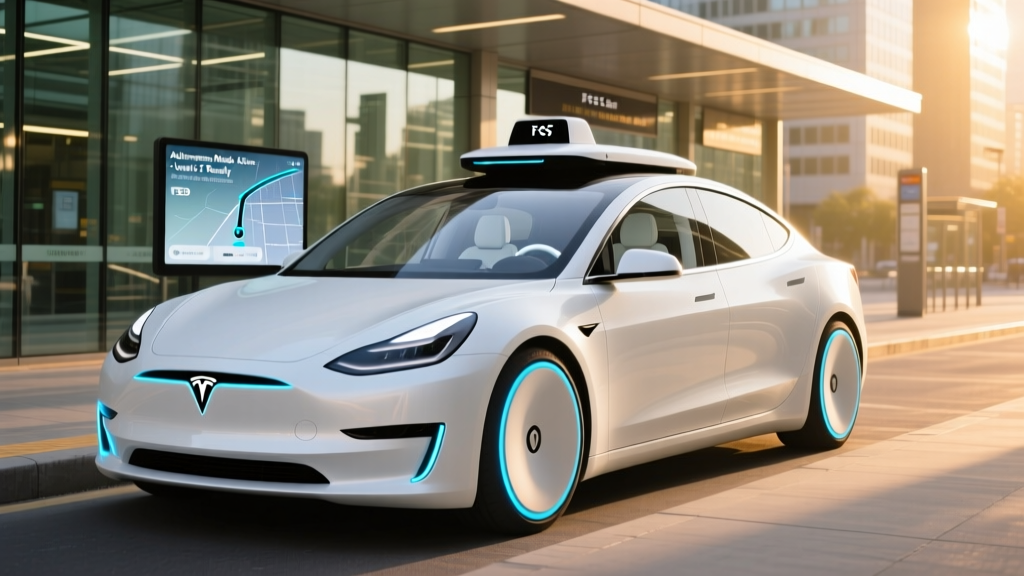
Every year around November and December, Tesla dangles what it calls a "holiday gift" to boost Full Self-Driving (Supervised) adoption. In 2026, the promotion typically bundles one or more of the following: a limited-time free FSD (Supervised) trial (often 30 days), a discounted monthly subscription rate, or — the most valuable perk — free FSD transfer to a new Tesla when you trade in or order before a set deadline. In prior years, Tesla has also offered one-month free FSD trials to existing owners who hadn't yet subscribed.
The catch: FSD (Supervised) is not a one-and-done purchase in most cases anymore. Tesla has shifted heavily toward its $99/month subscription model, with the outright purchase price (historically $8,000, later $12,000, at times $15,000) available but rarely promoted. The holiday gift is designed to lower the barrier to trying the system — and to lock in recurring revenue once the trial ends.
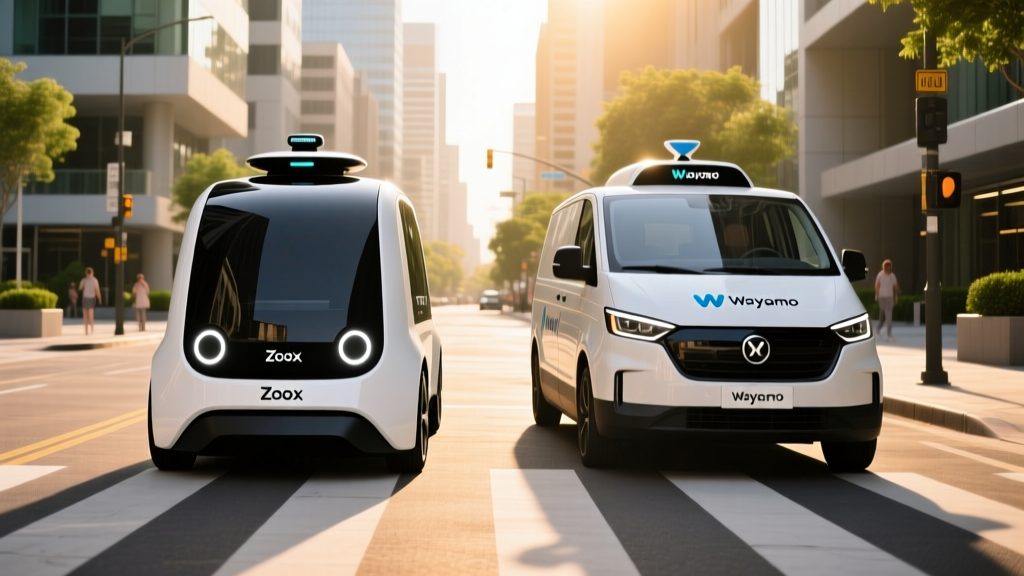
Tesla Full Self-Driving (Supervised) is classified as SAE Level 2 driver assistance. The driver must remain fully engaged, hands on or near the wheel, eyes on the road, and ready to intervene at any moment. It is not autonomous. Only Level 4 systems like Waymo's driverless robotaxi service operate without a human driver. Tesla's naming is aspirational — the "Supervised" tag is a legal requirement added to make this distinction clear.
How FSD (Supervised) Actually Works: Cameras, Neural Nets, and No Radar
Tesla's FSD stack is vision-only, branded as "Tesla Vision." Since 2022, Tesla has removed radar and ultrasonic sensors from all new vehicles, relying exclusively on a camera suite and neural network processing. The current hardware (HW4/AI5, depending on model year) includes:
- 8 cameras (front-facing narrow and wide, left/right repeaters, left/right rear, rear-facing)
- HW4 computer with dual redundant SoCs processing up to 2.5 billion pixels per minute
- End-to-end neural network (introduced in FSD v12 and refined through v13/v14) that replaces hand-coded rules with learned driving behavior from billions of miles of fleet data
The end-to-end architecture means FSD no longer relies on discrete modules for lane detection, object classification, and path planning. Instead, camera input maps directly to steering, braking, and acceleration outputs — more like how a human drives, but also harder to predict in edge cases.
| Feature | What It Does | Included in FSD? |
|---|---|---|
| Traffic-Aware Cruise Control | Maintains set speed and following distance | ✅ (Base Autopilot) |
| Autosteer | Lane centering on marked highways | ✅ (Base Autopilot) |
| Auto Lane Change | Initiates and executes highway lane changes | ✅ FSD only |
| Navigate on Autopilot | On/off-ramp and interchange navigation | ✅ FSD only |
| Traffic Light & Stop Sign Control | Detects and responds to signals and signs | ✅ FSD only |
| City Street Driving | Turns, intersections, urban navigation | ✅ FSD only |
| Smart Summon | Car navigates parking lot to your phone location | ✅ FSD only |
| Autopark | Parallel and perpendicular self-parking | ✅ FSD only |
Cost Breakdown: Subscription, Purchase, and the Holiday Gift Math
Understanding the real cost of FSD (Supervised) requires separating the three ways Tesla has offered it over the years:
| Option | Cost | Notes |
|---|---|---|
| Monthly Subscription | $99/month | Cancel anytime; no long-term commitment |
| Outright Purchase | $8,000 | Tied to the vehicle; transfers if FSD transfer promo is active |
| Holiday Gift: Free Trial | $0 for 30 days | Auto-converts to $99/mo subscription unless canceled |
| Holiday Gift: Free FSD Transfer | $0 transfer fee | Move purchased FSD to a new Tesla order placed before deadline |
The free FSD transfer is the most financially significant holiday perk. Normally, FSD purchased outright is tied to the VIN — if you sell or trade the car, the next owner may or may not get FSD (Tesla's policy has fluctuated). A free transfer lets you move your $8,000 FSD purchase to a new Tesla, which is effectively a $8,000 discount on your next vehicle. If you're planning a Tesla upgrade, timing your order around the holiday transfer window can save more than any negotiation.
For subscription users, the math is simpler: at $99/month, you'd spend $1,188/year. Break-even versus an $8,000 purchase is roughly 6.7 years. If you plan to keep the car longer than that and use FSD regularly, the purchase makes sense. If you're uncertain or drive mostly on highways where base Autopilot suffices, the subscription is the lower-risk choice.
Which Tesla Models and Trims Include FSD?
FSD (Supervised) is available across the entire current Tesla lineup — it's a software add-on, not a hardware-limited feature. However, there are nuances:
- Model 3 (2024+ Highland refresh and 2026 models): All trims ship with HW4. FSD available as subscription or purchase.
- Model Y (2025+ Juniper refresh and 2026 models): HW4 standard. FSD available across all trims.
- Model S and Model X (2026): HW4 equipped. FSD available, though the higher base price makes the subscription relatively more attractive.
- Cybertruck (2026): FSD available, though some features (like Smart Summon) may roll out later due to the vehicle's unique geometry.
- Older vehicles (pre-2019 HW2.5 or earlier): Not eligible for current FSD. HW3 vehicles can run FSD but may receive updates later than HW4/AI5 vehicles.
Base Autopilot (Traffic-Aware Cruise Control + Autosteer) is included standard on every new Tesla at no extra cost. Enhanced Autopilot ($6,000 one-time or unavailable in some markets) sits between base and FSD, adding Auto Lane Change, Navigate on Autopilot, Autopark, and Summon — but not city street driving.
Real-World Capabilities and Limitations: What FSD Can and Cannot Do
- Drive without your supervision. You are the driver. NHTSA holds you responsible.
- Handle all construction zones, especially those with shifted lanes, temporary barriers, or missing lane markings.
- Reliably detect emergency vehicles stopped at odd angles or in low-visibility conditions.
- Perform consistently in heavy rain, snow, fog, or direct sun glare that washes out camera feeds.
- Navigate unmapped roads, private driveways, or parking garages without significant driver input.
- Replace attentive driving on two-lane rural roads with no shoulder and oncoming traffic.
In real-world use on well-marked highways and major arterials, FSD (Supervised) in its v13/v14 end-to-end form is impressively smooth. Lane changes are deliberate, speed modulation through curves is natural, and the system handles most four-way stops and protected left turns competently. The disengagement rate — how often you need to take over — has dropped significantly compared to the rule-based v11 codebase.
But edge cases remain the system's Achilles' heel. In our experience and consistent with NHTSA's standing general order on ADAS incidents, the situations that demand immediate takeover include:
- Faded or conflicting lane markings — the system may track ghost lanes or oscillate.
- Unprotected left turns across multi-lane traffic — gap judgment is conservative but occasionally hesitant, causing awkward mid-intersection pauses.
- Pedestrians stepping off curbs unexpectedly — reaction time is fast but not always predictive of pedestrian intent.
- Merging onto high-speed freeways from short on-ramps — the system sometimes decelerates when acceleration is needed.
- Roundabouts — handling varies widely by geometry; complex multi-lane roundabouts often require takeover.
How FSD Compares to Ford BlueCruise, GM Super Cruise, and Others
| System | Brand | SAE Level | Hands-Off? | City Streets? | Cost |
|---|---|---|---|---|---|
| FSD (Supervised) | Tesla | Level 2 | No (monitoring required) | Yes | $99/mo or $8,000 |
| BlueCruise 1.4 | Ford | Level 2 | Yes (on approved highways) | No | $75/mo or $2,500 |
| Super Cruise | GM (Cadillac/Chevy) | Level 2 | Yes (on mapped highways) | No | $25/mo or $2,500 |
| ProPILOT Assist 2.0 | Nissan | Level 2 | Yes (on approved highways) | No | Included on select trims |
| Drive Pilot | Mercedes-Benz | Level 3* | Yes (limited conditions) | No | $2,500/yr (CA/NV only) |
*Mercedes Drive Pilot is SAE Level 3 under very restricted conditions (under 40 mph, mapped freeways, good weather, daytime) and is currently the only Level 3 system available in the U.S.
Tesla's FSD has the broadest geographic coverage — it works on virtually any road, not just pre-mapped highways. That's its biggest advantage. But Ford's BlueCruise and GM's Super Cruise offer something FSD does not: true hands-off driving on approved divided highways, validated by driver-monitoring cameras. On a 500-mile interstate trip, Super Cruise's hands-off capability can meaningfully reduce fatigue — something FSD still requires you not to do.
For city driving, FSD is the only consumer system that even attempts it. But "attempts" is the operative word. If your commute is 90% highway, BlueCruise or Super Cruise may deliver a more polished experience. If you need assistance on surface streets, FSD is currently the only game in town.
Should You Take the Holiday Gift? A Decision Framework
- You're planning to order a new Tesla within the next 60 days and can use the free FSD transfer to move an existing purchase.
- You've never tried FSD and want a zero-risk 30-day trial to evaluate it on your actual commute.
- You primarily drive in urban and suburban environments where FSD's city-street capability adds value over base Autopilot.
- Your driving is almost entirely on well-marked divided highways — base Autopilot (free) or a competitor's hands-off system may serve you better.
- You expect to cancel the subscription before auto-renewal and historically forget to cancel trials.
- You're uncomfortable with the supervision requirement and expect the car to drive itself — it will not, and frustration will follow.
Frequently Asked Questions
Is Tesla FSD actually self-driving?
No. Tesla Full Self-Driving (Supervised) is an SAE Level 2 driver-assistance system. The driver must remain engaged, monitor the road, and be prepared to take over instantly. Tesla added the "Supervised" label to its branding specifically because regulators and courts have made clear that the system does not drive autonomously. Only Level 4 services like Waymo operate without a human driver in the loop.
How much does FSD cost in 2026?
The standard subscription is $99/month with no long-term commitment. Outright purchase is available at $8,000 (pricing has fluctuated over the years between $8,000 and $15,000). During holiday promotions, Tesla may offer 30-day free trials or free FSD transfers to a new vehicle. Always check Tesla's official Autopilot page for current pricing.
What happens if I don't cancel the free FSD trial?
Your subscription will auto-renew at $99/month after the trial period ends. Tesla charges the payment method on file. Set a calendar reminder for day 28 if you're evaluating the system and want the option to cancel.
Does FSD work in bad weather?
FSD relies entirely on cameras (Tesla Vision). Heavy rain, snow accumulation on cameras, dense fog, and direct sun glare can degrade or disable the system. Tesla's owner manual explicitly states that adverse weather may limit FSD functionality. In practice, light rain is usually fine; anything that obscures camera lenses or washes out the image will trigger a degradation warning or disengagement.
Can I transfer FSD if I sell my Tesla?
Normally, FSD purchased outright is tied to the vehicle's VIN and does not transfer to a new owner in a private sale. However, Tesla periodically runs free FSD transfer promotions — often around end-of-quarter and holiday periods — allowing you to move your FSD purchase to a new Tesla you order. These promos are time-limited and not always available. Subscription-based FSD simply follows your Tesla account, not the vehicle.
Is FSD safer than a human driver?
Tesla publishes quarterly safety reports showing lower crash rates per million miles with Autopilot/FSD engaged versus disengaged. However, these figures are not independently verified by NHTSA and are subject to selection bias (Autopilot is used more on controlled-access highways, which are inherently safer). The IIHS has raised concerns about driver overreliance on Level 2 systems. Until peer-reviewed, third-party data is available, treat all manufacturer-reported safety claims with appropriate skepticism.
What's the difference between Autopilot, Enhanced Autopilot, and FSD?
Autopilot (standard, free): Traffic-Aware Cruise Control and Autosteer on highways. Enhanced Autopilot ($6,000): Adds Auto Lane Change, Navigate on Autopilot, Autopark, and Summon. FSD (Supervised) ($99/mo or $8,000): Everything in Enhanced plus Traffic Light and Stop Sign Control, and City Street Driving. For most highway commuters, base Autopilot is sufficient. FSD's value proposition is strongest for drivers who regularly navigate city streets and suburban intersections.