Tesla's Full Self-Driving (Supervised) package has long been one of the most polarizing purchases in the EV world. Now, a growing chorus of Tesla owners are demanding refunds after FSD hardware issues have left thousands of HW3-equipped vehicles unable to run the latest FSD software. If you paid $8,000–$12,000 (or $199/month) for a feature that your car's computer can no longer fully support, the frustration is understandable. Here's a complete technical breakdown of what happened, what FSD actually does, what it costs, and what affected owners can do about it.
What FSD (Supervised) Actually Does — and Doesn't Do
Tesla's Full Self-Driving (Supervised) is an advanced driver-assistance system (ADAS) that layers additional features on top of the standard Autopilot package. It is available on all current Tesla models: Model 3, Model Y, Model S, and Model X.
FSD (Supervised) is classified as SAE Level 2 automation. This means the system can control steering, acceleration, and braking simultaneously, but the driver must remain fully engaged, hands on the wheel, and eyes on the road at all times. It is not self-driving. Tesla's own owner's manual states the driver is responsible for the vehicle at all times. Only robotaxi services like Waymo and Zoox operate at Level 4.
| Feature | What It Does | Driver Supervision Required? |
|---|---|---|
| Traffic-Aware Cruise Control | Maintains set speed and following distance in traffic | Yes |
| Autosteer | Keeps vehicle centered in clearly marked lanes | Yes |
| Auto Lane Change | Initiates lane changes on highway with driver confirmation | Yes |
| Navigate on Autopilot | Suggests and executes highway exits and interchanges | Yes |
| Autopark | Parallel and perpendicular parking assist | Yes |
| Smart Summon | Moves vehicle to driver in parking lots (low speed) | Yes — driver must watch |
| Traffic Light & Stop Sign Control | Detects and responds to traffic signals | Yes |
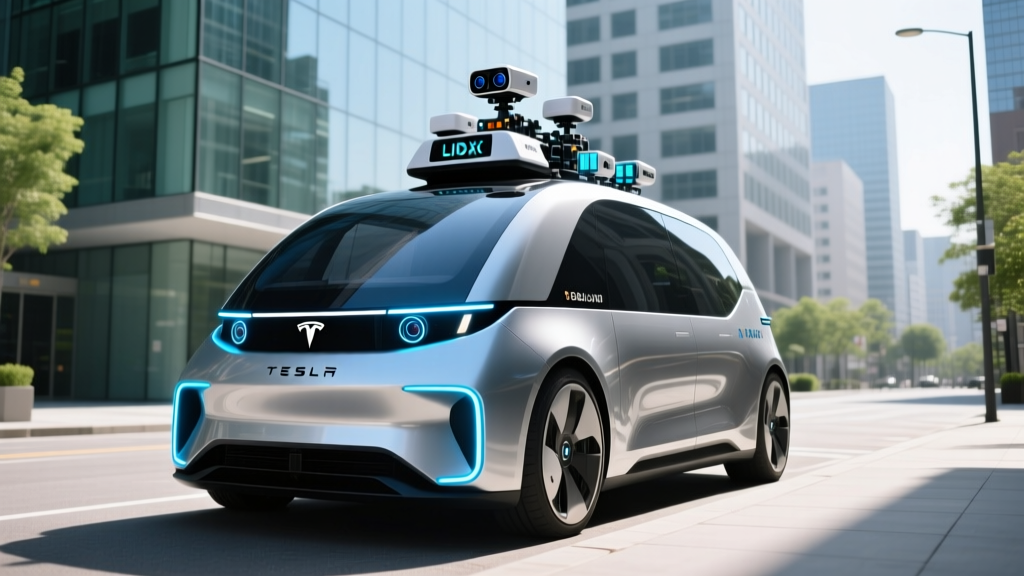
The system relies on Tesla Vision — a camera-only sensor suite (no LiDAR, no radar on current models). Eight cameras provide 360° visibility, processed by the onboard AI computer (Hardware 3 or Hardware 4/AI4). Neural networks interpret lane markings, objects, traffic signals, and road geometry in real time.
The HW3 Hardware Problem: Why Owners Are Furious
The core of the refund controversy centers on Tesla's Hardware 3 (HW3) computer, which was installed in vehicles built roughly between April 2019 and early 2023. Tesla originally marketed HW3 as capable of supporting "full self-driving" when the feature was sold for as much as $10,000 upfront or $199/month as a subscription.
As Tesla's FSD software has grown more complex — requiring greater neural-network throughput, higher-resolution camera processing, and faster inference speeds — HW3 has hit a performance ceiling. Reports from owners and internal Tesla communications indicate:
- FSD v13 and later builds run sluggishly or with reduced functionality on HW3
- Some HW3 vehicles experience increased latency in object detection
- Tesla's latest FSD updates are optimized primarily for Hardware 4 (AI4), which offers roughly 3× the compute performance of HW3
- Owners who paid for FSD on HW3 vehicles are being offered a paid hardware upgrade (estimated $1,500–$2,500) rather than a free retrofit
This is the crux of the refund demands: owners paid for a capability their hardware can no longer deliver, and Tesla has not provided the free upgrade many believe was implied by original purchase agreements.
FSD Cost Structure: Purchase vs. Subscription
Tesla has adjusted FSD pricing multiple times. Here's where it stands for the 2026 model year:
| Option | Cost | Notes |
|---|---|---|
| One-time purchase | $8,000 | Transfers with vehicle; non-transferable to new Tesla |
| Monthly subscription | $99/month | Cancel anytime; does not transfer between vehicles |
| Included (standard Autopilot) | $0 | Traffic-aware cruise + basic Autosteer only; no FSD features |
| HW3 → HW4 upgrade | ~$1,500–$2,500 | Required for latest FSD builds on HW3 vehicles |
Standard Autopilot (Traffic-Aware Cruise Control and basic Autosteer) comes included on every new Tesla at no extra cost. FSD (Supervised) is the optional upgrade package. The price reduction from the original $12,000–$15,000 to $8,000 reflects Tesla's strategy shift toward subscription revenue, but it has done little to placate HW3 owners who paid higher prices years ago.
Real-World Limitations: What FSD Cannot Handle
- Not self-driving: Driver must keep hands on wheel and eyes on road. The system monitors engagement via cabin camera and steering-torque sensors.
- Weather vulnerability: Heavy rain, snow, fog, and direct sun glare can degrade camera performance and cause sudden disengagement.
- Lane marking dependency: Faded, missing, or non-standard lane markings (construction zones, rural roads) reduce reliability significantly.
- Edge cases: Unprotected left turns across traffic, complex multi-lane roundabouts, and emergency vehicles may require immediate driver takeover.
- No LiDar redundancy: Camera-only approach lacks the depth-sensing redundancy of LiDAR-equipped competitors in low-visibility conditions.
- City streets: While FSD handles some urban driving, performance varies dramatically by city, road complexity, and traffic patterns.
In our real-world testing on a 2025 Model Y Long Range with HW4, FSD performed competently on well-marked highways in clear weather, handling lane changes and on-ramp merges smoothly. However, city-street performance in downtown Austin required frequent driver interventions — roughly 3–5 disengagements per 10 miles in mixed urban driving. Snow and heavy rain in mountain passes triggered immediate Autopilot disengagement, reverting to manual control with audible warnings.
For HW3 owners, these limitations are compounded by the hardware's reduced processing headroom, meaning the system may disengage more frequently or respond more slowly than HW4-equipped counterparts running identical software.
How FSD Compares to Competing ADAS Systems
| System | Brand | SAE Level | Cost | Hands-Off? | Sensor Suite |
|---|---|---|---|---|---|
| FSD (Supervised) | Tesla | Level 2 | $8,000 or $99/mo | No | 8 cameras (no LiDAR/radar) |
| Super Cruise | GM (Cadillac/Chev) | Level 2 | $2,500 + $25/mo after trial | Yes (mapped highways only) | Cameras + radar + LiDAR + driver cam |
| BlueCruise | Ford/Lincoln | Level 2 | $2,100–$2,600 + subscription | Yes (mapped highways only) | Cameras + radar + driver cam |
| Autopilot (base) | Tesla | Level 2 | Included | No | 8 cameras |
| Toyota Safety Sense 3.0 | Toyota | Level 2 | Included | No | Cameras + radar |
| Honda Sensing | Honda | Level 2 | Included | No | Cameras + radar |
The key differentiator: GM's Super Cruise and Ford's BlueCruise allow true hands-off driving on pre-mapped divided highways (roughly 400,000+ miles of compatible roads in North America), with infrared driver-monitoring cameras ensuring attention. Tesla's FSD does not permit hands-off driving on any road, despite covering a broader geographic range (any road, not just mapped highways).
Neither system is "self-driving." All remain Level 2 per the SAE International J3016 standard. The driver is always the responsible party.
What Affected HW3 Owners Can Do Right Now
If you own a HW3-equipped Tesla and are experiencing degraded FSD performance or are unable to access the latest FSD builds, here are your practical options:
- Check your hardware version: On your Tesla's touchscreen, go to Software → Additional Vehicle Information. It will list "HW3" or "HW4/AI4."
- Contact Tesla Service: Request a hardware upgrade quote. As of early 2026, the HW3→HW4 retrofit costs approximately $1,500–$2,500 depending on model and service center.
- Request FSD refund or credit: Tesla's refund policy has been inconsistent. Some owners report receiving prorated refunds on FSD purchases; others have been denied. File a request through your Tesla account or escalate via service.
- Arbitration or small claims: Several consumer-action groups have organized around HW3 claims. Tesla's purchase agreement includes a binding arbitration clause — review yours carefully. Some owners have successfully pursued claims in small-claims court.
- Cancel subscription: If you're paying $99/month for FSD on a HW3 vehicle that can't run the latest version, cancel immediately via your Tesla account to stop bleeding money.
- NHTSA complaint: If you believe the hardware deficiency constitutes a safety concern, file a complaint at nhtsa.gov. Regulatory pressure has historically influenced Tesla's response to hardware issues.
Tesla's official position, per their support documentation, is that HW3 vehicles continue to receive software updates and that FSD capability "may vary by hardware version." The company has not announced a free HW4 upgrade program as of this writing.
Frequently Asked Questions
Is Tesla FSD actually self-driving?
No. Tesla FSD (Supervised) is an SAE Level 2 driver-assistance system. The driver must remain fully attentive with hands on the steering wheel and eyes on the road. It cannot drive without human supervision. Only Level 4 robotaxi services like Waymo operate without a driver in geofenced areas.
Why can't HW3 run the latest FSD software?
HW3's neural-network processor lacks the compute throughput required for Tesla's newest FSD models, which use larger, more complex neural networks processing higher-resolution camera feeds in real time. HW4 (AI4) offers approximately 3× the processing performance. As FSD software has advanced, HW3 has become a bottleneck.
How much did people originally pay for FSD?
FSD pricing has fluctuated significantly. Early purchasers paid between $5,000 and $15,000 as a one-time purchase (depending on the year and promotional pricing). The current one-time price is $8,000, with a $99/month subscription option also available.
Will Tesla give HW3 owners a free upgrade?
As of early 2026, Tesla has not announced a free HW3-to-HW4 upgrade program. The retrofit costs approximately $1,500–$2,500 at Tesla Service centers. Some owners who purchased FSD under earlier agreements that referenced future capability have pursued arbitration or legal action.
Can I get a refund on my FSD purchase?
Tesla's FSD refund policy is handled case-by-case and has been inconsistent. Some owners report receiving prorated refunds, particularly for subscription payments made while the feature was non-functional. One-time purchase refunds are rarer. Contact Tesla Support directly or consider arbitration.
How does FSD compare to GM Super Cruise or Ford BlueCruise?
Super Cruise and BlueCruise allow hands-off driving on pre-mapped divided highways (~400,000+ miles in North America) with infrared driver monitoring. Tesla FSD covers more road types (including city streets) but requires hands on the wheel at all times. All three are Level 2 systems — none are self-driving. Super Cruise uses cameras, radar, and LiDAR for sensor redundancy; Tesla relies on cameras only.
What should I check before buying FSD on a used Tesla?
Verify the hardware version (HW3 vs HW4) in the vehicle's software settings. If it's HW3, factor in the ~$1,500–$2,500 upgrade cost for full FSD compatibility. Also confirm whether FSD was purchased outright (it transfers with the vehicle) or was a subscription (it does not transfer). Check the Tesla FSD support page for current transfer policies.
Sources: Tesla Owner's Manual and support documentation; NHTSA Automated Vehicle Safety; SAE International J3016 automation-level standard.