Tesla's Full Self-Driving (Supervised) remains one of the most discussed — and debated — driver-assistance systems on the road. But beyond the marketing, what does FSD actually cost, what does it do, and is it worth the money in 2026? This guide breaks down every pricing tier, compares FSD to competing Level 2 systems, and sets realistic expectations for what the software can and cannot do.
What Tesla FSD (Supervised) Actually Does
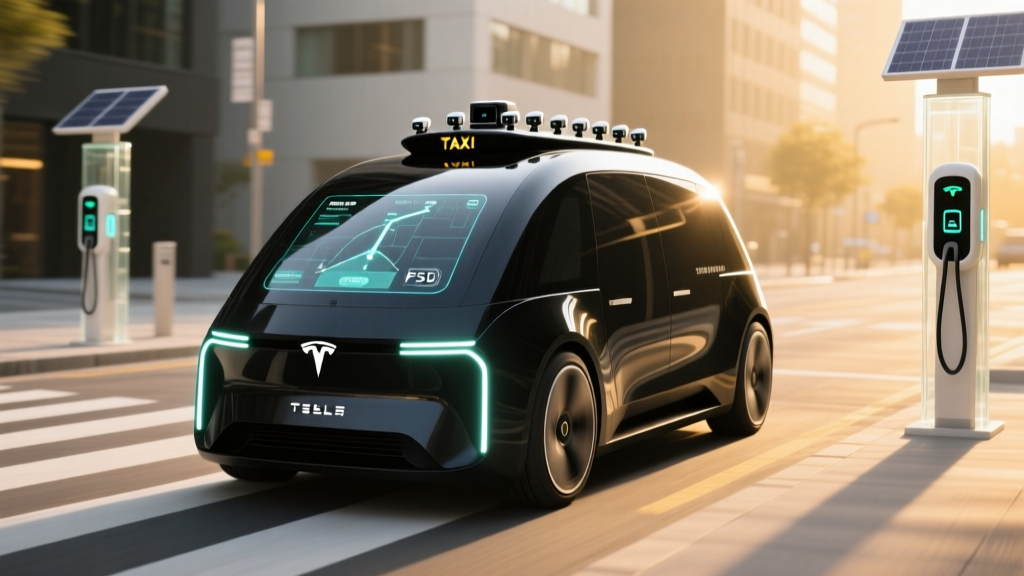
Tesla's Full Self-Driving (Supervised) is an advanced driver-assistance package that extends beyond basic Autopilot. Where standard Autopilot provides Traffic-Aware Cruise Control and Autosteer (lane centering on highways), FSD adds several layers of capability:
- Navigate on Autopilot: Automatic lane changes, on-ramp to off-ramp highway navigation, and interchanges based on your navigation route.
- Auto Lane Change: Suggests and executes lane changes to maintain speed and follow the route.
- Autopark: Detects parallel and perpendicular parking spaces and steers the vehicle into them.
- Smart Summon: Navigates a parking lot at low speed to come to the driver (within line of sight).
- Traffic Light and Stop Sign Control: Detects and responds to traffic signals and stop signs, slowing or stopping as needed.
- City Street Autosteer: Assists with steering on urban and suburban roads, including turns — the most ambitious and most scrutinized feature in the package.
Under the hood, Tesla uses a vision-only approach — no radar or lidar. The current hardware suite (HW4/AI4, standard on all new Teslas since 2023) includes a set of high-resolution cameras providing 360-degree coverage around the vehicle. Tesla's neural network processes these camera feeds in real time to identify lanes, vehicles, pedestrians, signs, and road geometry. Previous HW3 vehicles still run FSD but with a lower-resolution camera array and older compute chip.
Despite the "Full Self-Driving" name, Tesla FSD (Supervised) is classified as SAE Level 2 automation. This means the driver must remain fully engaged, keep hands on or near the steering wheel, and be prepared to take over at any moment. Tesla uses a steering-wheel torque sensor and cabin camera to monitor driver attention. The system will issue escalating warnings and eventually disengage if it detects inattention. Only fully driverless services like Waymo (Level 4) operate without human supervision. Do not treat FSD as a substitute for active driving.
Tesla FSD Cost: Purchase vs. Subscription
As of 2026, Tesla offers FSD (Supervised) through two pricing models. Here is the current structure:
| Option | Cost | Transferability | Notes |
|---|---|---|---|
| One-Time Purchase | $8,000 | Tied to vehicle (transfers to new owner on sale) | Available at purchase or added later via the Tesla app |
| Monthly Subscription | $99/month | Tied to your Tesla account, not the car | Cancel anytime; no long-term commitment |
Break-even math: At $99/month, you would need to subscribe for approximately 81 months (6.75 years) before the cumulative cost equals the $8,000 one-time purchase. If you plan to keep your Tesla for 5+ years and use FSD regularly, the upfront purchase saves money long-term. If you're uncertain about FSD's value, lease a subscription for a few months to evaluate it on your daily routes before committing.
Important caveat: Tesla has historically adjusted FSD pricing — the one-time purchase price has fluctuated between $6,000 and $15,000 since 2019, and the subscription has moved between $99 and $199/month. The current $8,000 / $99 pricing reflects Tesla's 2024-2025 restructuring. Always verify current pricing on Tesla's official FSD page before purchasing.
Which Tesla Models and Trims Include FSD?
FSD (Supervised) is not standard on any Tesla vehicle. It is an optional add-on available across the full lineup:
| Model | FSD Available? | Standard Driver-Assist | Hardware |
|---|---|---|---|
| Model 3 (2024+ Highland refresh) | Yes — $8,000 or $99/mo | Autopilot (TACC + Autosteer) | HW4 (AI4) |
| Model Y (2025+ Juniper refresh) | Yes — $8,000 or $99/mo | Autopilot (TACC + Autosteer) | HW4 (AI4) |
| Model S / Model X (2026) | Yes — $8,000 or $99/mo | Autopilot (TACC + Autosteer) | HW4 (AI4) |
| Cybertruck | Yes — $8,000 or $99/mo | Autopilot (TACC + Autosteer) | HW4 (AI4) |
Every new Tesla ships with basic Autopilot included at no extra charge. Previously, Tesla offered an "Enhanced Autopilot" tier ($6,000) that sat between basic Autopilot and FSD, but this mid-tier option has been discontinued in the US market as of late 2024. Buyers now choose between included Autopilot or the full FSD package.
Real-World Capabilities and Honest Limitations
Tesla FSD has improved substantially with the transition to the end-to-end neural network architecture (introduced with v12 in 2024). In real-world driving, the system handles many scenarios competently — but it has clear boundaries that every buyer should understand.
Where FSD Performs Well
- Highway driving: Lane keeping, automatic lane changes, and on/off-ramp navigation are mature and reliable. This is FSD's strongest use case.
- Suburban roads with clear markings: City Street Autosteer handles well-marked suburban roads at moderate speeds with reasonable competence.
- Traffic light and stop sign response: Detection accuracy for standard intersections has improved, though confirmation from the driver is still prudent.
Where FSD Falls Short
- Construction zones: Cones, shifted lanes, and temporary barriers can confuse the system. Always take over in work zones.
- Heavy rain, snow, or fog: Vision-only systems degrade in poor visibility. FSD may disengage or make errors when camera feeds are obscured.
- Faded or conflicting lane markings: Older roads with overlapping paint, temporary patches, or worn markings cause erratic steering behavior.
- Unprotected left turns: Complex multi-lane intersections with oncoming traffic remain a challenging edge case.
- Unusual obstacles: The system may not detect non-standard objects (fallen debris, animals, emergency vehicles stopped at odd angles) with sufficient lead time.
- Low-speed parking lots: Smart Summon works in simple scenarios but can struggle in crowded or complex lot geometries.
In cold weather or nighttime driving, FSD's camera-based system faces additional challenges. While Tesla's neural network has been trained on diverse conditions, drivers should maintain heightened vigilance during winter months and on poorly lit rural roads. According to NHTSA's guidance on automated vehicle safety, all Level 2 systems require continuous driver supervision regardless of conditions.
FSD vs. Competing Level 2 Systems: Cost and Feature Comparison
Tesla is not the only automaker offering advanced Level 2 driver-assistance. Here is how FSD stacks up against the leading alternatives in 2026:
| System | Brand | Cost | Highway Hands-Off? | City Streets? | Sensor Suite |
|---|---|---|---|---|---|
| FSD (Supervised) | Tesla | $8,000 or $99/mo | No (hands-on required) | Yes | Cameras only (HW4) |
| Super Cruise | GM (Cadillac, Chevy) | $2,500 or included on select trims | Yes (on mapped roads) | No | Cameras + radar + lidar HD maps |
| BlueCruise | Ford / Lincoln | $2,100 (2-yr) or $75/mo | Yes (on mapped roads) | No | Cameras + radar |
| ProPILOT Assist 2.0 | Nissan | Included on higher trims | Yes (on mapped highways) | No | Cameras + radar + HD maps |
| Toyota Safety Sense (TSS 3.0) | Toyota | Standard (no extra cost) | No (hands-on always) | No | Cameras + radar |
The key trade-off: FSD offers the broadest geographic coverage (works on virtually any road, not just pre-mapped highways) and the most feature-rich package (city streets, traffic lights, parking). But GM's Super Cruise and Ford's BlueCruise offer true hands-off highway driving on mapped divided highways — something Tesla FSD still does not permit. If your primary use case is long highway commutes on major interstates, Super Cruise or BlueCruise may provide a more relaxed experience at lower cost. If you want assistance across diverse road types and are willing to maintain active supervision, FSD's breadth is unmatched.
Is the FSD Cost Worth It? A Decision Framework
Buy FSD (one-time $8,000) if:
- You plan to keep your Tesla for 5+ years
- You drive 15,000+ miles/year on varied road types
- You value having the latest software capabilities as they improve via OTA updates
- You understand this is a Level 2 assist system, not a chauffeur
Subscribe ($99/month) if:
- You want to test FSD before committing $8,000
- You only need FSD for road trips (subscribe for the month, cancel after)
- You plan to sell or trade your Tesla within 2-3 years
Stick with included Autopilot if:
- Your driving is mostly city or short commutes where FSD features add limited value
- You prefer hands-off highway driving and would rather use Super Cruise or BlueCruise on a different vehicle
- The $8,000 outlay meaningfully impacts your vehicle budget
One financial consideration: Tesla has periodically offered FSD transferability promotions, allowing buyers who purchase FSD on a new vehicle to transfer it to a new Tesla purchase. These promotions are time-limited and not always available. Check Tesla's current offers before relying on transferability as part of your cost calculus.
Frequently Asked Questions
Is Tesla FSD actually self-driving?
No. Tesla FSD (Supervised) is an SAE Level 2 driver-assistance system. The driver must remain alert, keep hands on the steering wheel, and be ready to take over at any moment. Tesla's own documentation and the "(Supervised)" suffix in the product name make this explicit. Only Level 4 services like Waymo operate without a driver in defined service areas.
Can I add FSD to my Tesla after purchase?
Yes. You can purchase FSD or start a subscription at any time through the Tesla app, provided your vehicle has compatible hardware (HW3 or HW4). The software activates over-the-air after purchase.
Does FSD work in all weather conditions?
FSD can operate in light rain and overcast conditions, but performance degrades in heavy rain, snow, fog, or any situation that obscures the cameras. Tesla recommends the driver take full control in adverse weather. The vision-only architecture is more susceptible to weather-related degradation than multi-sensor systems using radar or lidar.
Does FSD improve over time?
Yes. Tesla delivers FSD updates over the air. The transition to end-to-end neural networks (v12+, beginning in 2024) represented a significant capability jump. However, improvements are incremental and non-linear — some updates may feel like steps backward on certain road types before subsequent patches address regressions. There is no guaranteed timeline for specific capability milestones.
Will FSD increase my Tesla's resale value?
Historically, FSD adds modest resale value — typically $2,000 to $4,000 based on used-market data, significantly less than the $8,000 purchase price. Buyers in the used market are generally unwilling to pay full price for a software add-on. If resale value recovery is a priority, the $99/month subscription avoids the depreciation hit entirely.
How does the FSD subscription work if I sell my Tesla?
The FSD subscription is tied to your Tesla account, not the vehicle. When you sell or trade your Tesla, the subscription stays on your account and can be applied to your next Tesla. If you don't replace the vehicle, simply cancel the subscription — there is no cancellation fee.
For the latest details on FSD capability and pricing, consult Tesla's official Autopilot page. For general context on driver-assistance safety standards, see IIHS's ADAS research.