Tesla's hardware suite has long been marketed with the promise of eventual full autonomy, but the gap between marketing language and regulatory reality remains wide. For owners and prospective buyers researching the Tesla Full Self-Driving Computer 3.0 (commonly known as Hardware 3 or HW3), the central question in 2026 is not what the silicon can theoretically process — it's whether the system actually delivers driverless capability. The short answer: it does not. FSD (Supervised) remains a Level 2 driver-assistance system, fundamentally different from the Level 4 robotaxi services now operating in select U.S. cities.
This guide dissects what HW3 can and cannot do, how Tesla's vision-only approach compares to lidar-equipped robotaxis, and what the safety data actually shows. If you're weighing whether to pay for FSD capability or wondering when your Tesla might earn money as a robotaxi, the specifics below matter far more than the headlines.
What Is the Tesla Full Self-Driving Computer 3.0?
Introduced in April 2019 and installed in vehicles produced through mid-2023, the FSD Computer (HW3) replaced the earlier HW2.5 unit. It features a dual-chip redundant architecture with Tesla's custom-designed neural network processors, each capable of processing up to 72 trillion operations per second (TOPS) according to Tesla's specifications. The system ingests data from Tesla's camera suite — eight cameras providing 360-degree visibility — along with radar (on earlier HW3 vehicles before Tesla removed it in 2021–2022) and ultrasonic sensors (later removed in late 2022 in favor of Tesla Vision).
| Specification | HW2.5 | HW3 (FSD Computer) | HW4 (AI4) |
|---|---|---|---|
| Neural Net Processor | NVIDIA DRIVE PX 2 | Tesla Custom FSD Chip (dual) | Tesla AI Chip (dual, 2nd gen) |
| Processing Power | ~24 TOPS | ~144 TOPS (dual chip) | ~300–500 TOPS (est.) |
| Camera Resolution | 1.2 MP | 1.2 MP | 5 MP |
| Camera Count | 8 | 8 | 8 (higher-res, repositioned) |
| Production Era | 2017–2019 | 2019–2023 | 2023–present |
| FSD (Supervised) Eligible | Limited | Yes | Yes |
By 2026 standards, HW3 is a generation behind Tesla's current AI4/HW4 hardware, which features 5-megapixel cameras and substantially higher compute throughput. Tesla began offering HW3-to-HW4 upgrades for FSD subscribers in late 2024, though availability and cost (reported around $1,500–$2,500 out of warranty) vary by vehicle model. The HW3 platform still receives FSD (Supervised) software updates, but its lower-resolution cameras and older sensor processing pipeline limit its performance ceiling compared to AI4-equipped vehicles.
SAE Automation Levels: Where FSD Actually Sits
Tesla's Full Self-Driving (Supervised) is classified as SAE Level 2 driver assistance — the same automation category as GM Super Cruise, Ford BlueCruise, and standard Tesla Autopilot. The driver must remain attentive, keep hands available, and is legally responsible for the vehicle at all times. This is fundamentally different from SAE Level 4 robotaxi services like Waymo, which operate without any human driver in defined service areas.
| Level | Name | Driver Role | Examples |
|---|---|---|---|
| Level 0 | No Automation | Full control | Legacy vehicles |
| Level 1 | Driver Assistance | Hands on wheel, feet active | Adaptive cruise, lane keep |
| Level 2 | Partial Automation | Must supervise constantly | Tesla FSD (Supervised), Super Cruise, BlueCruise |
| Level 3 | Conditional Automation | Can disengage in limited conditions | Mercedes DRIVE PILOT (limited markets) |
| Level 4 | High Automation | No driver needed in geofence | Waymo, Zoox, Cruise (suspended) |
| Level 5 | Full Automation | No driver, any condition | Does not exist commercially |
Tesla has not received regulatory approval for Level 3 or Level 4 operation in any U.S. jurisdiction. The "Full Self-Driving" branding has drawn scrutiny from the National Highway Traffic Safety Administration (NHTSA) and consumer advocacy groups, who argue the name overstates the system's capabilities. As of 2026, no Tesla vehicle can legally operate without an attentive, licensed driver behind the wheel.
FSD (Supervised) Safety Data: What the Numbers Show
Tesla reports that vehicles with FSD (Supervised) engaged average approximately one crash per 4–5 million miles, compared to the U.S. average of roughly one crash per 670,000 miles (NHTSA data). However, these figures require context: Tesla's data is self-reported, includes only crashes above a severity threshold, and FSD users tend to be higher-mileage, more attentive drivers who purchased a premium feature. Independent verification remains limited.
NHTSA's Standing General Order requires manufacturers to report crashes involving Level 2+ systems. Tesla's reported incidents under this order have numbered in the hundreds since 2021, though raw crash counts without exposure data (total miles driven with FSD active) are difficult to interpret. The Insurance Institute for Highway Safety (IIHS) has repeatedly found that partial-automation systems do not demonstrate clear safety benefits over conventional cruise control and lane-keeping, and has raised concerns about driver monitoring adequacy.
Compare this with Waymo's published safety record: the company reported in its 2024 safety study that its Level 4 robotaxis experienced 85% fewer injury-causing crashes per million miles than human benchmarks in the same operating areas, with over 30 million fully driverless miles logged. Waymo's data has been more extensively peer-reviewed and is subject to state regulatory oversight in California and Arizona.
Technology Stack: Tesla Vision vs. Lidar-Equipped Robotaxis
Tesla (HW3): Camera-only (8 cameras, 1.2 MP), no lidar, no radar (removed 2021+), no ultrasonics (removed late 2022+). Relies on neural-network-based depth estimation from 2D image data — essentially teaching a computer to "see" the way humans do using only eyes.
Waymo (6th-gen): Camera array + 5 lidar units + 6 radar units + external audio receivers. Lidar provides direct 3D point-cloud mapping accurate to centimeters regardless of lighting. Redundant sensing ensures no single sensor failure blinds the system.
The core engineering debate in autonomous driving centers on whether camera-only perception can achieve the reliability of multi-sensor fusion. Tesla's bet is that neural networks trained on billions of real-world camera miles will eventually match or exceed lidar-based systems at a fraction of the hardware cost. Critics — including most other AV developers — argue that cameras alone cannot reliably estimate depth in low-light, direct-sun-glare, or heavy-precipitation conditions where lidar and radar provide independent verification.
On HW3 specifically, the 1.2-megapixel camera resolution compounds this challenge. At highway speeds, a 1.2 MP camera resolves a stopped vehicle at roughly 300–400 feet — adequate for many scenarios but marginal for high-speed emergency braking compared to lidar, which detects objects at 500+ feet with centimeter-level precision regardless of contrast. Tesla's HW4/AI4 upgrade to 5 MP cameras partially closes this gap, but HW3 vehicles remain resolution-limited.
Where Can You Use Robotaxi Services Right Now?
A common misconception is that Tesla's FSD capability means your car can operate as a robotaxi. It cannot. The Level 4 robotaxi services that actually operate without a driver are limited to specific geofenced areas in a handful of cities:
| Service | Level | Operational Cities | Availability | Driver Present? |
|---|---|---|---|---|
| Waymo One | Level 4 | Phoenix, San Francisco, Los Angeles, Austin (expanding) | 24/7 in geofenced zones | No |
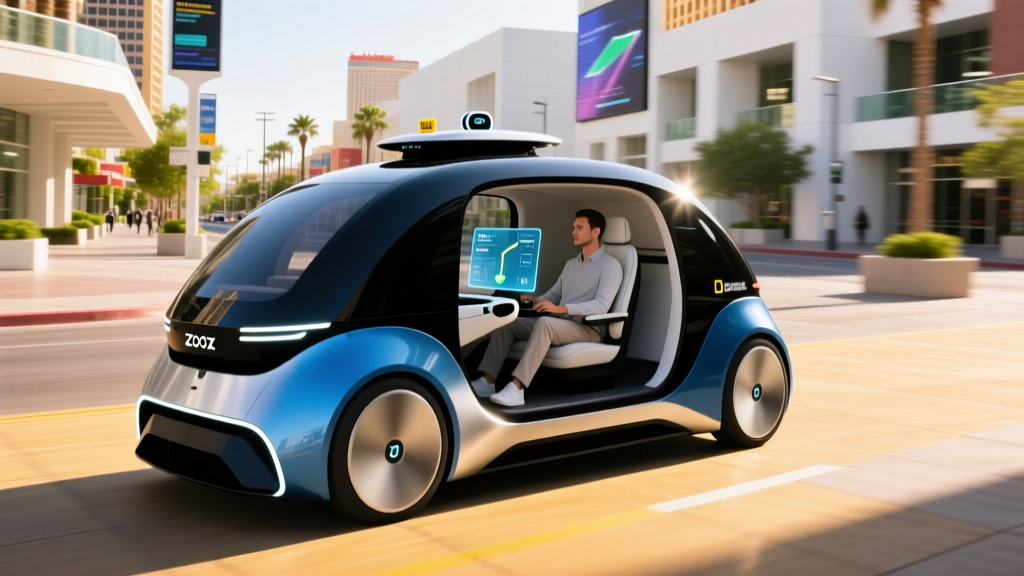
| Zoox | Level 4 | Las Vegas, Foster City (CA), limited SF | Limited hours/invited riders | No |
| Cruise | Level 4 | Suspended (post-Oct 2023 incident); limited restart testing | Not commercially available | No (when active) |
| Tesla FSD (Supervised) | Level 2 | Nationwide (any road) | Anywhere, with attentive driver | Yes — required |
Waymo remains the dominant commercial robotaxi operator in the U.S., completing over 10 million paid, fully driverless trips through early 2026. Tesla has announced plans for a "robotaxi" service built on its existing fleet, but as of 2026, no Tesla vehicle operates without a human driver in any commercial or regulatory-approved capacity. The Cybercab (Tesla's announced purpose-built robotaxi) remains in pre-production with no confirmed delivery date.
Cost Comparison: FSD Subscription vs. Robotaxi Rides vs. Rideshare
| Option | Cost Structure | Per-Ride / Monthly Cost | Notes |
|---|---|---|---|
| Tesla FSD (Supervised) Subscription | $99/month or $8,000 one-time | Varies by usage | You own/drive the car; Level 2 assist only |
| Waymo One (Phoenix/SF/LA) | Per-ride pricing | $8–$25 per ride (comparable to Uber/Lyft) | No driver; geofenced areas only |
| Uber / Lyft (human driver) | Per-ride pricing | $10–$30 per ride (city dependent) | Available everywhere |
| Personal vehicle (no FSD) | Fuel/charge + insurance + depreciation | ~$0.55–$0.70/mile (AAA 2025 data) | Full driver responsibility |
For Tesla owners, the FSD subscription makes economic sense primarily if you drive frequently in conditions where supervised automation reduces fatigue — long highway commutes, heavy stop-and-go traffic. It does not generate income or replace rideshare. Tesla's promised "Robotaxi Network" where owners could earn passive income from their vehicles remains unlaunched with no confirmed timeline.
Current Limitations of FSD on Hardware 3
The following conditions require immediate driver takeover and represent known limitations of the Tesla Full Self-Driving Computer 3.0 system:
- Low-visibility weather: Heavy rain, fog, snow, and direct sun glare can degrade camera-only perception with no lidar/radar backup
- Construction zones: Lane-shift detection is inconsistent; orange cones and temporary barriers are frequent disengagement triggers
- Unmapped or recently changed roads: FSD relies on map data; newly built roads or recent lane reconfigurations cause routing errors
- Complex intersections: Unprotected left turns across multi-lane traffic, roundabouts, and non-standard intersections remain high-intervention scenarios
- Night driving on unlit roads: 1.2 MP cameras on HW3 struggle with depth estimation in low-light rural environments
- Phantom braking: NHTSA has investigated Tesla for unexpected braking events on highways; HW3's lower resolution may contribute to false-positive detections
- Emergency vehicles: Detecting and appropriately responding to stopped emergency vehicles with flashing lights has been a persistent challenge for vision-only systems
Real-world FSD (Supervised) users report intervention rates of approximately one disengagement per 100–300 miles depending on route complexity, weather, and driving environment. Highway driving on well-mapped interstates yields the lowest intervention rates; urban surface streets with pedestrians, cyclists, and construction require near-constant vigilance. These rates have improved with successive software versions (FSD v13.x and v14.x in 2025–2026), but they remain orders of magnitude more frequent than Level 4 robotaxi disengagement rates (Waymo reports fewer than one intervention per 25,000+ miles in its operational domain).
Regulatory Landscape: Who Decides What Tesla Can Do?
Autonomous vehicle regulation in the United States operates on a dual-track system. The federal government (NHTSA) sets vehicle safety standards and investigates defects, but does not currently "approve" Level 2 systems for sale — they self-certify under existing Federal Motor Vehicle Safety Standards (FMVSS). State governments control licensing, insurance, and where driverless testing and commercial operation are permitted.
Key regulatory realities for Tesla FSD in 2026:
- NHTSA investigation: NHTSA has maintained an active investigation into Tesla's Autopilot/FSD crash patterns, particularly interactions with stationary emergency vehicles. This has resulted in recalls (software updates) but no sales suspension.
- California DMV: Tesla does not hold a California driverless testing permit. Waymo, Zoox, and Cruise hold such permits under strict reporting requirements. Tesla's FSD operates under California's existing Level 2 framework, which requires no special permit.
- Naming scrutiny: Both California's DMV and NHTSA have raised concerns about the "Full Self-Driving" name. In 2024, California's Office of Administrative Law upheld a DMV ruling that Tesla's marketing could be misleading, though Tesla continues to use the FSD branding with a "(Supervised)" qualifier.
- International markets: FSD (Supervised) availability varies widely. It is not approved in the EU (where UNECE regulations impose stricter requirements on automated steering), and China has a separate approval process with local data-storage requirements.
For Tesla to legally operate a driverless robotaxi service, it would need Level 4 permits from each state where it intends to operate — the same process Waymo has been navigating for years. No such permits have been granted to Tesla as of 2026.
Should You Buy FSD on a HW3 Vehicle?
Consider FSD (Supervised) on HW3 if:
- You commute 50+ miles daily on divided highways and want supervised lane-keeping and auto lane-change assistance
- You understand this is Level 2 assist — you remain the driver and are legally liable
- You're willing to accept that HW3's 1.2 MP cameras represent a performance ceiling below current AI4 hardware
- You value the $99/month subscription flexibility over a large upfront purchase
Do not buy FSD expecting:
- Driverless operation — now or on any guaranteed timeline
- Robotaxi income — Tesla's network is not operational
- Safety equivalent to Level 4 services — the driver supervision requirement fundamentally changes the risk profile
- Performance parity with HW4/AI4 — the hardware gap is real and widening with each software generation
Frequently Asked Questions
Is the Tesla Full Self-Driving Computer 3.0 truly self-driving?
No. The FSD Computer 3.0 runs FSD (Supervised), which is a Level 2 driver-assistance system per SAE classification. A licensed, attentive driver must be behind the wheel at all times and is legally responsible for the vehicle. Only Level 4 services like Waymo operate without a human driver.
Can I upgrade my HW3 Tesla to HW4/AI4?
Tesla began offering HW3-to-HW4 retrofit upgrades in late 2024 for FSD subscribers. The upgrade involves replacing the FSD computer and cameras (a significant hardware change). Reported cost is approximately $1,500–$2,500 out of warranty. Availability depends on vehicle model and service center capacity. Contact your local Tesla Service Center for a quote specific to your VIN.
How safe is FSD compared to a human driver?
Tesla's self-reported data suggests FSD-engaged vehicles crash less frequently than the U.S. average, but this data is not independently verified and is subject to selection bias (FSD users are a self-selected group). NHTSA and IIHS have not concluded that Level 2 systems provide a net safety benefit. For independently verified safety data, Waymo's Level 4 robotaxi record shows an 85% reduction in injury-causing crashes vs. human benchmarks in comparable urban environments.
Where can I use a real robotaxi service today?
Waymo One operates fully driverless rides in Phoenix, San Francisco, Los Angeles, and Austin (expanding). Zoox operates limited invited-rider service in Las Vegas and Foster City, CA. Cruise remains largely suspended following its October 2023 safety incident. Tesla does not offer any driverless service.
How much does FSD cost in 2026?
Tesla offers FSD (Supervised) as a $99/month subscription or a one-time purchase (historically $8,000, though pricing has fluctuated). The FSD capability does not transfer between vehicles unless explicitly included in a Tesla trade-in or transfer promotion. FSD is not eligible for any federal or state EV tax credits.
Will my HW3 Tesla ever become a Level 4 robotaxi?
There is no confirmed path for HW3 (or any current Tesla production vehicle) to achieve Level 4 regulatory approval. Level 4 certification requires demonstrating safe operation without a driver in a defined operational design domain — a process that requires extensive testing, regulatory approval, and likely additional sensor hardware (lidar) that Tesla has explicitly rejected. Tesla's announced Cybercab is a separate, purpose-built vehicle not yet in production.