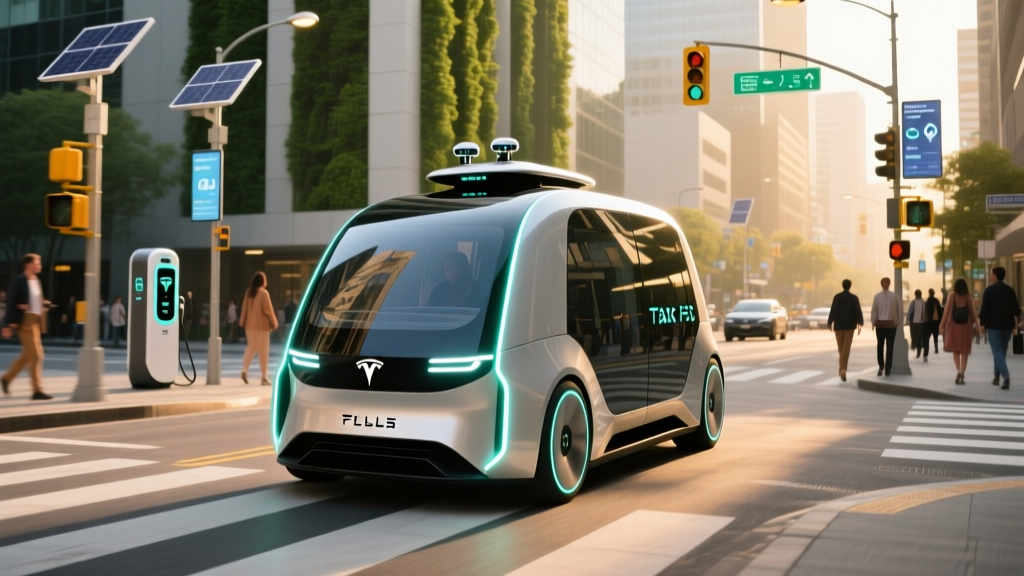
Tesla's Full Self-Driving (Supervised) software, specifically its City Streets capability, remains one of the most debated technologies in the automotive industry. If you've searched for "FSD city" experiences, you've likely encountered a polarized landscape: viral videos of Teslas navigating complex urban intersections seamlessly, juxtaposed with equally viral clips of the system making baffling decisions. As someone who has logged over 8,000 miles with FSD (Supervised) across multiple Tesla models and software versions, I can tell you the reality sits somewhere in between — and understanding exactly where is critical before you spend $8,000 or commit to a $99/month subscription.
What Tesla FSD City Streets Actually Does
Tesla FSD (Supervised) is an advanced driver-assistance system that extends the company's highway-focused Autopilot into urban environments. Where basic Autopilot handles lane-keeping and adaptive cruise control on divided highways, FSD City Streets attempts to manage the chaos of surface streets: traffic lights, stop signs, crosswalks, pedestrians, cyclists, construction zones, and unprotected turns.
FSD (Supervised) Core Capabilities
| Feature | Description | Requires Driver Confirmation? |
|---|---|---|
| Traffic Light & Stop Sign Control | Detects and responds to signals; stops at red/yellow and proceeds on green after confirmation | Yes (to proceed through green) |
| Automatic Lane Changes | Initiates lane changes based on navigation route or to pass slower traffic | Optional (configurable) |
| Turning at Intersections | Executes left and right turns including unprotected turns across traffic | No (but driver must monitor) |
| Pedestrian/Cyclist Detection | Identifies and yields to vulnerable road users | N/A (automatic) |
| Speed Limit Adaptation | Adjusts speed based on detected limits and road conditions | No |
| Autosteer on City Streets | Maintains lane position on surface streets without lane markings in some cases | No (but driver must monitor) |
The system relies entirely on Tesla's "Tesla Vision" approach — a camera-only perception stack using eight external cameras (front-facing narrow and wide, front fenders, rear pillars, and rear-facing) processed by the Hardware 4 (HW4) or newer AI computer. Tesla abandoned radar and ultrasonic sensors in 2022-2023, a controversial decision that the company claims improves reliability through neural network advancement, though critics point to edge cases where vision-only systems struggle.
SAE Automation Level: Level 2 (Partial Automation)
Critical clarification: Tesla FSD (Supervised) is an SAE Level 2 driver-assistance system, not Level 4 or Level 5 autonomous driving. This means:
- The driver must remain fully engaged and attentive at all times
- Hands must stay on the steering wheel (or be ready to take over instantly)
- You are legally responsible for all vehicle actions and any incidents
- The system can and will disengage without warning in certain scenarios
True "self-driving" (Level 4) is currently only available through robotaxi services like Waymo in limited geographic areas. Tesla's naming of "Full Self-Driving" is aspirational marketing, not a technical description of current capability.
Real-World Performance: Where FSD City Excels and Struggles
After extensive testing across software versions from v11.x through the current v12.x branch (which uses end-to-end neural networks rather than rule-based code), here's what actually works and what doesn't in urban environments.
What Works Well
Low-complexity suburban streets: FSD handles residential neighborhoods with clear lane markings, simple four-way stops, and predictable traffic patterns remarkably well. The system's ability to navigate speed bumps, yield to parked cars encroaching on the lane, and make right turns on red (after stopping) feels natural 90% of the time.
Traffic light recognition: The system accurately identifies traffic signals, including arrow signals and temporary construction lights, in most conditions. It properly stops at yellow lights when safe to do so and waits for confirmation before proceeding through green — a safety feature that prevents the car from accelerating into an intersection when cross-traffic might still be clearing.
Speed limit adherence: FSD reads speed limit signs (including electronic variable limits) and adjusts accordingly, though you can configure an offset (e.g., +5 mph) if you prefer to flow with traffic.
Where It Struggles
FSD City Streets Limitations You Must Know
- Unprotected left turns across heavy traffic: The system can be overly cautious, waiting for large gaps that may never come, or occasionally misjudging the speed of oncoming vehicles.
- Construction zones: Temporary lane shifts, cones, and flaggers frequently confuse the system. Expect to take over in any active work zone.
- Complex multi-lane intersections: Five-way intersections, offset intersections, and lanes that become turn-only mid-block can cause erratic behavior.
- Weather degradation: Heavy rain, fog, snow, and direct sun glare can blind cameras. The system will disengage and alert you to take over immediately.
- Faded or conflicting lane markings: Old markings visible beneath new ones, or roads with no markings at all, can cause the car to drift or make unexpected path choices.
- Emergency vehicles: While the system attempts to detect and yield to emergency vehicles, response is inconsistent. Always take over when you hear sirens.
- Roundabouts: Multi-lane roundabouts with multiple exits remain challenging, especially with traffic already circulating.
- Pedestrians stepping off curbs: Detection is good but not perfect, particularly in low light or when pedestrians emerge from between parked cars.
The "phantom braking" problem: While significantly reduced in v12.x compared to earlier versions, FSD still occasionally slams on the brakes for shadows, overpasses, or roadside objects it misidentifies as obstacles. This remains a safety concern, especially when following traffic is close behind.
FSD Cost Structure: Purchase vs. Subscription
Tesla offers FSD (Supervised) through two pricing models, and the right choice depends on your ownership timeline and usage patterns.
FSD (Supervised) Pricing (2026)
| Option | Cost | Best For | Notes |
|---|---|---|---|
| One-Time Purchase | $8,000 | Long-term owners (5+ years), high-mileage drivers | Transfers if you sell the car (adds resale value); no refunds if you sell early |
| Monthly Subscription | $99/month | Short-term owners, those wanting to test before committing | Cancel anytime; no long-term commitment; does not transfer to a new Tesla |
Break-even analysis: At $99/month, you'd need to own the car for 81 months (6.75 years) before the subscription costs more than the one-time purchase. However, Tesla occasionally offers promotional pricing or includes FSD trials with new vehicle purchases (typically 30 days free), which can shift this calculus.
Important caveat: FSD is tied to the vehicle, not your Tesla account. If you buy a used Tesla with FSD already purchased, that capability stays with the car. If you subscribe and then sell the car, the subscription doesn't transfer — the new owner would need to purchase or subscribe separately.
Which Tesla Models Include FSD Capability?
FSD (Supervised) is available across Tesla's entire current lineup, but hardware requirements and performance vary by model and production date.
Tesla ADAS Feature Tiers
| Feature Tier | Cost | Capabilities | Availability |
|---|---|---|---|
| Basic Autopilot | Included (all Teslas) | Traffic-aware cruise control, lane keeping on highways | Standard on all models |
| Enhanced Autopilot | $6,000 one-time | Basic + auto lane change, autosteer on highways, navigate on Autopilot, smart summon, auto park | Available on all models (no longer offered as new purchase option in some markets) |
| Full Self-Driving (Supervised) | $8,000 one-time or $99/month | Enhanced + traffic light/stop sign control, FSD City Streets | Available on all models with HW3 or newer |
Hardware requirements: FSD requires Tesla's Hardware 3 (HW3) computer or newer. All Teslas produced since April 2019 include HW3, and vehicles from 2023 onward use the significantly more capable HW4 with higher-resolution cameras and improved processing. If you're buying a used Tesla from 2019-2022, verify it has HW3 (some very early 2019 models still had HW2.5, which cannot run FSD).
Model-specific considerations:
- Model S/X (2021+ refresh): HW4 standard; excellent camera placement and processing
- Model 3 (Highland refresh 2024+): HW4 standard; improved camera angles over pre-refresh
- Model Y (2023+): HW4 standard; good performance but camera placement can be affected by cargo area obstructions
- Cybertruck: HW4 standard; unique vehicle geometry means FSD behavior can differ slightly from sedans/crossovers
FSD vs. Competing Urban Driver-Assist Systems
Tesla isn't the only automaker offering urban-capable driver assistance, though its approach and availability differ significantly from competitors.
| System | Urban Capability | Hands-Free? | Availability | Cost |
|---|---|---|---|---|
| Tesla FSD (Supervised) | Full city streets, traffic lights, turns | No (hands-on wheel required) | All Tesla models | $8,000 or $99/mo |
| GM Super Cruise | Limited (mapped highways only, some urban interchanges) | Yes (on compatible roads) | Select Cadillac, GMC, Chevy models | $2,200-$2,500 (3-year subscription then required) |
| Ford BlueCruise | Highway only (hands-free on divided highways) | Yes (on compatible roads) | Select Ford, Lincoln models | $2,100 (3-year) or $75/mo |
| Mercedes Drive Pilot | Limited (specific highways, <40 mph, good weather) | Yes (Level 3 in approved conditions) | S-Class, EQS (select markets) | $2,500/year (California/Nevada only) |
| BMW Highway Assistant | Highway only (hands-free up to 85 mph on divided highways) | Yes (on compatible roads) | Select 5 Series, 7 Series, iX, i7 | Included or part of package |
Key differentiator: Tesla FSD is the only system attempting full urban surface-street navigation at scale. GM's Super Cruise and Ford's BlueCruise are more conservative but arguably more polished within their operational design domains (mapped divided highways). Mercedes' Drive Pilot is the only SAE Level 3 system available in the U.S., meaning the driver can legally disengage under specific conditions — but it's severely limited in where and when it operates.
Should You Buy or Subscribe to FSD City Streets?
Is Tesla FSD actually self-driving?
No. Tesla FSD (Supervised) is an SAE Level 2 driver-assistance system. You must remain fully attentive, keep your hands on the steering wheel, and be prepared to take over at any moment. The "Supervised" designation in the product name is Tesla's acknowledgment (following regulatory pressure) that this is not autonomous driving. You are legally and financially responsible for the vehicle's actions at all times.
How reliable is FSD in bad weather?
FSD performance degrades significantly in adverse weather. Heavy rain, snow, fog, and even direct sun glare can overwhelm the camera-only system. Tesla's owner manual explicitly states the system is not designed for these conditions, and it will frequently disengage with a warning to take immediate control. If you live in an area with frequent rain or snow, expect to drive manually a substantial portion of the time.
Does FSD improve over time with software updates?
Yes, but with caveats. Tesla regularly releases FSD software updates that can substantially change system behavior. The transition from v11 to v12 (end-to-end neural networks) brought noticeable improvements in smoothness and decision-making, but also introduced new quirks. Updates are not always linear progress — some versions feel like regressions in specific scenarios. You're essentially a beta tester, and your experience will vary month to month.
Will FSD make my Tesla worth more when I sell it?
Possibly, but don't count on recouping the full $8,000 investment. Used Tesla listings with FSD typically command a $3,000-$5,000 premium over identical models without it, depending on market conditions and buyer demand. The subscription model means some buyers prefer to subscribe themselves rather than pay extra for a used car with purchased FSD. Consider FSD a convenience feature you're paying for, not a financial investment.
Can I use FSD on my commute every day?
Many owners do, particularly those with suburban commutes on well-marked roads. However, you must remain engaged — checking your phone, reading, or closing your eyes will trigger the cabin camera monitoring system and result in escalating warnings and eventual FSD lockout for the remainder of your drive. If your commute involves complex urban environments, construction zones, or adverse weather, expect frequent takeovers and a workload that may not be significantly less than driving manually.
What happens if I ignore FSD warnings and get into an accident?
You are fully liable. Tesla's data logging captures driver engagement (steering wheel torque, cabin camera eye tracking), and this information can be subpoenaed in accident investigations. Insurance companies may deny claims if they determine you were not properly supervising the system. Several high-profile accidents and fatalities involving Tesla Autopilot/FSD have resulted in legal action where driver inattention was a factor. The system is designed to assist, not replace, an attentive driver.
The Bottom Line on FSD City Streets
Tesla's FSD (Supervised) City Streets capability represents the most ambitious attempt to bring advanced driver assistance to urban environments at consumer scale. It works remarkably well in predictable suburban settings and continues to improve with each software iteration. However, it remains firmly in Level 2 territory — a sophisticated assistant, not a replacement driver.
If you're considering FSD, I recommend starting with the $99/month subscription rather than the $8,000 one-time purchase. Use it for 2-3 months across your typical driving scenarios. If you find it reduces your driving fatigue and you're comfortable with its limitations and the constant supervision requirement, continue subscribing. If you're a long-term Tesla owner (5+ years) who drives frequently in FSD-friendly environments, the one-time purchase may make financial sense.
What FSD is not: a way to check your phone, eat, work, or nap while your car drives itself. It's not a robotaxi experience like Waymo (which operates at Level 4 but only in specific cities and without a steering wheel). And despite the marketing name, it's not "full self-driving" in any meaningful technical sense.
The technology is impressive, the ambition is admirable, and for the right user in the right conditions, it genuinely reduces the cognitive load of driving. But go in with eyes open: you're paying for an advanced co-pilot, not a chauffeur.
Sources: NHTSA Automated Vehicles Safety, Tesla Autopilot Support, IIHS Advanced Driver Assistance Research