What You're Actually Buying for $99 a Month
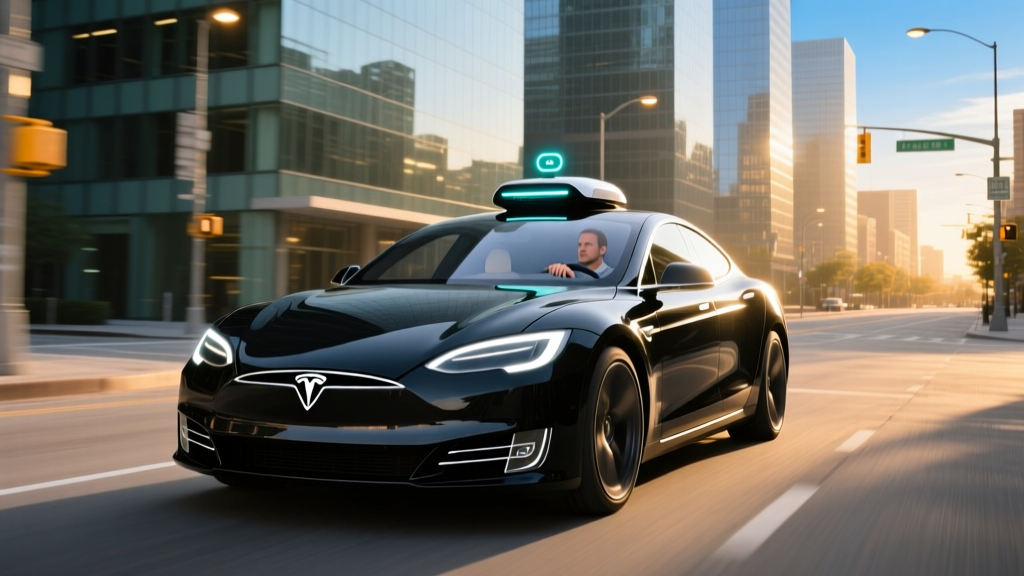
Tesla's Full Self-Driving (Supervised) capability has been one of the most debated options in the automotive industry since its beta launch. In 2026, Tesla continues to offer FSD as either a one-time purchase or a monthly subscription — and the Tesla FSD $99 subscription tier remains the entry point for drivers who want to test advanced driver-assistance features without committing $8,000 upfront.
But before you tap "Subscribe" in the Tesla app, you need to understand exactly what FSD (Supervised) delivers, where it falls short, and how it compares to competing Level 2 systems from Ford, GM, and others. This isn't marketing material — it's a technical and practical breakdown based on thousands of miles of real-world use.
Tesla FSD (Supervised) is classified as an SAE Level 2 driver-assistance system. This means the driver must remain fully attentive, keep hands on or near the steering wheel, and be prepared to take over at any moment. The "Supervised" designation Tesla added to the product name reflects this reality. Only Level 4 services like Waymo operate without a human driver in the loop.
How FSD (Supervised) Works: The Hardware Stack
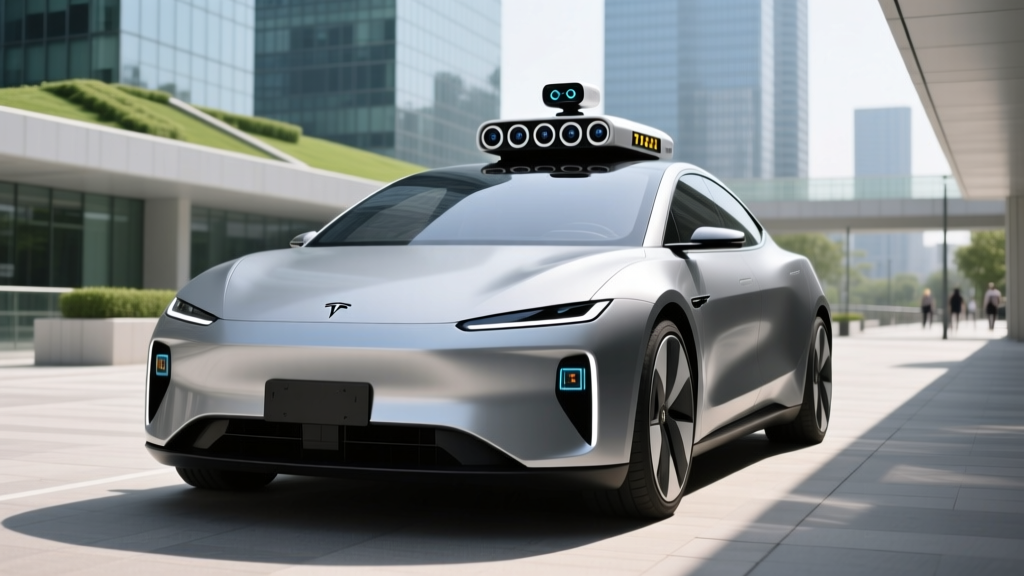
Tesla's approach to autonomous-capable driving is distinct from nearly every competitor. While most legacy automakers rely on a sensor fusion stack combining cameras, radar, ultrasonic sensors, and increasingly lidar, Tesla has committed to a vision-only architecture — branded as "Tesla Vision."
As of the 2025–2026 vehicle lineup (Model 3 Highland, refreshed Model Y, Model S, Model X, and Cybertruck), Tesla vehicles are equipped with:
- 8 cameras providing 360-degree surround view (front main, front wide, front narrow, left/right repeaters, left/right rear, and rear-view)
- HW4 (Hardware 4) computer with dual neural-network processing chips delivering approximately 300+ TOPS of inference performance
- No radar or ultrasonic sensors on new-production vehicles — Tesla removed ultrasonics starting late 2022 and radar before that
The neural network processes camera feeds in real time to detect lane markings, vehicles, pedestrians, traffic signals, road signs, and drivable space. FSD (Supervised) uses this perception layer to execute:
| Feature | What It Does | Included in Base Autopilot? |
|---|---|---|
| Traffic-Aware Cruise Control | Maintains set speed and following distance | Yes |
| Autosteer | Center-lane keeping on marked highways | Yes |
| Auto Lane Change | Initiates and completes lane changes on highways | No — FSD only |
| Navigate on Autopilot | Highway on/off-ramp navigation, interchange routing | No — FSD only |
| City Street Driving | Traffic light/stop sign recognition, turns, intersection handling | No — FSD only |
| Smart Summon | Vehicle navigates parking lots to your location | No — FSD only |
| Autopark | Parallel and perpendicular parking automation | No — FSD only |
The key differentiator between base Autopilot (standard on every Tesla) and FSD (Supervised) is city street capability and automated navigation. Base Autopilot handles highway lane-keeping competently; FSD extends that to surface streets, intersections, and turn-by-turn navigation — with the driver still responsible for oversight.
The Cost Breakdown: Subscription vs. Purchase
Tesla has adjusted FSD pricing several times, but as of 2026, the structure remains straightforward:
| Option | Cost | Notes |
|---|---|---|
| FSD (Supervised) Monthly Subscription | $99/month | Cancel anytime; tied to your Tesla account and vehicle |
| FSD (Supervised) One-Time Purchase | $8,000 | Transfers if you sell the car (stays with VIN); non-refundable |
| Base Autopilot | Included | TACC + Autosteer on highways; standard on all new Teslas |
The math on the Tesla FSD $99 subscription: At $99 per month, you'd pay $1,188 per year. The break-even point versus the $8,000 one-time purchase is approximately 6 years and 9 months. If you plan to keep your Tesla longer than that, buying outright is cheaper. If you trade vehicles every 3–4 years, the subscription makes more financial sense — especially since Tesla has occasionally offered FSD transfer promotions when you purchase a new vehicle.
One important caveat: the FSD subscription is tied to the vehicle, not your driver profile. If you sell your Tesla, the new owner does not inherit your subscription. If you buy a used Tesla that already has FSD purchased, you get it at no additional cost — which is why used Teslas with FSD command a premium on the secondary market.
Real-World Capabilities: Where FSD Shines
After extensive testing across highway, suburban, and urban environments, FSD (Supervised) demonstrates genuine utility in specific scenarios:
Highway driving remains the strongest use case. Navigate on Autopilot handles multi-lane interstates, on-ramp merges, and off-ramp exits with high confidence. Lane changes are generally smooth, and the system's ability to anticipate slower traffic ahead has improved substantially with successive software updates. On a 400-mile interstate trip, interventions may be limited to 2–3 instances — typically around construction zones or faded lane markings.
Suburban surface streets with clear lane markings and predictable traffic patterns are handled well. The system correctly identifies stop signs, traffic lights, and pedestrian crossings. Right turns on green and protected left turns are executed competently in most situations.
Parking assistance via Autopark has improved from earlier generations. The system can identify parallel and perpendicular spots and complete the maneuver, though tight spaces still benefit from driver verification via the touchscreen camera feed.
- Does not eliminate driver responsibility. You are legally and physically the driver at all times. NHTSA requires your hands on or near the wheel, and Tesla's cabin camera monitors attentiveness.
- Struggles in heavy rain, snow, and fog. Vision-only systems degrade when camera lenses are obscured. Expect FSD to disengage or perform poorly in precipitation — unlike radar-equipped competitors.
- Construction zones are a known weakness. Temporary lane shifts, orange barrels, and missing lane markings can confuse the system. Always take over in active work zones.
- Unprotected left turns across traffic remain an edge case. The system may hesitate or misjudge gaps in oncoming traffic.
- Rural roads without clear markings or with irregular surfaces may cause the system to disengage or follow incorrect paths.
- Does not communicate with other vehicles (no V2V). Tesla's system is purely perception-based — it cannot receive signal intent from other cars.
How Tesla FSD Compares to Competing Level 2 Systems
The Tesla FSD $99 subscription doesn't exist in a vacuum. Several competing Level 2 systems offer comparable — and in some cases superior — highway driving experiences. Here's how they stack up:
| System | Brand | Highway Hands-Free? | City Streets? | Cost |
|---|---|---|---|---|
| FSD (Supervised) | Tesla | No (hands-on required) | Yes | $99/mo or $8,000 |
| Super Cruise | GM (Cadillac, Chevy, GMC) | Yes (mapped highways) | No | Included 3 yrs, then ~$25/mo |
| BlueCruise | Ford / Lincoln | Yes (mapped highways) | No | $75/mo, $800/yr, or $2,500 |
| Autopilot (base) | Tesla | No (hands-on required) | No | Included (standard) |
| Driving Assistant Pro | BMW | Yes (up to 85 mph, hands-off) | No | ~$2,500 one-time (varies) |
The critical distinction: GM's Super Cruise and Ford's BlueCruise offer true hands-free highway driving on pre-mapped divided highways, using driver-monitoring cameras to ensure you're paying attention. Tesla FSD, despite its "Full Self-Driving" name, still requires hands-on-wheel confirmation — though Tesla's cabin camera monitoring has relaxed the frequency of torque-based steering inputs.
Where FSD pulls ahead is surface street coverage. Neither Super Cruise nor BlueCruise handles city intersections, traffic lights, or turn-by-turn navigation on non-highway roads. If your commute involves significant surface-street driving, FSD's capability set is broader — even if its hands-on requirement feels more restrictive on the highway.
For a detailed look at how Super Cruise maps compare to Tesla's approach, the NHTSA's automated vehicle safety guidelines provide regulatory context on what each system is permitted to do.
Which Tesla Models Include or Support FSD?
FSD (Supervised) is available as an add-on across Tesla's entire 2026 lineup, but hardware compatibility matters — particularly if you're considering a used vehicle:
- Model 3 (Highland, 2024+): HW4 standard. FSD subscription or purchase available on all trims (RWD, Long Range, Performance).
- Model Y (2025 refresh): HW4 standard. FSD available on all trims.
- Model S / Model X (2023+): HW4 retrofitted on newer production; older HW3 vehicles received limited FSD updates but HW4 delivers superior inference performance.
- Cybertruck (2024+): HW4 standard. FSD capability rolled out progressively; city street features reached Cybertruck in late 2024/early 2025.
- Older HW2.5 and HW3 vehicles: Tesla has stated that HW3 vehicles will continue to receive FSD updates, though processing limitations mean some newer neural-network features may be unavailable or less responsive.
If you're purchasing a used Tesla specifically for FSD, verify the hardware generation via the vehicle's Software menu (Controls → Software → Additional Vehicle Information). HW4 vehicles have noticeably better camera resolution and processing headroom.
Safety Data and Regulatory Context
Tesla's approach to FSD safety has drawn scrutiny from both NHTSA and the broader safety community. Key points to understand:
NHTSA investigations: The National Highway Traffic Safety Administration has opened multiple investigations into Tesla's Autopilot and FSD systems, particularly regarding crashes involving stationary emergency vehicles and the adequacy of Tesla's driver-monitoring system. As of 2026, Tesla has implemented stricter cabin-camera attentiveness monitoring and reduced the tolerance for repeated warnings before the system disengages for the remainder of a drive.
Tesla's safety report: Tesla periodically publishes data claiming that vehicles with Autopilot engaged experience fewer crashes per million miles than the US average. However, independent analysts have noted that this comparison is imperfect — Autopilot is primarily used on highways (which are inherently safer than surface streets), and Tesla's data does not isolate FSD-specific performance from basic Autopilot.
IIHS perspective: The Insurance Institute for Highway Safety has consistently emphasized that partial automation systems like FSD do not reduce driver workload in a safety-meaningful way and may create over-reliance. Their testing has found that driver-monitoring systems vary widely in effectiveness.
The practical takeaway: FSD (Supervised) is a convenience feature, not a safety system in the way that automatic emergency braking or lane-departure prevention are. It can reduce fatigue on long drives, but it does not make you safer than an attentive human driver operating the vehicle manually.
Should You Subscribe? A Decision Framework
Subscribe to the Tesla FSD $99 subscription if:
- You have a long highway commute (60+ miles daily) and want Navigate on Autopilot for reduced fatigue
- You want to try city-street FSD before committing to the $8,000 purchase
- You plan to trade your Tesla within 3–5 years (subscription is cheaper than purchasing and not recouping the cost at resale)
- You live in an area with well-marked roads and moderate weather
Skip it and stick with base Autopilot if:
- Your driving is primarily city/urban with complex, unpredictable traffic patterns
- You live in an area with frequent heavy rain, snow, or poorly maintained roads
- You expect a "self-driving" experience — FSD requires constant supervision and frequent interventions in many real-world conditions
- You'd prefer hands-free highway driving — consider a GM vehicle with Super Cruise or a Ford/Lincoln with BlueCruise instead
Frequently Asked Questions
Is Tesla FSD really self-driving?
No. Tesla FSD (Supervised) is an SAE Level 2 driver-assistance system. The driver must remain fully engaged, monitor the road, and be prepared to take over immediately. Tesla itself uses the "Supervised" label to clarify this. Only Level 4 systems — like Waymo's robotaxi service operating in select cities — qualify as self-driving without human oversight.
Can I cancel the $99/month FSD subscription anytime?
Yes. The FSD subscription can be cancelled at any time through your Tesla account. You'll retain access through the end of your billing period, after which the vehicle reverts to base Autopilot functionality. There are no cancellation fees.
Does FSD transfer if I sell my Tesla?
If you purchased FSD outright ($8,000), it stays with the vehicle's VIN and transfers to the next owner — which can increase resale value. If you have the $99/month subscription, it does not transfer. The new owner would need to subscribe or purchase FSD separately.
How does FSD handle bad weather?
Poorly, compared to radar-equipped competitors. Tesla's vision-only system relies on clear camera feeds. Heavy rain, snow, fog, or even a dirty camera lens can degrade performance or cause the system to disengage. Tesla's owner manual explicitly notes reduced capability in adverse weather. If you regularly drive in rain or snow, expect to take over frequently.
What's the difference between Autopilot and FSD?
Base Autopilot (standard on all new Teslas) includes Traffic-Aware Cruise Control and Autosteer — essentially adaptive cruise plus lane centering on highways. FSD (Supervised) adds Navigate on Autopilot (highway on/off-ramp routing), Auto Lane Change, city street driving with traffic light and stop sign recognition, Smart Summon, and Autopark. The $99/month subscription or $8,000 purchase unlocks these additional features.
Is FSD improving over time?
Tesla delivers over-the-air software updates that can improve FSD behavior. The transition from rule-based coding to end-to-end neural network processing (rolled out progressively in 2024–2025) represented a significant architectural change. However, "improving" does not mean the system is approaching Level 4 autonomy. Each update may improve specific scenarios while introducing new edge-case behaviors. Treat FSD as a continuously evolving Level 2 system, not a path to imminent full autonomy.
Sources: NHTSA Automated Vehicle Safety, IIHS ADAS Research, Tesla Owner's Manual (2026 Model Year).