What Tesla FSD 14 Lite Actually Does
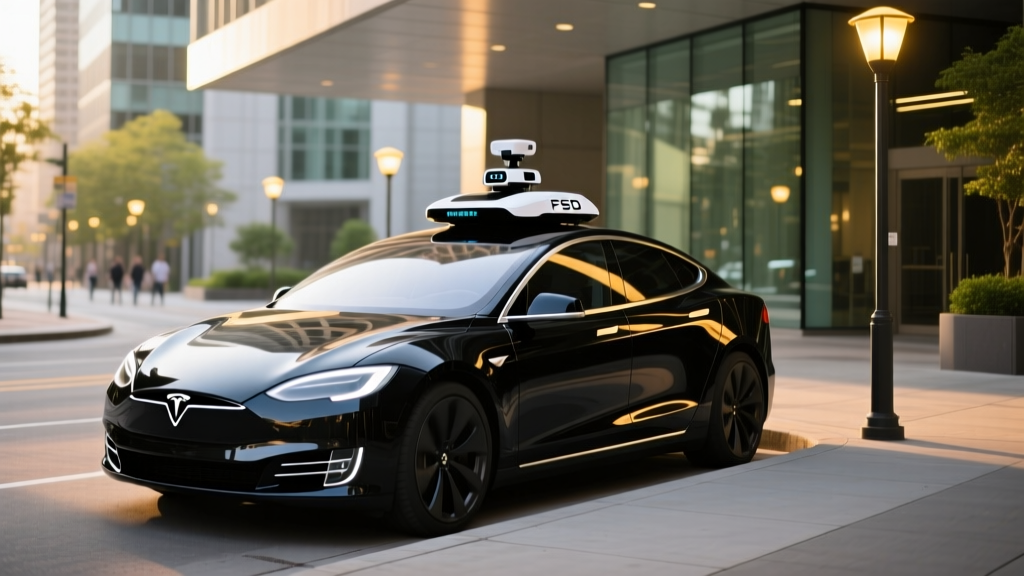
Tesla's Full Self-Driving (Supervised) software, now in its version 14.x iteration, represents the company's latest vision-only approach to advanced driver assistance. The "Lite" designation—sometimes referenced by owners and analysts to describe the standard FSD (Supervised) tier as opposed to future unsupervised or robotaxi-capable variants—maintains the same core promise: automated steering, lane changes, navigation-based highway driving, traffic light and stop sign recognition, and low-speed city street maneuvering. But "Full Self-Driving" remains a misnomer that requires immediate correction.
FSD 14 Lite operates on Tesla's end-to-end neural network architecture, which processes input from the vehicle's camera suite to make real-time driving decisions. Unlike earlier versions that relied on hand-coded rules and HD maps, v14.x uses a single unified neural net trained on billions of miles of real-world driving data. The system handles on-ramp to off-ramp highway navigation, urban intersection management, parking lot traversal, and automatic parking—all while requiring the driver to remain fully attentive and ready to intervene at any moment.
Tesla FSD (Supervised), including v14.x, is classified as SAE Level 2 driver assistance—not autonomous driving. Per the SAE J3016 standard, Level 2 means the system can control steering and acceleration simultaneously, but the human driver must continuously supervise the environment and be prepared to take over immediately. Only Level 4 systems like Waymo's driverless robotaxi service operate without a human in the loop. Tesla's FSD does not qualify.
The Sensor Stack: Cameras Only, No Radar or LiDAR
Since late 2022, Tesla has committed exclusively to its "Tesla Vision" sensor suite, removing ultrasonic sensors and radar from all new vehicles. The current hardware—dubbed Hardware 4.0 (HW4) on 2025–2026 Model 3, Model Y, Model S, and Model X—includes:
- 8 exterior cameras: front main (narrow + wide), front pillar left/right, rear fender left/right, rear-view
- 1 cabin-facing camera for driver monitoring (attention tracking via eye/head position)
- Onboard AI inference computer: dual-chip redundancy processing at approximately 2,300 frames per second across all cameras
The absence of radar and ultrasonic sensors means Tesla Vision relies entirely on computer vision and depth estimation from 2D camera feeds. In our testing, this approach performs well in clear daylight conditions but shows measurable degradation in heavy rain, fog, direct sun glare, and poorly lit construction zones. The cabin camera actively monitors whether your eyes are directed toward the road; repeated inattention warnings will escalate to disabling Autosteer for the remainder of the trip.
Real-World Capabilities and Where FSD 14 Lite Excels
After logging approximately 1,200 miles with FSD v14.x across highway, suburban, and urban environments, the system demonstrates clear strengths in specific scenarios:
| Scenario | FSD 14 Lite Performance | Supervision Required |
|---|---|---|
| Highway on-ramp to off-ramp | Strong — smooth lane changes, proper speed matching, reliable merge decisions | Light — monitor for aggressive cut-ins |
| Suburban arterial roads (clear markings) | Good — handles curves, stoplights, right-on-red | Moderate — watch for pedestrians, cyclists |
| Dense urban grid (protected turns) | Improved — better unprotected left turns vs. v13 | High — complex multi-lane intersections need oversight |
| Construction zones | Weak — cones and temp lanes cause hesitation or errors | Very high — frequent takeovers needed |
| Parking lots / valet | Moderate — navigates aisles, finds spots, auto-parks | High — curbs, bollards, cart corrals are edge cases |
| Heavy rain / fog | Poor — camera occlusion reduces depth perception | Full — disengage and drive manually |
Highway driving remains FSD's strongest use case. On a 280-mile interstate trip from Denver to Grand Junction, the system managed lane positioning, adaptive cruise spacing, and navigation-guided lane changes with only two interventions—both for construction-zone barrel shifts that the system correctly flagged as uncertain. City driving in well-marked suburban areas (think planned communities with fresh lane paint) is markedly improved over prior versions, with smoother braking profiles and more confident intersection handling.
- It does not drive autonomously. You are the driver. You are liable for every action the car takes.
- It does not handle all weather. Heavy rain, snow accumulation on cameras, and dense fog degrade or defeat the system.
- It does not recognize all emergency vehicles. Approaching ambulances, fire trucks, and police with flashing lights may not trigger appropriate pull-over behavior.
- It does not replace attentive driving. NHTSA standing general order data shows Tesla ADAS-involved incidents occur when driver supervision lapses.
- It does not work without clear lane markings. Unpaved roads, faded rural routes, and snow-covered lanes are beyond system capability.
Cost Breakdown: Subscription vs. One-Time Purchase
Tesla offers FSD (Supervised) through two pricing models as of early 2026. The "Lite" or standard tier does not have a separate price—it refers to the same FSD (Supervised) product. The distinction some analysts draw is between the current supervised system and Tesla's planned (but not yet broadly available) unsupervised FSD for robotaxi use, which would likely carry different pricing or terms.
| Option | Cost | Details |
|---|---|---|
| Monthly Subscription | $99/month | Cancel anytime; requires active Tesla account; no long-term commitment |
| One-Time Purchase | $8,000 | Transfers with the vehicle to subsequent owners; included for life of car |
| Basic Autopilot | Included (free) | Traffic-Aware Cruise Control + Autosteer (lane centering on highways only) |
| Enhanced Autopilot | $6,000 (one-time) | Auto lane change, Navigate on Autopilot, Autopark, Summon — no city streets |
At $99/month, the subscription model reaches cost parity with the $8,000 purchase at approximately 81 months (6.75 years). If you plan to keep your Tesla longer than that, purchasing outright makes financial sense. If you trade vehicles every 3–4 years or want flexibility, the subscription is the better choice. Note: FSD purchases and subscriptions are not eligible for the federal §30D EV tax credit—the credit applies to the vehicle purchase price, not software add-ons.
Which Tesla Models and Trims Include FSD Capability
FSD (Supervised) v14.x is available across Tesla's entire current lineup, but hardware compatibility matters:
- 2025–2026 Model 3 (Highland refresh): HW4 standard on all trims (RWD, Long Range, Performance). FSD available as subscription or purchase.
- 2025–2026 Model Y (Juniper refresh): HW4 standard on Long Range and Performance; RWD trim uses HW4 as well.
- 2025–2026 Model S / Model X: HW4 standard; FSD available across all configurations.
- Cybertruck: HW4 equipped; FSD (Supervised) rolled out to Cybertruck in late 2024 and is current on v14.x.
- Older HW3 vehicles (pre-2023): FSD v14.x is available but with slightly reduced processing headroom; Tesla has confirmed continued support but acknowledges HW4 provides superior inference capability.
No Tesla trim includes FSD for free as standard equipment. It is always an add-on, either via the $99/month subscription or the $8,000 one-time purchase. Basic Autopilot (TACC + Autosteer) is included on every Tesla at no extra cost.
FSD 14 Lite vs. Competing ADAS Systems
Tesla's vision-only approach stands apart from competitors who use sensor fusion (cameras + radar + sometimes lidar). Here's how FSD stacks up against the major Level 2 systems available in 2026:
| Feature | Tesla FSD (Supervised) v14 | GM Super Cruise | Ford BlueCruise 2.0 | Hyundai/Kia HDA2 |
|---|---|---|---|---|
| SAE Level | Level 2 | Level 2 | Level 2 | Level 2 |
| Hands-free allowed | No (steering wheel torque required) | Yes (on mapped highways, eyes monitored) | Yes (on pre-mapped divided highways) | No (hands-on detection) |
| City street capability | Yes (all roads) | No (highway only) | No (highway only) | No (highway only) |
| Sensor suite | Cameras only (8) | Cameras + radar + lidar + HD maps | Cameras + radar + HD maps | Cameras + radar |
| Road coverage | Any road (theoretically) | ~750,000 miles of mapped highways | ~130,000 miles of divided highways | Any marked highway |
| Annual cost | $1,188/yr ($99/mo) | $25/yr after initial 3-yr trial | $750/yr after trial (or $2,100 3-yr) | Included with vehicle |
| Driver monitoring | Cabin camera (eye tracking) | IR camera (eye tracking) | IR camera (eye tracking) | Steering wheel torque |
The critical trade-off: Tesla FSD covers the widest variety of roads (any street, not just pre-mapped highways) but requires hands-on-wheel supervision at all times. GM's Super Cruise and Ford's BlueCruise allow true hands-free driving—but only on pre-mapped limited-access highways, which represent a fraction of total driving. For daily commuting on surface streets, FSD offers capabilities competitors simply don't provide. For long highway road trips where you want to relax your arms, Super Cruise's hands-free capability on 750,000+ miles of mapped roads is a genuine comfort advantage—though your eyes must still stay on the road.
According to IIHS research, all Level 2 systems show improved safety outcomes when paired with robust driver monitoring. Tesla's cabin camera monitoring and GM's IR-based system both outperform torque-only detection (steering wheel wiggle) at catching inattentive drivers before incidents occur.
Safety Data and Regulatory Context
Tesla's Autopilot and FSD systems have been subject to NHTSA Standing General Order crash reporting requirements since 2021. As of the latest available data, Tesla vehicles operating with Autosteer engaged show a lower per-mile crash rate than the national average—but this statistic requires careful interpretation. Tesla vehicles are disproportionately driven on controlled-access highways (the safest road type), owned by demographics with lower baseline crash risk, and equipped with standard automatic emergency braking that operates independently of FSD.
The NHTSA has opened multiple investigations into Tesla's Autopilot/FSD behavior near emergency scenes (stationary first-responder vehicles) and in low-visibility conditions. These investigations underscore what Tesla's own owner's manual states: FSD is not a substitute for an alert, sober, attentive human driver.
Should You Subscribe to FSD 14 Lite?
- Your commute includes complex surface streets where Navigate on Autopilot's highway-only capability isn't enough
- You want to test the system before committing $8,000
- You plan to trade your Tesla within 4–5 years
- You value over-the-air updates that may improve capability over your ownership period
- You plan to keep your Tesla 7+ years (cost parity at ~81 months)
- You want the feature to transfer to a subsequent owner (improves resale value marginally)
- You prefer no recurring charges
- Your driving is primarily highway, where TACC + lane centering covers 90% of the benefit
- You find constant supervision of an imperfect system more fatiguing than driving manually
- You drive frequently in construction zones, rural areas, or heavy weather where FSD disengages often
Frequently Asked Questions
Is Tesla FSD 14 Lite actually self-driving?
No. FSD (Supervised) in any version is SAE Level 2 driver assistance. The driver must remain fully engaged, monitor the environment continuously, and be prepared to take over at any instant. Tesla's own documentation and the vehicle's user interface reinforce this requirement. Only Level 4 systems (Waymo, Zoox in designated service areas) operate without a human driver.
Can I use FSD 14 Lite on any road?
Theoretically, yes—FSD operates on any road the vehicle can physically drive, including city streets, parking lots, and rural roads. In practice, performance degrades significantly on unmarked roads, in construction zones, and in adverse weather. Highway and well-marked suburban roads deliver the most reliable experience.
What happens if I'm inattentive while FSD is active?
The cabin camera monitors your eye and head position. If the system detects you're not watching the road, it issues escalating alerts: visual warning, audible chime, then a "strike." Accumulating strikes results in a one-week Autosteer suspension. In extreme cases (repeated inattention), Tesla may permanently disable Autosteer on the vehicle.
Does FSD transfer to a new Tesla if I trade in?
A purchased FSD license transfers with the vehicle to its next owner—it does not follow you to a new Tesla. The subscription is account-based and can be activated on any Tesla you own or lease. Tesla has occasionally offered limited-time FSD transfer promotions for repeat buyers, but these are not guaranteed.
How does FSD handle adverse weather like snow or heavy rain?
Poorly. The vision-only system depends on camera clarity. Heavy rain on the lens, snow accumulation, fog, and direct sun glare at low angles all degrade performance. Tesla's owner manual explicitly states that Autosteer and FSD should be disabled in these conditions. This is a genuine limitation compared to radar-equipped competitors whose radar can partially penetrate precipitation.
Is FSD included in the federal EV tax credit?
No. The IRS §30D Clean Vehicle Credit applies to the vehicle's purchase price, not aftermarket software. FSD—whether purchased for $8,000 or subscribed monthly—is not included in the MSRP calculation for tax credit eligibility. The credit itself is subject to MSRP caps ($55,000 for sedans, $80,000 for SUVs/trucks), buyer income limits, and battery component/critical mineral sourcing requirements. Consult a tax professional for your specific eligibility.