What FSD 14 Actually Does on HW3 Hardware
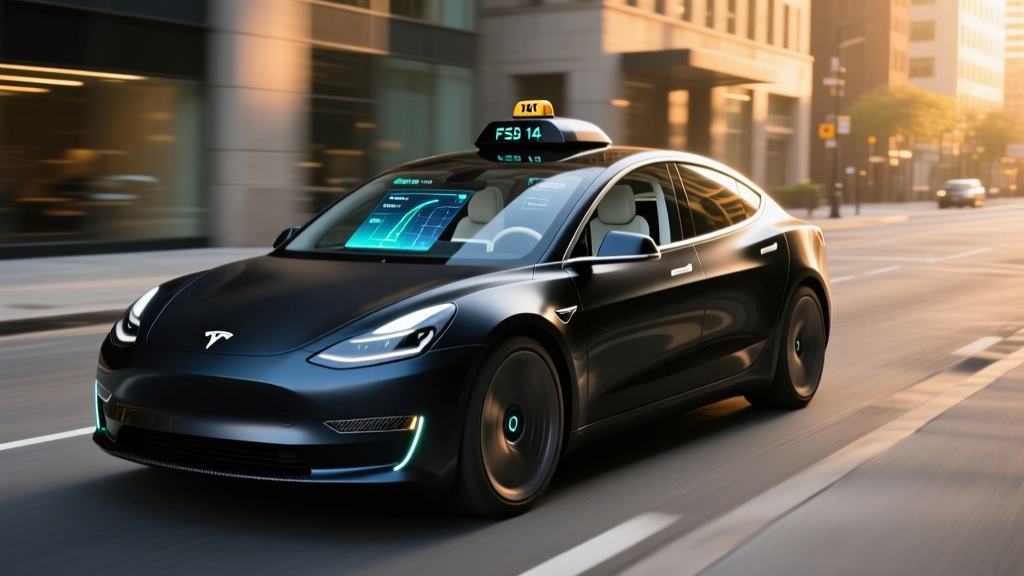
Tesla's Full Self-Driving (Supervised) software, currently at version 14, represents the latest iteration of the company's end-to-end neural network approach to driver assistance. For owners running Hardware 3 (HW3) — the camera and compute suite installed in Tesla vehicles roughly between April 2019 and early 2023 — the question is whether FSD 14 extracts meaningful capability from older silicon, or whether the hardware ceiling is now a bottleneck.
FSD 14 uses a vision-only architecture. There is no lidar, no ultrasonic sensors (Tesla removed those starting in 2022), and no radar on most current and recent vehicles. The system relies entirely on input from eight external cameras feeding into the onboard neural network processor. On HW3, that processor is a dual-chip design Tesla calls the "FSD Computer," delivering roughly 144 TOPS (trillions of operations per second) of inference performance.
| Function | What It Does | HW3 Status |
|---|---|---|
| Navigate on Autopilot | Highway on-ramp to off-ramp lane changes, interchange navigation | Supported; slightly slower decision latency vs HW4 |
| Auto Lane Change | Initiates lane changes based on traffic and navigation route | Supported |
| Autosteer (City Streets) | Traffic light/stop sign recognition, intersection handling, turns | Supported; complex intersections may require more driver intervention |
| Smart Summon | Navigates parking lots to reach the driver | Supported with improved path planning in v14 |
| Autopark | Parallel and perpendicular parking | Supported |
| Traffic-Aware Cruise Control | Maintains set speed and following distance | Supported |
In practice, FSD 14 on HW3 handles most routine driving scenarios: maintaining lane position on highways, adjusting speed for traffic, executing lane changes, and navigating suburban intersections. The end-to-end neural network approach introduced in the v12 lineage and refined through v14 means the system makes fewer jerky or overly cautious maneuvers compared to earlier rule-based versions. However, HW3's lower-resolution camera processing pipeline and reduced compute headroom mean the system can struggle more than HW4 in edge cases — faded lane markings, complex multi-lane intersections, or rapidly changing construction zones.
SAE Automation Level: FSD Is Level 2, Not Self-Driving
SAE Level 2 — Partial Automation (Driver Supervision Required)
Tesla FSD (Supervised) is classified as SAE Level 2. The driver must remain attentive, keep hands on or near the steering wheel, and be prepared to take over instantly. The system does not handle all driving scenarios, and Tesla explicitly states the driver is responsible for the vehicle at all times. Only Level 4 systems — such as Waymo's driverless ride-hail service operating in geofenced areas — qualify as truly autonomous without a human driver in the loop.
This distinction matters for legal liability, insurance, and your own safety expectations. When FSD 14 makes an error — misreading a temporary lane closure, failing to yield to a pedestrian in an unusual position, or hesitating at an unmarked intersection — you are the fallback. Tesla's cabin camera monitors driver attention and issues escalating warnings if your eyes leave the road, but the system cannot guarantee it will bring the vehicle to a safe stop if you become unresponsive in all scenarios.
The "(Supervised)" suffix Tesla added to FSD's branding is not marketing filler. It reflects the operational reality: you are the supervisor of a capable but imperfect driving assistant.
Real-World Capability and Where HW3 Hits Its Ceiling
Known FSD 14 Limitations on HW3
- Low-light and adverse weather: Camera-only systems degrade in heavy rain, fog, snow accumulation on lenses, and poorly lit roads. HW3's older image signal processor handles low-light scenes with less fidelity than HW4.
- Faded or missing lane markings: The system can drift or disengage when lane lines are absent or obscured by snow/water.
- Construction zones: Temporary barriers, shifted lanes, and flaggers require immediate driver takeover.
- Unprotected left turns: Complex multi-lane intersections with oncoming traffic remain a scenario where FSD may hesitate or make overly conservative decisions.
- Decision latency: HW3 processes camera frames with slightly higher latency than HW4, which can mean the difference between a smooth merge and a late, abrupt maneuver in dense highway traffic.
- Phantom braking: Though reduced in v14, sudden deceleration for perceived (but nonexistent) obstacles still occurs, particularly on shadowed highways.
Owners running FSD 14 on HW3 report a system that is markedly better than v12 or v13 in smoothness and confidence, but one that still demands active supervision. On controlled-access highways, the system performs well for extended stretches. In dense urban environments with unpredictable pedestrians, cyclists, and delivery trucks double-parked in travel lanes, intervention frequency remains significant — roughly every 5-15 miles in challenging city driving, based on aggregated owner disengagement reports.
HW4-equipped vehicles (installed from approximately early 2023 onward) benefit from higher-resolution cameras and a processor with roughly 2-3x the compute throughput. In side-by-side comparisons shared by owners who have driven both hardware versions, HW4 demonstrates faster object recognition at distance, better performance in rain, and more decisive behavior in merging scenarios. If you are evaluating whether to upgrade a HW3 vehicle specifically for FSD, this performance gap is the core consideration.
FSD Cost: Purchase, Subscription, and What's Included
Tesla offers FSD through two pricing models, and the costs have shifted several times. As of early 2026:
| Option | Cost | Notes |
|---|---|---|
| One-Time Purchase | $8,000 | Transfers with the vehicle, not the owner. Previously $15,000 before April 2024 price cut. |
| Monthly Subscription | $99/month | No long-term commitment; cancel anytime. Previously $199/month. |
| Basic Autopilot | Included (no extra cost) | Traffic-aware cruise control + autosteer on highways only. Standard on all new Teslas. |
| Enhanced Autopilot | Discontinued (rolled into FSD) | Previously $6,000; features now bundled under FSD. |
For HW3 owners debating whether to subscribe or purchase, the math is straightforward: at $99/month, the subscription equals the $8,000 purchase price after roughly 81 months (6.75 years). If you plan to keep the vehicle longer than that and use FSD regularly, the purchase makes financial sense — but keep in mind that FSD does not transfer to a new vehicle if you sell or trade in. It stays with the car, which adds modest resale value but typically less than the purchase price.
One important caveat: Tesla has periodically offered FSD transfer promotions (allowing a one-time transfer to a new Tesla purchase), but these are limited-time offers, not permanent policy. Check Tesla's current terms before purchasing.
Which Tesla Models Run FSD 14 on HW3?
Hardware 3 was installed across Tesla's lineup during a specific production window. Here is the approximate breakdown:
- Model 3: Vehicles produced from approximately April 2019 through early 2023 (pre-Highland refresh). The 2024+ "Highland" Model 3 uses HW4.
- Model Y: Vehicles produced from approximately early 2020 through early 2023. The 2025+ "Juniper" Model Y uses HW4.
- Model S: 2019-2023 production (post-2019 "Raven" refresh through pre-2023 HW4 transition).
- Model X: Same window as Model S.
FSD 14 is available as an over-the-air software update to any Tesla vehicle running HW3 or HW4 that has an active FSD purchase or subscription. There is no trim-level restriction — FSD availability is tied to the hardware package and the software license, not to whether you bought a Standard Range or Long Range variant.
However, Tesla CEO Elon Musk has stated on multiple occasions that HW3 may eventually reach a capability ceiling that prevents it from running future FSD versions at full performance. As of early 2026, Tesla has not announced a mandatory HW3-to-HW4 retrofit program, but the company has offered discounted or complimentary HW4 upgrades to select FSD purchasers in the past. If you are a HW3 owner who has paid the full $8,000 for FSD, monitor Tesla communications regarding any future hardware upgrade offers.
FSD vs. Competing ADAS: How It Stacks Up
| System | Brand | SAE Level | Hands-Free? | Cost |
|---|---|---|---|---|
| FSD (Supervised) | Tesla | Level 2 | No (hands-on or near-wheel monitoring) | $8,000 or $99/mo |
| Super Cruise | GM (Cadillac, Chevrolet) | Level 2 | Yes (on pre-mapped highways, eye monitoring required) | $2,500 or included on select trims |
| BlueCruise | Ford / Lincoln | Level 2 | Yes (on pre-mapped highways, eye monitoring required) | $2,100 (2-yr) or $75/mo |
| ProPILOT Assist 2.0 | Nissan | Level 2 | Yes (on pre-mapped highways) | Included on higher trims |
| Autopilot (Basic) | Tesla | Level 2 | No | Standard (included) |
Tesla's FSD is the most ambitious in geographic scope — it operates on virtually any road, not just pre-mapped limited-access highways. GM's Super Cruise and Ford's BlueCruise, by contrast, restrict hands-free operation to roughly 400,000+ miles of pre-mapped divided highways in the US and Canada. Off those mapped roads, they revert to basic adaptive cruise and lane-keeping with hands-on requirements.
The trade-off is reliability within their operating domain. On a mapped interstate, Super Cruise and BlueCruise deliver a smoother, more confidence-inspiring hands-free experience because they combine high-definition maps with camera and (in some cases) radar data. FSD's vision-only, any-road approach is more versatile but also more prone to edge-case failures, particularly on HW3 hardware where processing margins are tighter.
For safety ratings and crashworthiness context, the Insurance Institute for Highway Safety (IIHS) evaluates vehicles with ADAS features, and NHTSA tracks incident reports involving automated driving systems. Both are worth consulting before relying heavily on any driver-assist system.
The HW4 Upgrade Question: Should You Wait or Switch?
If you own a HW3 Tesla and are considering FSD, the practical decision tree looks like this:
- If you primarily drive on highways: FSD 14 on HW3 is competent for highway use, but Basic Autopilot (included free) or Super Cruise/BlueCruise on a GM or Ford vehicle may deliver a less stressful experience for the same use case.
- If you want city-street capability: FSD is the only consumer system that attempts full intersection navigation, traffic light response, and turns on arbitrary surface streets. HW3 runs it, but expect more frequent interventions than HW4.
- If you are buying a used Tesla: Prioritize HW4 vehicles (2023+ production for Model S/X; 2024+ for Model 3 Highland; 2025+ for Model Y Juniper). The compute and camera advantage is meaningful and will only matter more as future FSD versions demand more processing.
- If Tesla announces a HW3 retrofit program: Take it, especially if offered at no cost or subsidized. The performance delta is real.
There is no official timeline from Tesla for deprecating HW3 support in FSD. The company continues to push OTA updates to HW3 vehicles as of early 2026. But the trajectory is clear: each successive FSD version adds model complexity that strains older hardware more. Owners who purchased FSD at the former $15,000 price have a legitimate case for a free or discounted upgrade, and Tesla appears aware of this — hence the selective upgrade offers already extended.
Frequently Asked Questions
Is Tesla FSD 14 truly self-driving?
No. Tesla FSD (Supervised) is an SAE Level 2 driver-assistance system. It requires continuous driver supervision, and you are legally and practically responsible for the vehicle's operation at all times. The "(Supervised)" designation is intentional. Only Level 4 services like Waymo operate without a human driver in the loop, and those are restricted to geofenced areas with specialized vehicle fleets.
Can HW3 run the latest FSD version?
Yes, as of early 2026, HW3 vehicles can run FSD 14 via over-the-air update. However, HW3's lower compute throughput and older camera hardware mean the system operates with narrower performance margins than HW4, particularly in complex urban environments, low-light conditions, and adverse weather.
How much does FSD cost in 2026?
Tesla currently offers FSD as a one-time $8,000 purchase or a $99/month subscription. Basic Autopilot (highway-only adaptive cruise and lane-keeping) remains included at no extra cost on all Tesla vehicles.
Will Tesla force HW3 owners to upgrade to HW4?
Tesla has not announced a mandatory HW4 upgrade. The company has selectively offered free or discounted HW4 retrofits to some FSD purchasers. If a broader program is announced, it will likely prioritize owners who paid the higher historical FSD price ($12,000-$15,000).
Does FSD work in rain and snow?
FSD's camera-only system degrades in heavy rain, snow, and fog. Camera lenses can accumulate water, ice, or road grime, reducing visibility. HW3's image signal processor handles these conditions less effectively than HW4. Tesla's owner manual advises drivers to take over in adverse weather and notes that the system may not function correctly under such conditions.
How does FSD compare to GM Super Cruise or Ford BlueCruise?
Super Cruise and BlueCruise offer hands-free driving on pre-mapped divided highways with driver eye monitoring. They are more polished within their limited operating domain. FSD covers far more road types (city streets, residential roads, rural routes) but requires hands-on supervision and intervenes more frequently. Your preference depends on whether you value highway-only hands-free comfort or broader geographic coverage with active supervision.
For the latest Tesla FSD software release notes and hardware compatibility details, refer to your vehicle's software update log or Tesla's official FSD support page. For independent safety data on automated driving systems, consult NHTSA's Automated Vehicles for Safety resource.