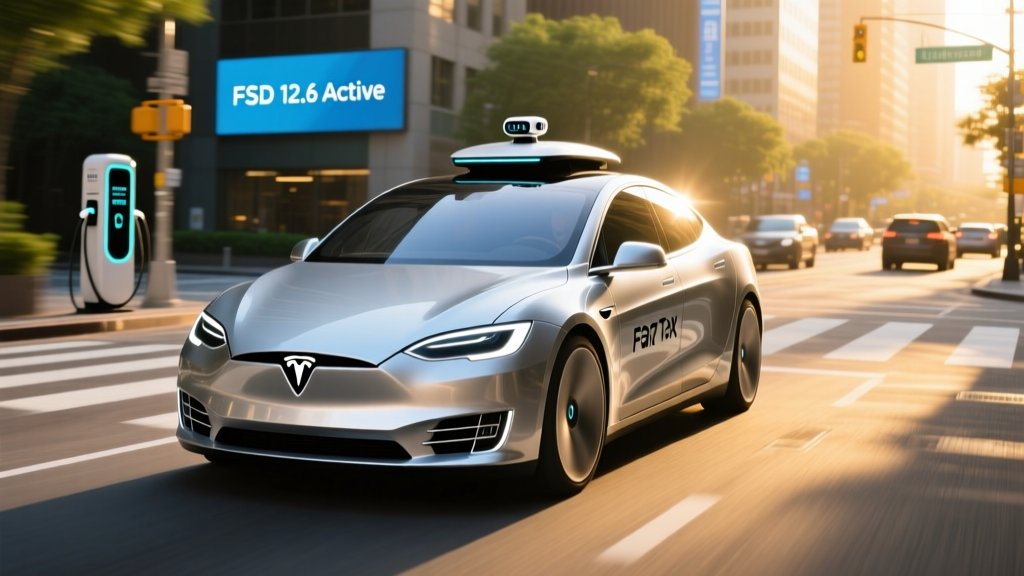
Tesla's Full Self-Driving (Supervised) software has undergone a radical transformation since the release of the v12 branch. With FSD 12.6, Tesla has fully committed to an end-to-end neural network architecture — replacing hundreds of thousands of lines of C++ heuristic code with a single, unified model that maps camera pixels directly to driving actions. For owners of Tesla vehicles equipped with Hardware 3 (HW3), also known as AI3, the update raises a critical question: can the older compute platform still deliver a competitive driving experience, or has the software outgrown its silicon?
We've spent extensive time with FSD 12.6 on HW3-equipped vehicles to break down exactly what this system does, where it excels, where it falls short, and whether the $99/month subscription makes sense for your daily driving.
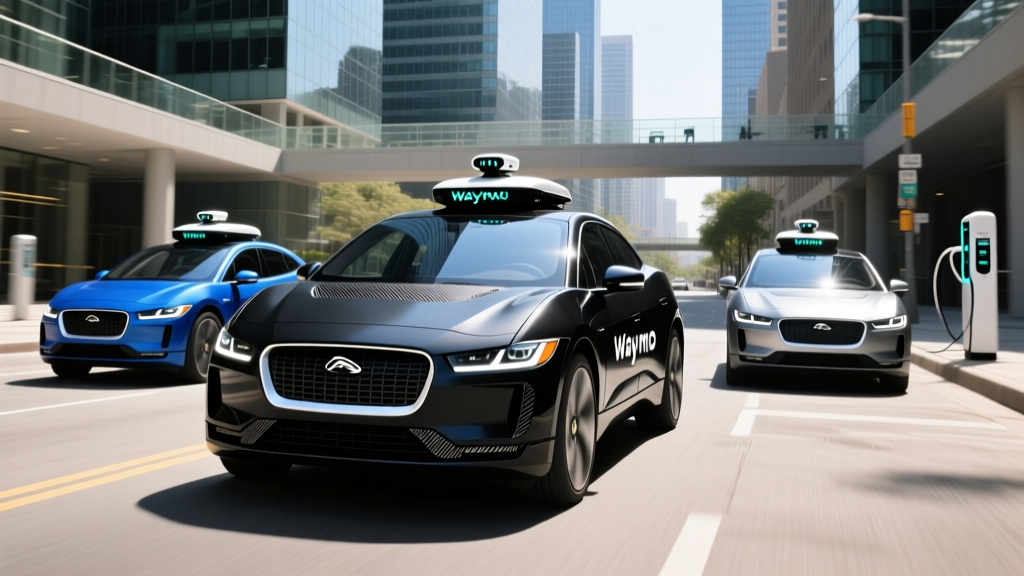
Tesla FSD (Supervised) is classified as SAE Level 2 driver-assist technology. This means the system can simultaneously control steering, acceleration, and braking under certain conditions, but the driver must remain fully engaged — eyes on the road, hands available to take over immediately. It is not autonomous. You are legally and operationally responsible for the vehicle at all times. Only Level 4 services like Waymo operate without a human driver.
What FSD 12.6 Actually Does on HW3
FSD (Supervised) encompasses the full suite of Tesla's driver-assistance capabilities layered on top of standard Autopilot. On FSD 12.6, the system handles:
| Capability | Description | HW3 Performance |
|---|---|---|
| Navigate on Autopilot | Highway on/off-ramp navigation, lane changes, toll plaza handling | Smooth, confident |
| City Streets | Traffic light/stop sign recognition, unprotected left turns, roundabouts | Competent, occasional hesitation |
| Auto Lane Change | Autonomous lane selection based on navigation route and traffic | Responsive |
| Smart Summon | Navigate parking lots to driver's phone location | Slow, cautious |
| Autopark | Parallel and perpendicular parking without driver input | Reliable in marked spaces |
| Traffic Light & Stop Sign Control | Automatic deceleration and acceleration at controlled intersections | Consistent |
The defining characteristic of FSD 12.6 is its end-to-end neural network approach. Rather than relying on hand-coded rules for every driving scenario (e.g., "if yellow light and speed > 35 mph, then brake"), the system learned driving behavior from millions of clips of human driving data. The result is smoother, more human-like inputs — less robotic braking, more natural gap selection, and better negotiation of ambiguous situations like four-way stops.
On Hardware 3, which uses dual Samsung Exynos-based SoCs delivering approximately 144 TOPS of combined INT8 inference throughput, FSD 12.6 runs at a reduced frame rate compared to HW4 (AI4). Tesla has optimized the neural network to fit within HW3's memory and compute envelope, but the system processes fewer camera frames per second and runs a somewhat simplified version of the model. In practice, this translates to slightly longer reaction latency — perhaps 200-400 milliseconds slower in edge-case scenarios — and occasionally less granular object classification at distance.
Hardware 3 vs. Hardware 4: What's the Real Difference?
Understanding the HW3 constraint is essential for setting expectations. Tesla began shipping Hardware 4 (AI4) in early 2023, which features higher-resolution cameras (5 megapixel vs. 1.2 megapixel), a wider field of view on the forward camera, and roughly 3-5x the compute throughput. Here's how the two platforms compare when running FSD 12.6:
| Specification | HW3 (AI3) | HW4 (AI4) |
|---|---|---|
| Camera Resolution | 1.2 MP | 5 MP |
| Camera Count | 8 | 7 (no passenger-side repeater) |
| Forward Camera FOV | Narrow + Main | Single wider lens |
| Compute (est.) | ~144 TOPS | ~300-500 TOPS |
| Radar | Removed (post-2021) | None (Tesla Vision only) |
| Ultrasonic Sensors | Removed (post-2022) | None (Tesla Vision only) |
For FSD 12.6, the practical differences show up most in low-light conditions, complex construction zones, and scenarios requiring long-range object detection (e.g., spotting a stalled vehicle 400+ feet ahead on the highway). HW3's lower-resolution cameras simply capture fewer pixels of distant objects, giving the neural network less information to classify. HW4's extra compute also allows the model to run with more parameters, meaning it can represent more nuanced driving strategies.
That said, for the vast majority of daily driving — suburban commutes, highway cruising, well-marked city streets — FSD 12.6 on HW3 performs competently. The gap narrows significantly in straightforward scenarios and widens only at the edges.
Real-World Limitations You Need to Know
- Rain and fog: Tesla Vision (camera-only) degrades noticeably in heavy precipitation. Water on camera lenses causes phantom braking and lane-centering drift. HW3's lower resolution compounds this.
- Direct sun glare: Low-angle sun washing out the forward camera can cause the system to disengage or miss lane markings entirely.
- Construction zones: Temporary lane markings, cones, and changed road geometry remain a challenge. The system may follow old lane lines or hesitate at merged lanes.
- Unprotected left turns: While improved in v12.6, the system can be overly cautious or, conversely, misjudge gaps in oncoming traffic on multi-lane roads.
- Narrow roads with no markings: Rural roads without painted lines force the system to infer lane position from road edges, which is less reliable on HW3.
- Phantom braking: Though reduced compared to earlier versions, the system still occasionally brakes hard for shadows, overpasses, or roadside objects it misclassifies as obstacles.
- Late-night/low-light: Camera-only systems are inherently limited in darkness beyond headlight range. HW3's lower-resolution sensors show this more than HW4.
The single most important limitation to internalize: FSD 12.6 will make mistakes that a paying-attention human would not. It may not see the police officer directing traffic. It may not recognize a mattress in the road. It may misread a temporary speed-limit sign. Your job as the supervisor is to catch these failures before they become incidents. NHTSA has investigated multiple Tesla Autopilot/FSD incidents where driver inattention was a contributing factor (source: NHTSA). Treat the system as a capable but imperfect co-pilot, not a replacement driver.
Cost Breakdown: Subscription vs. Purchase
Tesla offers FSD (Supervised) through two pricing models. As of 2026, the structure is:
| Option | Price | Notes |
|---|---|---|
| FSD Monthly Subscription | $99/month | Cancel anytime; tied to your Tesla account, not the vehicle |
| FSD One-Time Purchase | $8,000 | Transfers to your next Tesla; occasionally discounted during promotions |
| Basic Autopilot | Included (free) | Traffic-aware cruise control + Autosteer (lane centering) on highways |
| Enhanced Autopilot | Discontinued (as of 2024) | Previously $6,000; features now folded into FSD tier |
The breakeven math is straightforward: at $99/month, the subscription equals the $8,000 purchase price after approximately 81 months (~6.7 years). If you plan to keep your Tesla longer than that, or if you value the ability to transfer FSD to a future Tesla purchase, the one-time buy makes financial sense. If you're uncertain about how often you'll use the feature, or if you plan to sell the car within a few years, the subscription offers flexibility with no long-term commitment.
Important: FSD is not eligible for any federal tax credit. The IRS §30D credit applies to the vehicle purchase itself (subject to MSRP caps, income limits, and battery sourcing rules — see IRS guidelines), not to software add-ons purchased separately.
Which Tesla Models and Trims Include FSD?
FSD (Supervised) is available as an add-on purchase or subscription on every current Tesla vehicle — it is never included in the base MSRP. Here's the lineup:
- Model 3 (2024+ Highland refresh): All trims ship with HW4. FSD is a $99/mo or $8,000 add-on.
- Model Y (2025 Juniper refresh): All trims ship with HW4. Same FSD pricing.
- Model S / Model X (current generation): HW4 equipped. FSD available as add-on.
- Cybertruck: HW4. FSD available — note that some features (Smart Summon, certain city-street behaviors) may be calibrated differently due to the vehicle's unique geometry.
- Older Model 3/Y/S/X (2019-2022): Many of these vehicles have HW3. If you purchased FSD previously on these vehicles, you receive FSD 12.6 updates. Tesla has not announced a paid HW3-to-HW4 retrofit program as of 2026.
If you're buying a used Tesla with HW3 and want FSD, confirm that the FSD license transfers with the vehicle (it does when purchased outright, but not when the previous owner used the subscription). Tesla's used inventory page lists FSD capability per vehicle.
How FSD 12.6 Compares to Competing Level 2 Systems
| System | Brand | SAE Level | Hands-Free? | City Streets? | Cost |
|---|---|---|---|---|---|
| FSD (Supervised) 12.6 | Tesla | Level 2 | No (steering wheel monitoring) | Yes, nationwide | $99/mo or $8,000 |
| Super Cruise | GM (Cadillac, Chevy, GMC) | Level 2 | Yes (eye tracking) | No (mapped highways only) | $2,200 + $25/mo after 3 yrs |
| BlueCruise | Ford / Lincoln | Level 2 | Yes (eye tracking, selected zones) | No (mapped highways only) | $2,100 or $75/mo |
| Drive Pilot | Mercedes-Benz | Level 3 (limited) | Yes (eyes off, under 40 mph, approved roads) | No (highway congestion only) | $2,500/year (NV & CA only) |
| Toyota Safety Sense / ProPILOT | Toyota / Nissan | Level 2 | No | No | Included in MSRP |
FSD 12.6's primary differentiator is geographic coverage: it operates on virtually any road in the United States, not just pre-mapped highway corridors. GM's Super Cruise and Ford's BlueCruise are limited to roughly 750,000+ and 130,000+ miles of mapped divided highways, respectively. They excel in their domain — hands-free highway driving with robust driver monitoring — but cannot navigate a residential street, handle a roundabout, or manage a parking lot.
Mercedes-Benz's Drive Pilot is the only SAE Level 3 system available in the U.S. (Nevada and California), meaning the manufacturer accepts liability when the system is engaged. However, it's restricted to speeds under 40 mph on specific highways in congestion — a much narrower operational design domain than FSD.
For the buyer who values the broadest capability across the widest range of driving scenarios, FSD 12.6 remains the most ambitious Level 2 system available. For the buyer who wants the most reliable hands-free experience on highway commutes and doesn't care about city streets, Super Cruise's eye-tracking-based hands-free operation and LiDAR-enhanced mapping may be the better fit.
The HW3 Upgrade Question: Is It Worth It?
Tesla has not offered a paid HW3-to-HW4 retrofit. In late 2023, Tesla provided complimentary HW4 upgrades to a limited number of HW3 vehicles whose FSD purchase agreements included a hardware-upgrade clause, but this program was narrow in scope. As of 2026, if your Tesla has HW3, you're running FSD 12.6 on that hardware for the life of the vehicle.
Should this drive a trade-in decision? It depends on your usage. If FSD is central to your ownership experience — you use it daily on complex city routes — the improved sensor resolution and compute of HW4 on a newer Model 3 Highland or Model Y Juniper is a meaningful upgrade. If you primarily use FSD for highway commuting, HW3 handles that workload well, and the incremental benefit of HW4 is less compelling relative to the cost of a new vehicle.
Frequently Asked Questions
Is Tesla FSD 12.6 truly self-driving?
No. FSD (Supervised) is an SAE Level 2 driver-assistance system. Despite the "Full Self-Driving" branding, Tesla explicitly states the driver must supervise the system at all times and be prepared to take over. The "(Supervised)" label Tesla now appends to the product name reflects this legal and operational reality. True self-driving at the consumer level does not yet exist outside of geofenced Level 4 robotaxi services like Waymo.
Does FSD 12.6 work on all HW3 Teslas?
Yes. Any Tesla with HW3 that has an active FSD subscription or a purchased FSD license will receive FSD 12.6. Tesla continues to support HW3 with software updates, though the neural network running on HW3 is a somewhat simplified version compared to what runs on HW4 due to memory and compute constraints.
Can I get my HW3 upgraded to HW4?
As of 2026, Tesla does not offer a consumer-purchasable HW3-to-HW4 retrofit. The only path to HW4 is purchasing a newer vehicle (2023+ Model S/X, 2024+ Model 3, 2025+ Model Y, all Cybertrucks).
How does FSD handle bad weather on HW3?
Tesla Vision relies entirely on cameras — no radar or ultrasonic backup on current vehicles. Heavy rain, fog, and snow degrade camera visibility and therefore system performance. HW3's lower-resolution cameras are more affected than HW4. In heavy precipitation, expect more frequent disengagements, phantom braking, and lane-centering instability. Tesla recommends the driver take full control in adverse weather.
Is the $99/month subscription worth it?
If you drive frequently in varied conditions (city streets, unfamiliar routes, parking challenges), the subscription provides genuine utility at a reasonable cost. If your commute is primarily highway and you find basic Autopilot sufficient, the subscription may not justify the expense. The flexibility to cancel anytime makes it low-risk to try for a month or two and evaluate.
Does FSD affect my insurance rates?
It depends on your insurer and state. Tesla offers its own insurance product in many states that uses a real-time Safety Score to adjust premiums — and FSD usage can influence that score. Traditional insurers vary: some offer discounts for ADAS-equipped vehicles, while others have raised rates for Teslas due to higher repair costs. Check with your provider before assuming FSD will lower your premium.
What happens if I'm in an accident while FSD is engaged?
You are responsible. Because FSD is a Level 2 system, the driver bears legal liability for all vehicle operations. Tesla's vehicle data logs will record whether FSD was active, steering torque input, and driver alerts at the time of an incident. NHTSA has standing investigation authority over Autopilot/FSD incidents, and data from these events has been used in both regulatory actions and civil litigation.
Sources: NHTSA Tesla Investigations, IRS Clean Vehicle Credits (§30D), IIHS ADAS Research. Specifications and pricing reflect Tesla's published information as of 2026 and are subject to change.