Tesla FSD 12.6.4: What This Update Actually Changes
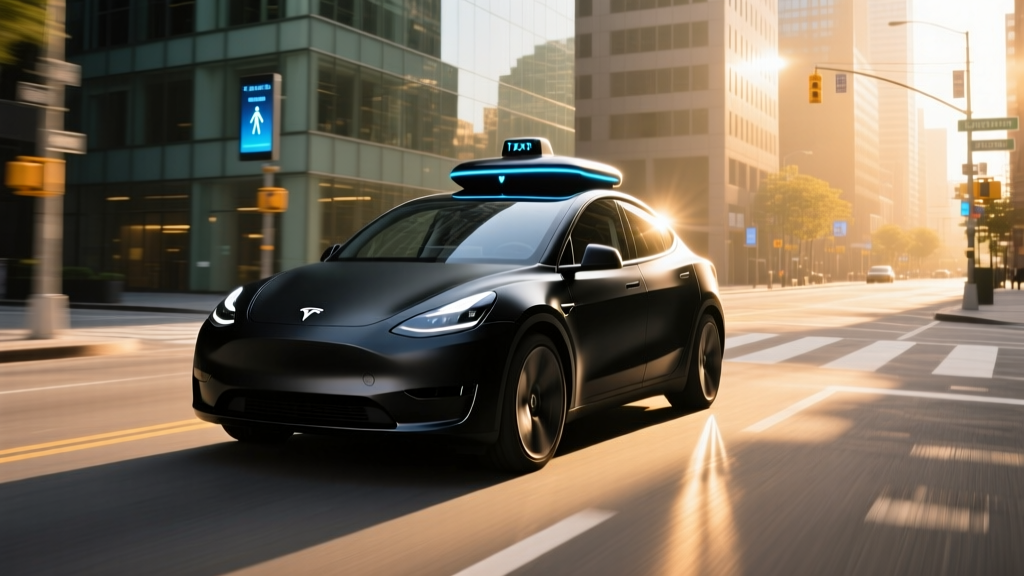
Tesla's Full Self-Driving (Supervised) software has reached version 12.6.4, continuing the brand's shift toward an end-to-end neural network architecture that replaces hand-coded rules with learned driving behavior. If you've been tracking FSD's evolution, v12.6.4 represents a refinement of the vision-only approach Tesla committed to in 2024 — no radar, no ultrasonic sensors, just eight cameras feeding a single unified neural net that handles perception, planning, and control simultaneously.
But let's be precise about what this means for you as a driver. FSD 12.6.4 is a Level 2 driver-assistance system under the SAE International classification. You must remain attentive, keep your hands on or near the steering wheel, and be prepared to intervene at any moment. Tesla's own documentation and the NHTSA's guidance on automated driving make this clear: the driver is responsible for the vehicle at all times.
FSD 12.6.4 (Supervised) is classified as SAE Level 2. The system can manage steering, acceleration, and braking under certain conditions, but the human driver must continuously supervise and is legally responsible for all driving decisions. This is fundamentally different from Level 4 robotaxis like Waymo, which operate without a human driver in geofenced areas. No production Tesla vehicle is self-driving.
How FSD 12.6.4 Works: End-to-End Neural Net Architecture
Prior to the v12 branch, Tesla's Autopilot and FSD stack relied on a hybrid approach: neural networks handled perception (identifying lanes, vehicles, pedestrians), but much of the driving logic — when to change lanes, how to handle a four-way stop, when to yield — was governed by hand-written C++ rules. Version 12.x replaced most of that rule-based stack with neural networks trained on millions of miles of real-world driving video.
By v12.6.4, the system processes input from Tesla's Hardware 4 (HW4) camera suite:
- Front-facing main camera — primary forward vision, ~120° field of view
- Front-facing narrow camera — long-range detection up to ~250 meters
- Front fender cameras (×2) — side-forward coverage for merges and intersections
- Rear-view camera — backup and rear traffic awareness
- Rear fender cameras (×2) — blind-spot and rear-side coverage
- Cabin camera — driver monitoring (attention tracking)
The cabin camera is critical: FSD 12.6.4 uses it to verify that your eyes are directed toward the road. If the system detects prolonged inattention, it issues escalating warnings and will eventually disengage, requiring you to pull over before re-enabling Autosteer for the remainder of the trip.
| Feature | What It Does | Driver Required? |
|---|---|---|
| Navigate on Autopilot | Highway on/off-ramp navigation, lane changes to follow route | Yes — confirm lane changes, monitor traffic |
| Auto Lane Change | Initiates and executes lane changes on surface streets and highways | Yes — can be overridden by steering input |
| Traffic Light & Stop Sign Control | Detects and responds to traffic signals and stop signs | Yes — must confirm proceed on green in some scenarios |
| Autosteer on City Streets | Handles turns, roundabouts, unprotected lefts, pedestrian yielding | Yes — full supervision required at all times |
| Smart Summon | Navigates parking lots to come to you (low speed, ~15 mph max) | Yes — phone must be actively monitored |
| Autopark | Parallel and perpendicular parking with minimal input | Yes — monitor surroundings |
Real-World Performance: Where v12.6.4 Shines and Struggles
In extended real-world testing across suburban, highway, and urban environments, FSD 12.6.4 shows marked improvement over the v11.x era. The end-to-end neural net produces smoother steering inputs, more natural gap selection in traffic, and fewer phantom braking events — a persistent complaint with earlier versions. Highway driving remains the system's strongest suit: lane centering is precise, merge decisions are generally well-timed, and the system handles moderate-density traffic with minimal intervention.
City street performance has improved substantially. Unprotected left turns, which once required near-constant driver takeover, are handled with more confidence. The system better interprets four-way stop etiquette, yielding appropriately and proceeding when clear. Roundabout navigation, a notorious edge case, is functional but occasionally hesitant — expect to apply light throttle input if the system pauses too long.
- Heavy rain and fog: Vision-only systems degrade in low-visibility conditions. The system may disengage Autosteer and revert to basic cruise control without warning.
- Faded or missing lane markings: Construction zones, rural roads, and recently repaved surfaces without fresh striping can confuse the system's lateral positioning.
- Complex construction zones: Temporary barriers, shifted lanes, and flaggers require full driver takeover. The system does not reliably interpret hand signals or temporary signage.
- Sun glare and camera washout: Direct low-angle sunlight can saturate forward cameras, causing momentary loss of lane and object detection.
- Unusual road geometries: Five-way intersections, offset junctions, and non-standard traffic patterns may produce erratic or overly cautious behavior.
- Emergency vehicles: While improved, the system does not consistently yield to approaching emergency vehicles with lights/sirens. You must take over.
Cold-weather operation presents an additional variable. Camera lenses can accumulate ice or road spray in winter conditions, and Tesla's camera heaters (standard on HW4 vehicles) mitigate but don't eliminate this issue. In temperatures below 20°F, expect more frequent disengagements and be prepared for reduced system availability.
Which Tesla Models Include FSD and What It Costs in 2026
FSD (Supervised) is available across the entire current Tesla lineup, but it is never standard equipment. Every new Tesla ships with Basic Autopilot (adaptive cruise control + lane centering on marked highways) at no extra cost. Enhanced Autopilot (adds Navigate on Autopilot, Auto Lane Change, Autopark, and Summon) and Full Self-Driving (Supervised) (adds city street Autosteer, Traffic Light & Stop Sign Control) are optional upgrades.
| Tier | One-Time Purchase | Monthly Subscription | Features Included |
|---|---|---|---|
| Basic Autopilot | Included (standard) | N/A | Traffic-Aware Cruise Control, Autosteer (highway) |
| Enhanced Autopilot | $6,000 | Not available | + Navigate on Autopilot, Auto Lane Change, Autopark, Summon |
| Full Self-Driving (Supervised) | $8,000 | $99/month | + City Street Autosteer, Traffic Light & Stop Sign Control |
The $99/month subscription model makes sense for drivers who want to test FSD before committing to the $8,000 one-time purchase, or who only need the feature for specific trips. Note that FSD purchases are tied to the vehicle, not the owner — if you sell the car, FSD transfers with it (which has implications for resale value). Subscription access does not transfer.
As of 2026, FSD (Supervised) is compatible with all Tesla vehicles equipped with Hardware 3 (HW3) or Hardware 4 (HW4). However, Tesla has confirmed that HW4 vehicles receive priority for the latest neural network optimizations. If you're purchasing a used Tesla with HW3, verify the current software compatibility before paying for the FSD upgrade.
| System | SAE Level | City Streets | Hands-Off Allowed | Cost |
|---|---|---|---|---|
| Tesla FSD (Supervised) | Level 2 | Yes (nationwide) | No — eyes-on required | $8,000 or $99/mo |
| GM Super Cruise | Level 2 | No — mapped highways only | Yes (eyes-on monitored) | $2,200 + $25/mo after trial |
| Ford BlueCruise | Level 2 | No — mapped highways only | Yes (eyes-on monitored) | $2,100 or $75/mo |
| Mercedes Drive Pilot | Level 3 (limited) | No — specific highways, <40 mph | Yes (eyes-off in approved zones) | $2,500/year subscription |
| Waymo (Robotaxi) | Level 4 | Yes (geofenced metro areas) | N/A — no driver | Per-ride pricing (not for purchase) |
Tesla's primary advantage is geographic coverage: FSD operates on virtually any public road in the United States and Canada, while Super Cruise and BlueCruise are restricted to pre-mapped divided highways (~400,000+ miles for Super Cruise, ~130,000+ miles for BlueCruise). The trade-off is that GM and Ford's systems allow true hands-off driving (with eye monitoring) on their approved roads, whereas Tesla requires hands-on engagement at all times.
Safety Record and Regulatory Context
Tesla publishes quarterly Vehicle Safety Reports claiming that vehicles driving with Autopilot engaged record fewer crashes per million miles than the US average. However, these statistics require careful interpretation: Autopilot is predominantly used on highways, which are statistically safer than surface streets, and the comparison does not fully control for driver demographics, vehicle age, or mileage distribution.
The NHTSA has issued multiple standing general orders requiring Tesla and other manufacturers to report crashes involving Level 2 and above automated systems. As of 2026, NHTSA has opened several investigations into Tesla's Autopilot/FSD behavior in specific scenarios, including emergency vehicle interactions and the system's operational design domain boundaries. Tesla has issued recalls (delivered via over-the-air software updates) to address some of these concerns.
The Insurance Institute for Highway Safety (IIHS) has consistently rated partial automation systems — including Tesla's — as providing no proven safety benefit over conventional adaptive cruise control, and has raised concerns about driver overreliance. IIHS testing shows that drivers using Level 2 systems tend to disengage from the driving task more than is safe, even with monitoring systems in place.
Is FSD 12.6.4 Worth It? A Decision Framework
- You frequently drive on complex surface streets and want reduced cognitive load (while staying engaged)
- You're a Tesla owner who values OTA feature improvements and wants access to the latest driving capabilities
- You drive a HW4-equipped vehicle and primarily operate in regions with well-marked roads and moderate weather
- The $99/month subscription fits your budget and you want flexibility to cancel
- You primarily drive on highways where Basic Autopilot (included) already handles cruise control and lane centering
- You live in an area with frequent heavy snow, fog, or poorly marked rural roads
- You expect a self-driving experience — this system requires constant supervision
- The $8,000 purchase price or ongoing subscription doesn't fit your ownership economics
Frequently Asked Questions
Is Tesla FSD 12.6.4 actually self-driving?
No. FSD (Supervised) is an SAE Level 2 driver-assistance system. Despite the "Full Self-Driving" name, Tesla's own documentation and regulatory filings make clear that the driver must remain fully engaged and is responsible for all driving decisions. The "Supervised" qualifier in the product name reflects this legal and technical reality. True self-driving (Level 4) is currently only available through robotaxi services like Waymo in select geofenced metro areas.
Does FSD 12.6.4 work in winter and bad weather?
Performance degrades in rain, snow, and fog because the system relies entirely on cameras. Heavy precipitation can obscure lenses, and the system will disengage Autosteer if visibility drops below its operational threshold. In light rain, FSD generally functions normally. In heavy snow or freezing rain, expect frequent disengagements and be prepared to drive manually. Tesla's camera heaters on HW4 vehicles help with ice and condensation but cannot fully compensate for heavy accumulation.
Can I subscribe to FSD monthly instead of paying $8,000?
Yes. Tesla offers FSD (Supervised) at $99/month with no long-term commitment. You can activate or cancel the subscription through your Tesla account. The subscription is tied to your Tesla account and vehicle — it does not transfer if you sell the car. The one-time $8,000 purchase is tied to the vehicle and transfers with it upon sale.
Does FSD work on any road?
FSD (Supervised) can technically be activated on any public road in the US and Canada — this is its primary advantage over GM Super Cruise and Ford BlueCruise, which are limited to pre-mapped highways. However, performance varies dramatically. Well-marked suburban and urban streets with clear lane markings yield the best results. Rural roads, construction zones, parking garages, and roads with degraded or absent markings will require frequent driver intervention.
What hardware do I need for FSD 12.6.4?
FSD 12.6.4 requires Tesla Hardware 3 (HW3/Autopilot Hardware 3.0) or Hardware 4 (HW4). All Tesla vehicles produced since approximately April 2019 include HW3 or later. HW4 vehicles (2023+ Model S/X, 2024+ Model 3/Y refresh) receive optimized neural network processing and higher-resolution camera feeds. If you own an older HW3 vehicle, FSD will still function, but you may not receive all performance optimizations available to HW4 owners.
How does FSD 12.6.4 compare to GM Super Cruise or Ford BlueCruise?
FSD offers broader geographic coverage (any road vs. mapped highways only) but requires hands-on engagement at all times. Super Cruise and BlueCruise allow hands-off driving on approved highways with eye-monitoring cameras, making them more relaxing for long highway trips. FSD handles city streets, turns, and intersections — something neither Super Cruise nor BlueCruise attempts. Your choice depends on whether you value geographic versatility (Tesla) or hands-off highway comfort (GM/Ford).