What the Tesla Free FSD Trial Actually Gives You
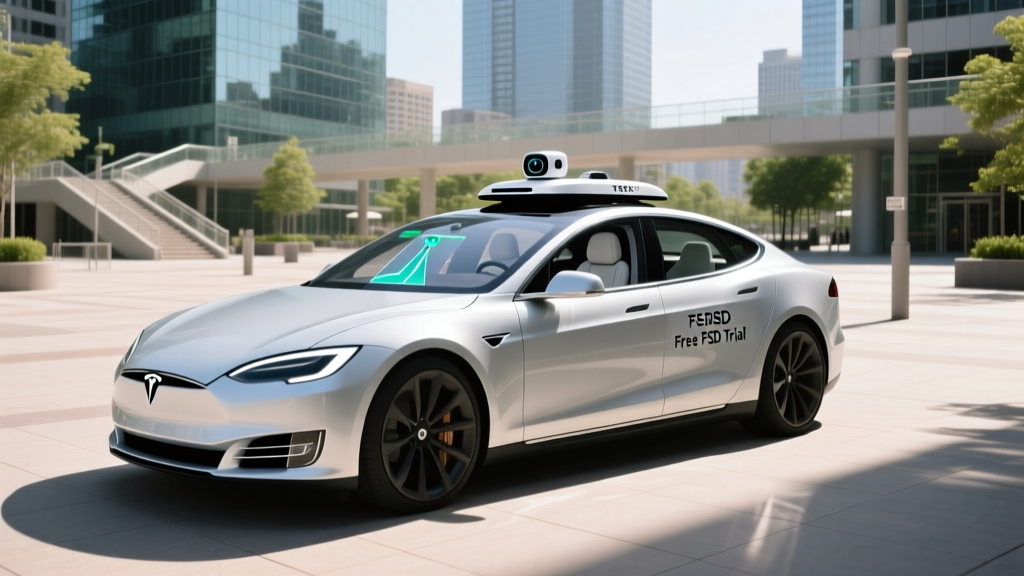
Tesla periodically offers new vehicle buyers and existing owners a limited-time trial of Full Self-Driving (FSD) Supervised — the company's most advanced driver-assistance package. As of early 2026, Tesla has run trial promotions ranging from 30 days to 90 days, typically activated at delivery or via an over-the-air software update for existing owners who haven't previously purchased or subscribed to FSD.
During the trial period, you get access to the full FSD (Supervised) feature set, which goes well beyond the standard Autopilot that comes included with every new Tesla. Here's what unlocks:
| Feature | Standard Autopilot (Included) | FSD Supervised (Trial/Paid) |
|---|---|---|
| Traffic-Aware Cruise Control | ✅ | ✅ |
| Autosteer (lane centering on highways) | ✅ | ✅ |
| Navigate on Autopilot (highway interchanges) | ❌ | ✅ |
| Auto Lane Change | ❌ | ✅ |
| Autopark (parallel & perpendicular) | ❌ | ✅ |
| Smart Summon | ❌ | ✅ |
| Traffic Light & Stop Sign Control | ❌ | ✅ |
| City Street Autosteer | ❌ | ✅ |
The headline capability is City Street Autosteer, which allows the system to navigate intersections, make turns, and respond to traffic signals on surface streets — not just divided highways. This is the feature that separates FSD from basic lane-keeping systems offered by competitors.
How FSD Works: Cameras, Neural Networks, and No LiDar
Tesla's FSD system relies entirely on a camera-only vision architecture, which the company calls "Tesla Vision." Current Tesla vehicles (Model 3, Model Y, Model S, Model X, and Cybertruck) are equipped with a suite of external cameras — typically eight cameras providing 360-degree coverage with ranges up to 250 meters for the forward-facing narrow camera.
Unlike competitors such as Waymo's Level 4 robotaxis (which use LiDAR, radar, and cameras), Tesla removed ultrasonic sensors and radar from its production vehicles starting in 2022-2023, betting entirely on neural-network-based image processing. The onboard Hardware 4 (HW4) computer, standard on vehicles built since early 2023, processes camera data through custom-designed inference chips capable of roughly 300+ trillion operations per second.
The system builds a real-time 3D representation of the environment from 2D camera feeds, identifying lane markings, vehicles, pedestrians, traffic signals, road edges, and obstacles. All processing happens locally on the vehicle — no cloud connection is required for driving decisions.
Tesla FSD (Supervised) is classified as SAE Level 2 driver assistance — not Level 4 or Level 5 autonomy. This means the driver must remain fully attentive, keep hands on or near the steering wheel, and be prepared to take over at any moment. The "Supervised" in the product name is intentional: Tesla explicitly states that the system does not make the vehicle autonomous. According to NHTSA guidelines, the human driver remains responsible for safe operation at all times.
Real-World Capabilities: Where FSD Excels and Where It Struggles
After extensive real-world use across thousands of miles in diverse conditions, FSD (Supervised) in its 2026 software iterations shows clear strengths and persistent weaknesses.
Where It Performs Well
- Highway driving: Lane changes, merging, and interchange navigation are generally smooth and predictable. Navigate on Autopilot handles multi-lane freeway interchanges competently in clear conditions.
- Suburban arterial roads: Well-marked roads with clear lane lines, moderate traffic, and standard intersections are handled with increasing confidence.
- Traffic light and stop sign recognition: The system reliably identifies signals and executes stops, though it occasionally hesitates at complex multi-phase intersections.
- Parking: Autopark handles standard perpendicular and parallel spots adequately, though tight spaces may require manual intervention.
Persistent Limitations
- Construction zones: Shifted lane markings, temporary barriers, and cone patterns frequently confuse the system. Expect to take over.
- Heavy rain, fog, or snow: Camera-only vision degrades significantly in low-visibility weather. The system may disengage or behave unpredictably.
- Unprotected left turns: Complex intersections with oncoming traffic and no dedicated signal remain a weakness — the car may hesitate too long or misjudge gaps.
- Faded or missing lane markings: Rural roads and older urban streets with worn paint can cause the system to drift or disengage.
- Roundabouts: Multi-lane roundabouts with non-standard geometry are handled inconsistently.
- Emergency vehicles: While Tesla has improved detection, parked or moving emergency vehicles with flashing lights have been involved in NHTSA-documented incidents requiring driver takeover.
In cold-weather and winter driving conditions, camera lenses can accumulate ice or road grime, further limiting capability. Unlike LiDAR-based systems, there is no redundant sensing modality to compensate when cameras are compromised.
Tesla Free FSD Trial Eligibility: Which Models and Trims Qualify
Tesla's trial promotions are not permanently available — they are offered at Tesla's discretion, often tied to end-of-quarter delivery pushes or new software version rollouts. Here is the current landscape for 2026:
| Model | Hardware Required | Standard Autopilot | FSD Trial Eligibility |
|---|---|---|---|
| Model 3 (Highland/Ridge) | HW4 | Included | Eligible when promotion active |
| Model Y (Juniper) | HW4 | Included | Eligible when promotion active |
| Model S (2024+) | HW4 | Included | Eligible when promotion active |
| Model X (2024+) | HW4 | Included | Eligible when promotion active |
| Cybertruck | HW4 | Included | Eligible when promotion active |
Important caveat: Vehicles with older Hardware 3 (HW3) computers — typically those built before April 2023 — may have limited FSD capability or may not receive the latest FSD software builds. Tesla has indicated that HW3 vehicles will eventually be upgraded, but timelines remain unclear. If you're buying used, confirm the hardware revision before expecting full FSD functionality.
FSD Pricing After the Trial: Subscription vs. One-Time Purchase
Once the free trial expires, you have two paths to keep FSD (Supervised) active. Tesla's pricing has shifted multiple times, so here are the figures as of early 2026:
| Option | Cost | Notes |
|---|---|---|
| Monthly Subscription | $99/month | Cancel anytime; no long-term commitment |
| One-Time Purchase | $8,000 | Transfers with vehicle to new owner (non-transferable between cars) |
Breakeven math: At $99/month, the subscription equals the $8,000 purchase price in roughly 81 months (6.75 years). If you plan to keep the vehicle longer than that and use FSD regularly, purchasing makes financial sense. If you're unsure whether FSD fits your driving patterns, the subscription is the lower-risk option — and the trial is the ideal way to test it first.
Standard Autopilot (Traffic-Aware Cruise Control and basic Autosteer) remains included at no additional cost on every new Tesla and does not require a subscription.
How Tesla FSD Compares to Competing Level 2 Systems
FSD (Supervised) competes with other premium Level 2 driver-assistance systems. None of these are self-driving — all require active driver supervision — but their approaches and coverage areas differ significantly.
| System | Brand | Hands-Free? | Where It Works | Cost |
|---|---|---|---|---|
| FSD (Supervised) | Tesla | No (hands-on monitoring) | Highways + city streets (most roads) | $99/mo or $8,000 |
| Super Cruise | GM (Cadillac/Chevy) | Yes (on mapped highways) | ~750,000+ mi of pre-mapped divided highways | Included on select trims; $2,500-$2,800 option |
| BlueCruise | Ford/Lincoln | Yes (on mapped highways) | ~130,000+ mi of pre-mapped divided highways | $2,100 one-time or included; $75/yr renewal after initial period |
| ProPILOT Assist 2.0 | Nissan | Yes (on mapped highways) | Pre-mapped highways | Included on select trims |
| Toyota Safety Sense 3.0 | Toyota | No | Highways (lane centering + ACC) | Standard on most models |
The key trade-off: Tesla FSD offers the broadest geographic coverage (it doesn't require pre-mapped roads), but it does not allow true hands-off driving. GM's Super Cruise and Ford's BlueCruise permit hands-free operation on specific mapped highways, with driver-monitoring cameras ensuring your eyes stay on the road — but they disengage outside those zones. According to IIHS research, systems with robust driver-monitoring tend to reduce driver complacency, a known risk factor with all Level 2 technology.
Should You Activate the Free FSD Trial? A Decision Framework
- You commute on highways or well-marked suburban roads and want to evaluate whether FSD reduces fatigue.
- You're considering the $8,000 purchase or $99/month subscription and want real-world data before committing.
- You drive a Tesla with HW4 and want access to Navigate on Autopilot and Smart Summon.
- You primarily drive in heavy snow, rain, or on poorly marked rural roads where camera-based systems struggle.
- You find the system's interventions and disengagements more stressful than driving manually.
- You expected "self-driving" and are uncomfortable with the constant supervision requirement.
During the trial, pay attention to disengagement frequency — how often you need to take over. Track it over your typical routes. If you're intervening every few minutes on your commute, the subscription may not deliver enough value at $99/month. If the system handles 85%+ of your highway miles smoothly, it may be worth keeping.
Frequently Asked Questions
Is Tesla FSD actually self-driving?
No. Tesla FSD (Supervised) is an SAE Level 2 driver-assistance system. The driver must remain attentive, keep hands on the steering wheel (or apply sufficient torque to demonstrate engagement), and be prepared to take over immediately. Tesla's own documentation and the product name emphasize that the system requires supervision. Only Level 4 services like Waymo operate without a human driver, and those are geofenced to specific cities.
How long does the Tesla free FSD trial last?
Trial durations vary by promotion. Recent Tesla promotions have offered 30-day, 60-day, or 90-day trials. The specific duration is determined at the time of the offer and is typically communicated via the Tesla app or at delivery. There is no permanent, always-available free trial.
Can I get the FSD trial on a used Tesla?
Tesla's trial promotions typically target new vehicle deliveries or existing owners who have never purchased or subscribed to FSD. Used Teslas that already had FSD purchased by a previous owner may retain the feature, but Tesla has changed its FSD transfer policies over time. Check the vehicle's software menu or contact Tesla support to confirm.
Does FSD work in bad weather?
Performance degrades in heavy rain, fog, snow, and any condition that obscures camera lenses. Unlike radar or LiDAR-based systems, Tesla Vision has no redundant sensor to compensate when cameras cannot see clearly. Expect more frequent disengagements and be prepared to drive manually in adverse conditions.
Will FSD improve over time with software updates?
Tesla regularly pushes over-the-air updates that refine FSD behavior. However, improvements are incremental, and the fundamental architecture (camera-only, Level 2 supervision required) remains unchanged. Tesla has a history of projecting future capability timelines that have not materialized on schedule — evaluate the system based on what it does today, not what is promised.
Does the FSD subscription or purchase affect my vehicle's resale value?
A one-time FSD purchase is tied to the vehicle and may increase resale appeal, though the premium buyers will pay for used FSD is typically less than the $8,000 original cost. Subscriptions do not transfer and end when you cancel. Market data on FSD's impact on used Tesla pricing varies by model and year.