Understanding the Tesla Collision in Salt Lake City
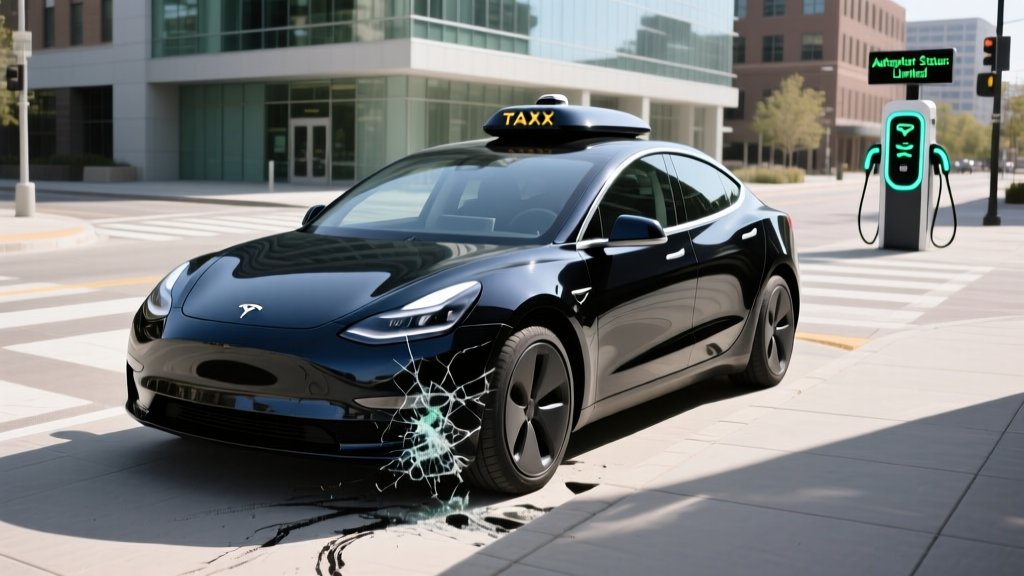
In early 2026, a Tesla Model S operating with Autopilot engaged was involved in a collision in Salt Lake City, Utah. The incident reignited public debate about the capabilities and limitations of Tesla's driver-assistance systems. While the National Highway Traffic Safety Administration (NHTSA) continues its investigation into the specifics, the crash underscores a critical reality: Tesla's Autopilot and Full Self-Driving (FSD) Supervised are Level 2 driver-assistance systems that require continuous driver engagement, not autonomous driving platforms.
This article examines the technical architecture behind Tesla's ADAS suite, dissects real-world limitations that may have contributed to the Salt Lake City collision, and provides actionable context for Tesla owners and prospective buyers navigating the gap between marketing language and system capability.
How Tesla Autopilot and FSD Actually Work
Tesla's driver-assistance ecosystem relies on a vision-only sensor suite. Since 2022, Tesla has removed radar and ultrasonic sensors from its vehicles, transitioning to Tesla Vision — an 8-camera array providing 360-degree visibility up to 250 meters. The system uses neural networks to process visual data in real-time, identifying lane markings, vehicles, pedestrians, and obstacles.
Both Tesla Autopilot and FSD Supervised are classified as SAE Level 2 systems. This means the vehicle can control steering, acceleration, and braking under certain conditions, but the driver must remain fully attentive, keep hands on the steering wheel, and be prepared to take over immediately. Only Level 4 systems (like Waymo robotaxis operating in Phoenix and San Francisco) qualify as truly driverless.
| Feature | Autopilot (Standard) | FSD Supervised |
|---|---|---|
| Traffic-Aware Cruise Control | ✓ | ✓ |
| Autosteer (lane centering) | ✓ (highways only) | ✓ (all roads) |
| Auto Lane Change | ✗ | ✓ |
| Navigate on Autopilot | ✗ | ✓ |
| Traffic Light & Stop Sign Control | ✗ | ✓ |
| Automatic City Street Steering | ✗ | ✓ |
| SAE Level | Level 2 | Level 2 |
Autopilot comes standard on all new Tesla vehicles and includes Traffic-Aware Cruise Control and Autosteer, primarily designed for highway use. FSD Supervised extends these capabilities to city streets, adding automatic lane changes, traffic light recognition, and navigation-based routing. As of 2026, FSD is available as a one-time purchase ($8,000) or monthly subscription ($99/month) and can be added to any Tesla model.
Real-World Limitations: Where the System Struggles
- Weather Degradation: Heavy rain, snow, fog, and direct sun glare can obscure camera visibility, causing the system to disengage or misread obstacles.
- Lane Marking Reliance: Autosteer requires clearly visible lane markings. Faded, missing, or construction-zone markings can cause erratic steering behavior.
- Stationary Object Detection: Vision-only systems historically struggle with detecting stationary vehicles or obstacles at highway speeds, particularly in low-contrast lighting.
- Edge Cases: Unusual road geometries, temporary traffic controls, and non-standard intersections can exceed the neural network's training data.
- Phantom Braking: The system may brake unexpectedly for shadows, overpasses, or roadside objects it misidentifies as obstacles.
The Salt Lake City collision occurred on a multi-lane urban arterial with moderate traffic. While official NHTSA findings are pending, early reports suggest the vehicle failed to detect a stationary emergency vehicle parked partially in the travel lane. This scenario — a stopped vehicle with emergency lights flashing — has appeared in multiple Tesla ADAS incidents over the past five years, including a 2021 crash in Los Angeles and a 2023 incident in Arizona.
Vision-only systems face particular challenges with stationary objects at speed. Unlike radar-equipped vehicles (such as the Ford Mustang Mach-E with BlueCruise or GM vehicles with Super Cruise), which can directly measure distance and relative velocity, camera-based systems must infer depth from visual cues. When a vehicle is stationary and the background is complex, the neural network may classify it as a roadside object or overhead sign rather than an obstacle in the travel path.
Competing ADAS Systems: How Tesla Compares
| System | Manufacturer | Sensor Suite | Hands-Free? | Cost |
|---|---|---|---|---|
| Autopilot / FSD Supervised | Tesla | 8 cameras (vision-only) | No (steering wheel monitoring) | $0 / $8,000 or $99/mo |
| BlueCruise | Ford | Cameras + radar + driver monitoring | Yes (approved highways) | $2,100 or $75/mo |
| Super Cruise | GM (Cadillac/Chevy) | Cameras + radar + LiDAR map + driver monitoring | Yes (mapped highways) | $2,500 or included on select trims |
| ProPILOT Assist 2.0 | Nissan | Cameras + radar | Yes (approved highways) | Included on SL/Platinum trims |
The key differentiator is sensor redundancy. Ford's BlueCruise and GM's Super Cruise both combine cameras with radar, providing direct distance measurement to stationary objects. Super Cruise adds LiDAR-mapped highway data, preloading 3D road geometry for over 400,000 miles of divided highways in the U.S. and Canada. Tesla's vision-only approach offers broader geographic coverage (FSD works on unmapped city streets) but sacrifices the sensor redundancy that helps detect edge cases.
All these systems remain Level 2. Even when branded as "hands-free," they require driver attention via camera-based eye monitoring (Ford, GM) or steering wheel torque detection (Tesla). The driver is legally responsible for vehicle operation at all times.
Cost and Availability Across Tesla's 2026 Lineup
| Feature | Purchase Price | Subscription | Availability |
|---|---|---|---|
| Basic Autopilot | Included | N/A | All Tesla vehicles (standard) |
| Enhanced Autopilot | $6,000 | N/A | All models (discontinued in some markets) |
| FSD Supervised | $8,000 | $99/month | All models (Model S, 3, X, Y, Cybertruck) |
As of 2026, Tesla has streamlined its ADAS offerings. Basic Autopilot remains standard on every new Tesla, providing highway lane-keeping and adaptive cruise control. FSD Supervised is available across the entire lineup — Model S ($74,990 base), Model 3 ($38,990 base), Model X ($79,990 base), Model Y ($44,990 base), and Cybertruck ($60,990 base). The $8,000 one-time purchase or $99 monthly subscription applies uniformly regardless of vehicle model.
Tesla discontinued Enhanced Autopilot in the U.S. market in late 2024, consolidating the mid-tier features (auto lane change, Navigate on Autopilot, Smart Summon) into the FSD Supervised package. Existing Enhanced Autopilot owners retain their features but cannot upgrade to FSD at a reduced rate.
Safety Data and NHTSA Oversight
Tesla's ADAS systems operate under intense regulatory scrutiny. NHTSA's Standing General Order requires Tesla and other automakers to report crashes involving Level 2+ systems within 24 hours. Between 2021 and 2025, Tesla reported over 1,000 crashes with Autopilot or FSD engaged, though this figure must be contextualized: Tesla's fleet exceeds 5 million vehicles globally, and Autopilot is engaged on approximately 40% of miles driven.
Tesla's own Vehicle Safety Report (Q4 2025) claims one crash per 4.27 million miles driven with Autopilot engaged, compared to the U.S. average of one crash per 670,000 miles. However, this comparison is imperfect — Tesla's data includes minor incidents, while NHTSA's national average encompasses all crash severities and vehicle types.
The Insurance Institute for Highway Safety (IIHS) has not awarded Tesla vehicles its Top Safety Pick+ designation since 2022, citing concerns about the lack of effective driver-monitoring systems. Tesla relies on steering wheel torque detection rather than camera-based eye tracking, which IIHS considers less reliable for ensuring driver engagement.
What Tesla Owners Must Understand
The Salt Lake City collision is a reminder that Tesla's driver-assistance systems are tools, not replacements for attentive driving. Here's what every Tesla owner and prospective buyer should internalize:
- You are the driver. Legally and functionally, you are responsible for the vehicle's operation, even when Autopilot or FSD is engaged. If the system fails to detect an obstacle, you must intervene.
- Supervision is non-negotiable. Keep hands on the wheel, eyes on the road, and be prepared to brake or steer immediately. Do not use your phone, eat, or engage in distracting activities.
- Know the limitations. Avoid using Autopilot in heavy rain, snow, or fog. Disable Autosteer in construction zones or on roads with poor lane markings. Be extra vigilant around stationary vehicles, emergency scenes, and unusual road configurations.
- Monitor system status. If the touchscreen displays "Autopilot Disengaged" or "Take Over Immediately," respond instantly. The system has encountered a scenario it cannot handle.
Frequently Asked Questions
Is Tesla Autopilot or FSD truly self-driving?
No. Both are SAE Level 2 driver-assistance systems that require continuous driver supervision. The vehicle can control steering, acceleration, and braking, but you must remain fully attentive and ready to intervene. Only Level 4 systems (like Waymo robotaxis) operate without a human driver.
Why did Tesla remove radar and ultrasonic sensors?
Tesla CEO Elon Musk has stated that a vision-only approach, powered by advanced neural networks, will ultimately outperform multi-sensor systems. The company argues that cameras provide richer contextual data than radar or LiDAR. However, this approach sacrifices sensor redundancy, which competitors like Ford and GM retain for edge-case detection.
How much does FSD cost in 2026?
FSD Supervised is available as a one-time purchase for $8,000 or a monthly subscription for $99. Basic Autopilot remains standard and free on all new Tesla vehicles.
Can I use Autopilot in bad weather?
Tesla's owner's manual advises against using Autopilot in heavy rain, snow, fog, or icy conditions. Camera visibility degrades significantly in these scenarios, and the system may disengage unexpectedly or fail to detect obstacles.
What should I do if Autopilot fails to detect an obstacle?
Brake or steer immediately. You are legally responsible for vehicle operation at all times. Report the incident to Tesla via the in-car voice command ("Report Bug") and to NHTSA if the incident resulted in a crash or near-miss.
Does Tesla's ADAS work everywhere?
Basic Autopilot works on most highways with clear lane markings. FSD Supervised operates on city streets and highways but performance varies by location. Complex intersections, temporary traffic controls, and unmapped roads may exceed the system's capabilities.
The Tesla collision in Salt Lake City is not an indictment of ADAS technology writ large, but it is a sobering reminder that Level 2 systems have real-world limitations. Tesla's vision-only approach offers impressive geographic coverage and continuous improvement via over-the-air updates, but it does not eliminate the need for driver vigilance. Until Level 4 autonomy becomes widely available, the human behind the wheel remains the most critical safety system in any vehicle.