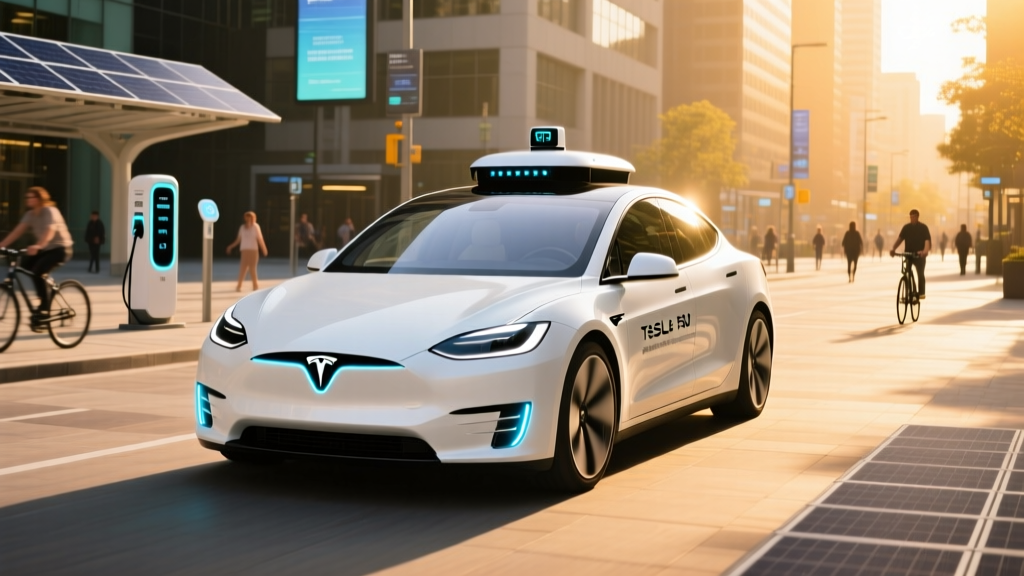
Tesla's camera-based driver-assistance stack makes its vehicles among the most sensor-dense on the road. That same hardware is also a primary reason Tesla collision repair costs routinely exceed those of comparable gas-powered cars after even minor accidents. Understanding what lives behind the glass, bumpers, and quarter panels is essential for any current or prospective Tesla owner budgeting for insurance, out-of-pocket repairs, or total cost of ownership.
What Tesla Vision Actually Is (and What It Costs to Fix)
Since 2022, every Tesla delivered in the U.S. has relied on Tesla Vision — a pure camera-and-neural-network architecture that replaced the earlier radar-equipped hardware suite. As of the 2026 model year, the current Hardware 4 (HW4/AI4) suite includes:
- 8 cameras (front-facing main + wide-angle, left/right repeaters on front fenders, left/right rear-pillar cameras, rear-view camera)
- 12 ultrasonic sensors (reintroduced in late 2024 on select trims after a brief removal)
- No radar (Tesla eliminated radar from U.S.-spec vehicles beginning in 2021-2022)
| Sensor / Component | Location | Estimated Part Cost | Labor + Calibration |
|---|---|---|---|
| Front main camera (narrow) | Behind windshield, top-center | $450–$700 | $250–$400 (includes calibration drive) |
| Front wide-angle camera | Behind windshield, top-center | $350–$550 | Bundled with main camera replacement |
| Fender repeater camera (each) | Front fender, behind wheel well | $200–$350 | $150–$250 |
| Rear pillar camera (each) | B/C-pillar area | $200–$350 | $150–$250 |
| Rear-view camera | Tailgate / trunk lid | $150–$300 | $100–$200 |
| Windshield (camera-equipped) | Full front glass | $600–$1,200 (OEM) | $300–$500 + recalibration |
| Ultrasonic sensor (each) | Front/rear bumper covers | $50–$120 | $75–$150 |
A seemingly minor fender-bender that damages a front bumper cover can easily cascade into $2,000–$4,000 in parts, labor, and calibration once you factor in ultrasonic sensors, the front-facing camera recalibration that follows windshield or body-panel work, and Tesla's requirement for OEM-aligned alignment procedures. A cracked windshield — which on a conventional car might cost $300–$500 to replace — routinely runs $900–$1,700 on a Tesla because the replacement glass must be optically precise for the camera suite, and a post-install calibration drive is mandatory.
Why Tesla Collision Repair Costs Are Higher Than Average
Three structural factors push Tesla repair bills above those of similarly priced vehicles from legacy automakers:
1. Unibody aluminum and high-strength steel construction. Tesla's body structures — particularly the Model S and Model X, which use significant aluminum content — require specialized welding, bonding, and riveting equipment. Many independent body shops lack this tooling, funneling owners toward Tesla-approved collision centers where labor rates run $150–$225/hour in major metro areas (2026 figures).
2. OEM-only parts pipeline. Tesla tightly controls its parts supply chain. Unlike a Toyota or Ford, where aftermarket bumpers, fenders, and glass are widely available at steep discounts, Tesla structural and sensor-adjacent parts are almost exclusively sourced through Tesla directly. Supply-chain delays of 2–6 weeks for body panels are not uncommon, extending rental-car costs and total claim amounts.
3. Mandatory post-repair calibration. Any repair that disturbs a camera's position — even by a fraction of a degree — requires Tesla's proprietary calibration routine. This often involves a test drive of 20–40 minutes under specific conditions (clear lane markings, moderate traffic, dry roads). The calibration itself adds $150–$400 to a repair invoice, and a failed calibration means a repeat visit.
Tesla Autopilot & FSD: What the Sensors Actually Do
Tesla's driver-assistance ecosystem is branded under two tiers, and understanding the distinction matters both for capability expectations and for the hardware at risk in a collision:
| Feature Tier | What It Does | Cost | Models Included |
|---|---|---|---|
| Basic Autopilot | Traffic-Aware Cruise Control + Autosteer (lane-centering on marked highways) | Standard (included) | All Model 3, Model Y, Model S, Model X, Cybertruck |
| Enhanced Autopilot (EAP) | Adds Navigate on Autopilot, Auto Lane Change, Autopark, Summon | $6,000 one-time (where available) | All models; availability varies by region |
| Full Self-Driving (Supervised) | Adds traffic-light/stop-sign control, city-street Autosteer, FSD computer | $8,000 one-time or $99/month subscription | All models with HW4/AI4 hardware |
Every Tesla driver-assistance feature — including FSD (Supervised) — is classified as SAE Level 2. This means the system provides combined steering and acceleration/braking assistance, but the driver must remain fully engaged, keep hands on or near the wheel, and be prepared to take over instantly. Tesla is not a self-driving car. The "Supervised" suffix on FSD is not marketing — it is a legal and functional requirement. Only Level 4 robotaxi services like Waymo operate without a human driver in defined geofenced areas.
How ADAS Hardware Drives Insurance Premiums
Tesla owners consistently report higher-than-average insurance premiums, and ADAS repair cost is a primary driver. According to IIHS and industry actuarial data, collision-coverage premiums for a 2026 Model Y Long Range average $2,400–$3,200/year nationally, compared to $1,600–$2,200 for a comparably priced gas crossover like the Mazda CX-5 or Toyota RAV4.
The logic is straightforward: insurers price collision coverage based on expected claim severity. When a 15-mph parking-lot tap requires $2,500 in sensor replacement and calibration instead of $400 in bumper-cover replacement, premiums adjust upward. Tesla's own insurance product (available in most U.S. states as of 2026) uses real-time driving-behavior data via the Safety Score to modulate monthly premiums, which can benefit low-risk drivers but does not change the underlying repair-cost math.
| Model | Est. Annual Premium (Full Coverage) | Key Repair-Cost Driver |
|---|---|---|
| Model 3 RWD | $2,200–$2,800 | Camera suite, aluminum hood, OEM glass |
| Model Y Long Range | $2,400–$3,200 | Same as Model 3 + larger glass area, hatch complexity |
| Model S Plaid | $3,500–$4,800 | Aluminum-intensive body, high performance rating |
| Cybertruck AWD | $2,800–$3,600 | Stainless-steel exoskeleton (specialized repair), camera array |
Real-World Limitations: What Tesla Vision Cannot Do
Tesla Vision is impressive on well-marked, dry, sunlit highways. Its limitations become apparent — and occasionally costly — in the following conditions, which also happen to be the conditions most correlated with collisions:
- Heavy rain, fog, or snow: Camera-only systems degrade faster than radar-equipped competitors in precipitation. Water droplets, road spray, and snow accumulation on camera lenses can cause Autosteer to disengage with minimal warning. (Radar, which Tesla removed, penetrates precipitation far better.)
- Faded or missing lane markings: Construction zones, rural roads, and recently repaved highways without fresh striping can confuse lane-centering. The system may center on old ghost markings or drift without alerting the driver promptly.
- Sun glare and camera washout: Low-angle sun directly into the front camera can temporarily blind Tesla Vision. This is most common during eastbound morning and westbound evening commutes in winter months.
- Stationary emergency vehicles: While Tesla has improved detection of parked first-responder vehicles via software updates, NHTSA has investigated multiple incidents of Teslas colliding with stationary emergency vehicles while Autopilot was engaged — a known edge case for camera-based systems.
- Phantom braking: Tesla Vision has a documented tendency to brake hard for no apparent obstacle, particularly on highways with overhead signs, bridges, or shadows. This can cause rear-end collisions from following traffic, generating its own category of repair costs.
Tesla vs. Competitor ADAS: Repair-Cost Comparison
| System | Sensors | Windshield Replacement (ADAS-equipped) | Front Bumper Sensor Repair (minor collision) | SAE Level |
|---|---|---|---|---|
| Tesla Autopilot / FSD (Vision) | 8 cameras, 12 ultrasonic | $900–$1,700 | $1,500–$3,500 | Level 2 |
| Ford BlueCruise | Cameras + radar + IR driver monitor | $700–$1,200 | $1,200–$2,800 | Level 2 (hands-free on approved roads) |
| GM Super Cruise | Cameras + LiDAR map + radar + driver cam | $800–$1,400 | $1,500–$3,000 | Level 2 (hands-free on mapped highways) |
| Toyota Safety Sense 3.0 | Camera + front radar | $500–$900 | $800–$1,800 | Level 2 |
| Hyundai/Kia Highway Driving Assist 2 | Cameras + front + rear radars | $550–$950 | $900–$2,200 | Level 2 |
Tesla's camera-only approach trades hardware cost and radar complexity for a heavier reliance on optical sensors — all of which sit behind glass or in body-panel-mounted housings that are vulnerable in collisions. Competitors that retain radar (mounted behind the front bumper or grille emblem) face their own repair costs when radar units are damaged, but radar modules are generally less expensive to replace than camera-calibration-intensive windshield work.
How to Minimize Tesla Collision Repair Costs
If you own or are considering a Tesla, these practical steps can reduce your financial exposure:
- Carry comprehensive and collision coverage. Given the repair-cost profile, driving a Tesla without collision coverage is a significant financial risk. A single moderate claim can exceed $5,000.
- Compare Tesla Insurance against third-party quotes. Tesla's Safety Score-based insurance can save low-risk drivers 15–25% versus traditional carriers, but high-mileage or urban drivers may find better rates elsewhere.
- Use Tesla-approved body shops. While independent shops may quote lower labor rates, improper sensor calibration or non-OEM glass can degrade Autopilot/FSD performance and may void related warranty coverage.
- Address windshield chips immediately. A small chip in the camera zone of the windshield can spread and necessitate a full $1,200+ replacement. Early resin repair costs $75–$150.
- Keep camera lenses clean. Road grime, bug splatter, and ice on camera housings cause Autopilot disengagements and can contribute to the very collisions that generate costly repairs.
Frequently Asked Questions
Why are Tesla collision repair costs so high compared to gas cars?
Three factors: aluminum-intensive body structures requiring specialized tooling, an OEM-controlled parts supply chain with limited aftermarket alternatives, and a camera-based ADAS suite that requires expensive recalibration after any body or glass work. A minor collision that costs $1,500 on a conventional sedan can easily cost $3,500–$6,000 on a Tesla.
Does Tesla's Autopilot or FSD reduce collisions enough to offset higher repair costs?
Tesla publishes safety statistics claiming fewer crashes per million miles with Autopilot engaged versus disengaged. However, these figures are self-reported and not independently verified by NHTSA in the same way IIHS crash-test data is. Autopilot is a capable Level 2 assist system, but it does not eliminate collisions — particularly in edge cases like construction zones, heavy rain, or stationary obstacles. The repair-cost premium remains a real ownership cost regardless of safety claims.
Is Tesla FSD (Supervised) actually self-driving?
No. FSD (Supervised) is an SAE Level 2 driver-assistance system. The driver must remain attentive, keep hands available for steering input, and be prepared to take over at any moment. The system can navigate city streets, stop at lights, and change lanes, but it makes errors and requires human supervision at all times. Calling it "self-driving" is incorrect and dangerous.
How much does it cost to replace a Tesla windshield with ADAS cameras?
Expect $900–$1,700 for an OEM windshield replacement on a Model 3 or Model Y in 2026, including the camera recalibration drive. Model S and Model X windshields can exceed $1,800 due to larger glass area and more complex curvature. Aftermarket glass is available at lower cost but may not meet Tesla's optical-precision requirements for camera calibration.
Does Tesla insurance cover ADAS sensor damage in a collision?
Yes — if you carry collision coverage, sensor replacement and recalibration are covered as part of the repair, subject to your deductible. Tesla's own insurance product and third-party carriers both cover these costs. The higher frequency and severity of sensor-related claims is precisely why Tesla insurance premiums tend to be higher than average.
What happens if I get into an accident while using Autopilot or FSD?
You are the responsible driver. SAE Level 2 systems place full legal liability on the human driver, regardless of whether the assistance system was engaged. Tesla's owner manuals explicitly state that the driver must supervise the system at all times. Insurance claims are processed the same way as any other at-fault or not-at-fault accident, with the same deductible and premium-impact consequences.