Why Tesla Collision Repairs Cost More Than You'd Expect
A minor fender-bender in a conventional car might set you back $1,500 at a body shop. The same impact in a Tesla Model Y or Model 3 can easily balloon to $5,000–$15,000 or more. The reason isn't just the aluminum panels or the battery pack — it's the dense network of ADAS (Advanced Driver-Assistance System) sensors, cameras, and radar units embedded in nearly every exterior surface of the vehicle.
For 2025 and 2026 model-year Teslas, the Autopilot and Full Self-Driving (Supervised) hardware suites include up to eight external cameras, ultrasonic sensors (on earlier builds), and in newer models, high-resolution vision arrays tied directly to the vehicle's neural-network processing stack. When a collision damages even one of these components, you're not just replacing hardware — you're paying for precise recalibration, software re-validation, and certified labor at a Tesla-approved body shop.
This guide breaks down exactly what drives up the cost of repairing a Tesla after collision, how the ADAS hardware factors into every estimate, and what you can do to manage the expense.
Understanding Tesla's ADAS Hardware: What's Mounted Where
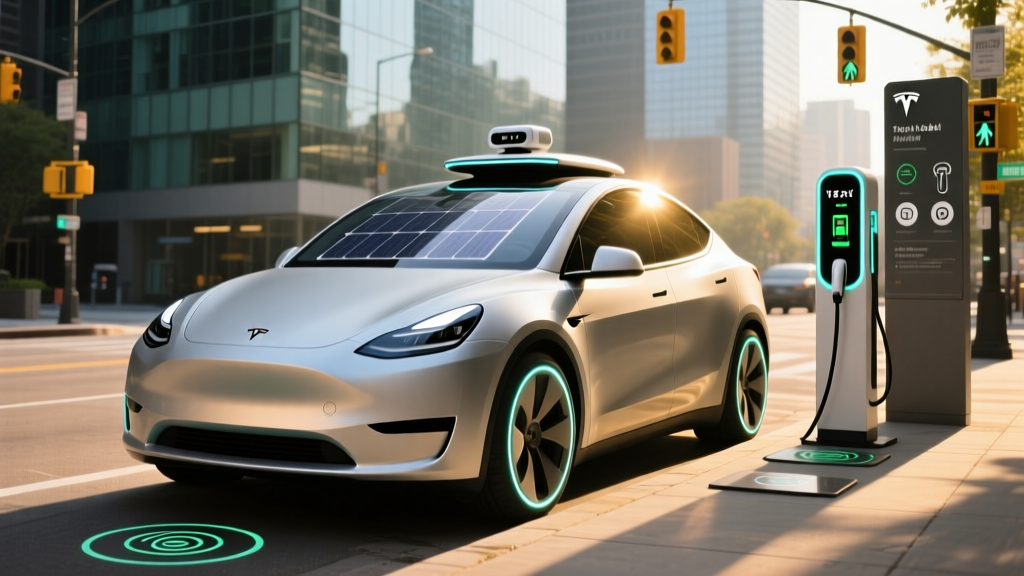
Before you can understand repair costs, you need to know what's actually on the car. Tesla's current vision-based ADAS architecture (often referred to as Tesla Vision) relies entirely on cameras and neural-network processing — no lidar, and since late 2022, no ultrasonic sensors on new production vehicles.
| Sensor / Component | Location | Function | Est. Replacement Cost |
|---|---|---|---|
| Front main camera (narrow) | Behind windshield, top center | Long-range lane/vehicle detection | $400–$800 (glass replacement required) |
| Front wide camera | Behind windshield, top center | Close-range intersection & pedestrian detection | Bundled with main camera module |
| Front fender cameras (×2) | Front fender repeater housings, left & right | Blind-spot and side-lane monitoring | $250–$500 each |
| Rear fender cameras (×2) | Rear quarter-panel area | Cross-traffic, lane-change assist | $250–$500 each |
| Rear-view camera | Rear hatch/tailgate, above license plate | Backing, rear-traffic detection | $200–$450 |
| Cabin camera | Above rearview mirror | Driver monitoring (attention) | $300–$600 |
| HW4 / AI4 computer | Glovebox area (behind panel) | Neural-net processing for all vision data | $1,500–$2,500 (rare in minor collisions) |
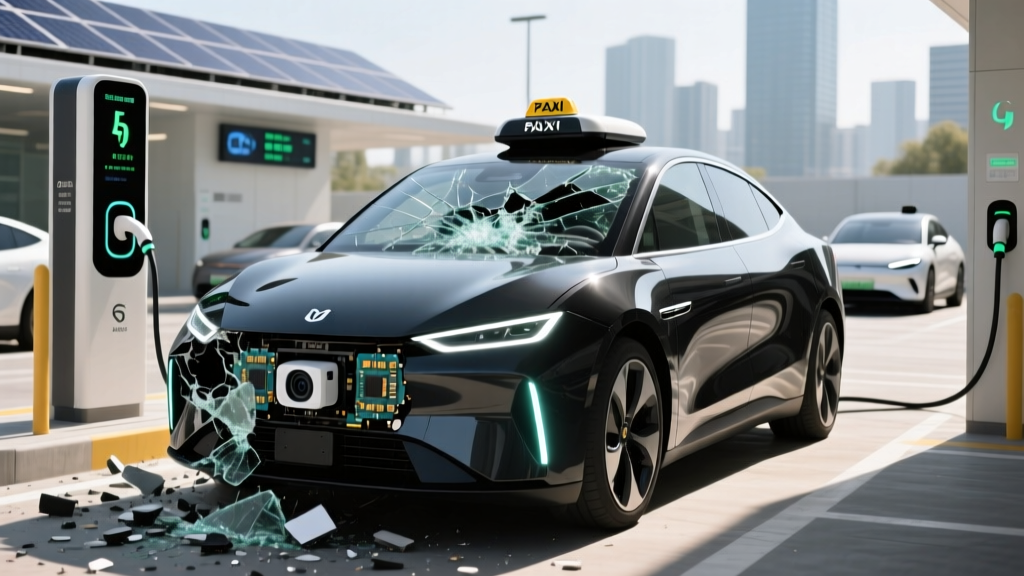
A front-end collision that cracks the windshield, dents a fender, and scrapes the rear quarter panel can simultaneously compromise four or five camera positions. Each one requires replacement, recalibration, and functional testing — and Tesla's body-shop certification requirements mean you often can't take this work to a generic shop.
SAE Automation Level: What Tesla Autopilot and FSD Actually Are
Tesla Autopilot and Full Self-Driving (Supervised) are classified as SAE Level 2 driver-assistance systems. This means the vehicle can manage steering, acceleration, and braking under certain conditions, but the driver must remain fully engaged, monitor the road at all times, and be prepared to take over instantly. Only Waymo and Zoox-style robotaxi services operate at Level 4 (true driverless in defined areas). Tesla's marketing of "Full Self-Driving" has drawn scrutiny from the NHTSA and consumer-safety advocates — the name does not reflect the system's actual capability.
This classification matters for repair context because every sensor on the vehicle is safety-critical. A miscalibrated camera after a repair doesn't just degrade convenience features — it can cause the Autopilot system to misread lane lines, fail to detect vehicles, or make incorrect steering inputs. Tesla and its approved body shops treat post-collision sensor recalibration as non-negotiable.
Tesla's ADAS Feature Names, Trims, and Costs
Tesla structures its driver-assistance features in three tiers. Understanding which tier your vehicle has is essential when reviewing a post-collision repair estimate, because higher-tier vehicles have more complex (and more expensive) calibration requirements.
| Feature Tier | What It Does | Availability | Cost (2026) |
|---|---|---|---|
| Basic Autopilot | Traffic-Aware Cruise Control, Autosteer (lane-centering on marked highways) | Standard on all new Teslas | Included in vehicle price |
| Enhanced Autopilot (EAP) | Adds Navigate on Autopilot, Auto Lane Change, Autopark, Summon | Optional on Model 3/Y/S/X | $6,000 one-time purchase |
| Full Self-Driving (Supervised) | Adds traffic-light/stop-sign recognition, city-street Autosteer, FSD Computer | Optional on all models | $8,000 one-time or $99/month subscription |
When a collision damages camera hardware, the recalibration process is essentially the same regardless of whether you have Basic Autopilot or FSD (Supervised) — the cameras are identical. However, FSD-equipped vehicles undergo more extensive post-repair validation testing because the system relies on every camera feed for city-street navigation. This can add 1–3 hours of labor at Tesla-certified shop rates ($175–$250/hour in most metro areas).
Collision Repair Cost Breakdown: Real Numbers
Based on repair estimates from Tesla-certified body shops, insurance industry data, and owner reports through 2025, here's what the cost of repairing a Tesla after collision typically looks like across common scenarios:
| Scenario | Hardware Damaged | Parts Cost | Labor + Calibration | Total Estimate |
|---|---|---|---|---|
| Rear-end, minor (bumper + hatch) | Rear-view camera, hatch panel, bumper cover | $1,200–$2,500 | $800–$1,500 | $2,000–$4,000 |
| Front-end, moderate (fender + windshield) | Front cameras (behind glass), fender repeater camera, hood, bumper | $3,000–$5,500 | $2,000–$3,500 | $5,000–$9,000 |
| Side-impact, driver side | Rear fender camera, front fender camera, door, quarter panel | $2,500–$4,500 | $1,500–$3,000 | $4,000–$7,500 |
| Multi-point, severe (front + side) | 5+ cameras, windshield, structural panels, possible battery inspection | $6,000–$12,000 | $3,500–$6,000 | $9,500–$18,000+ |
| Windshield replacement only | Front camera module (requires removal/reinstall) | $800–$1,400 | $400–$800 | $1,200–$2,200 |
Why Labor and Calibration Dominate the Bill
In a traditional vehicle, a bumper replacement might be 80% parts and 20% labor. With Teslas, the ratio often flips. Camera recalibration requires:
- Static calibration: The vehicle is positioned in a controlled environment with alignment targets at precise distances. Each camera's field of view is verified against factory specifications.
- Dynamic calibration: A trained technician drives the vehicle on specific road types (marked highways, intersections) while the system re-learns environmental parameters.
- Software validation: Tesla's service software runs a diagnostic pass to confirm all ADAS functions are operating within tolerance.
This process can take 3–6 hours of combined shop and road time. At certified labor rates, calibration alone often costs $700–$1,500.
Limitations and Risks: What to Watch After a Repair
- Aftermarket glass: Non-OEM windshields can distort the front camera's view, causing Autopilot to disengage frequently or misread lanes. Tesla and the IIHS both recommend OEM glass for any vehicle with windshield-mounted ADAS cameras.
- Non-certified body shops: Shops without Tesla certification may lack the proprietary calibration tools and software access required. A poorly calibrated system may appear functional but fail in edge cases (faded lane markings, construction zones, rain).
- Paint and wrap over camera housings: Even a thin layer of paint overspray or vinyl wrap on a camera lens degrades image quality enough to trigger ADAS errors.
- Structural repairs near sensor mounts: If a fender or quarter panel is pulled or reshaped rather than replaced, the camera mounting angle may shift by fractions of a degree — enough to throw off detection at distance.
Real-World ADAS Limitations (Even With Perfect Calibration)
Tesla Vision, like all camera-based Level 2 systems, has inherent limitations that no repair can fix:
- Heavy rain, fog, and snow: Camera lenses obstructed by precipitation reduce system capability. Autopilot may disengage or reduce speed limits automatically.
- Faded or missing lane markings: Construction zones, rural roads, and freshly repaved highways without markings challenge the vision system.
- Direct sun glare: Low-angle sun can saturate front cameras, particularly at dawn and dusk.
- Stationary objects at speed: Vision-based systems historically struggle with detecting stopped vehicles or obstacles at highway speeds — a known limitation documented in multiple NHTSA investigations.
Insurance Implications: Premiums and Totaling Thresholds
The elevated cost of repairing a Tesla after collision directly affects insurance economics. According to industry analyses, Tesla insurance premiums run 20–40% higher than comparable non-EV sedans and crossovers, largely due to repair severity.
Total-Loss Thresholds
Most US states set a total-loss threshold at 70–80% of actual cash value (ACV). Because Tesla repair estimates routinely exceed $8,000–$12,000 for moderate collisions, vehicles with lower ACV (older Model 3 Standard Range, for instance, with an ACV around $22,000–$26,000 in 2026) can be declared total losses from impacts that would be straightforward repairs on a conventional car.
Diminished Value Claims
After any collision repair, a Tesla may lose 10–25% of its resale value due to the vehicle history report entry. Owners in states that allow diminished-value claims against at-fault drivers' insurers should document pre-accident condition thoroughly.
Tesla vs. Competitors: How Do ADAS Repair Costs Compare?
Tesla isn't alone in expensive post-collision sensor repairs, but its vision-only architecture creates a unique cost profile compared to competitors that use radar, lidar, or ultrasonic redundancy.
| Brand / System | Sensors | Front-End Moderate Collision Est. | Key Cost Driver |
|---|---|---|---|
| Tesla (Autopilot/FSD) | 8 cameras, no radar/lidar | $5,000–$9,000 | Windshield camera + calibration labor |
| GM Super Cruise | Cameras + radar + lidar (map-based) | $7,000–$14,000 | Lidar unit ($2,000–$4,000 alone) |
| Ford BlueCruise | Cameras + radar | $4,500–$8,500 | Front radar module + camera calibration |
| Mercedes Drive Pilot (L3) | Cameras + lidar + radar + rear camera | $10,000–$20,000+ | Lidar + multi-sensor recalibration |
| Toyota Safety Sense 3.0 | Camera + front radar | $3,000–$6,000 | Lower parts cost, wider shop network |
Tesla's vision-only approach means fewer exotic hardware components (no lidar to replace), but the proprietary calibration requirements and limited certified body-shop network keep labor costs high. GM's Super Cruise can be even more expensive to repair due to lidar units, while Toyota's more conventional ADAS setup benefits from a massive dealer and shop network that keeps costs lower.
How to Minimize Your Tesla Collision Repair Costs
If you own or are considering a Tesla, these practical steps can reduce the financial impact of a collision:
- Car comprehensive and collision coverage: State-minimum liability won't cover your own Tesla's repair. Given the costs above, collision coverage with a deductible you can afford ($500–$1,000) is essential.
- Use a Tesla-certified body shop: Tesla maintains a network of approved collision centers. Non-certified shops may save on labor rates but risk improper calibration, which can void ADAS warranty coverage.
- Insist on OEM glass: For windshield replacements, OEM (Pilkington or Saint-Gobain for Tesla) glass ensures camera clarity. Aftermarket glass savings of $200–$400 can cause persistent Autopilot disengagement issues.
- Document everything pre-collision: Photos of all camera positions, dashcam footage, and maintenance records support insurance claims and diminished-value arguments.
- Check for software-related ADAS issues separately: Sometimes a post-collision ADAS complaint (phantom braking, lane wander) is a software bug rather than a calibration failure. Check Tesla's release notes and owner forums before authorizing repeat calibration charges.
Frequently Asked Questions
Does a minor bumper scrape require ADAS recalibration on a Tesla?
It depends on which bumper and whether any camera housing was disturbed. A front bumper scrape that doesn't touch the fender cameras or windshield area may not require recalibration. However, any impact near a camera mount — even without visible camera damage — should be inspected. Tesla's service software can run a camera alignment check to determine if recalibration is needed.
Will my insurance cover Tesla ADAS recalibration after a collision?
Yes, if you have collision or comprehensive coverage and the collision caused the damage. ADAS recalibration is a legitimate and necessary repair procedure, and insurers generally cover it when tied to a covered claim. However, you may need to push back if an adjuster questions the labor hours — provide documentation from the Tesla-certified shop explaining the calibration process.
Can I drive my Tesla with a damaged camera before getting it repaired?
You can physically drive the vehicle, but Autopilot and FSD features will likely be disabled or degraded. Tesla's system will display warnings on the touchscreen indicating which cameras are impaired. Basic driving functions (steering, braking, acceleration) are unaffected, but you lose all ADAS capability until the repair is completed and validated.
How long does a Tesla post-collision ADAS repair take?
Parts availability is often the bottleneck. Camera modules and windshield glass may take 1–3 weeks to arrive at the body shop, depending on the model and your region. Once parts are on hand, the physical repair and calibration typically take 2–5 business days. Total turnaround from drop-off to pickup is commonly 3–6 weeks for moderate collisions.
Does Tesla's warranty cover collision-related sensor damage?
No. Tesla's New Vehicle Limited Warranty (4 years / 50,000 miles) and Battery & Drive Unit Warranty (8 years / 100,000–150,000 miles depending on model) cover manufacturing defects, not collision damage. Collision repairs are covered by your insurance or out-of-pocket. However, if a sensor fails due to a defect after a proper certified repair, the repair shop's warranty (typically 12–24 months on workmanship) may apply.
Is Tesla's collision repair cost higher than other EVs?
Compared to EVs from legacy automakers (Hyundai Ioniq 5, Ford Mustang Mach-E, BMW i4), Tesla's repair costs tend to be moderately higher due to the limited body-shop network and proprietary calibration tools. Legacy brands can leverage their existing dealer networks for ADAS calibration, which often reduces labor costs by 15–30%. However, any EV with extensive sensor suites — especially those with lidar — can be equally expensive to repair.