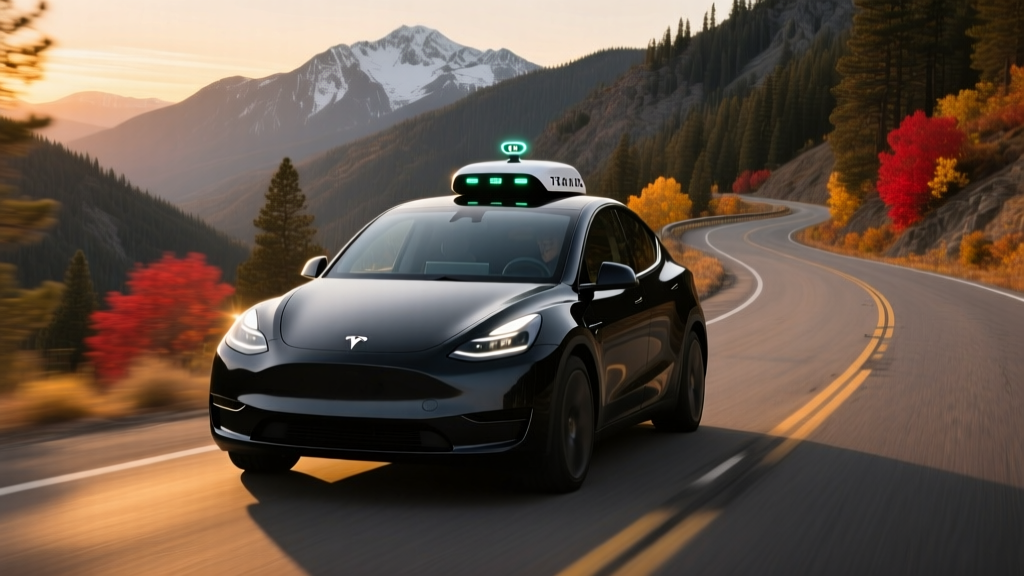
Reno, Nevada sits at 4,505 feet in the Truckee Meadows, flanked by the Sierra Nevada to the west and high desert to the east. For Tesla owners and prospective buyers in the area, that geography creates a specific set of driving challenges: thin air (irrelevant for EV powertrains but not for sensor clarity during inversions), sudden snow squalls crossing I-80 and US-395, two-lane mountain passes toward Lake Tahoe, and sun glare off the desert floor. If you've searched for Tesla collision Reno, you're likely trying to understand whether Tesla's collision avoidance and Autopilot systems actually work in these conditions — not just on a sunny demo loop in Palo Alto.
This guide breaks down exactly what Tesla's active-safety and driver-assist features do, where they fall short in Northern Nevada's real-world environment, and what you'll pay for them in 2026.
What Tesla's Collision Avoidance Actually Does
Tesla's collision-related systems span two tiers: standard active safety (included on every new Tesla) and Autopilot / Full Self-Driving (Supervised), which layers on adaptive cruise and lane-centering. The collision-avoidance stack relies on Tesla's vision-only Tesla Vision architecture — eight external cameras feeding a neural network running on the HW4 (AI4) computer. Radar was removed from vehicles built from mid-2021 onward, and ultrasonic sensors were phased out on most trims by late 2022.
The core collision features included standard on every 2026 Model 3, Model Y, Model S, and Model X are:
- Automatic Emergency Braking (AEB): Detects vehicles, pedestrians, and cyclists ahead and applies brakes if the driver doesn't react.
- Forward Collision Warning (FCW): Audible and visual alert when a frontal collision is imminent.
- Lane Departure Avoidance: Applies corrective steering if you drift over a lane line without signaling.
- Emergency Lane Departure Avoidance: Steers the car back into its lane if departure could cause a side-swipe or run-off-road event.
- Obstacle-Aware Speed Limitation: Reduces acceleration toward detected obstacles at low speeds (parking lots, driveways).
- Rear Cross-Traffic Alert + Automatic Braking: Warns and brakes when reversing into crossing traffic.
| Feature | Detection Target | Action | Operating Speed |
|---|---|---|---|
| AEB | Vehicles, pedestrians, cyclists | Full brake application | ~3–90 mph |
| Forward Collision Warning | Vehicles, pedestrians | Visual + audio alert | ~5–125 mph |
| Lane Departure Avoidance | Lane markings | Corrective steering | ~25–90 mph |
| Emergency Lane Departure | Lane edge + adjacent vehicle | Steering intervention | ~25–90 mph |
| Rear AEB | Vehicles, objects behind | Brake application in reverse | ~2–10 mph |
| Obstacle-Aware Speed Limit | Objects in acceleration path | Throttle reduction | 0–15 mph |
SAE Level 2 — Not Self-Driving, and Here's Why That Matters
Every Tesla driver-assist feature available to consumers in 2026 — including Basic Autopilot, Enhanced Autopilot, and Full Self-Driving (Supervised) — is classified as SAE Level 2 per the SAE J3016 standard. This means the system can control steering and acceleration/braking simultaneously, but the driver must remain fully engaged, monitor the environment at all times, and be prepared to take over instantly. Tesla is not a Level 4 or Level 5 system. The "Full Self-Driving" name is a product label, not an SAE classification.
For Reno drivers, this distinction is not academic. On I-80 through the Virginia Mountains or on Mt. Rose Highway (NV-431) heading toward Incline Village, you'll encounter scenarios that require immediate human intervention: rockfall on shoulders, sudden whiteout conditions, wildlife crossings, and construction zones with reconfigured lane markings. The system cannot be trusted to handle these without active driver supervision.
How Autopilot and FSD Perform in Reno's Real Conditions
Reno's driving environment tests Tesla's vision-based approach in ways that Phoenix or Los Angeles do not. Here's what owners and reviewers consistently report across Northern Nevada conditions:
Interstate Highway Driving (I-80, US-395)
On well-marked interstates with clear lane lines, Basic Autopilot's Traffic-Aware Cruise Control and Autosteer perform reliably. The system maintains following distance, handles gentle curves through the Virginia Range, and responds appropriately to cut-in traffic. This is Tesla's strongest use case, and Reno's highway corridors generally support it well.
Snow, Ice, and Reduced Visibility
This is where Tesla Vision's camera-only approach shows its limits. Snow accumulation on cameras — particularly the front fender and pillar cameras — degrades or disables Autopilot entirely. During Reno's periodic winter storms (November through April), the system will display "Autopilot Degraded" or "Cameras Blocked" warnings and disengage. Heavy snowfall, blowing snow on open stretches of I-80 east toward Fernley, and fog inversions in the Truckee Meadows all reduce the system's effective range.
- Snow or ice on any camera lens disables Autosteer and may limit AEB effectiveness.
- Faded or snow-covered lane markings on two-lane roads (Geiger Grade, parts of US-395 north) cause Autosteer to disengage or wander.
- Low-angle winter sun reflecting off wet pavement or snow can overwhelm camera dynamic range, causing phantom braking events.
- AEB may not detect black ice or reduced-traction surfaces — it responds to obstacles, not road grip.
- System does NOT adjust following distance or speed automatically for snow/ice conditions beyond what the driver sets manually.
Mountain Roads and Two-Lane Passes
On Mt. Rose Highway, Kings Canyon Road, or the drive to Carson City via US-50, Autosteer is technically available but not advisable. These roads have narrow lanes, no shoulders, sharp switchbacks, and inconsistent markings. The system is optimized for divided highways, not alpine passes. AEB still functions, but its detection range around tight curves is reduced compared to straight-line scenarios.
Urban Reno and Midtown Grid
In downtown Reno, the College District, and Midtown, the standard collision features (AEB, FCW) work well for pedestrian and cross-traffic detection. FSD (Supervised) handles stop signs and traffic lights, but Reno's older intersections with non-standard signal timing or partially obscured signs can cause hesitation. Expect to override the system at complex intersections like Virginia Street and 2nd Street during peak pedestrian traffic.
Cost Breakdown: What You'll Pay in 2026
Tesla restructured its driver-assist pricing in late 2024, and the 2026 lineup reflects a tiered approach:
| Package | Features Included | Cost | Availability |
|---|---|---|---|
| Active Safety (Standard) | AEB, FCW, Lane Departure Avoidance, Rear AEB | Included (all trims) | Every new Tesla |
| Basic Autopilot | Traffic-Aware Cruise Control + Autosteer | Included (all trims) | Every new Tesla |
| FSD (Supervised) | All above + Navigate on Autopilot, Auto Lane Change, Autopark, Summon, Traffic Light/Stop Sign Control, FSD city streets | $8,000 one-time OR $99/month | Model 3, Y, S, X (all trims) |
Enhanced Autopilot was discontinued as a standalone tier in the U.S. market as of mid-2025, simplifying the choice to either the included Basic Autopilot or the full FSD (Supervised) package.
Is FSD worth $8,000 or $99/month for Reno driving? Honestly, for most Reno owners, the included Basic Autopilot covers the primary use case — highway commuting on I-80 and US-395. FSD (Supervised) adds value primarily if you frequently drive in mapped urban areas (downtown Reno, Sparks, or trips to Sacramento/San Francisco) and are willing to actively supervise the system. The $99/month subscription is a reasonable way to test it during a road trip month without committing $8,000.
Tesla vs. Competing ADAS Systems: A Reno-Relevant Comparison
If you're cross-shopping Tesla against other EVs with strong driver-assist systems available in the Reno market, here's how the major competitors compare:
| Feature | Tesla (Autopilot / FSD) | GM Super Cruise | Ford BlueCruise | Hyundai/Kia HDA2 |
|---|---|---|---|---|
| SAE Level | Level 2 | Level 2 | Level 2 | Level 2 |
| Hands-Free Highway | No (hands-on wheel required) | Yes (on mapped roads, driver monitored) | Yes (on mapped roads, driver monitored) | No |
| Automatic Lane Change | Yes (FSD) | Yes | Yes | Yes (HDA2) |
| City Street Driving | Yes (FSD — supervised) | No | No | No |
| Sensor Suite | Cameras only (Tesla Vision) | LiDAR + cameras + radar | Cameras + radar | Cameras + radar |
| Snow/Weather Robustness | Limited (camera occlusion) | Stronger (LiDAR redundancy) | Moderate | Moderate |
| Cost | Included / $99/mo FSD | $2,200–$2,500 or subscription | $2,100 or subscription | Included on higher trims |
| Mapped Road Network | Nationwide (no HD map required) | ~750,000+ miles mapped | ~130,000+ miles mapped | Lane-following on marked roads |
For Reno specifically, one notable difference: GM's Super Cruise, which uses LiDAR-mapped highway data plus a driver-monitoring camera, tends to perform more consistently in variable weather on mapped sections of I-80. However, Tesla's advantage is geographic coverage — Autopilot works on any marked road, while Super Cruise and BlueCruise only activate on pre-mapped divided highways. If your commute involves unmapped roads like sections of Pyramid Highway (NV-445) or roads around Stead, Tesla's system will at least attempt to function where the others will not engage.
Safety Data and What the Numbers Show
Tesla publishes quarterly Vehicle Safety Reports claiming that vehicles with Autopilot engaged record fewer crashes per million miles than the national average. However, these reports have methodological limitations that buyers should understand:
- Autopilot is used predominantly on divided highways — the safest road type — creating a selection bias.
- The data does not isolate AEB-only performance from full Autopilot engagement.
- The National Highway Traffic Safety Administration (NHTSA) has opened multiple investigations into Tesla's Autopilot and FSD systems regarding crashes into stationary emergency vehicles and the adequacy of driver-engagement safeguards.
- The Insurance Institute for Highway Safety (IIHS) has rated Tesla's partial-automation systems as less robust in driver-monitoring compared to GM Super Cruise and Ford BlueCruise.
For Reno-area buyers, the practical takeaway: Tesla's standard AEB and FCW are effective, well-tested active-safety features that may prevent or mitigate collisions. Autopilot is a competent highway driver-assist. FSD (Supervised) is a continuously evolving system that still requires your full attention and should not be treated as autonomous.
Practical Tips for Reno Tesla Owners
- Keep cameras clean in winter. A soft cloth and de-icer spray for camera lenses (front fender, B-pillar, rear-view housing) is essential November–April. Snow crusting on the front camera pod will disable Autopilot within minutes of driving.
- Precondition before driving in cold. Beyond battery efficiency, preconditioning warms the camera housings slightly, reducing fogging and ice buildup on lenses.
- Reduce Autopilot following distance in wet/icy conditions. The system does not account for road surface friction — set a longer following distance manually when roads are slick.
- Don't rely on AEB at highway speeds in snow. AEB's braking effectiveness is limited by tire grip. Winter tires (or all-weather tires with the 3PMSF rating) are critical for any active-safety system to function as designed on Sierra-area roads.
- Use FSD (Supervised) monthly subscription to test. Before committing $8,000, subscribe for a month during favorable weather and evaluate whether the city-street features add value on your actual routes.
Frequently Asked Questions
Does Tesla's collision avoidance work in Reno's snow?
Partially. AEB and Forward Collision Warning still function, but heavy snow, ice on camera lenses, and obscured lane markings can degrade or disable Autosteer and limit the system's detection range. Always clear cameras before driving and treat the system as supplemental — not primary — in winter conditions.
Is Tesla Autopilot self-driving?
No. All Tesla consumer driver-assist features are SAE Level 2, which requires continuous driver supervision. You must keep your hands on the steering wheel (or demonstrate engagement via the steering-wheel torque sensor) and monitor the road at all times. Only Level 4 robotaxi services like Waymo operate without a human driver, and those are not available in Reno.
How much does Tesla FSD cost in 2026?
Full Self-Driving (Supervised) costs $8,000 as a one-time purchase or $99 per month as a subscription. Basic Autopilot (Traffic-Aware Cruise Control and Autosteer) and all active-safety features (AEB, FCW, Lane Departure Avoidance) are included standard on every new Tesla at no additional cost.
Which Tesla models sold in Reno include collision avoidance?
Every 2026 Tesla model — Model 3, Model Y, Model S, and Model X — includes the full active-safety suite (AEB, FCW, Lane Departure Avoidance, Rear AEB) and Basic Autopilot standard, across all trim levels. FSD (Supervised) is available as an add-on for all models and trims.
Does Tesla's AEB prevent all collisions?
No. AEB is designed to mitigate or prevent frontal collisions within its operating speed range (~3–90 mph) when the system detects a vehicle, pedestrian, or cyclist. It cannot prevent all collisions, particularly at high speeds, in low-traction conditions (ice, wet roads), or in scenarios involving lateral impacts, rollovers, or obstacles the vision system fails to classify. It is a supplemental safety system, not a replacement for attentive driving.
Is FSD better than Basic Autopilot for Reno commuting?
For highway-only commuting on I-80 or US-395, Basic Autopilot provides nearly identical functionality — adaptive cruise and lane centering. FSD (Supervised) adds value if you frequently drive on surface streets in Reno, Sparks, or on trips to Sacramento or the Bay Area where its city-street capabilities (traffic light recognition, intersection handling) are active. For most Reno-only drivers, Basic Autopilot is sufficient.