The Tesla Autopilot Verdict: What You Actually Get
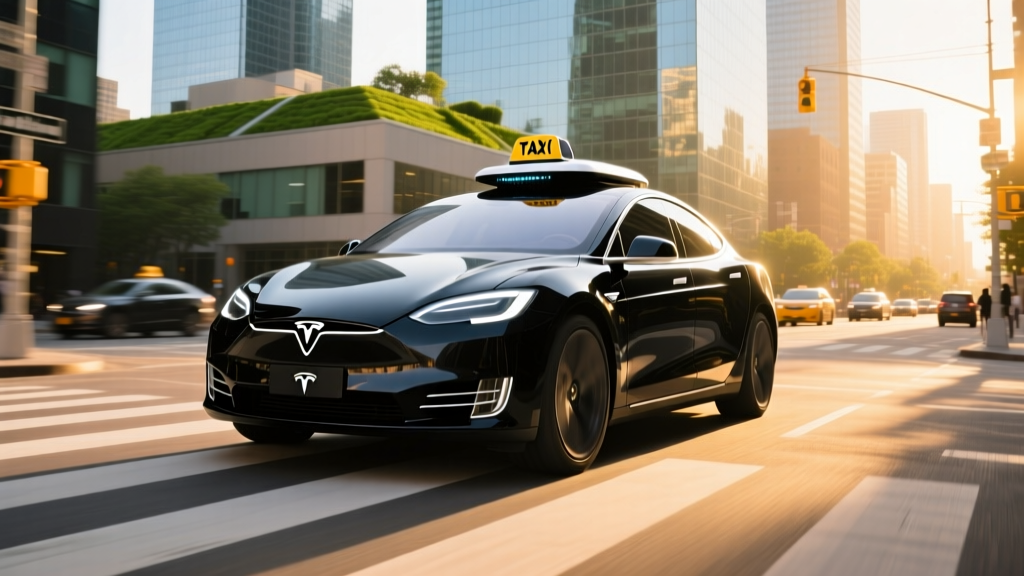
If you've spent any time reading EV forums or watching dashcam compilations, you've seen the extremes — Tesla Autopilot hailed as the future of driving or dismissed as a dangerous gimmick. The truth, as usual, lives in the data. After logging thousands of miles across Model 3, Model Y, Model S, and Model X platforms with both basic Autopilot and Full Self-Driving (Supervised), here's our measured verdict: Autopilot is the most capable standard Level 2 driver-assist system on the market for highway use, but it is emphatically not self-driving, and its limitations demand your full attention.
This guide breaks down exactly what Tesla's driver-assist stack does, what it costs in 2026, where it falls short, and how it stacks up against Ford BlueCruise and GM Super Cruise — so you can decide whether the premium is worth it.
How Tesla Autopilot Works: Sensors, Cameras, and Software
Tesla's approach to driver assistance is distinct from nearly every other automaker. While competitors like Ford, GM, and Mercedes-Benz rely on a sensor fusion stack combining cameras, radar, and sometimes lidar, Tesla has moved to a pure vision architecture branded as Tesla Vision. As of the 2026 model year, all Tesla vehicles ship with:
- 8 surround cameras providing 360-degree visibility (forward-facing, side-repeater, and rear-view)
- No radar — ultrasonic sensors were also removed starting with 2023 production
- Hardware 4.0 (HW4) computer with enhanced neural network processing, higher-resolution camera inputs, and improved low-light performance over HW3
The system processes visual data through deep neural networks trained on billions of miles of real-world driving footage. Tesla's end-to-end neural network approach (introduced progressively through 2024–2025 FSD updates) replaced much of the earlier rules-based coding with learned driving behavior — meaning the car mimics human driving patterns rather than following rigid programmed rules.
Tesla Autopilot and Full Self-Driving (Supervised) are classified as SAE Level 2 driver-assistance systems. This means the vehicle can control steering, acceleration, and braking simultaneously, but the driver must remain fully engaged, monitor the road at all times, and be prepared to take over instantly. Tesla is not a Level 4 or Level 5 autonomous vehicle. Only robotaxi services like Waymo operate at Level 4 in geofenced areas. Confusing Level 2 with "self-driving" is the single most dangerous misconception in the EV space.
Autopilot vs. FSD (Supervised): Feature Breakdown
Tesla layers its driver-assist features into two tiers. Understanding the difference is essential before you spend a dollar.
| Feature | Basic Autopilot (Standard) | FSD (Supervised) |
|---|---|---|
| Traffic-Aware Cruise Control | ✅ | ✅ |
| Autosteer (lane centering on highways) | ✅ | ✅ |
| Auto Lane Change | ❌ | ✅ |
| Navigate on Autopilot (off-ramp guidance) | ❌ | ✅ |
| Autopark / Smart Summon | ❌ | ✅ |
| Traffic Light & Stop Sign Control | ❌ | ✅ |
| City Street Autosteer | ❌ | ✅ |
Basic Autopilot comes standard on every new Tesla. It handles adaptive cruise control and lane centering on clearly marked highways — essentially a very polished version of what Toyota Safety Sense or Honda Sensing offers, but with smoother execution and more confident lane-keeping.
FSD (Supervised) adds city-street driving, automatic lane changes, navigation-guided off-ramp handling, traffic light recognition, and Smart Summon (the car drives to you in a parking lot). The "Supervised" label, which Tesla added to the branding in late 2024, is a legal and practical acknowledgment: you must watch the road.
Real-World Capabilities and Honest Limitations
On well-marked interstates in clear weather, basic Autopilot is excellent. The system tracks lanes with minimal hunting, modulates speed smoothly in traffic, and handles gentle curves without drama. On a 400-mile highway trip in a 2026 Model Y Long Range, we found Autopilot reduced driver fatigue significantly — arriving noticeably fresher than after the same trip under manual control.
FSD (Supervised) has improved markedly on city streets since the end-to-end neural network transition. It handles unprotected left turns, four-way stops, and pedestrian-heavy urban corridors with growing competence. But "growing competence" is not "reliability." Here are the real-world limitations we documented:
- Heavy rain, fog, or snow: Camera-only systems degrade significantly when lenses are obscured. Autopilot will disengage and alert you — sometimes abruptly.
- Faded or missing lane markings: Construction zones, rural roads, and freshly repaved highways without restriped lanes cause lane-centering confusion.
- Complex intersections: Unmarked multi-lane roundabouts, offset intersections, and temporary traffic patterns remain edge cases for FSD.
- Phantom braking: The system occasionally brakes hard for shadows, overpasses, or roadside objects that pose no actual threat. This remains a documented concern flagged by NHTSA.
- Sun glare: Direct low-angle sunlight into forward cameras can temporarily reduce system confidence and trigger disengagement.
- Stationary emergency vehicles: Despite software improvements, approaching parked first-responder vehicles with flashing lights remains a scenario requiring driver vigilance.
The steering wheel torque monitoring system requires periodic input to confirm driver engagement. If you fail to apply torque, the system escalates warnings — visual, audible, then a gradual deceleration with hazard lights. After repeated disengagement warnings in a single drive, Autopilot will lock out for the remainder of the trip. Tesla's attentiveness monitoring has tightened considerably; this is not a system you can ignore.
Cost: What You'll Pay for Autopilot and FSD in 2026
Basic Autopilot is included at no additional cost on every Tesla. FSD (Supervised) is the upsell — and it's substantial.
| Option | Cost | Notes |
|---|---|---|
| Basic Autopilot | Included | Standard on all 2026 Tesla vehicles |
| FSD (Supervised) — One-Time Purchase | $8,000 | Transfers with the vehicle, not the owner |
| FSD (Supervised) — Monthly Subscription | $99/month | Cancel anytime; requires active subscription for features |
| FSD Transfer (promotional) | Varies | Tesla occasionally offers FSD transfer from a previous Tesla to a new purchase — check current promotions |
Our financial recommendation: unless you drive over 15,000 highway miles annually and plan to keep the vehicle for 5+ years, the $99/month subscription makes more sense than the $8,000 lump sum. At $99/month, you'd need to subscribe for over 80 months (6.7 years) to match the purchase price — and FSD's capabilities and your tolerance for supervision requirements may change well before then.
How Tesla Autopilot Compares to BlueCruise and Super Cruise
Tesla doesn't operate in a vacuum. Ford's BlueCruise and GM's Super Cruise are legitimate Level 2 competitors, each with different design philosophies.
| Attribute | Tesla Autopilot / FSD | Ford BlueCruise | GM Super Cruise |
|---|---|---|---|
| SAE Level | Level 2 | Level 2 | Level 2 |
| Hands-Free (eyes monitored) | ❌ (torque required) | ✅ (on approved roads) | ✅ (on approved roads) |
| Geofenced Road Coverage | Any road (no geofence) | ~130,000+ miles of approved highways | ~750,000+ miles of compatible roads |
| City Street Capability | ✅ (FSD only) | ❌ | ❌ |
| Driver Monitoring | Steering wheel torque | Infrared camera (eye tracking) | Infrared camera (eye tracking) |
| Sensors | Cameras only | Cameras + radar | Cameras + radar + lidar (map data) |
| Annual / One-Time Cost | $8,000 or $99/mo | ~$2,100–$2,950 (2-yr plan) | ~$2,200–$2,500 (3-yr plan) |
The key differentiator: BlueCruise and Super Cruise allow true hands-free driving on pre-mapped highways, monitored by an infrared eye-tracking camera. Tesla requires steering wheel torque at all times but works on any road — including unmarked rural routes and city streets (with FSD). If your driving is mostly interstate commuting, BlueCruise or Super Cruise may actually offer a more relaxed experience. If you want a system that attempts to assist everywhere, Tesla FSD is the only option — with the caveat that its city-street performance still requires active supervision.
Safety ratings from the IIHS and crash-test data from NHTSA apply to the vehicles themselves, not specifically to ADAS features. Tesla's Model Y and Model 3 continue to earn top safety scores, but no current testing body certifies an ADAS system as "safe to use without attention."
Which Tesla Models Include Autopilot in 2026?
Every Tesla sold in 2026 includes Basic Autopilot as standard equipment. FSD (Supervised) is available as an add-on across the entire lineup:
- Model 3 (all trims: RWD, Long Range, Performance) — HW4 standard
- Model Y (all trims: Long Range, Performance, Long Range AWD) — HW4 standard
- Model S (Long Range, Plaid) — HW4 standard
- Model X (Long Range, Plaid) — HW4 standard
- Cybertruck (AWD, Cyberbeast) — HW4 standard; FSD available via subscription or purchase
There is no trim-level restriction on FSD availability — it's purely a software purchase. However, older Tesla vehicles with Hardware 3.0 (HW3) may not receive all FSD features or may experience reduced performance compared to HW4-equipped vehicles. If you're buying used, verify the hardware generation.
Our Verdict: Who Should Pay for FSD?
- Your driving is mostly highway commuting on well-marked roads
- You prefer to keep hands on the wheel regardless
- You're budget-conscious and don't want to spend $8,000 or $99/month on software
- You plan to sell or trade the vehicle within 3 years
Consider FSD (Supervised) if:
- You drive 15,000+ miles annually in mixed highway and city conditions
- You view it as a convenience feature (not a replacement for driving) and accept the supervision requirement
- You plan to keep the car 5+ years and want the option of evolving capabilities via OTA updates
- The $99/month subscription fits your budget as a trial before committing to purchase
Our bottom line: Basic Autopilot is a genuine value-add that comes free with every Tesla and reduces highway fatigue meaningfully. FSD (Supervised) is a compelling technology demonstration with real utility, but at $8,000 or $1,188/year on subscription, it's a premium product that doesn't yet deliver enough reliability in edge cases to justify the cost for most buyers. The subscription model is the smart play — try it for a few months, evaluate it on your actual commute, and cancel if it doesn't earn its keep.
Frequently Asked Questions
Is Tesla Autopilot actually self-driving?
No. Tesla Autopilot and FSD (Supervised) are SAE Level 2 driver-assistance systems. The driver must remain fully engaged, monitor the road continuously, and be prepared to take over at any moment. Tesla itself labels the system "Supervised" to make this clear. Only Level 4 robotaxi services like Waymo operate without a driver, and only within geofenced urban areas.
Does Autopilot work in rain and snow?
Basic Autopilot functions in light rain, but performance degrades in heavy precipitation, fog, or snow because Tesla's camera-only system relies on clear visual input. The system will alert you and disengage if camera visibility drops below its confidence threshold. Radar-equipped competitors like BlueCruise and Super Cruise handle adverse weather somewhat better due to sensor redundancy.
Can I transfer FSD to a new Tesla?
FSD purchased as a one-time license transfers with the vehicle, not the owner. If you sell your Tesla, the FSD license stays with the car. Tesla has periodically offered promotional FSD transfers from an old vehicle to a new purchase — check Tesla's current promotions or your Tesla account for eligibility.
How does Tesla monitor driver attention?
Tesla uses steering wheel torque sensing — you must apply periodic rotational force to the wheel to confirm engagement. Unlike Ford BlueCruise and GM Super Cruise, which use infrared cameras to monitor eye gaze, Tesla does not currently use a dedicated driver-monitoring camera for Autopilot (though the cabin camera exists for other purposes). Failure to respond to torque warnings results in escalating alerts and eventual Autopilot lockout for the remainder of the drive.
Is FSD worth $8,000 in 2026?
For most buyers, no — not as a lump-sum purchase. At $99/month ($1,188/year), the subscription breaks even against the $8,000 purchase at roughly 6.7 years. Given that FSD capabilities continue to evolve and your driving needs may change, the subscription offers flexibility without long-term commitment. If Tesla ever achieves true unsupervised autonomy (Level 4), early subscribers would benefit without the sunk cost risk.
Does using Autopilot affect my insurance rates?
It depends on your insurer and state. Tesla offers its own insurance product in many states that uses real-time driving data (including Autopilot usage) to calculate premiums — safe Autopilot use can lower your rate. Third-party insurers vary; some offer discounts for ADAS-equipped vehicles, while others don't differentiate. Check with your provider before assuming a discount.