San Francisco's Robotaxi Landscape at a Glance
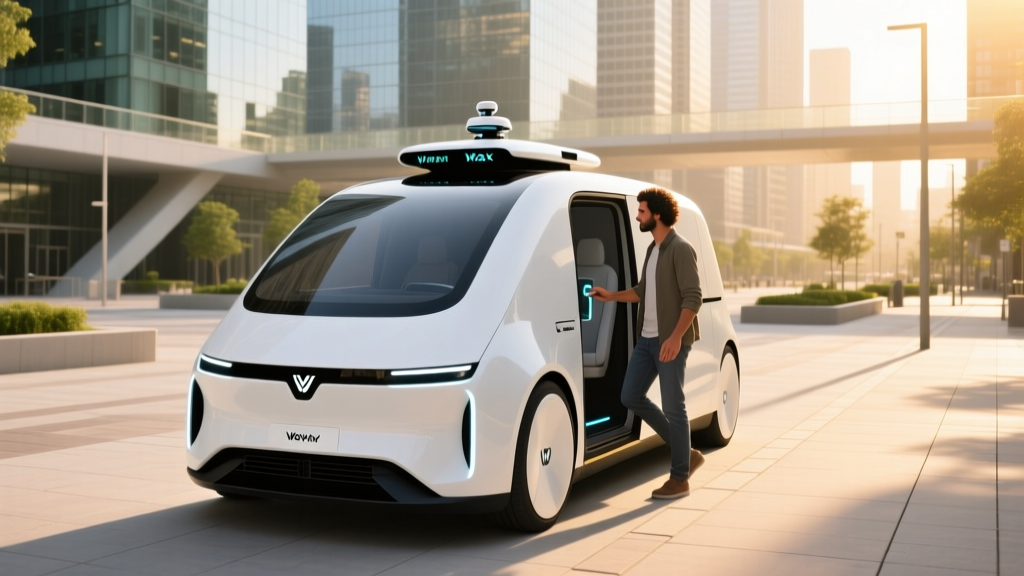
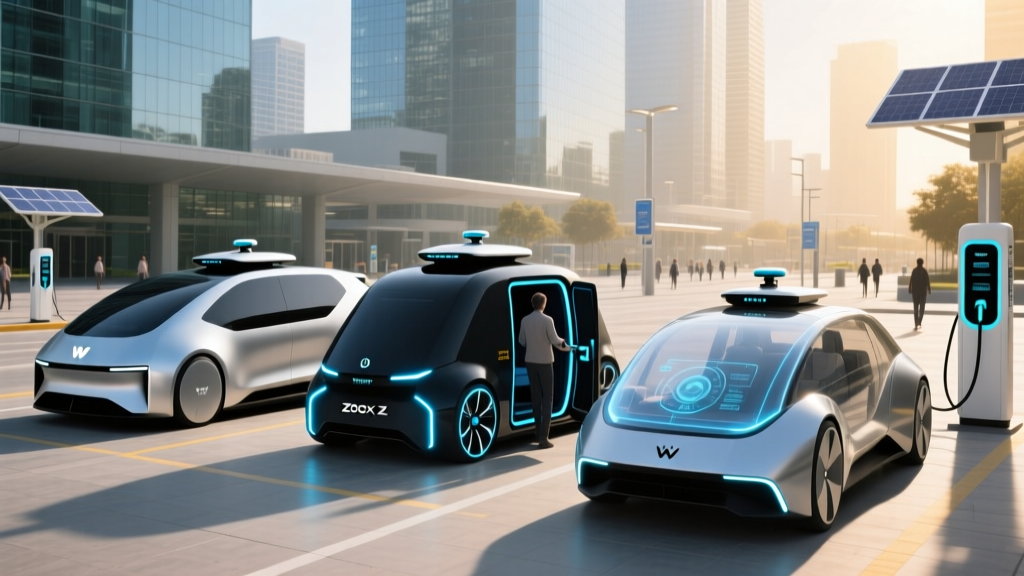
San Francisco remains the most active proving ground for commercial robotaxi services anywhere in the United States. As of early 2026, two primary operators run driverless passenger service within city limits: Waymo (Alphabet's autonomous-vehicle division) and Zoox (Amazon's purpose-built robotaxi subsidiary). Cruise, GM's robotaxi arm, suspended operations in late 2023 following a serious incident and has not resumed commercial passenger service in the city, though limited testing with safety drivers continues.
If you're searching for an SF robotaxi, you're likely weighing whether these services are actually usable for everyday trips, how they compare on cost, and whether the safety record justifies stepping into a vehicle with no one behind the wheel. This guide answers those questions with current data.
Robotaxis operating commercially in San Francisco are classified as SAE Level 4 — meaning the vehicle handles all driving tasks within a defined operational design domain (geofenced area, certain weather conditions) with no human driver present. This is fundamentally different from SAE Level 2 systems like Tesla Autopilot, Ford BlueCruise, or GM Super Cruise, which require continuous driver supervision. If you own an EV with "Full Self-Driving" or "Autopilot," you are still the driver. In a Waymo or Zoox robotaxi, you are strictly a passenger.
| Level | Name | Who Drives? | Example |
|---|---|---|---|
| Level 2 | Partial Automation | Human (hands on or eyes on) | Tesla Autopilot/FSD Supervised, BlueCruise |
| Level 3 | Conditional Automation | System in limited conditions; human must take over when requested | Mercedes Drive Pilot (Germany, select US states) |
| Level 4 | High Automation | System fully; no human needed in defined zone | Waymo One, Zoox (SF, Phoenix, LA) |
| Level 5 | Full Automation | System everywhere, all conditions | Does not exist commercially |
Where Can I Ride a Robotaxi in San Francisco Right Now?
Service areas are geofenced — meaning each operator has mapped specific streets and zones where its vehicles are approved to operate autonomously. Requesting a ride outside these zones will either be rejected or the vehicle will only drive to the boundary.
| Operator | Vehicle | SF Coverage Area | Hours | Access |
|---|---|---|---|---|
| Waymo One | Jaguar I-PACE EV (custom sensor suite) | Most of SF proper: SoMa, Mission, Marina, Sunset, Richmond, Financial District, parts of Bayview | 24/7 | Open to public via Waymo app |
| Zoox | Zoox Gen-3 (purpose-built, no steering wheel) | Foster City HQ zone + limited SF corridors (SoMa, Embarcadero adjacent) | Limited hours (typically daylight/early evening) | Invite-only / early-access program |
Waymo has the broader footprint by a wide margin. After receiving expanded permits from the California Public Utilities Commission (CPUC) in mid-2023, Waymo opened its SF service area to nearly all neighborhoods south of the Golden Gate Bridge. You can hail a ride from the Mission to the Presidio, from the Embarcadero to the Outer Sunset.
Zoox operates a smaller, more controlled footprint. Its bidirectional, carriage-style vehicle (which has no steering wheel or pedals) is primarily deployed in Foster City and select San Francisco corridors. Zoox has been gradually expanding its early-rider program, but as of early 2026, it is not yet open to the general public the way Waymo is.
Both services also operate in other cities — Waymo in Phoenix, Los Angeles, and Austin; Zoox in Las Vegas and Foster City — but San Francisco remains the densest and most complex urban environment where Level 4 robotaxis carry paying passengers daily.
How Much Does an SF Robotaxi Cost vs. Uber and Lyft?
Robotaxi pricing is designed to be competitive with traditional rideshare, not to undercut it dramatically — at least not yet. Here's what typical fares look like for common San Francisco routes:
| Route (approx.) | Waymo One | UberX | Lyft Standard |
|---|---|---|---|
| SoMa → SFO Airport (~14 mi) | $38–$52 | $35–$55 | |
| Mission → Financial District (~3 mi) | $12–$18 | $10–$16 | |
| Sunset → Union Square (~7 mi) | $22–$30 | $18–$28 | |
| Marina → Castro (~5 mi) | $16–$22 | $14–$20 |
A few important pricing notes:
- Waymo uses dynamic pricing that factors in distance, time, and demand — similar to rideshare surge pricing, though Waymo has historically capped surges more conservatively than Uber/Lyft.
- Tipping is not expected or solicited in a robotaxi (there's no driver), which can make the effective cost lower than a comparable UberX ride where a 15–20% tip is customary.
- No shared/pool option currently exists for Waymo. You get the vehicle to yourself.
- Zoox rides in its early-access program have been free or heavily subsidized; commercial pricing has not been publicly announced.
For airport runs, Waymo serves SFO and has begun limited service to Oakland Airport. However, pickup zones at airports may require walking to a designated area rather than curbside terminal pickup — check the app for specific instructions.
Safety Record: What the Data Actually Shows
This is the question every prospective robotaxi rider asks, and it deserves a data-driven answer rather than marketing claims or fear-based headlines.
- Over 30 million fully driverless miles completed across all markets (SF, Phoenix, LA, Austin) as of late 2025.
- Waymo's own analysis, validated by third-party researchers, found a ~85% reduction in injury-causing crash involvement compared to human-driven benchmarks in comparable urban environments.
- Waymo vehicles were involved in fewer police-reported crashes per million miles than the human baseline in San Francisco, according to data submitted to the National Highway Traffic Safety Administration (NHTSA).
- Most reported incidents involve low-speed contact (under 10 mph) — typically another vehicle rear-ending a Waymo stopped at a light, or minor sideswipe in dense traffic.
Context matters. In late 2023, a Cruise robotaxi in San Francisco dragged a pedestrian who had been thrown into its path by another vehicle. That incident — combined with a pattern of vehicles stalling in intersections and blocking emergency responders — led the California DMV to suspend Cruise's permits. Cruise subsequently paused all operations nationwide. This event underscored that while the technology is maturing, edge cases remain and regulatory oversight is real and consequential.
Waymo has not been immune to incidents. The company has reported instances of vehicles making contact with parked cars, briefly entering construction zones, or stopping unexpectedly in traffic lanes. However, no fatalities have been attributed to Waymo's driverless operations as of early 2026.
Zoox, operating at a smaller scale, has not reported any passenger injuries in its limited commercial service. Its purpose-built vehicle includes redundant braking, steering, and computing systems, and its lower operating speeds in current deployments reduce severity risk.
For transparency, both Waymo and Cruise (prior to suspension) were required to file disengagement and collision reports with the California DMV and the CPUC. These reports are public record and represent the most concrete safety data available.
Technology Stack: Lidar, Cameras, and How Robotaxis See the Road
The sensor suite on a robotaxi is orders of magnitude more complex than the cameras and radar powering consumer Level 2 ADAS systems. Here's how the two SF operators approach perception:
| Component | Waymo (6th-Gen on Jaguar I-PACE) | Zoox (Gen-3 Vehicle) |
|---|---|---|
| Primary sensors | Custom lidar (roof-mounted + side), 8+ cameras, radar array | Roof and corner lidar units, multi-camera arrays, radar |
| Camera-only? | No — lidar-first with camera/radar fusion | No — lidar-first with camera/radar fusion |
| HD mapping | Centimeter-precision pre-mapped routes | Pre-mapped operational zones |
| Compute | Custom AI chips, redundant compute modules | Redundant compute, dual-failover architecture |
| Geofencing | Strict — vehicle will not operate outside approved ODD | Strict — limited to approved corridors |
| Vehicle platform | Retrofit Jaguar I-PACE (90 kWh battery, ~234 mi EPA range) | Purpose-built symmetric vehicle, bidirectional, no steering wheel |
| Redundancy | Dual braking, steering, compute, power | Full redundancy across all safety-critical systems |
Why lidar matters here. Unlike Tesla's camera-only approach for its consumer FSD system (Level 2), both Waymo and Zoox rely heavily on lidar — light detection and ranging sensors that create precise 3D point clouds of the environment in real time. Lidar provides depth accuracy that cameras alone struggle to match, particularly in low-light conditions or when parsing complex urban scenes with overlapping objects (pedestrians partially occluded by parked cars, for example).
The trade-off is cost and complexity. A Waymo sensor suite is estimated to add $50,000–$100,000+ in hardware to each vehicle — viable for a fleet operator but not for consumer vehicles. Zoox sidesteps this by designing its entire vehicle around the sensor array from the ground up.
Both platforms use HD maps — centimeter-accurate 3D maps of every street in their service area — as a baseline, then overlay real-time sensor data to detect dynamic objects (pedestrians, other cars, construction). This is why geofencing is non-negotiable: if the map hasn't been built and validated, the car won't drive there.
The Regulatory Framework: Who Approves Robotaxi Operations?
Operating a driverless commercial passenger service in California requires approval from multiple agencies — and this layered oversight is a key reason SF robotaxi expansion has been deliberate rather than reckless.
- California DMV: Issues autonomous vehicle testing permits and can suspend them (as it did with Cruise in October 2023). Requires annual disengagement reports.
- California Public Utilities Commission (CPUC): Regulates commercial passenger service — essentially the "taxi license" layer. Waymo received its CPUC permit for paid driverless rides in SF in August 2023.
- NHTSA (Federal): Oversees vehicle safety standards. Current Federal Motor Vehicle Safety Standards (FMVSS) assume a human driver (steering wheel, mirrors, pedals). Zoox received a limited FMVSS exemption to operate its purpose-built vehicle without these controls — a significant regulatory milestone.
- San Francisco Municipal Transportation Agency (SFMTA): Manages street-level operations, pickup/dropoff zones, and coordinates on incidents that affect traffic flow.
This multi-agency structure means that a robotaxi operator must satisfy vehicle-safety regulators, public-utility commissioners, and city transportation officials simultaneously. It's a high bar — and it's why you don't see a proliferation of competitors in the SF market.
Current Limitations: Where Robotaxis Still Fall Short
Level 4 autonomy is impressive within its operational domain, but that domain has hard edges. Here's what robotaxis in San Francisco cannot do as of 2026:
- Heavy rain and fog: Waymo vehicles may pull over or refuse to dispatch during heavy precipitation. Lidar performance degrades in dense fog — common in SF's western neighborhoods (Sunset, Richmond) during summer marine-layer conditions.
- Unmapped zones: If your destination falls outside the geofence, the ride cannot be completed. This includes most of the Golden Gate Bridge northbound, parts of the Presidio, and areas south of the city (Daly City, Brisbane) unless specifically mapped.
- Construction zones: While both operators handle routine construction, major road reconfigurations (long-term lane closures, temporary traffic patterns) can cause the vehicle to stop and wait for remote assistance or reroute significantly.
- No highway driving (Zoox): Zoox's current deployment is limited to surface streets at lower speeds.
- Accessibility: Waymo's Jaguar I-PACE is a standard SUV — not wheelchair-accessible. Zoox's vehicle has a low floor and wide opening but is still being evaluated for full ADA compliance in commercial service.
- Passenger behavior: No eating, smoking, or open containers. The in-cabin camera monitors for safety, and trips can be terminated if rules are violated.
- Wait times: During peak demand or low fleet availability, wait times can stretch to 15–25 minutes — longer than a typical UberX in the same area.
- Multi-stop trips: Generally not supported. One pickup, one drop-off.
The weather limitation is particularly relevant for San Francisco. The city's famous fog — thick enough to reduce visibility below 200 feet in the Sunset and Richmond districts — regularly triggers operational restrictions. If you're planning a robotaxi ride across town at 7 AM in July, have a backup plan.
How to Actually Use Waymo One in San Francisco
If you're ready to try an SF robotaxi, Waymo One is the practical choice for most riders. Here's the process:
- Download the Waymo One app (iOS/Android) and create an account. You'll need a valid payment method on file.
- Enter your pickup and drop-off. The app will confirm whether both locations are within the service area. If not, it will suggest the nearest valid point.
- Wait for your vehicle. The app shows the approaching car's location, license plate, and vehicle description (white Jaguar I-PACE with a prominent roof sensor array). Typical wait times: 3–10 minutes in core areas, up to 20+ minutes in outer neighborhoods or during peak hours.
- Unlock and ride. When the vehicle arrives, confirm the license plate, then tap "Unlock" in the app. The doors open automatically. Buckle up — the vehicle won't move until all passengers are belted.
- Monitor the ride. A rear-seat screen displays the route, current speed, and what the vehicle's sensors are detecting (other cars, pedestrians, cyclists rendered as bounding boxes). You can pull over or contact support at any time via the in-app or in-vehicle button.
- Exit at your destination. The vehicle will pull to a safe stop. Check for cyclists and traffic before opening the door (the screen provides a visual alert). Your payment is processed automatically.
The experience is surprisingly unremarkable — which is exactly the point. The car accelerates smoothly, signals lane changes, yields to pedestrians, and obeys speed limits (often driving slightly below the posted limit in residential zones). It feels like a cautious, attentive driver — because that's what the system is optimized to emulate.
Frequently Asked Questions
Is a robotaxi truly self-driving, or is there a remote human controlling it?
There is no human driver in the vehicle — not behind the wheel, not remotely controlling it in real time. Waymo and Zoox vehicles make all driving decisions autonomously. However, both companies employ remote-assistance teams that can provide guidance in ambiguous situations (e.g., an unusual construction setup). The vehicle may pause and request remote input, but the remote operator does not "joystick" the car — they confirm a path or resolution, and the vehicle executes it.
Can I use a robotaxi to get to SFO from downtown San Francisco?
Yes. Waymo One serves SFO with designated pickup and drop-off zones. Expect a fare in the $38–$52 range from SoMa, depending on demand. Allow extra time for potential wait and for navigating the airport's designated robotaxi pickup area, which may not be directly at your terminal curb.
What happens if the robotaxi gets into an accident?
The vehicle is programmed to pull over safely, contact emergency services if needed, and notify the operations center. Waymo carries commercial insurance covering passengers and third parties. Passengers are not liable for the vehicle's driving decisions. Both operators are required to report collisions to the California DMV within defined timeframes.
Why doesn't Tesla have a robotaxi service in SF?
Tesla's Full Self-Driving (FSD) system, even in its latest "Supervised" iteration, is an SAE Level 2 driver-assistance system. It requires a human driver to remain engaged and ready to take over at all times. Tesla has discussed a future "Robotaxi" product, but as of early 2026, it does not operate a driverless commercial ride service in any city. The gap between Level 2 (driver-assist) and Level 4 (driverless in a defined zone) is substantial — it requires different hardware (lidar, redundant systems), different regulatory approvals, and different liability frameworks.
Are robotaxis safe for solo riders at night?
Waymo operates 24/7 in San Francisco. The vehicle has no driver to interact with, in-cabin cameras provide monitoring, and a support button connects you to a live operator immediately. Many riders report feeling safer in a robotaxi at night than in a traditional rideshare — there's no risk of an impaired or fatigued driver, and the vehicle cannot be diverted from its programmed route. That said, standard urban safety awareness still applies when entering and exiting the vehicle.
How does robotaxi efficiency compare to a personal EV?
Waymo's Jaguar I-PACE has an EPA range of approximately 234 miles with its 90 kWh battery pack. However, the added weight and aerodynamic drag of the sensor suite reduce real-world range to an estimated 160–190 miles. The fleet charges at depot locations between shifts. For comparison, a personal I-PACE without the sensor array achieves closer to 200–210 real-world miles. Fleet utilization and charging logistics are managed by the operator — riders don't interact with charging at all.