If you have searched for a "self-driving Uber Las Vegas" ride, you are not alone. The idea of hailing a driverless car on the Strip sounds like peak 2026 futurism. The reality is more nuanced: Uber itself does not operate a Level 4 robotaxi fleet, but autonomous ride-hailing services from Waymo, Zoox, and Motional have been expanding into Las Vegas and nearby markets. This guide explains exactly what is available, what is not, and how robotaxi pricing, safety, and technology compare to a standard Uber or Lyft ride.
Is There Actually a Self-Driving Uber in Las Vegas?
The short answer: Uber does not run its own driverless robotaxi service anywhere in the U.S. as of early 2026. However, Uber has partnered with autonomous vehicle companies to integrate robotaxi rides into its app in select cities. In Las Vegas specifically, the landscape looks like this:
| Service | Operator | Las Vegas Status | Nearest Live Market |
|---|---|---|---|
| Waymo One | Waymo (Alphabet) | Not yet launched | Phoenix, AZ (~280 mi) |
| Zoox | Zoox (Amazon) | Limited testing; no public rides | Las Vegas (employee/invite only) |
| Motional | Motional (Hyundai/Aptiv) | Ended Uber/Lyft integration in 2024 | N/A — restructured |
| Uber Autonomous | Uber + Waymo partnership | Not available in LAS | Phoenix, Los Angeles |
| Cruise | Cruise (GM) | Operations suspended nationally | Winding down |
The most relevant option for Las Vegas visitors seeking a robotaxi experience is to plan a trip to Phoenix, Arizona, where Waymo One operates commercially 24/7 across a 300+ square-mile service area covering Phoenix, Scottsdale, Tempe, Mesa, and Chandler. In Los Angeles, Uber users can request a Waymo autonomous ride directly through the Uber app — the closest current model to a "self-driving Uber" experience.
Understanding Autonomy: Level 2 vs. Level 4
Consumer confusion about autonomy levels is widespread, and it matters for safety expectations. Here is the critical distinction:
| SAE Level | Who Drives | Examples | Available to Public? |
|---|---|---|---|
| Level 2 | Human (system assists) | Tesla Autopilot/FSD Supervised, GM Super Cruise, Ford BlueCruise | Yes — purchase required |
| Level 3 | System (in limited conditions; human must take over) | Mercedes DRIVE PILOT (selected markets) | Limited |
| Level 4 | System (fully driverless in geofenced area) | Waymo One, Zoox | Yes — in specific cities |
| Level 5 | System (anywhere, any condition) | None currently deployed | No |
Robotaxis like Waymo and Zoox are SAE Level 4: the vehicle handles all driving tasks within a defined operational design domain (geofenced area, mapped roads, certain weather conditions) with no human driver present. This is fundamentally different from Tesla's FSD (Supervised) or GM's Super Cruise, which are Level 2 systems requiring continuous driver attention. A Level 2 car with a distracted driver is far more dangerous than a Level 4 robotaxi operating within its validated zone.
How to Use a Robotaxi Service (and Where)
If you are willing to travel to a city with live robotaxi service, here is how the experience works in practice:
Waymo One (Phoenix, Los Angeles, San Francisco, Austin)
- App: Download the Waymo One app (or use Uber in LA/Phoenix where integrated)
- Hailing: Enter pickup/dropoff within the geofenced zone; the car arrives in 3-8 minutes on average
- Ride: No driver. Rear screens show route, climate controls, and a "pull over" button
- Availability: 24/7 in Phoenix; limited hours in some other markets
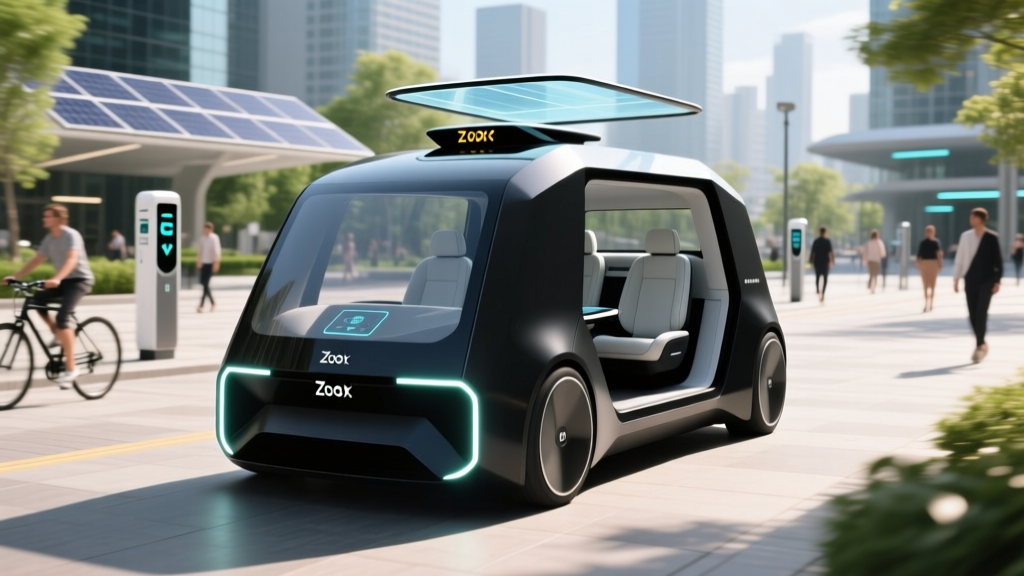
Zoox (Las Vegas — invite/employee only; Foster City, CA — limited public)
- Zoox's purpose-built bidirectional vehicle (no steering wheel) has been testing on Las Vegas streets since 2023
- Public ride-hailing is not yet open; Zoox has focused on controlled expansion and regulatory approval
Robotaxi Pricing vs. Uber/Lyft
One of the most common questions: does removing the driver make rides cheaper? The answer depends on the market and time of day, but robotaxis are generally priced to be competitive with conventional rideshare, not dramatically cheaper (yet).
| Service | Base Fare Range | Surge Pricing | Tip Expected? |
|---|---|---|---|
| Waymo One (Phoenix) | $8–$14 | No surge; flat algorithmic pricing | No (no driver) |
| UberX (Las Vegas) | $10–$18 | Yes — can 1.5x–3x during events | Yes — 15-20% standard |
| Lyft (Las Vegas) | $9–$17 | Yes — Prime Time pricing | Yes |
| Waymo via Uber (LA) | $9–$15 | Matches Uber pricing structure | No |
Waymo's pricing strategy prioritizes market penetration over per-ride profitability. Riders frequently report promotional credits, especially for first-time users. The elimination of tipping (no driver) effectively saves 15-20% versus a comparable UberX ride, making the total out-of-pocket cost similar or slightly lower than conventional rideshare.
Robotaxi Safety: What the Data Shows
Safety is the most scrutinized aspect of autonomous vehicles. Here is what we know from publicly reported data, with important caveats about comparison methodology:
| Metric | Waymo (2024–2025 data) | U.S. Human Average |
|---|---|---|
| Miles driven (cumulative) | 50+ million fully autonomous miles | N/A |
| Injury-causing crash rate | ~5.7 per million miles (per NHTSA-reported data) | ~1.5 per million miles (NHTSA national avg) |
| Contactless disengagements | Rare; Waymo reports <1 per 10,000 miles in mature markets | N/A |
| Fatalities (robotaxi at-fault) | 0 Waymo at-fault fatalities reported | ~1.3 per 100M VMT |
Important context: Waymo's reported injury-crash rate appears higher than the national average partly because robotaxis report every minor contact (including low-speed parking-lot bumps that human drivers typically don't report). When adjusted for severity and reporting methodology, independent analyses — including a study by the Insurance Institute for Highway Safety (IIHS) — have found that Waymo vehicles are involved in fewer severe crashes per mile than human drivers in comparable urban environments.
Cruise's 2023 incident in San Francisco (where a pedestrian was dragged under a robotaxi after being struck by a human-driven vehicle) led to California DMV suspending Cruise's permit and prompted a national re-evaluation of robotaxi oversight. Cruise subsequently wound down operations. This event underscores that Level 4 autonomy, while generally safe, is not infallible — particularly in edge-case scenarios involving multi-vehicle interactions.
Technology Stack: How Robotaxis See the Road
Understanding how robotaxis perceive their environment helps explain both their capabilities and their limitations.
Waymo (6th-Generation Driver, 2025–2026 vehicles)
- LiDAR: Multiple roof-mounted and bumper-integrated LiDAR units providing 360° 3D point-cloud mapping out to 500+ meters
- Cameras: 29+ high-resolution cameras for traffic-light recognition, sign reading, lane detection
- Radar: 6 imaging radars for object velocity tracking, poor-weather performance
- Audio sensors: External microphones to detect emergency vehicle sirens
- HD Maps: Pre-mapped geofenced areas with centimeter-level precision; the vehicle localizes against this map in real time
Zoox (Purpose-Built Vehicle)
- Symmetrical sensor layout: Identical sensor pods on all four corners (the vehicle can drive in either direction)
- LiDAR + cameras + radar: Redundant sensing with no single point of failure
- No steering wheel or pedals: True Level 4 design — no fallback to human control
Camera-Only (Tesla approach — NOT a robotaxi)
Tesla's FSD (Supervised) relies on cameras without LiDAR. This is a Level 2 system requiring driver supervision and is not approved for driverless commercial service anywhere. The camera-only approach is more scalable but lacks the depth-perception redundancy that LiDAR provides, which is why every commercially operating Level 4 robotaxi uses LiDAR as a core sensor.
Regulatory Landscape: Who Approves Robotaxis?
Robotaxi operations in the U.S. require a patchwork of approvals:
- State level: Each state sets its own rules. California (CPUC + DMV), Arizona (permissive executive-order framework), and Texas (Austin-specific permits) are the most active. Nevada has testing permits but has not yet approved commercial driverless ride-hailing at scale.
- Federal level: NHTSA oversees vehicle safety standards. The FMVSS (Federal Motor Vehicle Safety Standards) were written for human-driven cars — vehicles like Zoox (no steering wheel) require exemption petitions. As of 2026, Zoox has received limited FMVSS exemptions for its purpose-built vehicle.
- Local level: City councils and transportation authorities negotiate operating agreements covering pickup zones, congestion management, and accessibility requirements.
Las Vegas and Nevada have been more cautious than Phoenix/Arizona in approving commercial robotaxi service. While Zoox has tested on Las Vegas streets, commercial fare-charging rides require additional state and local approvals that have not yet been granted as of early 2026.
Current Limitations of Robotaxi Services
- Geofencing: Robotaxis operate only within pre-mapped zones. You cannot hail a Waymo from Phoenix to Flagstaff — the car will refuse trips outside its operational design domain.
- Weather: Heavy rain, fog, snow, and dust storms degrade LiDAR and camera performance. Waymo reduces speed or pauses service in severe conditions. Las Vegas monsoon-season downpours can trigger service interruptions.
- Construction zones: Rapidly changing road layouts confuse HD-map-based systems. Robotaxis may reroute conservatively or pull over when encountering unmapped construction.
- Pickup/dropoff precision: Unlike a human Uber driver who can pull into a crowded hotel porte-cochère, robotaxis use designated virtual stops — sometimes a block from your actual destination.
- No highway driving (mostly): Waymo's Phoenix service includes some freeway segments, but most robotaxi operations are surface-street only. A Las Vegas-to-Henderson freeway trip is outside current robotaxi capability in that market.
- Accessibility: Current Waymo vehicles (Jaguar I-PACE based) require passengers to enter a standard car seat. Wheelchair-accessible robotaxis remain in pilot stages.
When Will Las Vegas Get a True Self-Driving Uber?
Based on current trajectories, here is a realistic outlook:
- Waymo expansion to Las Vegas: Plausible by 2027–2028 given the city's tourism volume and relatively simple grid-road layout, but not confirmed. Waymo has prioritized Phoenix, LA, Austin, and San Francisco.
- Zoox commercial launch in Vegas: Zoox's testing presence makes Las Vegas a logical first commercial market, but FMVSS exemption limits and fleet scaling challenges push this to 2027 at the earliest.
- Uber's autonomous integration: Uber has signaled it will be a platform/aggregator for robotaxi operators rather than building its own fleet. When Waymo or Zoox launches in Las Vegas, Uber integration is likely to follow within months.
For now, if you want a genuinely driverless ride-hailing experience, Phoenix is the closest and most mature option — roughly a 4.5-hour drive or a short flight from Las Vegas.
Frequently Asked Questions
Can I hail a self-driving Uber in Las Vegas right now?
No. As of early 2026, there is no commercially available self-driving Uber, Waymo, or other Level 4 robotaxi service open to the public in Las Vegas. Zoox is testing on Las Vegas streets but has not launched public rides. The nearest commercial robotaxi service is Waymo One in Phoenix, Arizona.
How much does a Waymo robotaxi ride cost compared to Uber?
Waymo pricing is competitive with UberX — typically $8–$14 for a 5-mile trip in Phoenix. The effective savings come from no surge pricing and no tip (15-20% savings vs. a tipped UberX ride). Promotional credits are frequently available for new users.
Are robotaxis safer than human drivers?
Available data from Waymo's 50+ million autonomous miles shows zero at-fault fatalities and lower severe-crash rates than human drivers in comparable urban environments, according to IIHS analysis. However, robotaxis report every minor contact, which inflates raw crash-rate comparisons. Robotaxis are safest within their validated geofenced zones under normal weather conditions.
What are the main limitations of robotaxi services?
Key limitations include geofenced service areas (no intercity trips), weather sensitivity (service pauses in heavy rain or snow), construction-zone challenges, designated pickup/dropoff stops rather than door-to-door service, and limited wheelchair accessibility.
Is Tesla FSD a self-driving robotaxi?
No. Tesla's Full Self-Driving (Supervised) is an SAE Level 2 driver-assistance system that requires continuous human supervision. It is not approved for driverless commercial operation anywhere. Waymo and Zoox are Level 4 — fully driverless within their operating zones, with no human driver present or required.
Will Las Vegas get robotaxi service soon?
Zoox is the most likely first mover in Las Vegas given its existing testing presence, but a commercial launch is not expected before 2027. Waymo expansion to Las Vegas is plausible by 2027–2028 but unconfirmed. Uber is expected to integrate whichever service launches first.