If you've searched for a self-driving Uber in Fort Lauderdale, you're not alone — South Florida is one of the most requested robotaxi expansion markets in the country. But as of early 2026, the reality on the ground is more nuanced than the headlines suggest. Uber doesn't operate its own Level 4 robotaxi fleet, and while partnerships with autonomous vehicle companies are evolving, Fort Lauderdale riders still can't summon a fully driverless car through the Uber app the way they can in Phoenix or San Francisco.
This guide cuts through the hype. We'll cover which robotaxi services are actually live, where you can ride one today, how Uber fits into the autonomous vehicle ecosystem, pricing versus standard rideshare, real safety data, and when Fort Lauderdale might realistically see driverless rides.
Is There a Self-Driving Uber in Fort Lauderdale Right Now?
The short answer: no. As of 2026, you cannot hail a fully autonomous, driverless robotaxi through Uber (or any other app) within Fort Lauderdale city limits. Here's why:
Uber divested its self-driving unit (Uber ATG) in 2020, selling it to Aurora Innovation. Since then, Uber has positioned itself as a platform partner for robotaxi operators rather than a developer of autonomous technology. In select cities, Uber's app integrates with Waymo's Level 4 fleet — meaning you can request a Waymo robotaxi through Uber in markets where Waymo operates. But that integration is city-specific.
The vehicles you might see testing in Florida with safety drivers behind the wheel are operating at SAE Level 2 or Level 3 — meaning a human must monitor the system and be ready to take over. A true robotaxi — no driver, no steering wheel — is SAE Level 4. Only Level 4 services (currently Waymo and Zoox in limited markets) qualify as genuinely "self-driving." Tesla's FSD (Supervised), GM's Super Cruise, and Ford's BlueCruise are all Level 2 driver-assist systems, regardless of marketing names. (SAE International J3016)
Where Can You Actually Ride a Robotaxi in 2026?
While Fort Lauderdale isn't live yet, the robotaxi map has expanded considerably. Here's where Level 4 driverless services currently operate in the United States:
| Operator | Live Driverless Markets (2026) | Uber Integration | Hours |
|---|---|---|---|
| Waymo One | Phoenix, San Francisco, Los Angeles, Austin | Yes (select cities) | 24/7 in most zones |
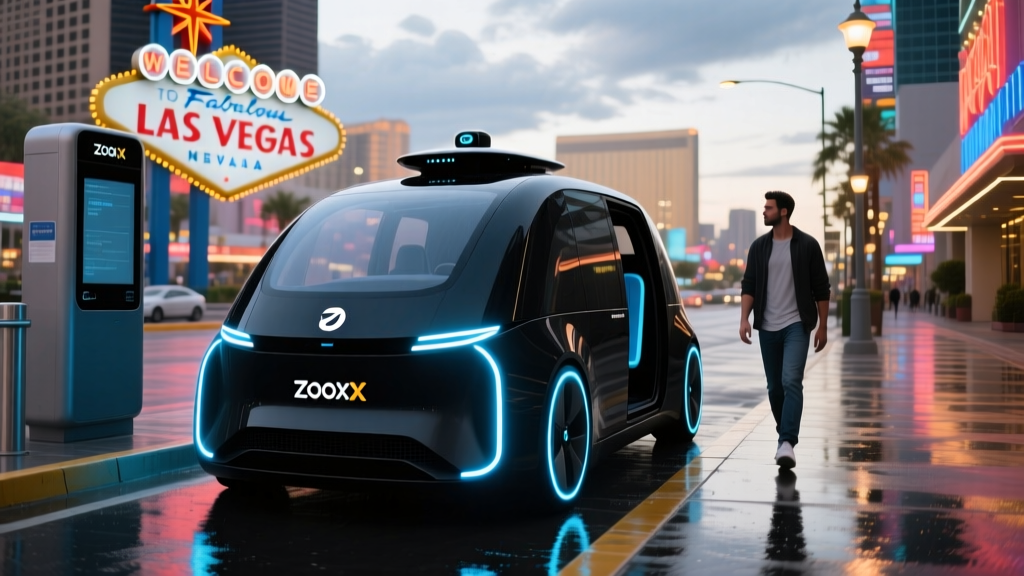
| Zoox | Las Vegas ( Strip corridor), Foster City, CA | No (proprietary app) | Limited hours |
| Cruise | Suspended — phased relaunch in Phoenix with safety drivers | No | N/A |
| Waymo (testing only) | Miami-Dade (testing with safety driver, not public rides) | No | N/A |
The closest option to Fort Lauderdale: Waymo has been conducting mapping and testing operations in the greater Miami area with safety drivers since late 2024. However, this is a testing program — not a public, driverless ride-hail service. Miami-Dade would likely be the first South Florida market to go live with a commercial robotaxi service, and Fort Lauderdale would follow, but no public launch date has been announced for either city.
Florida's Robotaxi Regulatory Landscape
Florida is actually one of the most permissive states for autonomous vehicle deployment. State law (F.S. § 319.145 and § 316.86) allows fully driverless vehicles on public roads without requiring a human safety operator, provided the vehicle meets federal motor vehicle safety standards and the operator maintains minimum insurance coverage ($1 million general liability, $5 million for AV-specific incidents).
Key regulatory facts for Florida:
- No special state permit required for AV testing or deployment — unlike California's DMV permit system
- Local municipalities can restrict operations through traffic ordinances or geofencing agreements
- NHTSA federal oversight applies to vehicle design and crash reporting (NHTSA AV Safety)
- Insurance requirements are set at the state level and are among the clearer frameworks nationally
So the regulatory path is open. The delay for Fort Lauderdale is operational — mapping the area, validating performance in South Florida's specific conditions (afternoon thunderstorms, dense urban corridors like A1A and Federal Highway, tourist-heavy pedestrian zones), and scaling fleet logistics — not legal.
How Robotaxi Technology Works: Sensors, Lidar, and Geofencing
Understanding the tech stack helps explain why robotaxis are limited to specific cities and why Fort Lauderdale's environment presents unique challenges.
Waymo's 6th-Generation Driver System (2026 Fleet)
Sensor suite: 13 cameras, 6 lidar units (roof-mounted + side-facing), 8 radar modules. The system builds a real-time 360° 3D model of the environment, detecting objects at 200+ meters in all lighting conditions.
Lidar vs. camera-only: Waymo uses lidar (light detection and ranging) as a primary sensor, unlike Tesla's camera-only FSD approach. Lidar provides precise depth data independent of lighting, which is critical for driverless operation at night and in glare conditions — common on Florida's east-west highways at sunset.
Geofencing: Waymo robotaxis operate only within pre-mapped, approved zones. The vehicle's software has centimeter-level HD maps of every lane, intersection, and traffic signal in the service area. If a ride request falls outside the geofence, the system declines it. Expanding to a new city requires months of mapping and validation drives.
Compute: Custom-designed onboard computer processing sensor data in real-time, with redundant braking and steering actuators for fail-safe operation.
Why this matters for Fort Lauderdale: The city's frequent afternoon thunderstorms, construction zones along I-95 and I-595, and seasonal road-reconfiguration for events like the Fort Lauderdale International Boat Show all represent edge cases that require extensive mapping and validation before a driverless service can launch safely.
Robotaxi Pricing: How Does It Compare to Uber and Lyft?
In markets where Waymo One operates commercially, pricing is competitive with standard UberX and Lyft rides — not the premium you might expect for cutting-edge technology.
| Service | Typical 5-Mile Ride | Surge Pricing | Tipping |
|---|---|---|---|
| Waymo One | $10–$18 | Dynamic pricing (less aggressive than Uber surge) | Not available (no driver) |
| UberX | $9–$20 | Yes (can 2-3x during peak) | Expected (15-20%) |
| Lyft Standard | $9–$19 | Yes (Prime Time pricing) | Expected (15-20%) |
When factoring in that no tip is expected on a Waymo ride, the total cost often comes out slightly lower than a comparable UberX trip. Waymo also frequently offers promotional credits for new riders in newly launched markets, which could bring initial rides in South Florida well below $10 when the service eventually arrives.
For context, Uber has stated that its long-term economics depend on integrating robotaxi supply into its platform — taking a commission on each Waymo ride booked through the Uber app. This means Uber riders in Fort Lauderdale may eventually get access to autonomous rides without switching apps, but the timing depends entirely on Waymo's expansion schedule.
Robotaxi Safety Record: What the Data Actually Shows
Safety is the most consequential question for any prospective robotaxi rider — and the most misrepresented in media coverage. Here's what the verified data indicates:
Waymo has accumulated over 50 million fully driverless miles across Phoenix, San Francisco, and Los Angeles. According to data the company published and submitted to NHTSA:
- 85% fewer police-reported injury crashes per million miles compared to human drivers in the same cities
- 57% fewer property-damage-only crashes
- Contact events: The majority of minor contacts involved the Waymo vehicle being rear-ended or side-swiped by human drivers — not caused by the AV system
Source: Waymo Safety Report; NHTSA Standing General Order crash reporting data.
The Cruise incident context: In October 2023, a Cruise robotaxi in San Francisco struck a pedestrian who had been thrown into its path by a human-driven vehicle, then dragged the person while pulling to the curb. The incident led to Cruise's California permit suspension and a nationwide operational pause. Cruise has since restructured its operations and relaunched with safety drivers in Phoenix. This event underscores that even with strong aggregate safety data, edge-case failures can have serious consequences and reshape the regulatory landscape.
What this means practically: The data suggests that Level 4 robotaxis in their validated geofenced zones are, on average, safer than human drivers in urban environments. But the data set is still relatively small (tens of millions of miles versus trillions of human-driven miles), and performance in novel environments — like Fort Lauderdale's unique road configurations and weather patterns — cannot be assumed from Phoenix or San Francisco data.
Current Limitations: What Robotaxis Cannot Do
Even in cities where robotaxis operate daily, significant limitations persist. These constraints explain why expansion to new markets like Fort Lauderdale takes years, not months:
Operational Limitations
- Heavy rain and flooding: Waymo robotaxis will pull over or refuse to dispatch during heavy precipitation that degrades lidar and camera performance. South Florida's daily summer thunderstorms could cause frequent service interruptions during the wet season (June–October).
- Geofence boundaries: The vehicle will not drive outside its mapped zone. If your destination is outside the service area, the ride simply won't be offered.
- Construction zones: While improving, robotaxis still struggle with unmapped lane closures, temporary traffic signals, and flaggers. Active construction corridors on I-95 and the I-595 interchange are significant obstacles.
- Unprotected left turns: Some complex multi-lane unprotected left turns remain challenging, and the vehicle may choose conservative routes that avoid them — leading to longer trip times.
- Pedestrian-dense zones: High-foot-traffic areas (Las Olas Boulevard during events, Fort Lauderdale Beach on weekends) can trigger excessive caution stops, making the vehicle impractically slow.
- Airport and port access: Special agreements with airport authorities (FLL) and Port Everglades are required, and these are often the last areas added to a geofence.
What Robotaxis Are NOT
- They are not SAE Level 5 (drive anywhere, any condition). No Level 5 system exists in production anywhere in the world.
- They are not the same as Tesla FSD. Tesla's Full Self-Driving (Supervised) is a Level 2 system requiring continuous driver attention. A Waymo robotaxi has no driver and no steering controls.
- They do not handle every edge case. Unusual road configurations, emergency vehicle interactions, and off-standard signage still cause delays and conservative behavior.
When Will Fort Lauderdale Get Robotaxi Service?
Based on Waymo's stated expansion pattern and Florida's regulatory openness, a reasonable — though not guaranteed — timeline estimate:
- 2025–2026: Waymo testing with safety drivers in Miami-Dade County (currently underway)
- 2026–2027: Potential commercial driverless launch in Miami (if testing milestones are met)
- 2027–2028: Possible expansion to Broward County / Fort Lauderdale, contingent on Miami operational success and fleet scaling
Other operators could enter the market sooner or on different timelines. Motional (Hyundai/Aptiv) has tested in various U.S. cities, and Amazon's Zoox has expressed interest in Sun Belt markets. Uber's role will likely be as a distribution platform — connecting you to whichever operator holds the local license, through the Uber app you already use.
What you can do now: If you want to experience a Level 4 robotaxi, your closest options in 2026 are Austin, TX (Waymo One) or a flight to Phoenix or San Francisco. Uber's app in those cities allows you to request a Waymo ride directly — giving you a preview of what Fort Lauderdale's experience will eventually look like.
Frequently Asked Questions
Can I get a self-driving Uber in Fort Lauderdale today?
No. As of 2026, no Level 4 driverless robotaxi service is commercially available in Fort Lauderdale or anywhere in Broward County. Waymo is testing with safety drivers in Miami-Dade, but that is not a public ride service.
How much would a robotaxi ride cost compared to Uber?
In cities where Waymo One operates, a typical 5-mile ride costs $10–$18, comparable to UberX ($9–$20 before tip). Since no tip is expected on a robotaxi, the all-in cost is often slightly lower. Surge pricing exists but tends to be less extreme than Uber's peak multipliers.
Are robotaxis actually safe?
Waymo's published data shows 85% fewer injury crashes per million miles compared to human benchmarks in the same operating cities, across 50+ million driverless miles. However, the data set is still limited relative to total human driving miles, and the Cruise pedestrian incident in San Francisco demonstrated that edge-case failures can be serious. Robotaxis are not risk-free — but aggregate data suggests they are at least as safe as attentive human drivers in their approved zones.
What's the difference between Tesla FSD and a Waymo robotaxi?
Tesla's Full Self-Driving (Supervised) is an SAE Level 2 driver-assist system. The driver must remain attentive, keep hands available, and is legally responsible for the vehicle at all times. A Waymo robotaxi is SAE Level 4 — fully driverless within its geofenced zone, with no human driver present and no steering wheel. They are fundamentally different categories of technology, regardless of marketing terminology.
Why can't robotaxis handle Fort Lauderdale's weather?
Heavy rain scatters lidar beams and obscures cameras, reducing the sensor system's effective range. South Florida's intense afternoon thunderstorms — which can dump 2+ inches in 30 minutes — create conditions where the system cannot maintain the confidence level required for driverless operation. In current markets, Waymo vehicles will pause or decline rides during severe precipitation.
Will Uber eventually offer robotaxis in Fort Lauderdale?
Uber's strategy is to integrate third-party robotaxi fleets (primarily Waymo) into its platform rather than develop its own autonomous technology. When Waymo or another operator launches a commercial driverless service in South Florida, Uber is likely to offer those rides through its app — just as it does in Phoenix, San Francisco, Los Angeles, and Austin today. The timeline depends on operator expansion, not Uber's own development.