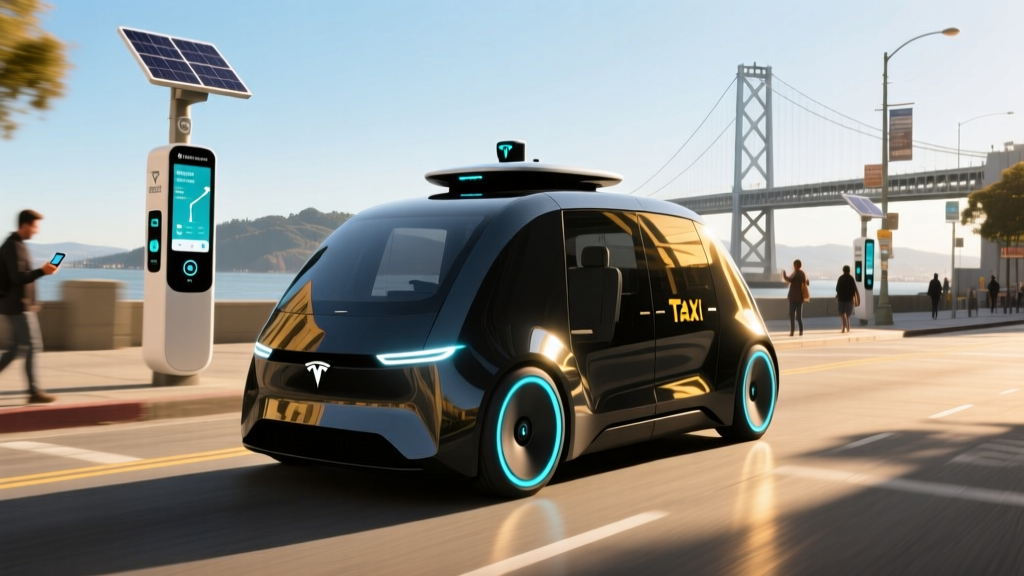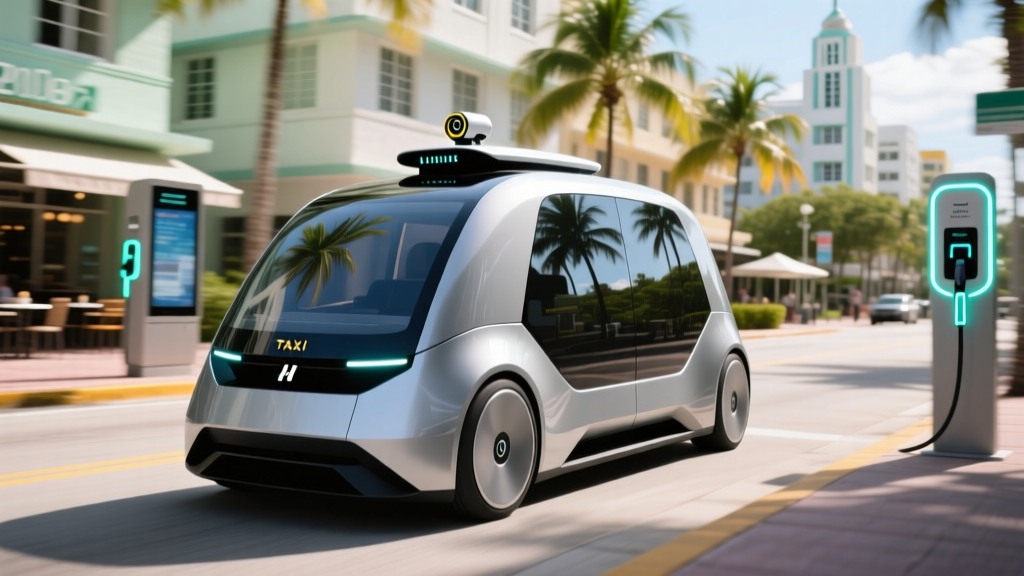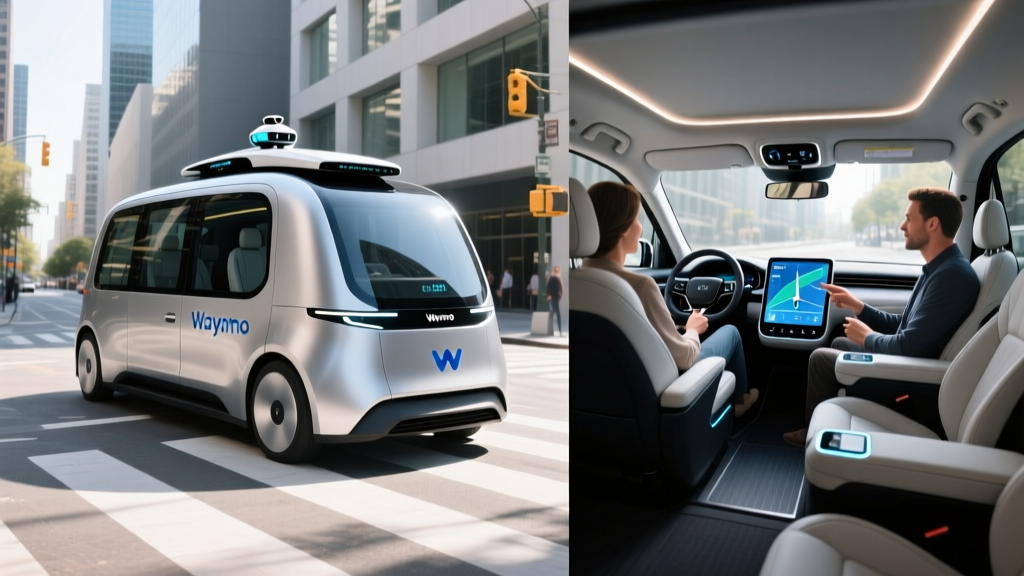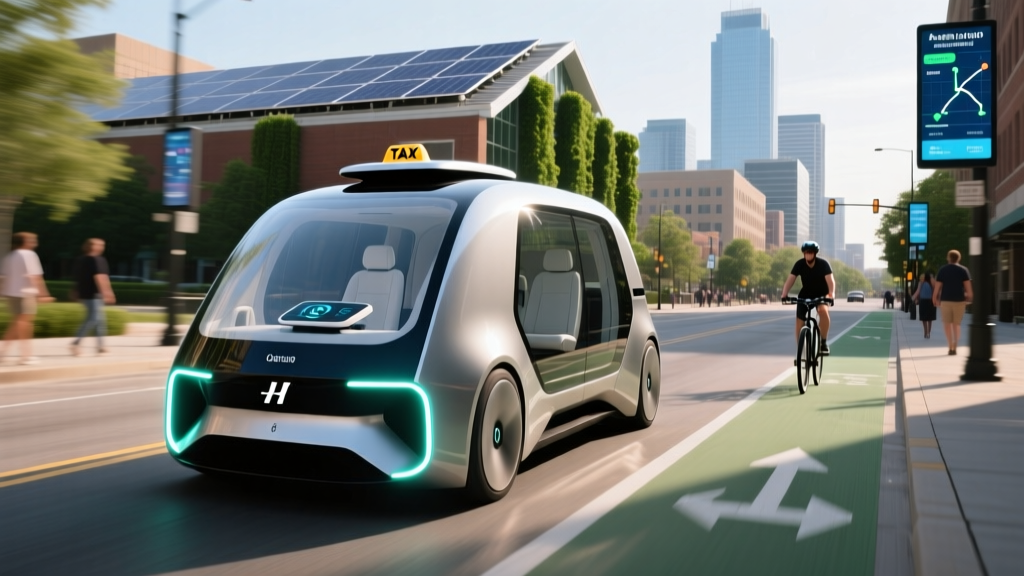
If you've searched for a self-driving Uber in Arlington, Virginia, you've probably noticed the results are a confusing mix of hype headlines and vague "coming soon" promises. As of 2026, Arlington sits adjacent to one of the most active robotaxi testing corridors in the United States — but that doesn't mean you can open the Uber app on Wilson Boulevard and summon a driverless car. Here's exactly what's available, what's in testing, and what the data says about safety, cost, and limitations.
The Autonomy Gap: Level 2 vs. Level 4 Explained
The single most important distinction in the robotaxi conversation is the difference between consumer driver-assistance and true driverless operation. Marketing materials blur this line constantly, but the engineering reality is stark:
| SAE Level | What It Means | Real-World Examples | Driver Required? |
|---|---|---|---|
| Level 2 | Partial automation — steering + acceleration assisted | Tesla Autopilot, FSD (Supervised), GM Super Cruise, Ford BlueCruise | Yes, always — hands on or eyes on |
| Level 3 | Conditional automation — car drives in specific scenarios | Mercedes Drive Pilot (limited highway traffic, ≤40 mph) | Eyes off allowed, must be ready to resume |
| Level 4 | High automation — no driver needed in geofenced area | Waymo One, Zoox, Cruise (pre-suspension) | No — fully driverless within operational design domain |
| Level 5 | Full automation — any road, any condition | Does not exist commercially | N/A |
When people ask about a "self-driving Uber in Arlington," they're typically asking about Level 4 robotaxi service — a vehicle with no human behind the wheel, summoned via app. That's a fundamentally different technology category than the Tesla Model Y you might buy with FSD (Supervised), which remains a Level 2 system requiring constant driver engagement.
Where Can You Actually Use a Robotaxi Right Now?
As of early 2026, fully driverless commercial robotaxi service in the United States is extremely limited geographically. Here's the current landscape:
| Service | Operational Cities (Commercial, Driverless) | Testing / Expansion Areas | Uber Integration? |
|---|---|---|---|
| Waymo One | Phoenix metro, San Francisco, Los Angeles | Austin (expansion announced) | Yes — Waymo rides bookable through Uber app in Phoenix and SF |
| Zoox | Limited Las Vegas corridors, Foster City (CA) pilot | Seattle (testing) | No — Zoox operates its own app |
| Cruise | Suspended commercial ops post-Oct 2023 incident; limited supervised testing resumed in Phoenix, Dallas, Houston | No driverless commercial service active | No |
| Motional (Hyundai/Aptiv) | No commercial service | Las Vegas testing (via Uber/Lyft integration in limited capacity) | Limited Uber integration in Las Vegas (with safety driver) |
Arlington, Virginia, does not currently have any commercial driverless robotaxi service. The Washington, D.C. metro area — including Arlington, Alexandria, and parts of D.C. proper — has seen autonomous vehicle testing over the years, but no operator has received regulatory approval for fully driverless commercial rides in the district or Northern Virginia as of this writing.
Virginia's autonomous vehicle regulatory framework allows testing with permits, but the path to commercial driverless deployment involves approval from both state authorities and local jurisdictions. The Virginia DMV oversees AV testing permits, and no operator has publicly announced an imminent Arlington launch date.
Uber's Robotaxi Strategy: Aggregator, Not Operator
Uber has positioned itself as a platform partner rather than building its own Level 4 robotaxi fleet. After selling its Advanced Technologies Group (ATG) to Aurora Innovation in 2020, Uber pivoted to integration partnerships:
- Waymo: Uber and Waymo announced a multi-year partnership allowing Uber app users in Phoenix and San Francisco to be matched with Waymo driverless vehicles. If a Waymo is available and your trip falls within its geofence, the Uber app routes your ride to a Waymo vehicle — same app, same payment flow.
- Motional: Limited integration in Las Vegas with safety-driver-equipped Hyundai Ioniq 5 robotaxis.
- Avride (formerly Yandex SDG): Uber announced a partnership for Dallas-Fort Worth expansion targeting 2026-2027.
For Arlington riders, this means your Uber app will continue showing human-driven UberX, Comfort, and Black options. If and when a Waymo or other Level 4 operator receives Virginia approval and establishes a geofence covering Arlington, Uber's platform is the most likely integration point.
Robotaxi Pricing: How Does It Compare to UberX?
Where robotaxi services are live, pricing has been aggressively subsidized to build ridership. Here's how Waymo One pricing has compared to standard rideshare in active markets:
| Route Example | UberX (Human Driver) | Waymo One (Driverless) | Notes |
|---|---|---|---|
| Airport to downtown (PHX, ~8 mi) | $18–$26 | $15–$22 | Waymo often cheaper on airport routes due to flat pricing |
| Short urban trip (SF, ~3 mi) | $12–$18 | $10–$16 | Promotional credits frequently applied |
| Suburban commute (~15 mi) | $28–$40 | $25–$38 | Surge pricing affects UberX more than Waymo |
| Late night / high demand | $35–$55 (surge) | $20–$35 (no surge) | Waymo doesn't implement surge pricing — limited supply instead |
Key pricing insight: Waymo's current pricing is not sustainable long-term. The company is subsidizing rides to build market share and rider comfort. Analysts estimate Waymo's true cost per ride — factoring in vehicle hardware (~$150,000+ per equipped Jaguar I-PACE or Zeekr RT), remote assistance staffing, insurance, and fleet operations — is significantly higher than current fares. Expect pricing to normalize upward as the service matures beyond its growth phase.
For Arlington, there is no robotaxi pricing to compare yet. When service eventually arrives, expect introductory pricing comparable to UberX, with premiums for the novelty and convenience of driverless operation during peak demand periods when UberX surges.
Safety Data: What the Numbers Actually Show
Robotaxi safety is the most contentious topic in autonomous vehicles, with operators, regulators, and the public interpreting the same data differently. Here's what we know from concrete, reported figures:
Waymo Safety Record (Through 2025)
- Total autonomous miles driven: Over 30 million fully driverless miles across Phoenix, SF, and LA (per Waymo's public reporting)
- Contact rate: Waymo's own study, peer-reviewed and published, claims a 73% reduction in police-reported crash involvement rates compared to human baseline drivers in the same geographies
- Injury severity: Waymo reports an 84% reduction in crashes involving any injury compared to human benchmarks
- Notable incidents: Multiple minor contact events in school zones and construction zones; NHTSA has opened inquiries into specific incidents but no fleet-wide recalls mandated
The Cruise suspension context matters: In October 2023, a Cruise robotaxi in San Francisco struck a pedestrian who had been thrown into its path by a human-driven vehicle, then dragged the person approximately 20 feet while pulling to the curb. Cruise initially failed to disclose the dragging aspect to regulators, leading the California DMV to suspend its permit. The incident triggered a cascading shutdown — Cruise pulled out of all cities, GM cut funding by $1 billion, and the company spent over a year restructuring before resuming limited supervised testing. This remains the most significant real-world demonstration of how a single edge-case failure can collapse an entire robotaxi operation.
For comparison, the NHTSA reports that human drivers in the U.S. are involved in approximately 5.5 million police-reported crashes annually, with roughly 1.15 deaths per 100 million vehicle miles traveled. Robotaxis have not accumulated enough miles to achieve statistical parity with these population-level figures, but early data from Waymo's millions of driverless miles suggests competitive or superior safety performance in their operational domains — with the critical caveat that robotaxis operate in geofenced, mapped, and relatively predictable urban environments, not rural highways or unmapped roads.
The Technology Stack: How Robotaxis Actually See the World
Level 4 robotaxis use a fundamentally different sensor architecture than consumer Level 2 vehicles:
Typical Level 4 Robotaxi Sensor Suite
| Sensor Type | Function | Example Specs |
|---|---|---|
| LiDAR (Light Detection and Ranging) | 3D point-cloud mapping of surroundings; precise distance measurement regardless of lighting | Multiple roof- and bumper-mounted units; 360° coverage; range up to 200–300m; millions of points per second |
| Cameras | Color imaging for lane markings, traffic lights, signs, object classification | 8–12+ cameras; high dynamic range; overlapping fields of view for redundancy |
| Radar | Velocity detection of moving objects; all-weather performance | 4–6 units; effective in rain/fog where LiDAR degrades |
| HD Maps + Localization | Centimeter-precise vehicle positioning within pre-mapped environment | Proprietary HD maps updated frequently; GPS + IMU + LiDAR localization fusion |
| Compute | Real-time sensor fusion, prediction, and planning | Custom AI accelerators; hundreds of TOPS (trillions of operations per second); redundant compute paths |
This contrasts sharply with Tesla's camera-only FSD (Supervised) approach, which relies on vision-only neural networks without LiDAR or radar. Tesla's Level 2 system places the human driver as the redundancy layer. Level 4 robotaxis eliminate the human, so they require hardware redundancy — multiple overlapping sensor modalities so that if one system is degraded (camera blinded by sun glare, LiDAR scattered by heavy rain), others maintain environmental awareness.
The cost of this sensor stack is substantial. A fully equipped Waymo vehicle's hardware is estimated at $150,000–$200,000, though per-unit costs are declining as LiDAR and compute prices drop. This hardware cost is the primary reason robotaxi economics don't yet pencil out without subsidies or very high utilization rates.
Current Limitations: What Robotaxis Cannot Do
Understanding limitations is essential for anyone considering robotaxi service — whether in Phoenix today or Arlington someday:
- Geofencing: Robotaxis operate only within precisely mapped boundaries. Cross the geofence line and the vehicle will pull over safely and end the ride. You cannot take a Waymo from Phoenix to Sedona.
- Weather degradation: Heavy rain, fog, and snow scatter LiDAR point clouds and obscure cameras. Waymo has improved its rain performance significantly, but severe weather events still trigger service suspensions. Snow-covered roads remain effectively off-limits for current Level 4 systems.
- Construction zones: While improving, robotaxis still struggle with dynamic lane reconfigurations, temporary barriers, and flagger-directed traffic. Expect the vehicle to pull over and request remote human assistance in complex construction scenarios.
- Pick-up/drop-off precision: Robotaxis cannot pull into parking garages, navigate private driveways, or stop in loading zones that aren't pre-mapped. You walk to the car, not the other way around.
- No highway service (mostly): Most current robotaxi geofences cover urban and suburban arterials, not interstate highways. Waymo has begun limited freeway-capable routes in Phoenix, but this is the exception.
- Wait times: Fleet sizes are small. In Phoenix, Waymo operates roughly 1,000+ vehicles; in SF, fewer. During peak demand, you may wait 15–25 minutes for a robotaxi vs. 3–5 minutes for a human UberX.
- Accessibility: Current robotaxi fleets use standard sedans and SUVs — no wheelchair-accessible vehicles are available in any fleet as of 2026. Zoox's purpose-built vehicle, when it reaches commercial scale, is designed with accessibility in mind but is not yet widely deployed.
- Remote assistance delays: When a robotaxi encounters an edge case it cannot resolve autonomously, it contacts a remote human operator. This can add 2–10 minutes of stationary wait time to your trip.
Regulatory Landscape: Who Decides Where Robotaxis Can Operate?
Robotaxi deployment in the U.S. involves a patchwork of regulatory authorities:
- Federal (NHTSA): Sets vehicle safety standards (FMVSS) and investigates crashes. NHTSA has issued standing general orders requiring AV operators to report crashes. However, NHTSA does not "approve" robotaxi services for operation — that authority falls to states.
- State DMVs / PUCs: The California DMV issues testing and deployment permits — the most influential regulatory body in AV policy, as demonstrated by its Cruise permit suspension. Other states have their own frameworks: Arizona has been permissive (Waymo's Phoenix launch), while some states require legislative action before driverless commercial service is legal.
- Virginia specifically: Virginia Code § 46.2-1080 et seq. governs autonomous vehicle testing and operation. The state allows AV testing with a permit and insurance requirements, but commercial driverless passenger service requires additional local coordination. Arlington County would need to work with the state and any operator on deployment logistics including curb management, emergency response protocols, and geofence boundaries.
- Local jurisdictions: Cities control curb access, parking, and local traffic enforcement. Even with state approval, a robotaxi operator needs local buy-in for pick-up/drop-off zones and emergency response coordination.
For Arlington residents, the regulatory path to a self-driving Uber involves: (1) an operator applying for Virginia state deployment authority, (2) coordination with Arlington County and WMATA on urban logistics, (3) geofence mapping of Arlington's street network, and (4) integration with Uber's platform. None of these steps has been publicly initiated by any operator as of early 2026.
What Arlington Riders Should Watch For
While driverless service isn't imminent in Arlington, several signals would indicate progress:
- Waymo East Coast announcements: Waymo has focused exclusively on Sun Belt and West Coast cities. Any announcement of East Coast or Mid-Atlantic expansion would be the strongest signal.
- Virginia legislative activity: Bills expanding AV deployment authority beyond testing would precede commercial launches.
- Uber partnership expansions: Uber's Avride (Dallas) and Waymo partnerships demonstrate the platform-integration model. Arlington would likely receive robotaxi service through Uber's app rather than a standalone operator app.
- Motional progress: The Hyundai/Aptiv joint venture has tested in Boston and Las Vegas. An East Coast city with existing Hyundai relationships could be a logical next market.
Frequently Asked Questions
Can I hail a self-driving Uber in Arlington, VA right now?
No. As of 2026, no commercial driverless robotaxi service operates in Arlington or the broader Washington, D.C. metro area. The nearest active robotaxi services are Waymo One in Phoenix, San Francisco, and Los Angeles — all accessible through the Uber app in those cities.
Is Tesla's FSD the same thing as a Waymo robotaxi?
No. Tesla's Full Self-Driving (Supervised) is an SAE Level 2 driver-assistance system that requires the human driver to remain fully engaged and ready to take over at any moment. Waymo One is a Level 4 driverless service with no human in the vehicle. The technology, regulatory approval, safety architecture, and liability frameworks are entirely different.
How much would a robotaxi ride cost compared to UberX?
In active markets (Phoenix, SF), Waymo rides booked through Uber are priced comparably to or slightly below UberX, typically $10–$25 for urban trips. Robotaxis don't implement surge pricing, making them relatively cheaper during peak demand. However, current pricing is subsidized — long-term fares are expected to rise as operators seek profitability.
Are robotaxis actually safer than human drivers?
Early data from Waymo's 30+ million driverless miles suggests lower police-reported crash rates and significantly lower injury rates compared to human driver benchmarks in the same cities. However, robotaxis operate in geofenced, mapped urban environments and avoid the most challenging conditions (heavy snow, unmapped roads, highways in many cases). Direct comparison to all human driving — including rural, highway, and adverse-weather driving — is not statistically valid with current data volumes.
When will self-driving Ubers come to Arlington or D.C.?
No operator has announced a timeline for Washington, D.C. or Northern Virginia service. Given the regulatory complexity, weather challenges (including snow), and dense urban environment, Arlington is unlikely to be among the next wave of robotaxi cities. Reasonable estimates place East Coast urban robotaxi deployment in the 2027–2030 window, contingent on regulatory approval and operator expansion priorities.
What happens if a robotaxi gets into an accident?
The robotaxi operator (e.g., Waymo) carries commercial insurance and assumes liability for its vehicles. In the event of a crash, the vehicle is designed to pull over safely, contact emergency services if needed, and report the incident to NHTSA under standing general order requirements. Riders are not liable for vehicle operation.