Texas Is the Epicenter of Autonomous Trucking
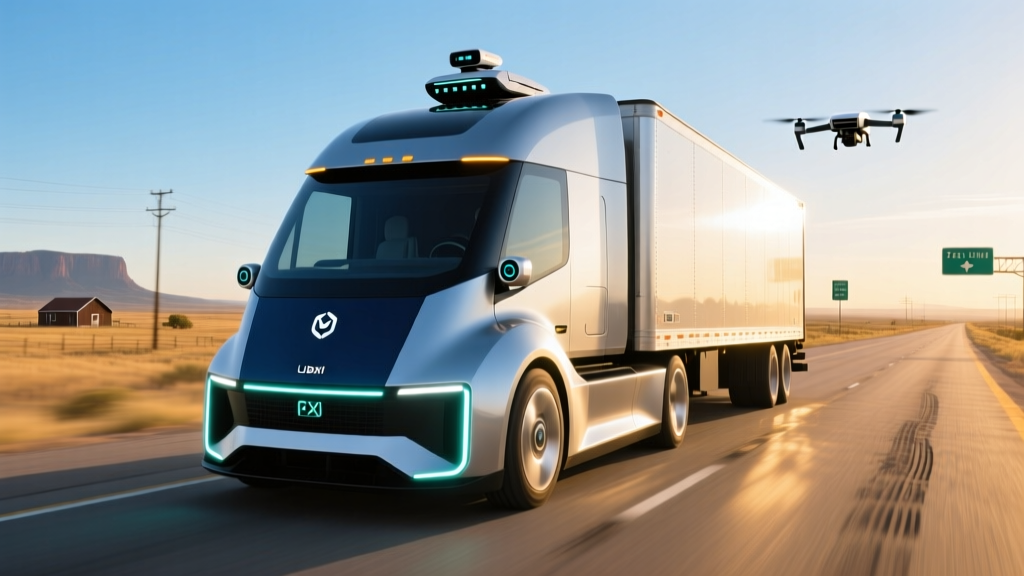
When people search for self driving semi trucks in texas, they're usually looking for one of two things: where autonomous 18-wheelers are currently hauling freight, and how close the technology is to replacing human drivers. The answer in 2026 is both encouraging and constrained. Texas has more autonomous truck miles logged than any other U.S. state, thanks to its permissive regulatory environment, long straight interstate corridors, and mild winters. But these are not driverless trucks roaming freely — they operate within tightly defined SAE Level 4 geofences, primarily on highway segments between major freight hubs.
This guide breaks down exactly which companies are running self-driving semi trucks in Texas today, what the technology stack looks like, the safety record so far, and how autonomous freight compares economically to traditional trucking.
SAE Automation Levels: Where Autonomous Trucks Actually Sit
Understanding the SAE automation levels is critical before evaluating any autonomous trucking claim. Consumer driver-assist systems like Tesla's Autopilot or Ford BlueCruise are SAE Level 2 — the driver must remain engaged at all times. Autonomous freight trucks operating in Texas are classified as SAE Level 4, meaning they can handle all driving tasks without human intervention, but only within a defined operational design domain (ODD).
- Level 2 (Driver Assist): Systems like Tesla Autopilot, GM Super Cruise. Driver must monitor and intervene. Not self-driving.
- Level 4 (High Automation): Waymo Via, Aurora, Kodiak. No driver needed inside the ODD. This is what's running on Texas highways.
- Level 5 (Full Automation): No geographic or weather restrictions. Does not exist commercially for trucks or cars in 2026.
The key distinction: Level 4 trucks can operate without a safety driver on approved routes, but they cannot handle every scenario. If conditions exceed the system's capabilities — heavy snow, unmapped construction zones, sensor obstruction — the truck must execute a minimal risk condition (MRC), which typically means pulling over safely and waiting for remote assistance or human intervention.
Who Is Operating Self-Driving Semi Trucks in Texas Right Now?
As of 2026, three primary companies are running commercial autonomous freight operations on Texas highways, with a fourth in advanced testing. These are not pilot programs hauling empty trailers — these are revenue-generating freight runs for major logistics customers.
| Company | Primary Texas Corridors | Freight Partners | Driver in Cab? | Status |
|---|---|---|---|---|
| Aurora Innovation | I-45 (Dallas–Houston), I-35 (Dallas–San Antonio) | FedEx, Volvo, PACCAR | No (driverless since late 2024) | Commercial operations |
| Waymo Via | I-45 (Dallas–Houston), I-10 (Houston–San Antonio) | J.B. Hunt, UPS | No (driverless since 2024) | Commercial operations |
| Kodiak Robotics | I-35 (Dallas–Laredo), I-45 (Dallas–Houston) | AT&T, IKEA, US Xpress | No (driverless since 2025) | Commercial operations |
| Gatik | Short-haul DFW metro routes | Walmart | No | Commercial (box trucks, not semis) |
Where can you see them? The most active stretch is the I-45 corridor between Dallas and Houston — roughly 240 miles of flat, well-marked interstate that represents an ideal ODD for Level 4 systems. Aurora's driverless trucks have been running this route commercially since late 2024, hauling FedEx freight in PACCAR-built Peterbilt 579 autonomous rigs. Waymo Via uses a custom-built Class 8 platform on the same corridor for J.B. Hunt loads. Kodiak focuses heavily on the Dallas-to-Laredo run on I-35, which is one of the highest-volume freight corridors in North America connecting to the Mexican border.
Technology Stack: How These Trucks Actually See the Road
Unlike Tesla's camera-only FSD approach for consumer vehicles, every major autonomous trucking company uses a multi-sensor fusion stack. The reasoning is straightforward: a fully loaded 80,000-pound semi traveling at 70 mph needs to detect objects at far greater distances than a passenger car, and camera-only systems struggle with depth estimation at those ranges.
- LiDAR: 3–6 roof- and bumper-mounted units providing 360° 3D point clouds at 200–300 meter range. Primary sensor for object detection and distance measurement. Brands: Luminar, Innoviz, Hesai.
- Cameras: 8–12 high-resolution units covering all sightlines, used for lane detection, sign reading, and classification. Supplement LiDAR with texture and color data.
- Radar: 4–6 units for velocity detection and all-weather performance. Radar penetrates fog and rain where LiDAR degrades.
- HD Maps + Localization: Pre-mapped routes with centimeter-level precision. Trucks localize against the map using LiDAR and GPS/IMU fusion.
- Compute: NVIDIA DRIVE Orin or custom silicon, typically 500+ TOPS of processing power running perception, prediction, and planning models simultaneously.
Kodiak's approach is notable for its modular "sensor pod" design — a roof-mounted unit containing LiDAR, cameras, and radar that can be swapped in under 10 minutes if a component fails. This is a practical concession to fleet maintenance reality: you can't send an autonomous truck to a specialized depot every time a sensor needs calibration.
All three major operators rely on geofencing — the trucks only operate on pre-mapped highway segments where the ODD has been validated. The truck handles highway driving (lane keeping, merging, exit navigation, speed management), but the first and last miles (surface streets, distribution center navigation) are typically handled by human yard jockeys or drivers at transfer hubs. This hub-to-hub model is the dominant architecture in 2026.
Safety Record: What the Data Actually Shows
Any discussion of autonomous truck safety requires separating marketing claims from reported incident data. The National Highway Traffic Safety Administration (NHTSA) requires all Level 4 operators to report crashes involving their automated driving systems under a Standing General Order issued in 2022 and updated since.
- Aurora: Over 2 million driverless freight miles logged on Texas highways. Zero at-fault collisions reported. Multiple MRC (pull-over) events triggered by construction zones and sensor occlusion — no injuries.
- Waymo Via: Approximately 1.5 million autonomous truck miles in Texas. One minor low-speed incident during a transfer-hub maneuver (2025) — truck scraped a jersey barrier while repositioning, no injuries, $2,100 in damage.
- Kodiak: Over 1 million driverless miles on I-35 and I-45. Zero reported collisions. Notable for publishing monthly disengagement and MRC data voluntarily.
Sources: NHTSA ADS crash reporting, company safety disclosures, IIHS analysis.
For context, the Federal Motor Carrier Safety Administration (FMCSA) reports that human-driven large trucks are involved in approximately 1.15 fatal crashes per 100 million vehicle miles traveled. The autonomous operators have not yet accumulated enough miles to make statistically rigorous fatality-rate comparisons — 2 million miles is a fraction of the billions of miles needed for actuarial confidence. However, the absence of at-fault collisions across roughly 4.5 million combined driverless miles is a positive early signal.
The most common "incident" for autonomous trucks is not a crash but a minimal risk condition event — the truck detects something it can't confidently handle (a lane closure with non-standard signage, a disabled vehicle partially blocking a lane, heavy rain degrading LiDAR returns) and pulls to the shoulder. These events cause delays but not danger. Aurora reports an MRC rate of roughly 1 per 500–800 miles on its Texas routes, a figure that has improved steadily with software updates.
Economics: Autonomous Trucks vs. Human-Driven Freight
The economic case for self-driving semi trucks in Texas hinges on utilization. A human truck driver is limited by Hours of Service (HOS) regulations to 11 hours of driving within a 14-hour on-duty window, followed by 10 consecutive hours off. An autonomous truck can run 20+ hours per day, stopping only for fuel/charge, maintenance, and loading.
| Metric | Human-Driven Truck | Autonomous Truck (Level 4) |
|---|---|---|
| Daily operating hours | 11 hrs (HOS limit) | 20+ hrs |
| Driver cost per mile | $0.55–$0.75 | $0 (no driver) + ~$0.15 tech fee |
| Dallas → Houston (240 mi) transit | ~4 hrs (one driver) | ~3.5 hrs (no breaks needed) |
| Round trips per week (same corridor) | 3–4 | 6–8 |
| Estimated cost per loaded mile | $1.80–$2.20 | $1.40–$1.70 (est.) |
| Sensor suite / tech amortization | N/A | ~$150K–$200K per truck |
The per-mile savings of $0.30–$0.50 might sound modest, but at fleet scale — thousands of trucks running tens of thousands of miles monthly — it's transformative for carriers. Aurora has stated publicly that its autonomous trucks achieve roughly double the utilization of human-driven equivalents on the same corridor, which is where the real margin improvement lives.
The trade-off is capital cost. The sensor suite and compute hardware add $150,000–$200,000 to the price of a Class 8 truck (which starts around $150,000–$180,000 for a conventional diesel rig). Companies are amortizing this over 4–5 years, with the utilization gains covering the premium. No consumer pricing applies here — this is B2B freight contracting, not a service you can hail.
Regulatory Landscape: Why Texas Leads
Texas has become the dominant state for autonomous trucking for specific regulatory reasons. In 2017, Texas passed SB 2205, which explicitly authorized the operation of autonomous vehicles on public roads without a human driver, provided the vehicle is insured and can comply with traffic laws. Unlike some states, Texas does not require a special permit or a safety driver for Level 4 commercial operations.
Key regulatory facts for 2026:
- State level: Texas Department of Motor Vehicles and TxDOT oversee autonomous vehicle operations. No special testing permit is required for Level 4 commercial freight — companies must register, insure, and report incidents.
- Federal level: NHTSA regulates vehicle safety standards (FMVSS) but has not yet issued comprehensive ADS-specific standards for commercial trucks. The FMCSA is still developing rulemaking around autonomous truck operator qualifications and maintenance standards.
- Insurance: Texas requires autonomous trucks to carry minimum $5 million in liability coverage (vs. $750K–$1M for conventional commercial trucks). All major operators exceed this minimum.
- Neighboring states: Arizona is similarly permissive. New Mexico and Louisiana have more restrictive frameworks. This is why most Texas autonomous routes stay within state lines — crossing into a more restrictive state would require a human driver to take over at the border.
The Texas Department of Transportation has also invested in infrastructure readiness, including high-definition lane markings and V2I (vehicle-to-infrastructure) communication pilots on sections of I-45 that benefit autonomous system reliability.
Current Limitations: What Autonomous Trucks Cannot Do
The gap between marketing and reality matters. Self-driving semi trucks in Texas in 2026 are impressive on their approved routes, but they face hard limitations that define where and when they can operate.
- Weather: Heavy rain, fog, and dust storms degrade LiDAR and camera performance. Aurora and Kodiak will pause operations and pull over when visibility drops below system thresholds. This means West Texas dust storms and Gulf Coast tropical downpours can sideline the fleet.
- Geofence boundaries: Trucks cannot deviate from pre-mapped highway segments. If an accident closes I-45 and the detour goes through unmapped surface streets, the truck cannot take the detour autonomously.
- Construction zones: Non-standard lane shifts, temporary barriers, and flaggers remain a significant challenge. MRC events spike in active construction areas.
- First/last mile: Autonomous systems handle highway driving only. Getting from the interstate exit to a warehouse dock requires a human driver or yard jockey. This hub-to-hub model adds transfer time and labor cost at both ends.
- No urban surface streets: These trucks do not navigate downtown Dallas or Houston traffic. They stay on the Interstate.
- Payload restrictions: Some operators restrict hazmat and oversized loads until more operational data is accumulated.
The weather limitation is particularly relevant in Texas. While the state avoids the snow and ice that shut down autonomous operations in northern states, the combination of intense rain squalls along the Gulf Coast corridor (Houston–San Antonio on I-10) and blowing dust in West Texas creates regular operational pauses. Kodiak has reported that roughly 3–5% of scheduled runs are delayed or rerouted due to weather-triggered MRC events.
The Electric Autonomous Truck Question
As of 2026, virtually all autonomous semi trucks operating in Texas are diesel-powered. The sensor suite and compute hardware draw significant electrical load (1–3 kW continuous), but the primary reason for diesel is range and refueling infrastructure. A loaded Class 8 electric semi like the Tesla Semi or Freightliner eCascadia offers 300–500 miles of EPA-estimated range, which is adequate for the Dallas–Houston corridor but leaves little margin for detours, HVAC load, or the added parasitic draw of autonomous sensors.
That said, Aurora has a partnership with Volvo's electric truck platform, and Kodiak has demonstrated autonomous operation on a PACCAR-built electric chassis. The convergence of autonomous driving and electric powertrains is expected to accelerate as battery energy density improves and fast-charging infrastructure expands along freight corridors. The IRS §30D and 45W clean vehicle credits can offset up to $40,000 for qualifying commercial electric trucks, which helps the economics — but fleet operators are waiting for 500+ mile real-world range and reliable 350+ kW depot charging before committing to electric autonomous rigs at scale.
Frequently Asked Questions
Where can I see self-driving semi trucks in Texas right now?
The most active corridor is I-45 between Dallas and Houston, where Aurora and Waymo Via run daily freight operations. Kodiak's trucks are frequently seen on I-35 between Dallas and Laredo. These are commercial freight runs, not public demonstrations — you'll see them in regular highway traffic, identifiable by their roof-mounted sensor arrays and prominent company branding.
Is this truly self-driving or just driver-assist?
These are SAE Level 4 autonomous trucks — genuinely driverless within their operational design domain. There is no human in the cab during highway operation. This is fundamentally different from Level 2 consumer systems like Tesla Autopilot or Ford BlueCruise, which require a fully attentive driver at all times. The trucks handle all driving tasks on approved highway segments without human input.
How safe are autonomous trucks compared to human drivers?
Across roughly 4.5 million combined driverless miles in Texas (Aurora, Waymo Via, Kodiak through early 2026), there have been zero reported at-fault collisions and one minor low-speed property-damage incident. For comparison, the FMCSA reports approximately 1.15 fatal crashes per 100 million miles for human-driven large trucks. The sample size for autonomous trucks is still too small for definitive statistical comparison, but the early record is promising. The most common "incident" is a precautionary pull-over (MRC), not a crash.
Can I hire an autonomous truck to move my freight?
Not directly as an individual. These services are contracted through major carriers like FedEx, J.B. Hunt, UPS, and US Xpress. If you're a shipper working with one of these carriers on Texas lanes, your freight may already be routed on an autonomous truck. Small carriers and owner-operators cannot currently purchase or lease autonomous truck systems — the technology is offered as a managed service, not a product.
When will autonomous trucks operate outside Texas?
Aurora has expanded into the Dallas–Atlanta corridor and is testing on segments in Arizona and the Southeast. Waymo Via operates in Arizona and is expanding in California. However, the patchwork of state regulations means expansion is slow — each new state requires regulatory approval, insurance framework alignment, and route mapping. Texas and Arizona remain the primary operational states for driverless freight in 2026.
Will autonomous trucks replace human truck drivers?
In the near term, no. The hub-to-hub model still requires human drivers for first/last mile, yard operations, and routes outside the geofence. The American Trucking Associations estimates a driver shortage of 78,000+ positions, and autonomous trucks are being positioned to fill long-haul highway segments where driver recruitment is hardest — not to eliminate driving jobs entirely. The role shifts from long-haul highway driving to local delivery, yard operations, and autonomous fleet oversight.