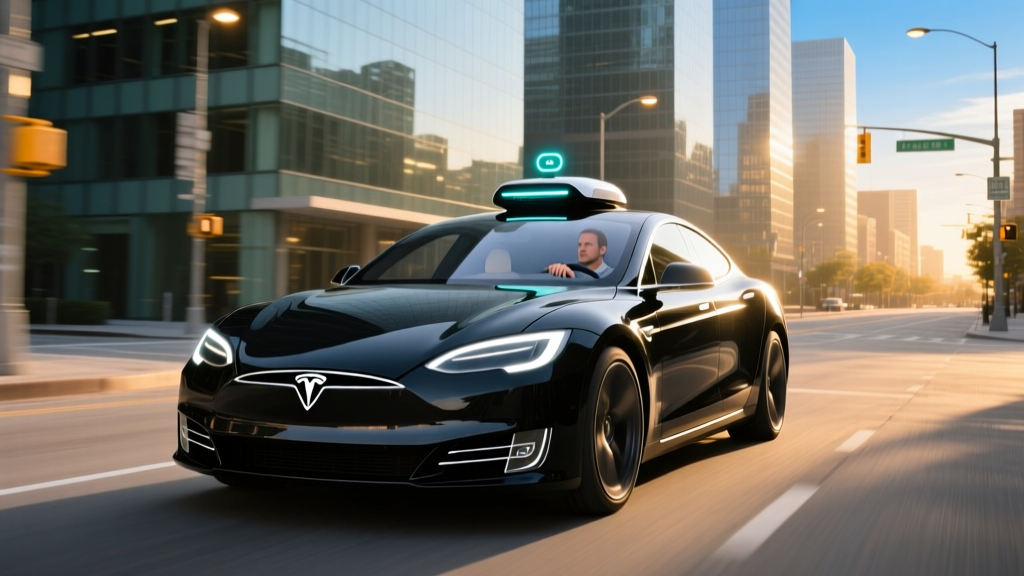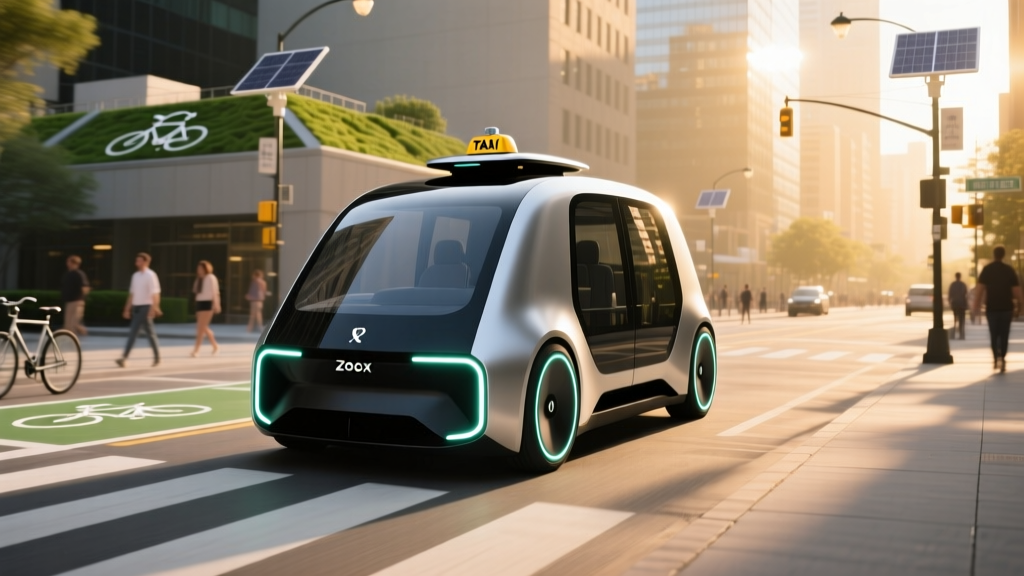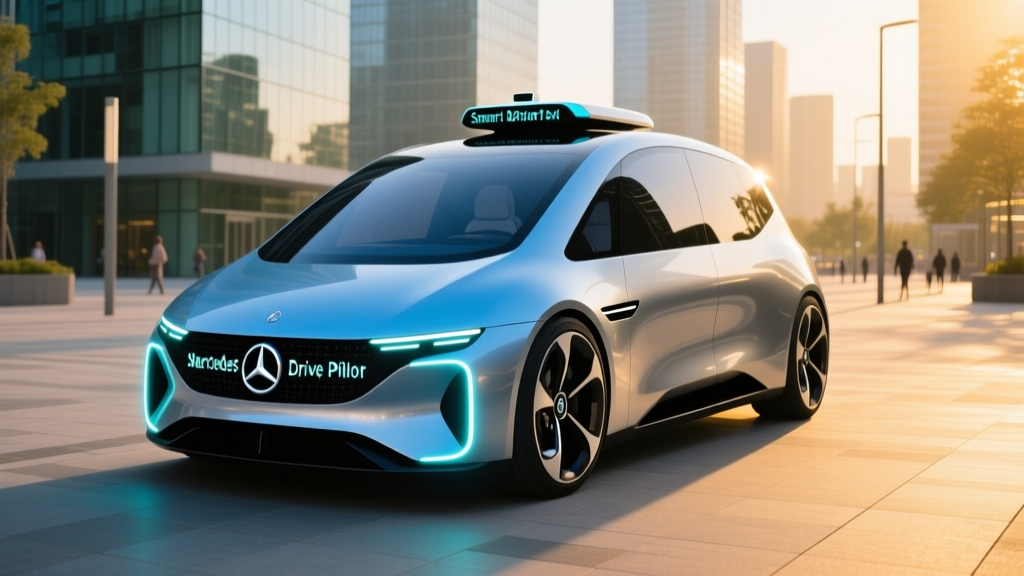
Mercedes-Benz is the first automaker to sell a certified SAE Level 3 automated driving system to U.S. consumers. Called Drive Pilot, it allows the driver to legally hand over control of the vehicle under specific conditions — a fundamentally different proposition than the Level 2 driver-assist systems sold by Tesla, Ford, GM, and others. But what does a self-driving Mercedes cost, and what do you actually get for the money?
This guide breaks down Drive Pilot's subscription pricing, the vehicles it's available on, where you can use it, the technology behind it, its verified safety record, and the hard limitations that define what "self-driving" really means in 2026.
What Is Mercedes Drive Pilot — and What SAE Level Is It?
Before discussing cost, it's critical to define exactly what Drive Pilot is and is not. Mercedes-Benz Drive Pilot is an SAE Level 3 conditional automation system. This is a legally and technically significant designation.
| Level | Name | Who Drives? | Example |
|---|---|---|---|
| Level 0 | No Automation | Human does everything | Basic cruise control |
| Level 1 | Driver Assistance | Human, with one automated function | Adaptive cruise OR lane-keep |
| Level 2 | Partial Automation | Human must supervise at all times | Tesla Autopilot, GM Super Cruise, Ford BlueCruise |
| Level 3 | Conditional Automation | System drives; human must take over when requested | Mercedes Drive Pilot |
| Level 4 | High Automation | System drives; no human needed in geofence | Waymo One, Zoox |
| Level 5 | Full Automation | System drives everywhere, all conditions | Does not yet exist commercially |
Self-Driving Mercedes Cost: Pricing by Model and Subscription
Drive Pilot is not a standalone product — it's an optional system available on specific Mercedes-Benz models, sold as a combination of hardware (included at purchase) and an annual software subscription.
| Vehicle | Drive Pilot Availability | Hardware/Option Cost | Annual Subscription | Base Vehicle MSRP |
|---|---|---|---|---|
| 2025–2026 EQS Sedan (certain trims) | Optional (Level 3, up to 60 km/h / ~37 mph) | $2,500 option package | $1,500/year | ~$105,550 (EQS 450+) |
| 2025–2026 S-Class (S 500 / S 580) | Optional (Level 3, up to 60 km/h / ~37 mph) | $2,500 option package | $1,500/year | ~$118,850 (S 500) |
| Drive Pilot 95 (announced, U.S. TBD) | Up to 95 km/h (~59 mph) — approved in Germany, U.S. rollout pending | TBD (estimated higher tier) | TBD | TBD |
Total first-year cost of ownership with Drive Pilot: For an EQS 450+, expect roughly $105,550 (base) + $2,500 (Drive Pilot option) + $1,500 (first-year subscription) = ~$109,550 before destination, taxes, or other options. Renewing the subscription costs $1,500/year.
Mercedes previously offered a flat purchase price for Drive Pilot in Germany (~€5,000–€9,000 depending on configuration). The U.S. subscription model shifts cost over time but means the system stops working if you don't renew.
Where Can You Use Drive Pilot Right Now?
Drive Pilot operates only in geofenced, pre-mapped areas on divided highways under specific conditions. As of early 2026, U.S. availability is limited.
| Region | Status | Approved Roads / Conditions |
|---|---|---|
| Nevada (Las Vegas area) | Live — first U.S. state to certify Level 3 (late 2023) | Selected divided highways (e.g., portions of I-15, US-93); speed ≤ 37 mph; daytime; clear weather |
| California | Live — approved by CA DMV for Level 3 deployment | Specific mapped freeways in approved regions; same speed/weather restrictions |
| Germany | Live — original launch market (2022) | ~13,191 km of Autobahn; up to 60 km/h (Level 3); up to 95 km/h with Drive Pilot 95 (2025+) |
| Rest of U.S. | Not available | No regulatory approval outside NV and CA |
How Does Drive Pilot Cost Compare to Rideshare and Other Systems?
Drive Pilot is a personal-vehicle automation system, not a robotaxi service. The comparison to Uber/Lyft or Waymo One is apples-to-oranges in terms of use case, but the economics are worth examining for buyers weighing their options.
| Option | Upfront Cost | Recurring Cost | Driver Required? | Typical Use Case |
|---|---|---|---|---|
| Mercedes Drive Pilot (EQS) | ~$109,550+ (vehicle + option) | $1,500/year subscription + insurance + electricity | Yes (Level 3 — must be present) | Highway commute; hands-off in congestion |
| Tesla FSD (Supervised) | $8,000 one-time or $99/month (on $38,990+ vehicle) | $99/month if subscribed | Yes (Level 2 — must supervise) | Highway + some city; driver always liable |
| GM Super Cruise | Included on select trims ($2,100–$2,500 option on others) | Free for first 3 years, then ~$25/month | Yes (Level 2 — eyes-free but hands near wheel) | Mapped divided highways; ~750,000 miles of road |
| Waymo One (robotaxi) | $0 | Per-ride (comparable to Uber/Lyft pricing) | No (Level 4 — fully driverless) | Point-to-point in Phoenix, SF, LA |
| Uber/Lyft (human driver) | $0 | $1.50–$3.50/mile average (varies by city and surge) | N/A | Any destination, any conditions |
Bottom line on cost: If your goal is to avoid driving entirely, a Waymo robotaxi in a supported city costs a fraction of a Drive Pilot-equipped EQS. But if you want the convenience of your own vehicle with the ability to disengage during congested highway commutes — and you accept the liability-transfer benefit of Level 3 — Drive Pilot's $1,500/year subscription is modest relative to the vehicle's price.
The Technology Stack: Sensors, Lidar, and Why It Matters
Mercedes took a sensor-fusion approach with Drive Pilot — fundamentally different from Tesla's camera-only philosophy. The system uses redundant, overlapping sensor arrays to build a real-time 3D model of the vehicle's surroundings.
- Lidar: Rear-mounted roof lidar unit providing a 360° 3D point cloud of the environment (supplied by Luminar in earlier generations; Valeo SCALA 3 in current iterations)
- Radar: Multiple long-range and short-range radar units (front, rear, corners) for object detection and velocity measurement in all weather
- Cameras: Stereo cameras behind the windshield plus surround-view cameras for lane marking detection, traffic sign recognition, and object classification
- Ultrasonic sensors: Short-range proximity detection for close-quarter situations
- HD GPS + pre-mapped HD maps: Centimeter-accurate positioning on pre-scanned road segments — the system will not engage without a valid map match
- Redundant computing: Dual independent compute platforms that can each independently execute safe stop maneuvers
- Redundant steering and braking: Backup actuators ensure the car can stop safely even if a primary system fails
This redundant architecture is a primary reason Drive Pilot achieved Level 3 certification. Regulators in Nevada and Germany required proof that the system could handle sensor failures, compute failures, and unexpected scenarios without driver intervention — something a single-sensor-type approach cannot guarantee.
Safety Record and Regulatory Approval
As of early 2026, Drive Pilot's U.S. deployment is still relatively limited in scale compared to robotaxi fleets. Here's what the data shows:
- Germany: Drive Pilot has been in customer hands since mid-2022 on S-Class and EQS models. Mercedes has reported no at-fault collisions during Level 3 engaged operation in Germany through available reporting periods.
- U.S. (Nevada/California): Deployment began in late 2023/2024. The limited number of equipped vehicles (option take rate is low given the price and restrictions) means aggregate U.S. mileage data is sparse. No NHTSA-reported incidents specifically attributed to Drive Pilot Level 3 operation have been published as of this writing.
- Testing: Mercedes conducted millions of miles of validation testing across Germany, the U.S., and other markets before certification, including extensive edge-case simulation and closed-course validation.
- Liability: Mercedes has publicly committed to accepting liability for accidents caused by Drive Pilot while the system is properly engaged within its operational design domain (ODD). This is verified through their official corporate statements.
Sources: NHTSA, Mercedes-Benz Group AG press releases, Nevada DMV autonomous vehicle certifications.
Regulatory landscape: Level 3 deployment in the U.S. is governed at the state level. Nevada was first to certify Drive Pilot through its DMV autonomous vehicle testing program. California followed through its DMV's Autonomous Vehicle Deployment Program. There is currently no federal framework specifically governing Level 3 consumer vehicle sales — NHTSA retains authority over vehicle safety standards but has not issued a dedicated Level 3 rule. Mercedes must obtain approval state-by-state, which is why Drive Pilot remains unavailable in most of the country.
Current Limitations: What Drive Pilot Cannot Do
The restrictions on Drive Pilot are extensive and define the real-world utility of the system. Understanding these limitations is essential before spending $2,500 plus $1,500/year.
- Speed cap: The U.S. version operates only at speeds up to 60 km/h (~37 mph). Above this speed, the system will not engage or will request driver takeover. (Germany's Drive Pilot 95 raises this to 95 km/h / ~59 mph, but U.S. approval for the higher-speed version is pending.)
- Geofenced roads only: The system requires HD-mapped divided highways. Surface streets, rural roads, and unmapped highway segments are excluded.
- Weather restrictions: Drive Pilot will not activate in heavy rain, snow, fog, or conditions that obscure sensors. It also requires daytime operation in the U.S. — no nighttime Level 3 driving.
- Traffic conditions: Designed primarily for congested, slow-moving highway traffic. In free-flowing traffic above 37 mph, the system is inactive and the driver must use standard Level 2 driver-assist (Mercedes' Distronic adaptive cruise + lane-keeping).
- Takeover requests: When the system approaches its operational limits (e.g., traffic clears and speed rises, the road exits the geofence, weather deteriorates), it issues a takeover request. The driver has approximately 10 seconds to resume control. If the driver does not respond, the vehicle will execute a controlled stop in its lane (activating hazard lights and contacting emergency services).
- Driver monitoring: An interior camera monitors the driver's eyes and head position. You can read, watch content on the vehicle's central display, or browse the web — but you cannot sleep, and your eyes must be open and generally forward-facing. If the system detects the driver is not available to take over, it will not engage or will disengage.
- Construction zones: Active construction areas with altered lane configurations may fall outside the system's ODD and trigger a takeover request.
- No lane changes: The current U.S. Level 3 system maintains position in the current lane. It does not execute autonomous lane changes.
Is Drive Pilot Worth the Cost? A Decision Framework
Consider Drive Pilot if:
- You commute daily on a congested, mapped highway in Nevada or California
- You're already purchasing an EQS or S-Class and the $2,500 option is marginal relative to the vehicle cost
- You value the legal liability transfer — knowing Mercedes accepts responsibility when the system is engaged
- You want to reclaim 20–40 minutes of your commute for reading, emails, or video (within the system's monitoring rules)
Skip Drive Pilot if:
- You live outside Nevada or California (the system won't activate where you drive)
- Your commute is primarily above 37 mph in free-flowing traffic (the system won't engage)
- You expect "full self-driving" — this is a traffic-jam assistant, not a chauffeur
- You prefer to spend the subscription cost on robotaxi rides (a $1,500/year subscription buys ~50–75 Waymo or Uber rides depending on distance)
- You want autonomous lane changes, city driving, or nighttime operation
Frequently Asked Questions
Is Mercedes Drive Pilot truly self-driving?
It is SAE Level 3 conditional automation — the system fully controls steering, braking, and acceleration within its approved conditions, and Mercedes accepts liability. However, you must remain in the driver's seat, be available to take over within ~10 seconds, and the system only operates below 37 mph on mapped divided highways in clear daytime weather. It is not Level 4 or Level 5 "self-driving" in the way a Waymo robotaxi operates without any human in the loop.
How much does self-driving on a Mercedes cost per year?
The Drive Pilot option costs $2,500 at vehicle purchase (on an EQS or S-Class starting around $105,000–$119,000) plus a $1,500/year subscription. If you don't renew the subscription, the Level 3 functionality is disabled, though the vehicle's standard Level 2 driver-assist features continue to work.
Can I use Drive Pilot in any U.S. state?
No. As of 2026, Drive Pilot is certified for consumer use only in Nevada and California. Mercedes must obtain regulatory approval in each state before offering the system. Expansion to additional states depends on regulatory progress and Mercedes' deployment timeline.
What happens if I fall asleep with Drive Pilot engaged?
The driver-monitoring camera will detect that your eyes are closed and issue escalating alerts. If you don't respond, the system will begin a controlled deceleration, activate hazard lights, bring the vehicle to a stop in its lane, and automatically contact emergency services. You cannot use Drive Pilot as a substitute for rest.
Does Drive Pilot work at night or in rain?
No. The U.S. version is restricted to daytime operation in clear weather. Heavy rain, fog, snow, or darkness will prevent the system from engaging or cause it to disengage and request driver takeover.
How is Drive Pilot different from Tesla Autopilot or FSD?
Tesla Autopilot and FSD (Supervised) are SAE Level 2 systems — the driver must supervise at all times and bears full legal liability. Drive Pilot is Level 3 — Mercedes accepts liability when the system is properly engaged. However, Tesla's Level 2 systems operate at any speed and on virtually any road, while Drive Pilot is restricted to ≤37 mph on specific mapped highways. They solve different problems: Tesla offers broad capability with driver responsibility; Mercedes offers narrow capability with manufacturer liability.
Will Drive Pilot get better over time?
Mercedes has announced Drive Pilot 95, which raises the operational speed to 95 km/h (~59 mph) and has been approved in Germany. U.S. approval and rollout of the higher-speed version is expected but not yet confirmed with a timeline. Over-the-air updates may expand the system's geofenced road network within approved states.