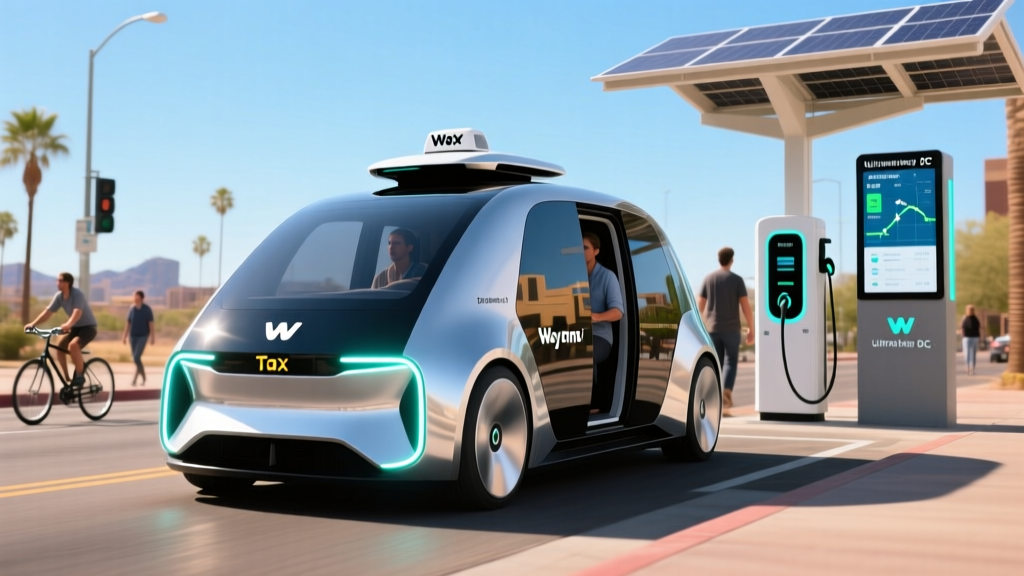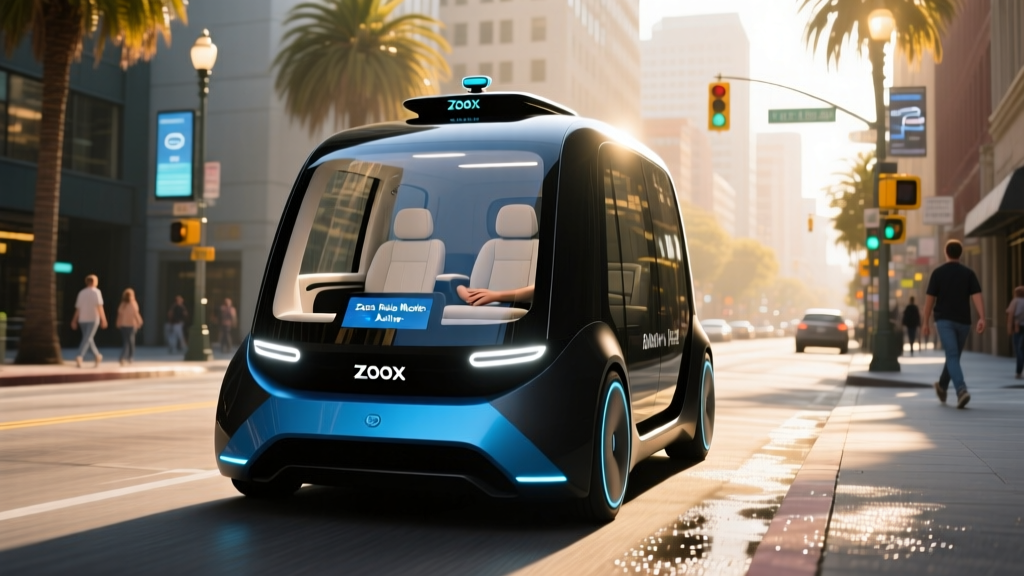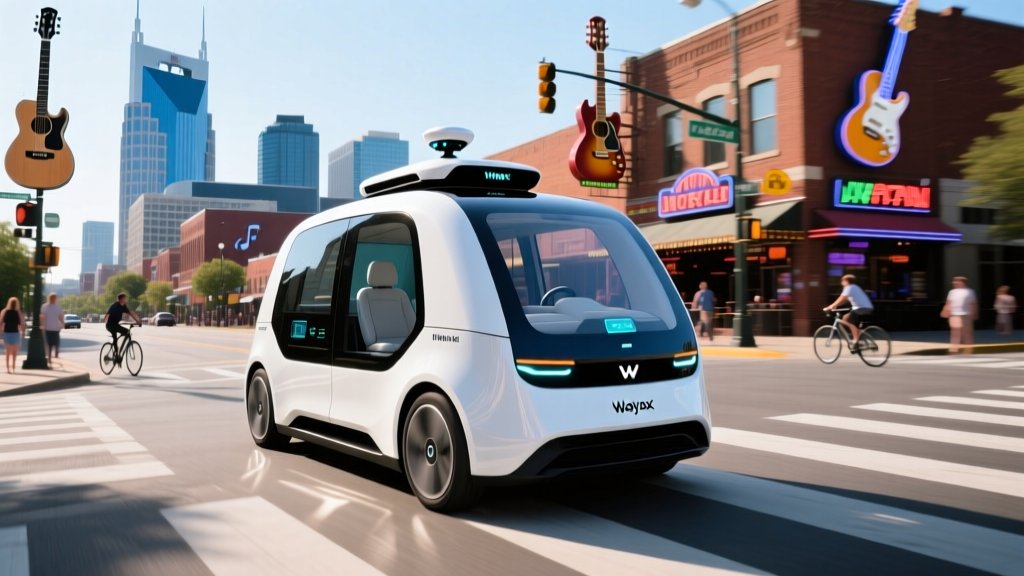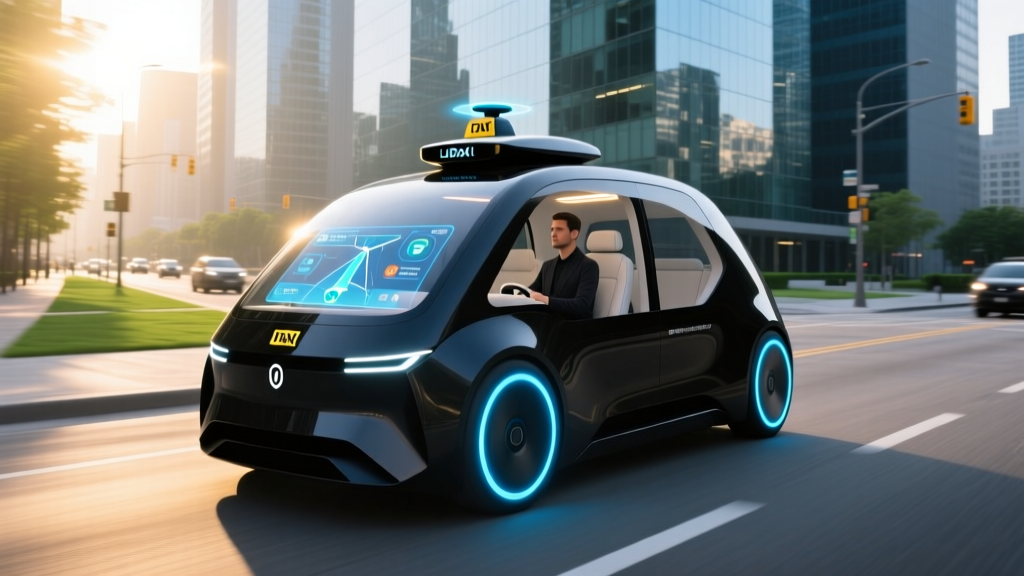
The expansion of robotaxi services across major U.S. cities has brought autonomous vehicles into daily traffic alongside human drivers — and inevitably, into collision reports. Searches around self driving cars accidents spike every time a high-profile incident makes headlines. But headlines rarely tell the full story. What does the actual data say about robotaxi safety in 2026? How do these vehicles compare to human drivers, and what are the real limitations buyers and riders should understand before stepping into a driverless car?
This analysis draws on NHTSA incident reports, operator-published safety data, and independent research to separate signal from noise.
First: What "Self-Driving" Actually Means in 2026
Before examining accident data, it is essential to distinguish between the two categories of autonomous technology on public roads — because conflating them distorts every safety statistic.
| Level | Description | Who's Responsible | Examples |
|---|---|---|---|
| Level 2 | Driver-assist (steering + acceleration). Driver must remain fully engaged. | Human driver | Tesla Autopilot/FSD Supervised, GM Super Cruise, Ford BlueCruise |
| Level 3 | Conditional automation. System drives in specific scenarios; human must take over on request. | Shared (context-dependent) | Mercedes DRIVE PILOT (limited markets/conditions) |
| Level 4 | High automation in a defined operational domain. No driver needed inside that domain. | System/operator | Waymo One, Zoox, Cruise (where permitted) |
| Level 5 | Full automation everywhere, all conditions. Does not currently exist. | System | None commercially available |
When news reports reference "self driving cars accidents," they frequently mix Level 2 incidents (where a human driver was supposed to be paying attention) with Level 4 robotaxi incidents (where no human driver was present). These are fundamentally different failure modes. This article focuses primarily on Level 4 robotaxi safety — the Waymo, Cruise, and Zoox services that operate without a human behind the wheel — while noting where Level 2 data intersects.
Where Can You Actually Ride in a Robotaxi Right Now?
Level 4 robotaxi service in 2026 remains geographically constrained. These vehicles operate within tightly defined geofences — mapped corridors where the system has been validated — and do not function outside those boundaries.
| Operator | Live Commercial Service | Service Model | Hours |
|---|---|---|---|
| Waymo One | Phoenix (metro), San Francisco, Los Angeles, Austin (expanding) | Open commercial rides (app-based) | 24/7 in most markets |
| Zoox | Las Vegas (limited corridor), Foster City, CA (testing) | Limited rider program / early commercial | Limited hours |
| Cruise | Phased re-entry in select cities (post-2023 suspension) | Safety-driver present, limited driverless | Restricted |
| Tesla (announced) | Not yet commercially available as robotaxi | Announced — no public driverless service | N/A |
Waymo remains the dominant commercial operator by a wide margin, completing over 150,000 paid rides per week across its active markets as of late 2025. If you want to hail a truly driverless car today, Phoenix, San Francisco, and Los Angeles are your primary options.
Self Driving Cars Accidents: What the Safety Data Actually Shows
- Total autonomous miles driven: Over 50 million fully driverless miles (cumulative)
- Injury-causing crash rate: Approximately 85% lower than human benchmarks in comparable urban environments, per Waymo's published safety analysis and third-party review by Swiss Re
- Police-reportable crash rate: Approximately 60% lower than human benchmarks
- Most common incident type: Low-speed contact while stopped or maneuvering (e.g., being rear-ended at a stop light)
The most rigorous independent analysis to date comes from a collaboration between Waymo and Swiss Re, one of the world's largest reinsurance companies. Their study compared Waymo's driverless crash data against a human benchmark drawn from over 100 billion miles of driving. The finding: Waymo's vehicles were involved in significantly fewer injury-causing and police-reportable crashes per million miles than the human reference group.
However, important context matters:
- Selection bias in operating domain: Robotaxis operate in geofenced, mapped areas — typically well-marked urban streets at moderate speeds. They do not currently navigate unmapped rural roads, extreme weather, or construction zones outside their domain. Human crash data includes all of those.
- Severity profile: When robotaxi collisions do occur, they tend to be low-speed. The vehicles are programmed conservatively — they stop rather than risk an aggressive maneuver. This means they are occasionally rear-ended by human drivers who expect more assertive behavior.
- The denominator problem: 50 million driverless miles is substantial but still a fraction of the trillions of miles humans drive annually. Statistically rare edge cases may not yet appear in the data.
Cruise's 2023 Suspension: A Case Study in What Can Go Wrong
Any honest discussion of self driving cars accidents must address the October 2023 incident in San Francisco that led to Cruise's statewide suspension. A Cruise robotaxi struck a pedestrian who had been thrown into its path by a human-driven vehicle. The robotaxi detected the collision but then pulled over to the curb, dragging the pedestrian approximately 20 feet while she was trapped underneath.
The California DMV suspended Cruise's deployment permit, citing failures in post-collision behavior and incomplete reporting to regulators. Cruise subsequently paused nationwide operations, conducted a safety review, and began a phased return with human safety drivers before resuming limited driverless operations in 2024-2025.
The incident underscored a critical point: the risk in autonomous driving is not only about avoiding the initial collision but about how the system responds to edge cases — scenarios its training data may not have fully anticipated.
How Much Does a Robotaxi Cost vs. Uber and Lyft?
| Service | Typical 5-Mile Trip | Surge Pricing? | Notes |
|---|---|---|---|
| Waymo One | $12–$22 | Yes (demand-based) | Comparable to UberX; premium during peak demand |
| UberX | $10–$20 | Yes | Human driver; wider coverage area |
| Lyft | $10–$19 | Yes | Human driver; wider coverage area |
| Zoox | Early promotional pricing (varies) | Limited availability | Not yet at full commercial scale |
In Waymo's core markets, pricing is broadly competitive with UberX and Lyft — sometimes slightly higher during peak periods, sometimes lower during promotional windows. The key trade-off is coverage: Uber and Lyft operate everywhere; Waymo operates within its geofence. If your destination falls outside the service area, Waymo simply will not accept the ride.
Using the service mirrors a standard rideshare: open the Waymo app, enter your destination, and a vehicle arrives. The difference is that no one is in the driver's seat. In-car screens display the route, and riders can contact support via an in-vehicle button or the app.
The Technology Stack: How Robotaxis See the Road
Understanding self driving cars accidents requires understanding how these vehicles perceive their environment. Level 4 robotaxis rely on layered sensor systems — a fundamentally different approach than the camera-dominant systems in consumer Level 2 vehicles like Teslas.
- LiDAR: Multiple roof- and body-mounted units providing 360° 3D point-cloud mapping up to 500+ meters. Works in darkness; degraded by heavy precipitation.
- Cameras: High-resolution surround cameras for lane markings, traffic signals, signage, and object classification.
- Radar: Forward- and side-facing radar for velocity detection of moving objects, particularly in weather conditions where LiDAR and cameras degrade.
- Audio sensors: External microphones to detect emergency vehicle sirens.
- HD Maps + Geofencing: Pre-mapped centimeter-accurate road models. The vehicle only operates where this map data exists and has been validated.
This sensor redundancy is why Level 4 robotaxis perform differently than Level 2 consumer vehicles. A Tesla running FSD Supervised relies primarily on cameras and neural networks (its "Tesla Vision" approach). If a camera misinterprets a scene — a white truck trailer against a bright sky, for instance — there is no LiDAR or radar fallback. Level 4 systems have multiple independent sensor layers, and a disagreement between sensors triggers conservative behavior (slowing down or stopping) rather than proceeding on a single data source.
That said, no sensor suite eliminates all risk. LiDAR scatters in heavy rain and fog. Cameras struggle in direct sun glare. Radar can produce false positives from roadside metal objects. The system's decision-making software — how it fuses these inputs and handles conflicting data — is where the real engineering challenge lies, and where edge-case accidents originate.
Regulatory Landscape: Who Approves Robotaxi Operations?
Robotaxi regulation in the United States is fragmented across federal, state, and local jurisdictions — and this fragmentation directly affects where self driving cars accidents are reported and investigated.
- Federal (NHTSA): Sets vehicle safety standards and investigates safety defects. NHTSA's Standing General Order requires operators to report crashes involving Level 2-5 automated systems. However, NHTSA does not directly approve or license robotaxi operations.
- State level: This is where operational authority lives. California's DMV and Public Utilities Commission (CPUC) regulate testing and commercial deployment. Arizona has taken a permissive approach with minimal state oversight. Texas passed legislation in 2023 enabling autonomous vehicle operations. Each state sets its own rules for permits, safety-driver requirements, insurance minimums, and incident reporting.
- Local/municipal: Cities negotiate with operators on pickup zones, curb management, and emergency-response protocols. San Francisco, for instance, imposed restrictions on robotaxi operating hours and fleet size before the Cruise suspension.
The patchwork nature of regulation means that reporting standards for self driving cars accidents vary by jurisdiction. California requires detailed incident reports; other states have less rigorous disclosure requirements. This makes cross-state safety comparisons difficult and is a gap that safety advocates continue to press regulators to close.
Current Limitations: Where Robotaxis Still Struggle
- Heavy rain, snow, and fog: LiDAR and camera performance degrade significantly. Most operators suspend service or reduce fleet availability in adverse weather. Waymo has improved wet-weather operation in Phoenix and LA but does not operate in snow climates.
- Construction zones: Temporary lane shifts, cones, and flaggers can fall outside the system's training data. Vehicles may stop and wait for remote-assistance guidance, blocking traffic.
- Unmapped or newly modified roads: If the HD map has not been updated to reflect a new traffic pattern, the vehicle may behave unexpectedly or refuse to proceed.
- Emergency vehicle interaction: While improving, there have been documented instances of robotaxis failing to yield promptly to approaching emergency vehicles or proceeding through intersections where firefighters are actively working.
- Double-parked vehicles and ad-hoc detours: Human drivers improvise around obstacles. Robotaxis tend to stop and wait, which can cause traffic backups on narrow urban streets.
- Pedestrian intent prediction: Predicting whether a person on a sidewalk will step into the road remains one of the hardest perception challenges. This was a factor in the Cruise pedestrian incident.
These limitations are not theoretical — they are the direct causes of the most common robotaxi incidents. The vehicles are exceptionally good at following traffic rules in predictable environments. They are less capable when the environment becomes chaotic, ambiguous, or novel. Every self driving cars accident in the public record tends to cluster around these edge cases rather than routine driving scenarios.
Level 2 vs. Level 4: Why the Accident Data Gets Confused
A significant portion of what the public perceives as "self driving cars accidents" actually involves Level 2 driver-assist systems — Tesla Autopilot, FSD Supervised, GM Super Cruise — where a human driver was legally responsible for the vehicle.
NHTSA's crash reporting data for automated systems has historically shown that a large share of reported incidents involve Tesla vehicles running Autopilot or FSD. This is partly because Tesla has the largest installed base of Level 2-equipped vehicles on U.S. roads, and partly because NHTSA's Standing General Order requires Tesla to report these incidents. But in every one of these cases, the human driver was the responsible party. The system is designed to assist, not to replace the driver.
Conflating these incidents with Level 4 robotaxi safety is like comparing airline safety statistics to general-aviation private-pilot accidents. The technology, the supervision model, and the operational constraints are fundamentally different. When evaluating robotaxi safety specifically, focus on Level 4 operator data — Waymo, Zoox, and Cruise — not on consumer Level 2 crash reports.
Frequently Asked Questions
How safe are robotaxis compared to human drivers?
Based on available data through 2025, Waymo's Level 4 robotaxis show injury-causing crash rates approximately 85% lower than human benchmarks in comparable urban environments, according to analysis by Swiss Re and Waymo's published safety data. However, robotaxis operate in constrained, well-mapped areas and do not face the full spectrum of driving conditions that humans encounter. The comparison is directionally favorable but not perfectly apples-to-apples.
What causes most robotaxi accidents?
The most common incidents are low-speed contacts — particularly being rear-ended by human drivers at stops. Robotaxis tend to drive conservatively, braking earlier and more decisively than human drivers expect, which occasionally leads to rear-end collisions. More serious incidents typically involve edge cases: construction zones, unusual pedestrian behavior, or scenarios outside the system's training distribution.
Can I ride in a Waymo in any city?
No. As of 2026, Waymo One operates commercially in Phoenix, San Francisco, Los Angeles, and Austin, with expansion planned but not yet live in additional markets. Service is confined to geofenced areas within those metro regions. You cannot hail a Waymo outside its mapped service zone.
Is Tesla's FSD a self-driving car?
No. Tesla's Full Self-Driving (Supervised) is a Level 2 driver-assist system. The driver must remain fully engaged, keep their hands available, and is legally responsible for the vehicle at all times. It is not a robotaxi and should not be compared directly to Level 4 services like Waymo. Despite the "Full Self-Driving" name, the "Supervised" qualifier is critical — and legally mandated.
What happens if a robotaxi gets into an accident with no driver?
Level 4 operators carry commercial insurance covering rider and third-party liability. In the event of a collision, the vehicle is designed to stop safely, contact emergency services if needed, and connect the rider to a remote support agent. The operator (Waymo, Cruise, etc.) assumes liability for the vehicle's actions, which is a fundamental difference from Level 2 systems where the human driver bears responsibility.
Will robotaxis eventually operate in bad weather and rural areas?
Eventually, yes — but not soon. Current sensor limitations in heavy precipitation, combined with the need for centimeter-accurate HD maps, mean that Level 4 operation will remain urban and suburban for the foreseeable future. Solid-state LiDAR improvements and advances in simulation-based training may expand the operational domain over the next several years, but no operator has announced a credible timeline for all-weather, all-road autonomy.