The Real Data Behind Self-Driving Cars Accidents
Headlines about self-driving cars accidents tend to dominate the news cycle, but raw incident counts tell an incomplete story. What matters for buyers and riders evaluating autonomous transportation is the rate: how many incidents occur per million miles driven, under what conditions, and with what severity. This article breaks down the concrete safety data from the major Level 4 robotaxi operators currently running commercial services in the United States, explains the technology stack that enables driverless operation, and clarifies what these systems can and cannot do in 2026.
The distinction between consumer driver-assist features and true robotaxi services is the single most important framing for this conversation. They are fundamentally different categories with different safety profiles, different regulatory oversight, and different failure modes.
| Level | Name | Who Drives | Examples |
|---|---|---|---|
| Level 2 | Driver Assistance | Human (hands on, eyes on) | Tesla Autopilot/FSD Supervised, GM Super Cruise, Ford BlueCruise |
| Level 3 | Conditional Automation | System (human on standby) | Mercedes DRIVE PILOT (limited conditions, 40 mph cap) |
| Level 4 | High Automation | System (no human needed in geofenced area) | Waymo One, Zoox, Cruise (paused/restructuring) |
| Level 5 | Full Automation | System (anywhere, any condition) | Does not exist commercially |
When discussing "self-driving cars accidents," this article focuses on Level 4 robotaxi services. Level 2 incidents are driver-responsibility events — the human is always the responsible party.
Where Robotaxi Services Operate in 2026
Level 4 robotaxi services are geofenced — they operate within mapped, approved zones and will not drive outside those boundaries. Here is where you can actually hail a driverless ride today:
| Operator | Live Commercial Cities | Service Hours | Vehicle Platform |
|---|---|---|---|
| Waymo One | Phoenix (metro), San Francisco, Los Angeles, Austin | 24/7 in most zones | Jaguar I-PACE (custom sensor suite), Zeekr RT (announced rollout) |
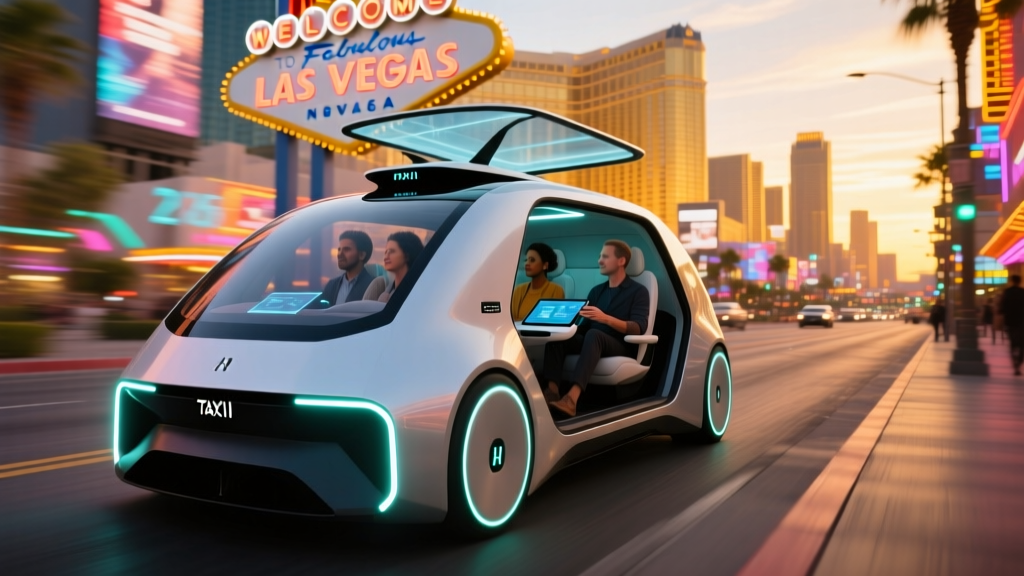
| Zoox | Las Vegas (Strip corridor), San Francisco (limited zones) | Limited hours, expanding | Zoox purpose-built vehicle (bidirectional, no steering wheel) |
| Cruise | Operations suspended nationally since Oct 2023; limited supervised testing in Phoenix, Dallas | N/A — no commercial rides | Chevrolet Bolt EV (origin), next-gen Origin (uncertain) |
Key takeaway: Waymo is the only operator running scaled, 24/7 commercial driverless service across multiple US cities as of early 2026. Zoox is in early commercial deployment. Cruise remains in recovery mode after its permit suspension following a serious pedestrian incident in San Francisco.
Self-Driving Cars Accidents: What the Safety Data Shows
This is the core question: are robotaxis safer or more dangerous than human-driven rideshare? The data, while still maturing, provides a clearer picture than headlines suggest.
- Total autonomous miles driven: Over 50 million fully driverless miles across Phoenix, SF, and LA (NHTSA standing general order data)
- Injury-involved crashes: Waymo reported approximately 2.1 police-reported crashes per million autonomous miles, compared to a human benchmark of approximately 4.9 per million miles for similar urban driving environments (based on Waymo's published comparative analysis, 2024)
- Severity profile: The vast majority of Waymo-involved incidents were low-speed contact events (under 15 mph), typically rear-end collisions where the Waymo vehicle was stopped or slowing and was struck by a human-driven vehicle
- Pedestrian/cyclist contact: Extremely rare relative to miles; Waymo's sensor suite (lidar-dominant) provides 360° object detection that does not degrade with attention fatigue
The Cruise Incident That Changed the Industry
Any honest discussion of self-driving cars accidents must address the October 2023 Cruise incident in San Francisco. A Cruise robotaxi struck a pedestrian who had been thrown into its path by a human-driven vehicle. The Cruise vehicle then dragged the pedestrian approximately 20 feet while pulling to the curb. The pedestrian suffered serious injuries.
The critical failure was not solely the initial collision — it was the post-impact behavior and, more consequentially, Cruise's incomplete disclosure of the dragging to regulators. The California DMV suspended Cruise's deployment permit, triggering a nationwide operational shutdown. GM subsequently cut Cruise's budget by over $1 billion and restructured the division.
This single incident demonstrates both the risk profile of Level 4 systems operating near pedestrians in complex urban environments and the regulatory accountability that exists when operators fail to transparently report incidents.
How Robotaxi Safety Compares to Human Drivers
| Metric | Waymo (Driverless) | Human Drivers (Urban US Average) | Source |
|---|---|---|---|
| Police-reported crashes per million miles | ~2.1 | ~4.9 | Waymo safety report / NHTSA |
| Injury-causing crashes per million miles | ~0.7 | ~1.6 | Waymo comparative analysis |
| DUI / impaired driving | 0 (impossible) | Significant factor in ~30% of fatal crashes | NHTSA |
| Distracted driving | 0 (impossible) | Factor in ~25% of crashes | NHTSA |
| Fatigued driving | 0 (impossible) | Underreported, estimated ~10-20% | NHTSA / AAA Foundation |
The data suggests robotaxis have a meaningful safety advantage in eliminating impairment, distraction, and fatigue — the three largest contributors to human-caused crashes. However, robotaxis face unique challenges in edge-case scenarios that human drivers handle intuitively: construction zones with conflicting signage, hand-signal-directed traffic, and erratic pedestrian behavior in dense urban cores.
The Technology Stack: How Robotaxis Actually See the Road
Understanding self-driving cars accidents requires understanding how these vehicles perceive their environment. The sensor and compute stack is the differentiator between operators.
Waymo (6th-Generation Driver)
- LiDAR: Multiple high-resolution lidar units providing 360° 3D point-cloud mapping out to ~500 meters; primary sensor for object detection and distance measurement
- Cameras: 29+ cameras covering all directions; used for traffic-light state detection, signage reading, lane-marking identification, and object classification
- Radar: 6 imaging radars for velocity detection and redundancy in poor visibility (rain, fog)
- Audio sensors: External microphones to detect emergency-vehicle sirens
- Compute: Custom-designed AI inference hardware; processes over 10 TB of sensor data per hour of driving
- HD Maps: Centimeter-precision pre-mapped routes within the geofence; the vehicle localizes itself against this map in real time
Zoox (Purpose-Built Vehicle)
- LiDAR: Roof-mounted lidar array with full 360° coverage
- Cameras: Multi-spectral camera suite including infrared for low-light pedestrian detection
- Radar: Redundant radar coverage
- Vehicle design: Bidirectional (can drive equally in either direction), four-wheel steering, no steering wheel or pedals — designed from scratch for Level 4, not adapted from a consumer vehicle
Tesla FSD Supervised (Level 2 — NOT a Robotaxi)
- Cameras only: 8 external cameras, no lidar, no radar (removed in recent hardware revisions)
- Approach: Vision-only neural-network-based perception; Tesla argues lidar is unnecessary and that camera+AI can achieve human-equivalent perception
- Classification: Level 2 driver-assist — the driver must remain attentive and is legally responsible for all driving actions
- Robotaxi plans: Tesla has announced a "Cybercab" robotaxi concept, but no commercial driverless service is operational as of 2026
The camera-only vs. lidar debate is central to the self-driving cars accidents conversation. Every commercial Level 4 robotaxi service currently operating uses lidar as a primary sensor. The redundancy lidar provides — direct distance measurement independent of lighting conditions — is considered essential by every operator that has achieved regulatory approval for driverless commercial service.
Robotaxi Pricing vs. Uber and Lyft
For riders in cities where robotaxis operate, cost is a practical consideration alongside safety.
| Service | Typical 5-Mile Urban Ride | Surge Pricing | Wait Time (Typical) |
|---|---|---|---|
| Waymo One | $10–$18 (varies by city/time) | Yes, but generally less volatile than Uber/Lyft surge | 3–8 minutes (Phoenix), 5–15 minutes (SF/LA) |
| UberX | $12–$22 (varies widely) | Frequent; can 2–3x during peak demand | 2–10 minutes (depends on driver supply) |
| Lyft | $11–$20 | Yes, "Prime Time" pricing | 3–12 minutes |
| Zoox | Currently free/subsidized (limited pilot riders) | N/A | Invite-only, limited availability |
Waymo's pricing is broadly competitive with Uber/Lyft for equivalent trips, and often cheaper during peak surge periods when human-driver supply is constrained. The fleet does not surge as aggressively because supply is algorithmically managed rather than dependent on independent contractors deciding whether to drive.
How to Use Waymo One
- Download the Waymo One app (iOS/Android)
- Create an account and add payment method
- Enter your pickup and drop-off locations — the app confirms whether both are within the service geofence
- Confirm the ride; the vehicle arrives autonomously
- Unlock the vehicle via the app (tap "Start Ride" on the rear seat screen)
- The vehicle drives itself to your destination; you can adjust music/temperature but cannot override driving
- Exit at your destination; the vehicle drives away to its next ride or to a depot
Regulatory Oversight: Who Approves Robotaxi Operations
Robotaxi deployment in the US is regulated at both the federal and state level, creating a patchwork of requirements:
- Federal (NHTSA): Sets vehicle safety standards (FMVSS). Robotaxis without steering wheels/pedals (Zoox, Cruise Origin) require exemptions from certain standards. NHTSA also mandates crash reporting through its Standing General Order for all Level 2+ and Level 4 systems.
- California (DMV + CPUC): The DMV issues testing and deployment permits; the California Public Utilities Commission (CPUC) regulates commercial passenger service pricing and operations. California has the most mature regulatory framework and the most data transparency requirements.
- Arizona: Minimal regulatory barriers; Waymo has operated in Phoenix since 2020 under a relatively permissive environment. The Arizona Department of Transportation requires notification but not pre-approval for testing.
- Texas: Austin allows autonomous vehicle testing and deployment under state law (HB 3142, 2017). Local permits required for commercial service.
- Nevada: DMV issues autonomous vehicle permits; Zoox operates in Las Vegas under this framework.
The regulatory landscape is still evolving. No single federal framework governs robotaxi deployment nationwide — operators must navigate state-by-state approval processes, which limits expansion speed but also creates accountability checkpoints.
Current Limitations: Where Robotaxis Cannot Go or Struggle
- Geofence boundary: The vehicle will not drive outside its mapped zone. If your destination is 500 feet outside the geofence, the ride cannot be completed.
- Heavy snow and ice: No commercial Level 4 service operates in snowy conditions. Snow obscures lane markings, degrades lidar/camera performance, and creates road-surface conditions the systems are not validated for.
- Dense fog: Visibility below approximately 100 meters can trigger operational pauses. The vehicle will pull over safely and wait, or the ride may be cancelled.
- Construction zones: While improving, complex construction zones with temporary lane shifts, hand-flaggers, and conflicting signage remain a challenge. The vehicle may stop and request remote assistance or reroute.
- Unmapped roads: New developments, recently altered road layouts, or private roads not in the HD map database are inaccessible.
- Off-road / unpaved roads: Strictly on-paved-road only.
- Highway merging in some zones: Certain Waymo geofences include highway segments; others do not. Highway-capable operation requires separate validation.
- Pets and unusual cargo: Service animals are accommodated; large pets or unusual cargo may not be, depending on operator policy.
These limitations explain why robotaxis are not a replacement for personal EV ownership in most scenarios. They are an urban mobility option with specific operational boundaries — excellent within those boundaries, unavailable outside them.
Frequently Asked Questions
Are self-driving cars safer than human drivers?
Based on available data from Waymo's 50+ million driverless miles, Level 4 robotaxis show approximately 55-60% fewer police-reported crashes per million miles compared to human drivers in similar urban environments. The primary advantage is the elimination of impairment, distraction, and fatigue. However, the total miles driven by robotaxis are still a small fraction of human-driven miles, and the operational environments are geofenced to avoid the most challenging conditions.
What causes most self-driving cars accidents?
The majority of robotaxi-involved incidents are low-speed rear-end collisions where a human-driven vehicle strikes the robotaxi from behind while it is stopped or slowing. Robotaxis tend to drive conservatively — they stop completely at stop signs, maintain generous following distances, and brake earlier than human drivers expect. This conservative behavior occasionally leads to being rear-ended by inattentive human drivers.
Can a Waymo robotaxi get into an accident I'd be liable for?
No. As a passenger in a Level 4 robotaxi, you have no driving responsibility and no liability for vehicle operation. The operator (Waymo) carries insurance and assumes liability for the vehicle's driving actions. You are responsible only for your own behavior inside the cabin (e.g., not interfering with vehicle systems).
Why did Cruise shut down, and is it coming back?
Cruise suspended all operations in October 2023 after a San Francisco incident where a Cruise vehicle struck and then dragged a pedestrian. The California DMV revoked the company's deployment permit, citing both the incident and incomplete reporting to regulators. GM cut Cruise's budget significantly and restructured the division. As of early 2026, Cruise is conducting limited supervised testing in Phoenix and Dallas with safety drivers, but no commercial driverless service is active. A return to commercial driverless operations has not been announced with a firm timeline.
Is Tesla's FSD a self-driving robotaxi?
No. Tesla Full Self-Driving (Supervised) is an SAE Level 2 driver-assist system. The driver must remain attentive, keep hands available, and is legally responsible for all driving actions at all times. Tesla has announced plans for a future "Cybercab" robotaxi, but no driverless commercial service is operational. Conflating Tesla FSD with Waymo-style Level 4 robotaxis is a category error — they operate under entirely different regulatory frameworks and safety assumptions.
Where can I ride in a self-driving taxi right now?
Waymo One is available to the general public (no waitlist in most zones) in Phoenix metro, San Francisco, Los Angeles, and Austin. Zoox offers limited rides in Las Vegas and San Francisco, primarily to invited participants. No other Level 4 commercial robotaxi service is broadly available to the public in the US as of early 2026.